


The Open Source Hardware Association (OSHWA) continues to expand its footprint in the global maker and engineering communities through its ongoing initiative to validate and catalogue open-source technological projects. Operating a free certification program designed to ensure that creators’ hardware faithfully complies with the official community definition of open source hardware, OSHWA provides a standardized benchmark for transparency, collaboration, and shared innovation. Whenever engineers, educators, or hobbyists encounter the official OSHWA certification logo on a device, they are assured that the hardware meets rigorous community standards for openness regarding its documentation, schematics, and design files.

With the inclusion of 30 newly approved projects in September, the comprehensive OSHWA certification database has now reached a notable milestone, encompassing 3,431 individual certifications from contributors around the world. The latest additions reflect the diverse and inventive nature of the open-source movement, spanning specialized educational physics equipment, advanced 3D printer enhancements, and critical cybersecurity tools designed to safeguard computing hardware. Ranging from brand-new contributors to returning members of the open-source ecosystem, these newly minted projects demonstrate the broad utility and continuous growth of community-driven hardware design.

Among the standout entries in the September batch is the Photogate V2, registered under the unique identifier UID AR000006. Developed to address the often prohibitive costs associated with outfitting science laboratories, the Photogate V2 is an affordable, low-cost photogate specifically engineered for physics education. By integrating an ESP32-based microcontroller, infrared sensing capabilities, a built-in user interface, and 3D-printable mechanical components, the device can be easily fabricated and deployed by educators and students alike. Photogates are a staple of physics classrooms, traditionally used to measure time intervals, velocity, and acceleration with high precision during mechanics experiments. By making the entire design open source and accessible, the creators of the Photogate V2 have provided a practical pathway for schools and independent learners to bring hands-on experimental physics directly into the classroom without straining educational budgets.

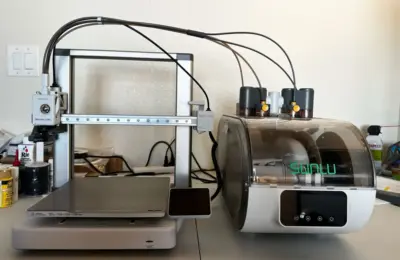
Another notable addition tailored to the maker community is ChamberFlux, registered under UID US002855. Designed specifically for enthusiasts and professionals utilizing enclosed 3D printers, ChamberFlux offers a streamlined chamber-circulation model aimed at optimizing air transport and thermal management inside closed printing environments. The system is engineered to integrate seamlessly with existing printer filtration mechanisms, providing an extra layer of protection for the workspace. Modern 3D printing often involves melting various thermoplastics that can release ultrafine particles and volatile organic compounds into the surrounding air. By improving air circulation and filtration through an open-source modification, ChamberFlux addresses environmental and health considerations within hobbyist and professional maker spaces, ensuring cleaner air while operating enclosed machinery.

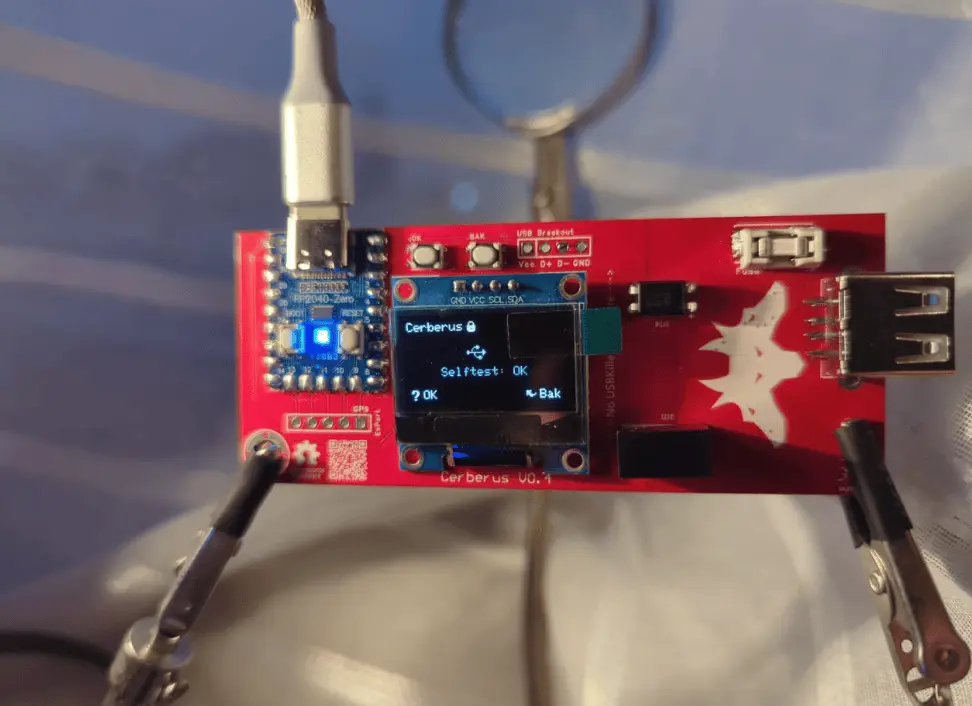
Addressing the domain of digital security, the September updates also feature Cerebus, registered under UID MX0000041. Cerebus is a compact, pocket-sized hardware auditing device built to analyze suspicious USB peripherals before they are connected to a primary computer. Users can plug unfamiliar storage drives or unknown USB accessories into the device to observe how the peripheral behaves and what commands it attempts to execute, functioning as a diagnostic sandbox. Equipped with an integrated OLED screen and a color LED indicator, Cerebus provides immediate visual feedback regarding the capabilities of an attached device. This proactive approach helps users mitigate potential hardware-level security risks, such as unexpected voltage spikes designed to fry USB ports or sudden unauthorized file offloading, thereby offering a practical safeguard against common physical attack vectors.

The continuous expansion of the OSHWA database is supported by modern communication channels that keep the global maker community informed of new developments. Enthusiasts and developers can track ongoing submissions and approvals in real-time by following the official OSHWA certification bot on Mastodon. For creators looking to formalize their own hardware projects and contribute to the growing repository of open-source knowledge, OSHWA maintains an active application portal where developers can submit their documentation for official review and certification.