


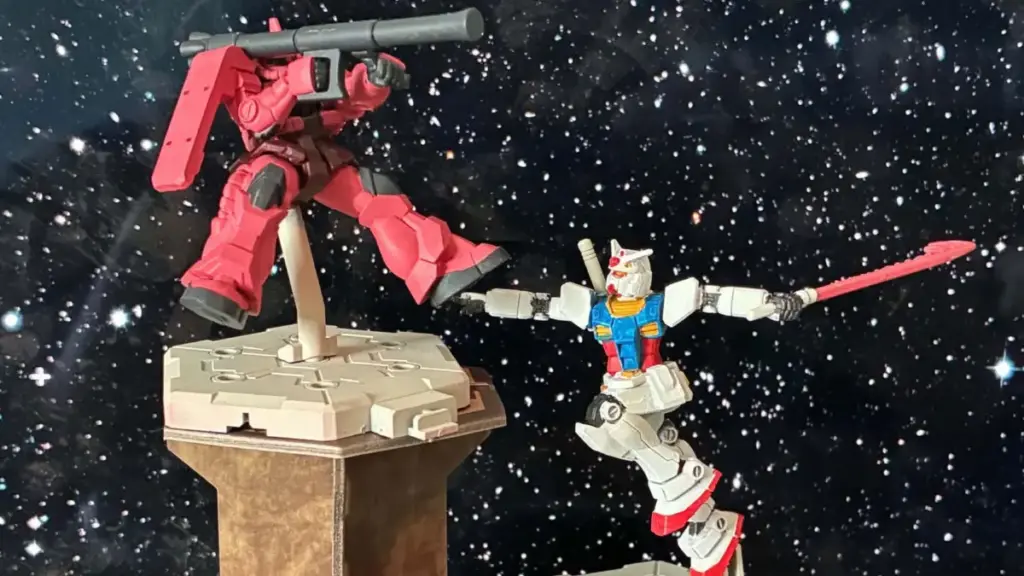
The storied Mobile Suit Gundam franchise is making yet another prominent venture into the tabletop gaming landscape with Gundam Assemble, an all-new miniatures game experience designed to offer a more accessible entry point into the hobby. Revealed alongside the forthcoming Gundam Card Game as part of a visual companion showcase, fans were treated to a synchronized one-two punch of fresh tabletop game announcements. Following a substantial amount of hands-on time with the starter set, Gundam Assemble is shaping up to be a delightfully bite-sized brawl compared to the sprawling, time-intensive commitments demanded by some of the other miniature wargames currently populating the market.
Arguably one of the most formidable barriers of entry for newcomers to miniature wargames has always been the intimidating building and painting aspect, which often requires specialized tools, steady hands, and hours of meticulous preparation. If building is a prospective player’s primary concern, however, Gundam Assemble aims to alleviate those anxieties entirely. Drawing directly from the beloved tradition of the Bandai gunpla kits that the series is globally renowned for, Gundam Assemble features components that players simply cut out and snap securely into place. Granted, the physical pieces are noticeably smaller in scale when compared to standard, full-sized gunpla models, but the engineering has been significantly simplified, requiring only a handful of parts to fully complete a miniature Gundam unit.
While the process is streamlined, using proper cutting tools remains strongly advised given the miniature nature of the pieces, which leaves considerably less room for error. Once constructed, the models look remarkably impressive, showcasing a commendable amount of fine detail that faithfully captures the iconic mobile suit designs fans are intimately familiar with. Much like other modern miniatures, assembly has been rendered much easier by doing away with complex gluing, though this design choice inevitably sacrifices some of the deep customization and modular swapping that hobbyists might prefer in particular tabletop systems. Instead of individual part customization, the game delivers distinct variants and dynamic poses of various Gundam units scattered across different product releases. For example, the classic RX-78-2 Gundam included in the primary starter set features a dramatic beam saber attack pose, whereas an alternative variant found in the specialized Paint Pack depicts the same mecha unit brandishing a high-powered beam rifle. Although this approach is less than ideal for collectors who crave a deeply personalized touch to their custom creations, it drastically lowers the barrier to entry, enabling complete beginners and impatient players alike to jump straight into the painting and gameplay phases with minimal delay.
Diving into the world of miniature painting is rarely described as an endeavor for the faint of heart, and Gundam Assemble does not completely rewrite that narrative, given the sheer abundance of tiny details packed into elements like the weaponry and intricate mecha head pieces. Perfectionists will undoubtedly find themselves investing significantly more hours into painting their squads than actually playing matches on the board. With that said, the mobile suit units inhabiting the Gundam universe are inherently well-suited for straightforward painting workflows, typically sporting mostly monochrome color palettes punctuated by distinct colored embellishments. Fortunately, hobbyists do not have to contend with the notoriously difficult task of painting organic skin tones or flesh, which can frequently trip up novices.
By beginning with a solid base coat of primer, players can preserve valuable time, particularly when tackling units featuring iconic, clean color schemes such as the RX-78-2 or the Wing Gundam Zero. For players who lack abundant free time and prioritize the actual tactical gameplay over the arts-and-crafts side of the hobby, keeping the painting process relatively simple is a practical necessity. Most hobbyists want their deployed forces to look reasonably cool and clean on the tabletop, avoiding the messy, nostalgic aesthetics of their childhood miniature painting days. On the flip side, some wargamers would prefer to bypass the painting process altogether—a preference that historically drives players toward pre-painted miniature systems like HeroClix or Star Wars X-Wing. While leaving the miniatures completely unpainted is a valid option, investing a modest amount of extra effort into painting undeniably elevates the overall tabletop experience. To assist newcomers, the starter set includes a dedicated painting guide section within its instruction manual. Beyond utilizing specific paints offered via products like the Gundam Assemble Paint Pack, hobbyists can easily substitute standard water-based acrylic model paints and mix custom colors as needed, a method that successfully brought Char’s iconic Zaku to life during dedicated community paint days. Ultimately, painting these miniatures is considerably more approachable today and can save substantial amounts of time with a little preliminary research.
For players whose primary motivation is the tactical execution of tabletop matches, Gundam Assemble delivers a surprisingly smooth and cohesive gameplay experience. Many casual strategy enthusiasts occasionally dabble in lighter cooperative board games like Marvel United, but often find that the single greatest hurdle in the broader miniatures scene is rounding up a willing group of friends prepared to master complex rulebooks, carve out dedicated time, and secure sufficient physical space for sprawling matches. This friction is a common point of discussion among gaming groups who endlessly talk about diving into intensive skirmish games like Warhammer 40K Kill Team, yet ultimately hesitate to fully commit due to the daunting preparation required for building and painting armies.
Gundam Assemble successfully mitigates this friction by drastically lowering the logistical footprint of matches, requiring only a modest force of six mobile suit units split evenly between opposing sides rather than massive armies filled with numerous grunt units. Although the game still utilizes a healthy collection of cardboard tokens to track various battlefield effects, status conditions, and objectives, the most critical mechanic ensuring a smooth and intuitive turn-taking flow is the Gundam Assemble timeline. Structurally consisting of ten rounds that collectively form a single phase, the timeline features a dedicated side track where players slot their unit tokens into predetermined numbered slots to meticulously monitor each mobile suit’s activation order.
For instance, the Gundam Vidar possesses a timeline start number of one, whereas the classic RX-78-2 starts at number two. This numerical setup means the Gundam Vidar places its activation token on round one of the timeline during initial setup, signifying that it takes its tactical turn before the action shifts to round two, where the RX-78-2 token waits. As individual units execute specific tactical actions on the board, their corresponding unit tokens march further down the timeline track. Depending on the action economy and the weight of the commands chosen, a mobile suit might experience a significant wait before it gets to act again. Being able to clearly visualize which mecha is next in line introduces a compelling layer of strategic depth reminiscent of turn-based tactical video games like XCOM or Star Wars Zero Company. Keeping this timeline neatly positioned off to the side of the map also prevents the main battlefield from becoming hopelessly cluttered with extraneous token placements.
In a standard competitive scenario, players battle across two complete phases—equaling twenty total rounds—in a fierce race to accumulate victory points through a variety of strategic avenues. Scoring opportunities range from rescuing or destroying strategic garrisons and successfully eliminating opposing mecha units to securely holding designated objective points at the conclusion of each phase. During a mobile suit unit’s activation, a player can choose from a streamlined suite of possible actions, starting with an advance move, executing a primary action, deploying command abilities, and playing tactics cards.
Advancing functions as basic movement, allowing units to traverse up to three hexes in any direction across the map. However, scaling upward by a single level of terrain costs two hexes of movement allowance, while descending a level incurs no movement penalty, and units equipped with the Hover ability ignore all terrain movement penalties completely. Primary actions directly advance the unit’s token down the timeline and encompass four key options: attack, dash, energize, and rescue. Attacks printed directly on unit cards carry specific timeline costs; if the RX-78-2’s signature Beam Saber attack carries a timeline cost of three, the Gundam’s token moves down the timeline three full rounds after executing that specific strike.
The remaining three primary actions typically cost two timeline rounds to execute. Dash allows a unit to cover two additional hexes of ground, and in mobile suits like Char’s Zaku, dashing can even double as an offensive maneuver that deals damage via the Char Kick ability. Energize grants a unit a valuable energy token, empowering them to trigger specialized powers later in the match. The final primary action is rescue, which allows units to recover friendly garrison tokens scattered across the battlefield to secure vital victory points. Certain units derive unique benefits from rescue operations; for example, the RX-78-2 features a command ability that permanently increases its combat strength by one for every garrison successfully rescued.
Beyond primary actions, command abilities printed directly on unit cards provide additional tactical options during a turn, usually demanding an energy expenditure or meeting specific board state prerequisites. Finally, players have access to tactics cards, which can be played up to once per turn before being discarded. Players begin matches holding a baseline of three tactics cards and draw additional cards as each phase concludes. These single-use cards offer versatile utility ranging from emergency hull repairs for a damaged mecha to unleashing unexpected bonus attacks or instantly countering an incoming enemy maneuver. While this might initially sound like an overwhelming volume of options for a single turn, gameplay quickly settles into a fluid rhythm where players primarily alternate between advancing and utilizing a single primary action as available battlefield opportunities organically shift.
Combat encounters within Gundam Assemble benefit immensely from the compact 3v3 mobile suit structure, which keeps the battlefield uncluttered by excess miniatures and ensures that engagements initiate swiftly during the opening turns as forces deploy and disperse toward competing objectives. When opposing units close the distance into attack range, the active player can select one of two offensive profiles printed on their unit card or deploy an attack-focused tactics card. Each attack profile specifies a numeric strength rating, which directly dictates how many ten-sided dice must be rolled to calculate successful hits, critical strikes, and overall damage output.
Rolling a four or higher constitutes a standard hit, translating directly into one point of damage, while natural nines and tens score critical hits that trigger special offensive effects unique to that weapon system—ranging from amplified damage to debilitating negative statuses that hinder the target’s operational capabilities. Unlike many traditional miniature wargames, Gundam Assemble completely eschews defensive dice rolls and complex saving throws, keeping damage calculation brisk and accessible. Instead, defensive mitigation is handled through Shield tokens, which units can occasionally acquire by chance or generate via command abilities and tactics cards.
Shield tokens function as passive defensive bonuses that outright nullify one point of incoming damage per equipped token, after which they become exhausted and deactivated until the start of that mecha unit’s next activation. For instance, if the Gundam Barbatos Lupus Rex unleashes its devastating Tail Blade attack attempting to deal six points of damage to the Gundam Vidar, but the defending unit currently has two active Shield tokens equipped, the damage is effectively mitigated. Rather than suffering the full six damage, the Gundam Vidar absorbs only four points, while its two Shield tokens are flipped over to indicate they have been expended. If a subsequent enemy unit targets the Gundam Vidar before it manages to reactivate its shields at the start of its next turn, those tokens will offer no further protection against incoming damage.
This straightforward defensive system, paired with select abilities and tactics cards capable of dampening incoming harm, keeps combat rolls fast-paced and seamless. Players are spared the headache of calculating complex faction synergies, line-of-sight concealment modifiers, or aiming bonuses commonly found in heavier wargames. The only environmental variable to consider during offensive calculations is accuracy, which can be dynamically altered by elevation advantages or specialized terrain features such as water. When a mobile suit unit is ultimately reduced to zero structural integrity and defeated, the victorious player immediately claims the victory points printed on the fallen enemy’s card. Subsequently, the defeated unit’s token on the timeline is advanced two spaces forward, representing the time required to complete off-field repairs before it can redeploy back into the combat zone. Crucially, any accumulated upgrades or stored energy reserves remain attached to the defeated mecha unit, persisting through its destruction and carrying over when it eventually re-enters the fray.
Another critical consideration for any prospective collector evaluating a new miniatures game is the financial investment required. Because highly detailed physical miniatures represent a substantial upgrade over traditional cardboard tokens, acrylic standees, or flat chits, building a collection can easily become financially intimidating. The Gundam Assemble Starter Set 01 retails for approximately $35, a price point that sits only slightly above a standard High Grade (HG) gunpla model kit, depending on the specific mobile suit. When contrasted against the steep financial barrier of rival systems—where a starter set for Warhammer 40K Kill Team can easily run around $118 and a Star Wars Legion starter box typically demands roughly $99—Gundam Assemble proves exceptionally gentle on the wallet.
For dedicated hobbyists seeking an even more robust entry point, a Deluxe Starter Set is available for approximately $100, containing double the miniature count of the standard box. Furthermore, for fans eager to expand their tactical rosters, dedicated expansion packs featuring popular fan-favorite mobile suits are available for around $40.
Ultimately, Gundam Assemble offers a compelling design balance that blends objective-based tactical scoring with the visceral thrill of going toe-to-toe in all-out assaults against enemy units for lucrative victory point rewards. Navigating the delicate equilibrium between these competing strategic priorities to maximize a squad’s specific capabilities is precisely what separates casual participants from master tacticians. By bridging the gap between the accessible snap-fit building style familiar to gunpla enthusiasts and the brisk, streamlined combat and timeline management of modern tabletop games, the overall barrier to entry is noticeably more welcoming than competing starter sets in the current miniature wargame landscape. Combined with an approachable price point, the game presents an inviting proposition for established Gundam fans eager to explore a fresh tabletop medium, as well as newcomers looking to dip their toes into the broader world of miniature gaming for the very first time.