

To the uninitiated, mentioning that you regularly whip up a batch of fresh crepes for your children on a hectic school morning—or during the twilight hours before a busy evening—is a guaranteed way to elicit looks of sheer bewilderment. In the common imagination, crepes belong firmly in the realm of leisurely weekend mornings, specialized street-side carts in Paris, or high-end brunch spots. They sound impossibly fancy, delicate, and time-consuming. Yet, in practice, the humble crepe is actually one of the most practical, efficient, and versatile dishes a busy parent who loves to cook can possibly master.
Contrary to popular belief, you do not need to invest in a specialized cast-iron crêpière, wooden spreaders, or single-purpose kitchen gadgets to pull off a successful batch. Any reliable nonstick pan already sitting in your kitchen cabinet will do the job admirably. Furthermore, the cooking process itself moves at a remarkably brisk pace, with each thin pancake cooking in barely a couple of minutes.
The logistical hurdles that often deter home cooks from attempting batters on busy days are virtually nonexistent here. There is no rigid requirement to mix the batter far in advance; a brief five-minute resting period is all it takes to allow the nutrient-dense buckwheat flour to properly hydrate. For maximum convenience, the remaining batter holds up splendidly in the refrigerator for up to three days, ready to be deployed at a moment’s notice. Because the batter is intentionally kept only barely sweetened, these crepes possess a delightful culinary neutrality. They can seamlessly pivot across multiple meals, skewing savory when wrapped around a core of melty cheese or tender, cooked vegetables, or leaning comforting and sweet when paired with jammy, cooked fruit.
Like countless parents navigating the daily challenge of feeding growing children, the desire to subtly optimize nutrition without sacrificing flavor remains a constant priority in the kitchen. Buckwheat, despite its misleading name, is actually not a wheat at all, but rather a pseudo-cereal related to rhubarb and sorrel. It is naturally gluten-free, remarkably high in dietary fiber, exceptionally nutrient-dense, and boasts a low glycemic index, making it a stellar choice for sustained energy throughout the day.
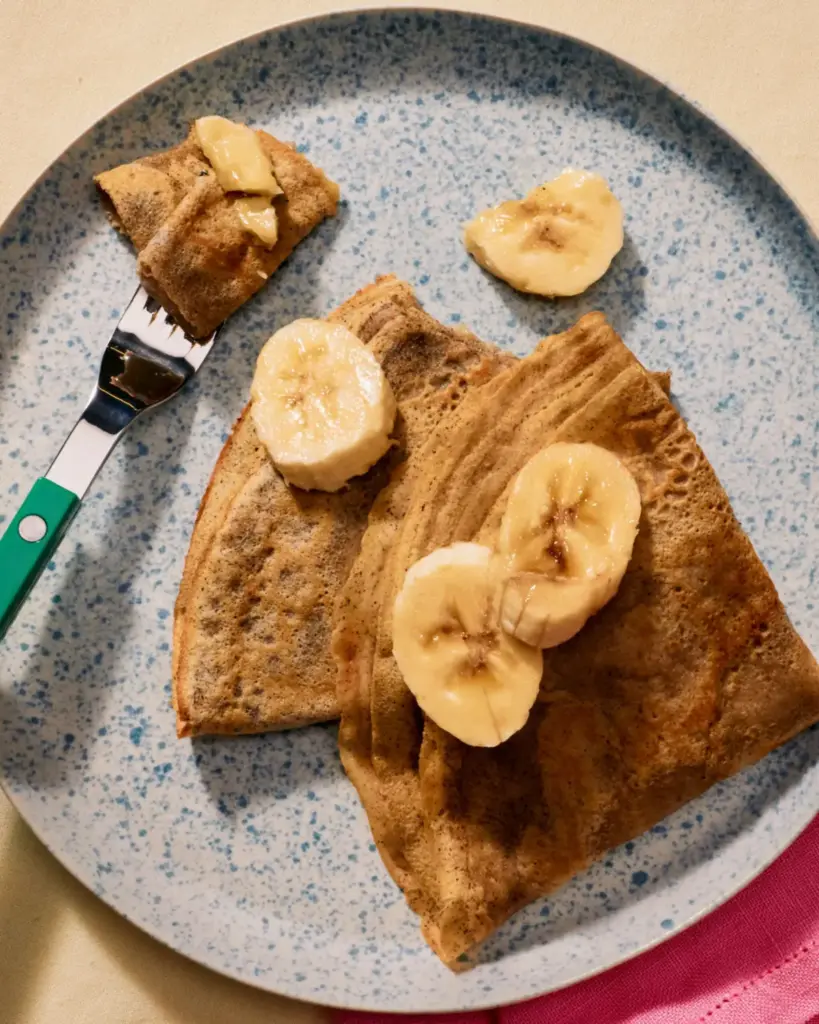
There is an undeniable charm to buckwheat’s distinctive, earthy flavor profile, particularly when it comes into contact with butter browning in a hot pan, creating a nutty, aromatic symphony that elevates simple ingredients into something truly memorable. Developing a reliable household recipe often involves fine-tuning proportions to balance health, taste, and structural integrity. A successful batter relies on a thoughtful mix of buckwheat flour combined with just enough all-purpose flour to provide the minimal amount of gluten necessary to hold the delicate pancakes together during flipping. By keeping the ratio of buckwheat significantly higher than the wheat flour, the resulting crepes emerge distinctly darker in color and far more richly flavored than a standard, all-wheat version.
This culinary experiment eventually evolved from a quiet household staple into a demanded feature on a professional menu. The recipe became such an overwhelming favorite within the family that the children eventually insisted it be brought out of the home kitchen and placed directly onto the brunch menu at Oberon, the restaurant located inside Manhattan’s New Museum, where the creator serves as Executive Chef.
For those looking to expand their morning repertoire with similar successes, the culinary landscape offers a wide array of inspiring morning dishes, ranging from crispy crepes paired with dark maple syrup to perfectly fluffy traditional pancakes and hearty hash brown breakfast casseroles designed to satisfy a crowd. Yet, even among a sea of breakfast contenders, the adaptable buckwheat crepe retains its unique standing as a dish that bridges the gap between everyday practicality and the quiet satisfaction of culinary craftsmanship.