


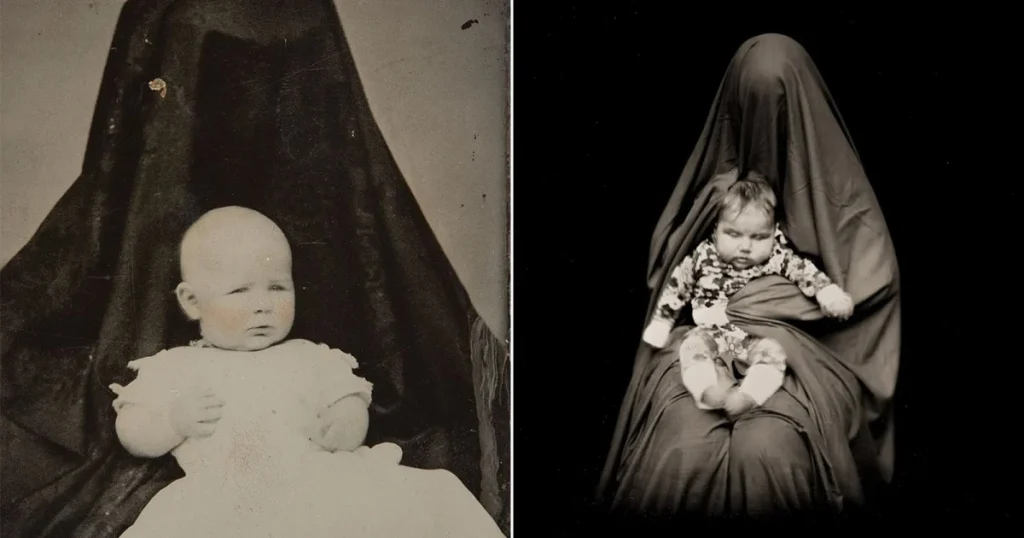
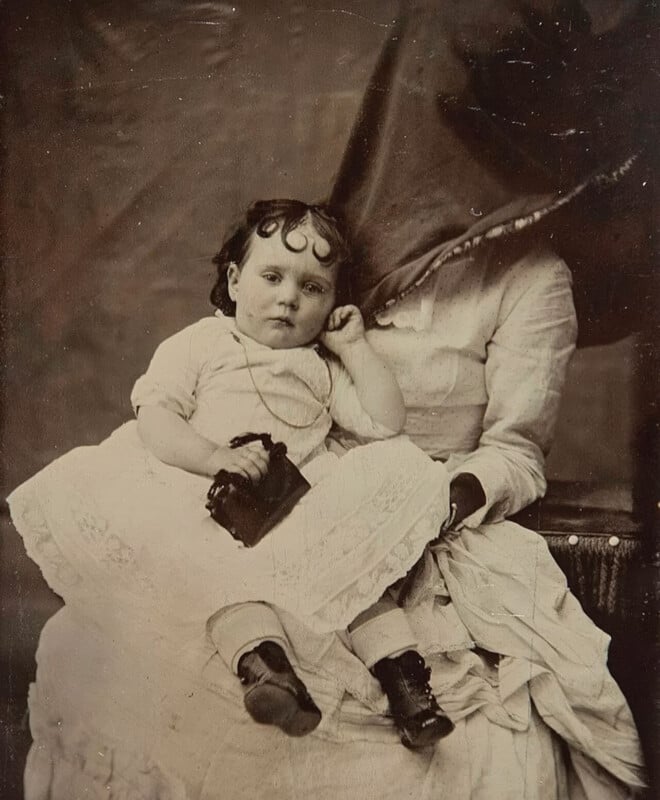
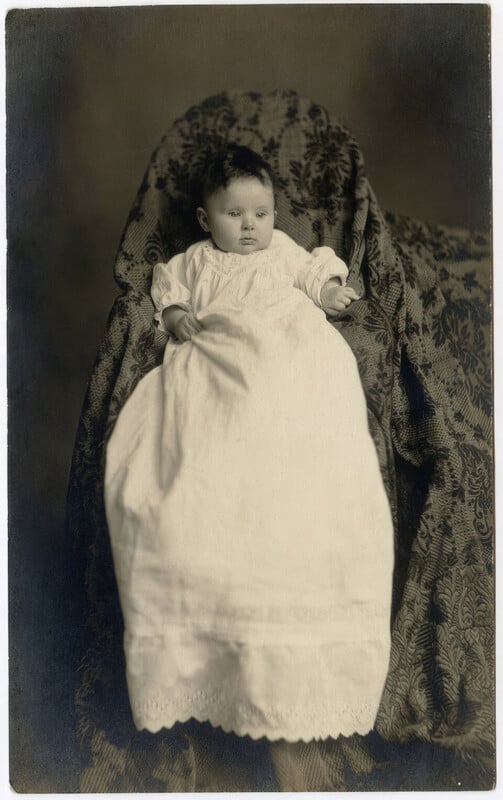
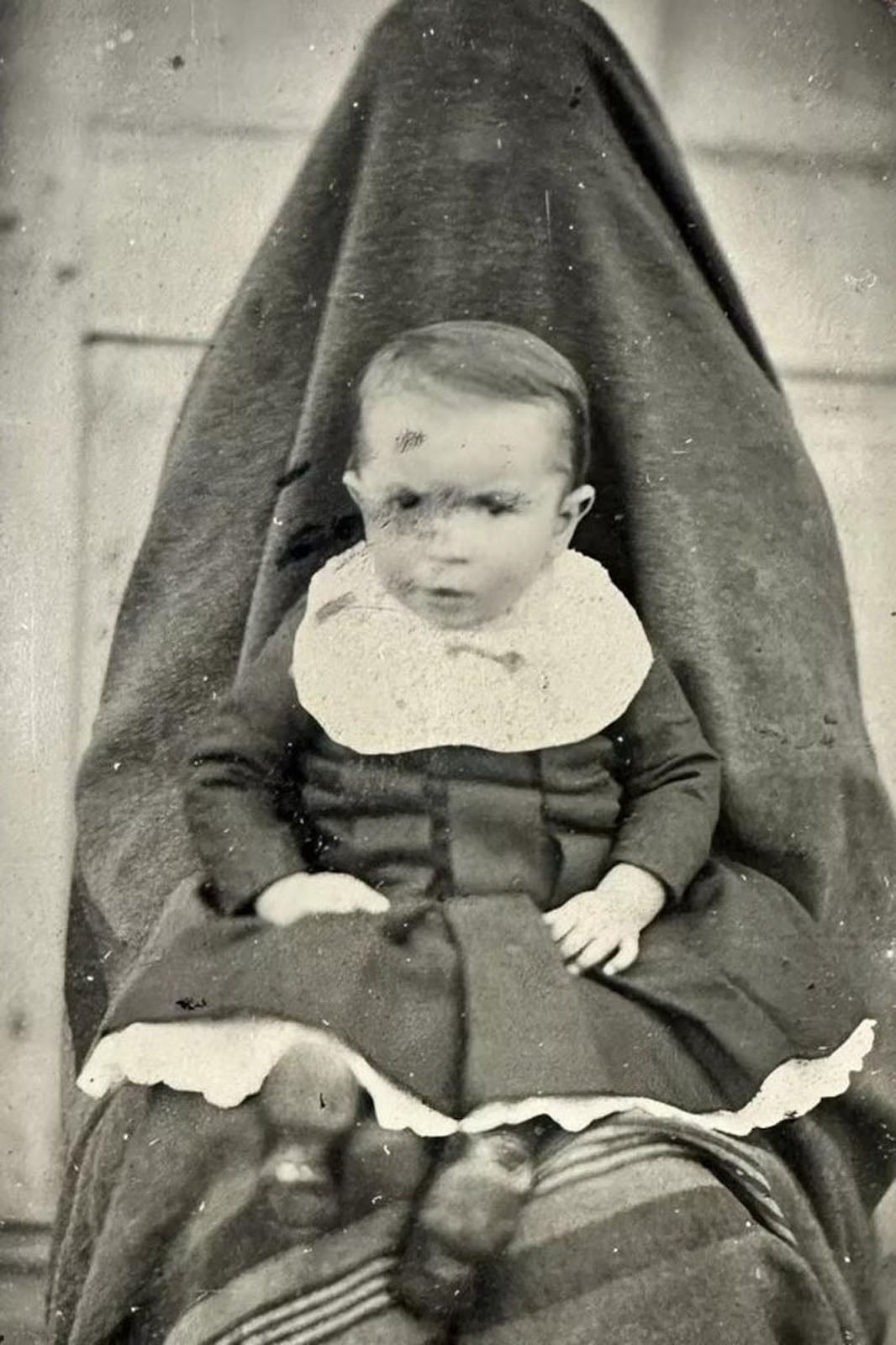
To modern eyes, certain vintage photographs from the 19th century carry an undeniably eerie aesthetic. Across archives and antique shops, portraits from the Victorian era frequently feature infants or young children posed upright, held securely by adults completely cloaked from head to toe in dark, heavy fabric, shrouds, or draped behind cloaked chairs. These spectral figures, with their obscured faces and hidden bodies, have long sparked confusion, curiosity, and sometimes outright dread among contemporary viewers. Often mistaken for elements of the macabre or grouped alongside classic ghost and spirit photography, these images are actually the result of a very practical, technical limitation of early photographic methods.
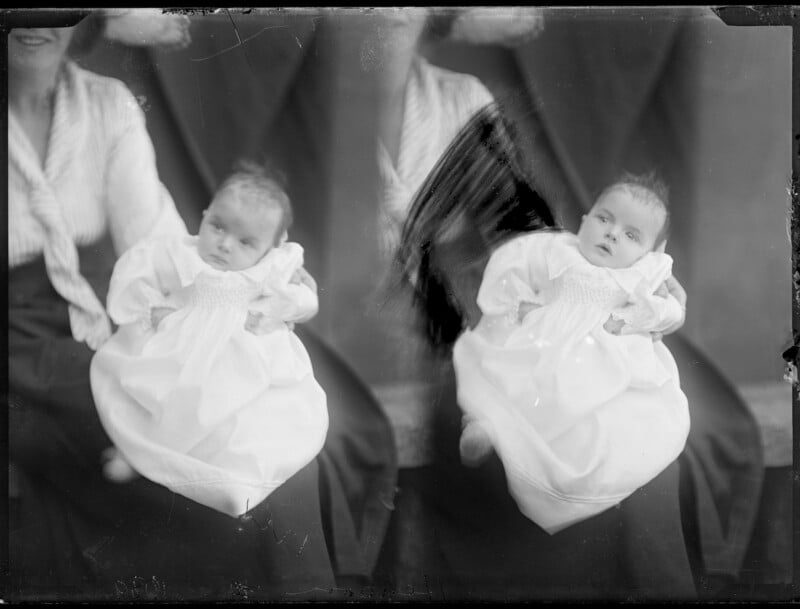
Known broadly as the "Hidden Mother" genre, this unique photographic practice dates back to the very infancy of the photographic process, with many surviving examples originating around 1839 with the advent of the daguerreotype. Photographers and parents used a variety of methods to keep squirming infants stable, achieving varying degrees of success depending on the specific preferences of the studio and the sitter. Sometimes, an adult would simply stand just out of frame, relying on the photographer’s ability to crop them out later. In other instances, mothers or assistants were draped in heavy cloth to blend into the studio backdrop, turning themselves into living, breathing furniture designed to steady a child.
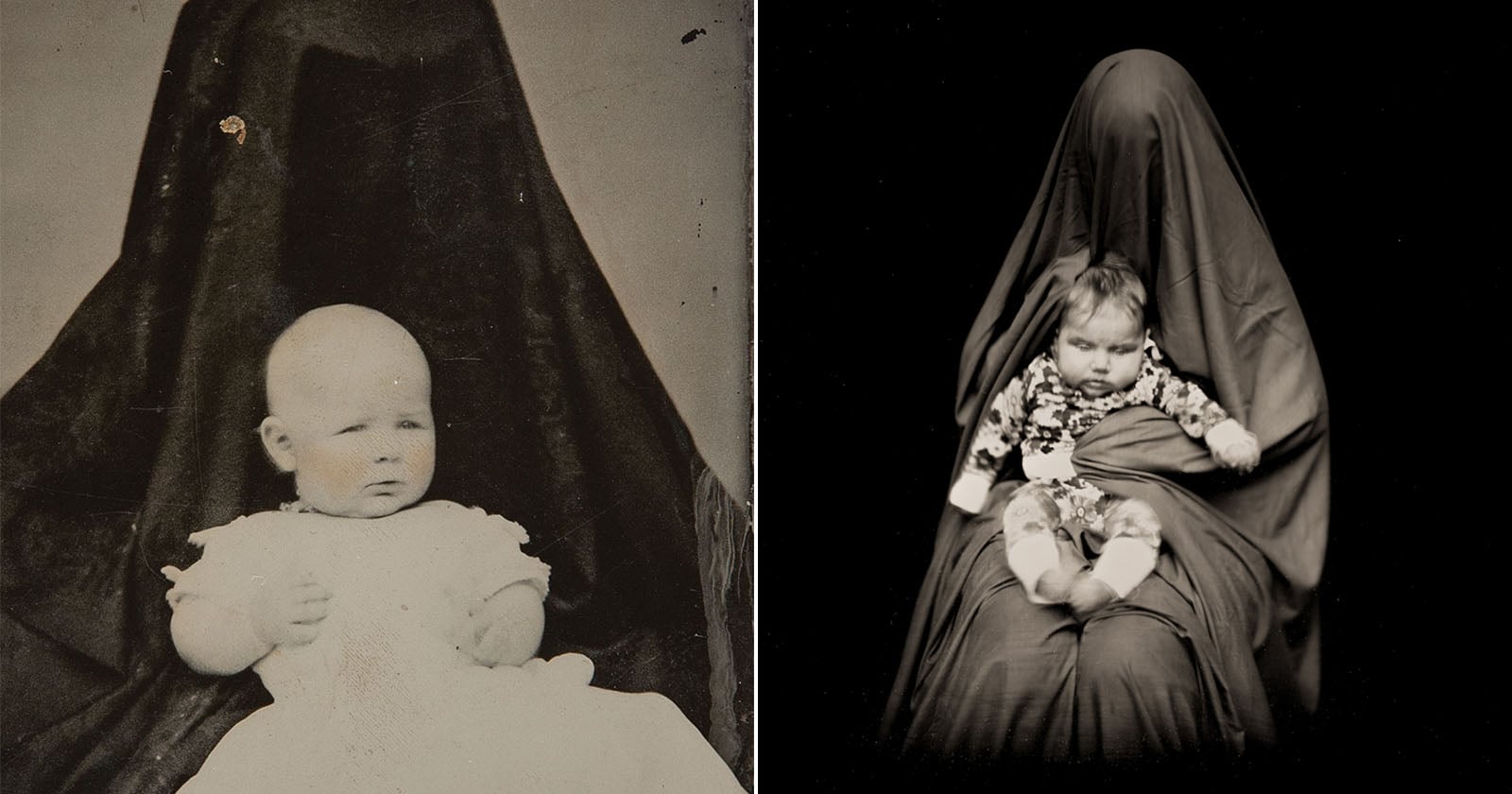
While modern sensibilities often interpret these images through a lens of the unnerving or spooky, the historical reality is rooted entirely in the extreme technological demands of early photography. Mid-19th-century photographs of children were exceptionally rare, and when young children did appear in period imagery, they were frequently blurry and completely out of focus. Parents desperately wanted clear portraits of their babies, and the hidden mother phenomenon emerged as a clever, albeit bizarre-looking, solution. This fascinating practice persisted well into the 1920s, finally fading away only as camera lenses grew significantly faster and plate and film photography evolved to require drastically reduced exposure times.
The primary culprit behind the hidden mother genre was exposure time. Early photographic techniques, such as the daguerreotype and the wet plate collodion process, required camera lenses to remain open for exorbitant amounts of time. While some exposures could be completed in a few seconds, others demanded that subjects hold perfectly motionless for minutes on end. These extended durations tested the absolute limits of human endurance. In a modern natural light wet plate studio, a typical exposure time ranges anywhere from six to twelve seconds depending on the season and available light. While that might sound brief, contemporary sitters quickly discover that remaining completely frozen can feel like an eternity.
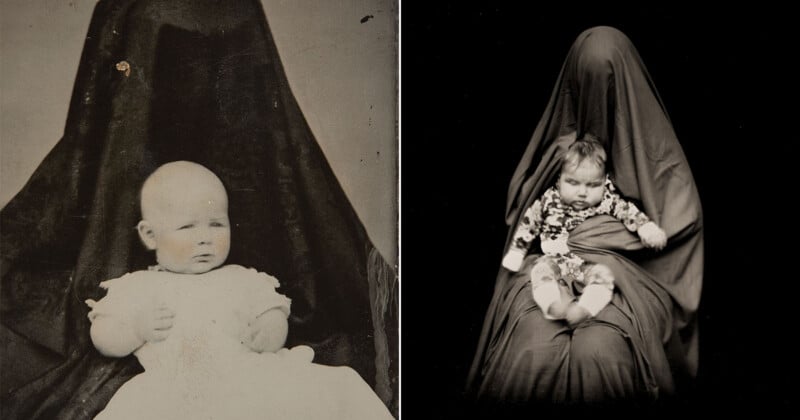
Practitioners of these historic arts continue to explore these techniques today to better understand the challenges faced by 19th-century pioneers. Modern wet plate collodion photographers, utilizing the process introduced by Frederick Scott Archer in the mid-19th century, often recreate these historic setups to pay homage to the ingenuity of early practitioners. Recently, one such photographer undertook the challenge in a natural light studio, attempting a portrait of a young infant named Mazie alongside her mother, Dana, and father, Chris.
The recreation demonstrated precisely why the technique was so widely utilized historically. The infant remained entirely unaware that her mother was shrouded beneath a fabric drape, yet she could still feel her familiar touch and hear her soothing voice, which kept her calm as her mother worked to keep her steady. The mother’s concealed body effectively stabilized the child, eliminating any risk of the baby toppling over or sliding off the chair, mirroring the visible stabilizing arms seen in numerous historical examples. Additionally, the presence of the infant’s father just outside the frame, rattling a favorite toy, provided a friendly, recognizable face to capture her attention.
Despite the careful preparation, capturing wet plate imagery remains a delicate science. During an eight-second exposure, the infant happened to kick her legs with two seconds remaining, leaving a subtle trace of movement imprinted directly on the final silver-on-glass plate. Utilizing a large format camera with a wide-open lens, the resulting ambrotype—a unique silver image on a glass plate—is fully archival and built to endure for a millennium.
The challenge of remaining motionless was not exclusive to infants; adults during the Victorian era found long exposures equally daunting. Because exposures could occasionally stretch into minutes, historic studios relied heavily on a specialized mechanical device known as a headbrace or posing stand. These adjustable metal stands supported the sitter’s head, allowing them to focus entirely on avoiding sudden movements or controlling the natural human urge to blink. Because early photographic processes were remarkably slow, a quick, natural blink would often pass without disrupting the focus of the final image.
Original historical headbraces are exceedingly rare today, as they became entirely obsolete once photographic plates and film speeds advanced. Authentic surviving examples command substantial sums, occasionally selling upwards of $10,000 at auction. Modern practitioners who utilize these tools typically rely on contemporary foundry casts patterned after original 19th-century equipment.
A common modern misconception falsely links these posing stands to post-mortem photography, with casual observers frequently assuming that the metal apparatus was used to prop up deceased individuals. Historians and photography experts emphasize that this notion is entirely false. The physical strain of a ten-second exposure required mechanical stabilization for living subjects, and metal studio stands lacked the structural capability to support dead weight in the manner often suggested by urban legends.
Instead of morbid records, the hidden mother craze of the 1800s represents a poignant chapter in family documentation, sparking profound fascination in the 21st century. Authentic historical examples command high prices when brought to market, and dedicated volumes, such as Italian-Swedish artist Linda Fregni Nagler’s 2013 publication The Hidden Mother, catalog hundreds of such images for collectors and enthusiasts.
When historical context is applied, the seemingly ghoulish records of the Victorian era reveal themselves as practical solutions to technological limitations. Photographers and parents went to extraordinary lengths simply to preserve the likeness of a child in an era before instant digital capture, high-speed shutter mechanisms, or accessible consumer cameras. The meticulous care, composition, and preparation required to open a camera shutter in the 1850s stand in stark contrast to the casual ubiquity of modern smartphone photography.
As contemporary society captures billions of digital images daily, questions naturally arise regarding the longevity of modern archives. With the vast majority of digital photographs remaining unprinted and entirely dependent on software and hardware formats bound to become obsolete, the physical endurance of 19th-century glass plates and paper prints highlights a profound shift in how human memories are preserved. For now, historical genres like the hidden mother continue to captivate public imagination, offering a tangible window into the dedication required to capture a single fleeting moment in photographic history.