Published October 11, 2026 03:40AM
A comprehensive new scientific review published in the Journal of Applied Physiology is shedding fresh light on the physiological mechanisms behind cold-water immersion, offering a deeper understanding of how and why people perish in frigid environments. Authored by researchers Laura Leuci and Luca Carenzo, the study synthesizes decades of peer-reviewed data to map out the chronological stages of cold-water trauma, moving past the common assumption that hypothermia is the primary and immediate threat.
The urgency of these findings is underscored by tragic real-world incidents. On a sunny day in May, Jeru Bague and Mariz Bello fell off their paddleboard on Browning Lake, near the prominent outdoor recreation hub of Squamish, British Columbia. The recently married couple both drowned, adding to an unusually grim year for water safety in the province. Data shows that 42 people have drowned in British Columbia so far this year, marking a staggering 50 percent increase compared to the same period last year.
While bystander analysis might suggest a straightforward solution in such scenarios—such as holding onto a floating piece of equipment—falling into cold water involves complex and rapid physiological reactions. Hypothermia typically takes at least half an hour to significantly impair core body temperature. Yet, a substantial proportion of open-water fatalities occur long before hypothermia can set in, as tragically demonstrated in the case of Bague and Bello. Even more puzzling to rescue experts, a large share of drownings occur shortly after a swimmer has been pulled to safety. Statistics indicate that more than half of all open-water deaths happen within just three meters—less than ten feet—of safety, and two-thirds of those who perish are considered competent swimmers. Furthermore, the majority of triathlon-related fatalities occur within the first few hundred meters of the swim leg, long before physical exhaustion or systemic cooling can take hold.
The new review by Leuci and Carenzo categorizes these underappreciated dangers into four distinct, chronological stages, providing a clearer picture of what happens to the human body from the moment of immersion to the critical moments of rescue.
The Cold Shock Response
The immediate hazard of sudden immersion in water below 15 degrees Celsius (59 degrees Fahrenheit) is the cold shock response. The primary physiological reaction is a large, involuntary gasp of air. If an individual is submerged beneath the surface when this reflex triggers, the immediate inhalation of water can rapidly initiate the drowning process.
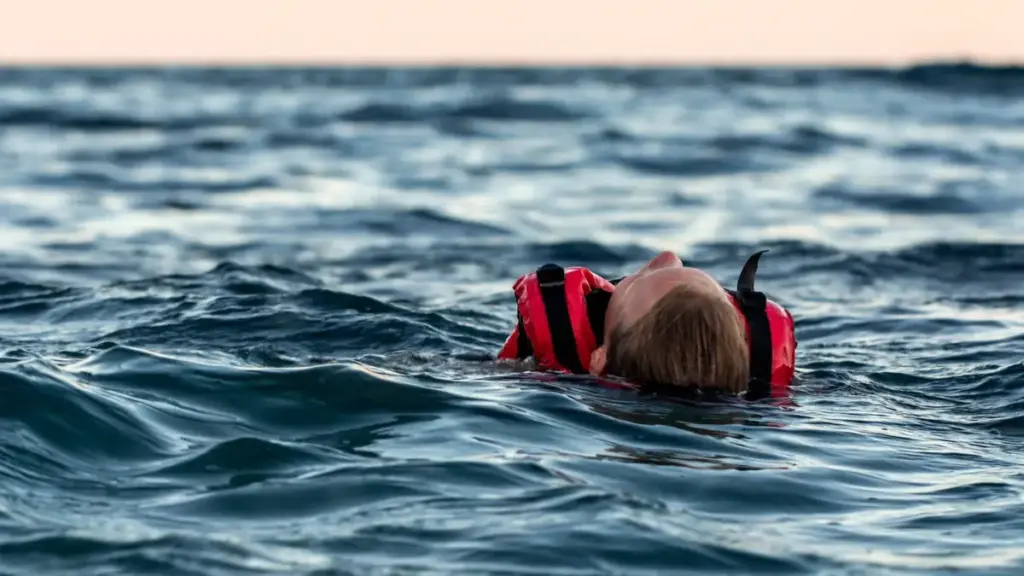
Following the initial gasp, victims typically experience rapid hyperventilating for one to three minutes. In open-water conditions characterized by choppy waves, coordinating rapid breathing between swells becomes exceedingly difficult, once again escalating the risk of inhaling water. To counter this, water safety organizations such as the Royal National Lifeboat Institution advocate for techniques like "Float to Live," which instructs individuals to lean back and float with their face clear of the water until the hyperventilation subsides. Modern personal flotation devices are engineered to automatically orient a wearer into this safe posture, though the fundamental technique of spreading limbs and leaning back remains effective even without gear.
Beyond breathing difficulties, the initial thermal shock stimulates the sympathetic nervous system, triggering an immediate "fight-or-flight" response. This causes the heart rate to accelerate rapidly and irregularly, increasing by 15 to 30 beats per minute within seconds. However, if the face happens to be submerged during this time, an ancient evolutionary mechanism known as the mammalian diving reflex activates simultaneously, attempting to slow the heart rate to conserve oxygen.
This clash of biological signals creates what researchers term "autonomic conflict," producing electrical instability within the heart muscle that can potentially trigger dangerous cardiac arrhythmias, particularly in individuals with pre-existing heart conditions. While studying these rapid responses in laboratory settings remains exceptionally difficult and hazardous, researchers conclude that some cold-water fatalities are likely caused by sudden cardiac arrest immediately following immersion rather than the effects of core cooling.
Researchers also note that the severity of the cold shock response is influenced by habituation and exposure. Frequent, gradual exposure to cold water dampens the intensity of the cold shock reflex, with protective adaptations persisting for months. Similarly, slipping into cold water gradually produces a milder response than jumping or diving in all at once.
Swimming Failure
For those who survive the initial shock, the thermal effects of the water begin to penetrate from the outside in over the subsequent 30 minutes. As extremities, muscles, and peripheral limbs cool down, they progressively lose functional capacity. Skin temperatures dropping below 15 degrees Celsius (59 degrees Fahrenheit) cause fingers to become markedly clumsy, while temperatures falling below approximately 8 degrees Celsius (46 degrees Fahrenheit lead to a complete loss of tactile sensation. This localized cooling diminishes a person’s physical ability to swim, maintain a grip on an overturned vessel, or pull themselves out of the water, all while core body temperature may remain close to normal.
This phase forces a critical decision regarding survival tactics: whether to attempt swimming toward a nearby point of safety or to remain stationary. In water measuring 12 degrees Celsius (54 degrees Fahrenheit), a typical individual wearing a standard swimsuit can cover approximately 1,250 meters before experiencing swimming failure, while someone clothed can manage about 800 meters. When attempting to swim, experts recommend moving on the back with leg-only propulsion while keeping the arms close to the torso to conserve thermal energy.
If safety is located beyond swimming range, the priority shifts entirely to heat retention. Remaining still and adopting the Heat Escape Lessening Position—pulling the knees to the chest and holding the arms tight against the body—is advised, as active swimming accelerates heat loss and hastens physical failure.
Hypothermia
As time progresses, typically extending past the first half-hour of immersion, core body temperature may drop below 35 degrees Celsius (95 degrees Fahrenheit), signaling the onset of clinical hypothermia. At this stage, cognitive function, decision-making, and consciousness become impaired. When core temperatures decline below approximately 30 degrees Celsius (86 degrees Fahrenheit), loss of consciousness is virtually certain, frequently resulting in drowning for individuals unsupported in the water. Without intervention, cardiac arrest eventually ensues.
Leuci and her co-authors highlight documented cases where hypothermic victims have been successfully revived long after their hearts stopped beating. In one notable instance, a patient survived three hours of cardiac arrest with a core temperature that plummeted to 13.7 degrees Celsius. This prolonged survival window occurs because extreme cooling forces the brain into a metabolic standby mode that temporarily eliminates its oxygen requirements.
However, medical professionals emphasize that this protective metabolic suppression cannot be relied upon in typical cold-water immersion accidents. Protective cooling requires the body temperature to drop significantly before the heart stops. In sudden cold-water scenarios, the abrupt impact of the cold shock response often causes cardiac arrest before the body has fully cooled, creating a much more perilous physiological scenario.
Circum-Rescue Collapse
One of the most complex and paradoxical phenomena associated with cold-water immersion is circum-rescue collapse, wherein individuals deteriorate or suffer fatal cardiac events immediately before, during, or after being rescued. Historically, medical professionals attributed this phenomenon to "afterdrop," a continuous decline in core temperature occurring as external rewarming efforts begin, driven by cold blood returning from the periphery to the central core. While afterdrop remains a recognized physical process, contemporary research suggests it may not be the primary driver of rescue-related fatalities.
Instead, researchers point to the sudden loss of hydrostatic pressure—the external pressure exerted by water on a submerged body. While immersed, this pressure forces blood from the limbs toward the central core. Upon sudden extraction from the water, gravity allows blood to rapidly pool back into the extremities, precipitating a potentially catastrophic drop in blood pressure. This risk is amplified when a victim is hoisted vertically, such as during a helicopter winch rescue. To mitigate this hazard, rescue protocols now advise keeping recovered victims in a horizontal position whenever feasible during and immediately following extraction.
An additional risk factor involves the emotional and psychological shift associated with impending rescue. Similar physiological collapses have been documented among avalanche survivors immediately following their extrication. While evidence remains largely observational, researchers theorize that the sudden psychological relief triggers a "parasympathetic surge," abruptly switching the autonomic nervous system from a state of fight-or-flight to rest-and-digest. This sudden transition can likewise cause an acute drop in blood pressure.
Ultimately, researchers emphasize that these physiological nuances operate against the backdrop of fundamental water-safety principles: environmental awareness, adequate preparation, and, most crucially, the consistent use of a personal flotation device. Yet for those who experience an unexpected plunge, understanding the acute risks associated with both initial immersion and the delicate extraction phase is critical for maximizing the chances of survival.