

The practice of adding liquid toppers to pet food has transitioned from a niche culinary trend to a mainstream nutritional strategy. Among the most popular of these additions is bone broth, a moisture-rich liquid celebrated by pet owners for its ability to entice picky eaters and add hydration to dry kibble. However, while the process of making bone broth for human consumption often involves complex seasoning profiles, preparing a batch that is safe for canine companions requires a radically simplified approach.
A dog-appropriate broth relies on a minimal recipe consisting of plain animal bones and water, followed by meticulous cooling, straining, and the absolute exclusion of common culinary ingredients like onions, garlic, chives, bouillon, and added salt. While homemade preparation is highly rewarding for owners who can carefully manage the labor-intensive cooking and straining process, commercial alternatives offer a practical, standardized solution for those seeking convenience and guaranteed safety.
What Bone Broth Can and Cannot Do for Dogs
To understand the role of bone broth in a dog’s diet, it is necessary to examine what the liquid actually is. Bone broth is the nutrient-dense liquid resulting from the prolonged simmering of animal bones and connective tissues in water. As the mixture cooks, collagen-derived gelatin is extracted into the liquid, which often gives the broth a distinct, soft gel-like texture once it cools.
The primary and most dependable benefit of bone broth for dogs is practical. It serves as an excellent tool for moistening dry kibble, altering the texture of a meal, and introducing a rich aroma that can stimulate the appetite of hesitant eaters. Furthermore, for dogs that are otherwise medically stable but reluctant to drink enough plain water, a splash of bone broth can encourage essential fluid intake. This is particularly useful during hot weather or recovery from mild exertion. Some owners also freeze the broth into small portions, offering them as low-calorie, mentally stimulating enrichment treats.
Despite these benefits, it is crucial to recognize the strict nutritional limitations of bone broth. Broth is not a complete meal and does not contain the balanced ratio of proteins, fats, vitamins, and minerals required to sustain a dog’s daily health. It must never displace a significant portion of a complete-and-balanced commercial diet. According to the United States Food and Drug Administration (FDA) guidelines on pet food labeling, nutritional adequacy is determined by a product’s formal adequacy statement, not by how wholesome or familiar its ingredients sound to a human consumer.
Additionally, bone broth should not be marketed or viewed as a medical treatment. It is not a cure for joint disease, gastrointestinal disorders, or systemic dehydration, nor does it act as a biological "detox." If a dog is exhibiting signs of illness—such as vomiting, persistent diarrhea, lethargy, pain, or a sudden refusal to eat—adding broth to their bowl will not resolve the underlying issue. These situations require immediate professional veterinary diagnostics and a targeted treatment plan.
When incorporating bone broth into a dog’s routine, owners must navigate several clear distinctions between the liquid’s practical uses and its limitations. While broth is excellent for adding moisture to a familiar meal, it cannot provide complete daily nutrition; therefore, a complete-and-balanced food must always remain the nutritional foundation. Similarly, although the rich aroma of broth can make a meal more enticing, it cannot guarantee that an unwell dog will eat. Any sudden or persistent changes in a dog’s appetite should be investigated by a veterinarian rather than managed solely with flavor enhancers.
As an occasional topper or a frozen enrichment treat, bone broth is highly effective, but it should never be used as a substitute for professional veterinary care in treating arthritis or digestive illness. It can supplement fluid intake, but it must never replace a constant supply of fresh, clean drinking water. Finally, while broth makes mixed feeding more appealing, it is not a calorie-free addition. To prevent unwanted weight gain, owners must factor the calories of any added broth into the dog’s total daily energy allowance, adjusting their primary food portions accordingly.
Special caution is required if a dog has been placed on a therapeutic diet by a veterinarian. If a pet is on a sodium-restricted plan, a low-fat diet, a specialized fluid management protocol, or an active ingredient elimination trial to diagnose food allergies, owners must consult their veterinarian before introducing any broth. Even a formulation prepared specifically for dogs can disrupt a carefully calibrated medical management plan.
Ingredients and Equipment for Dog-Safe Bone Broth
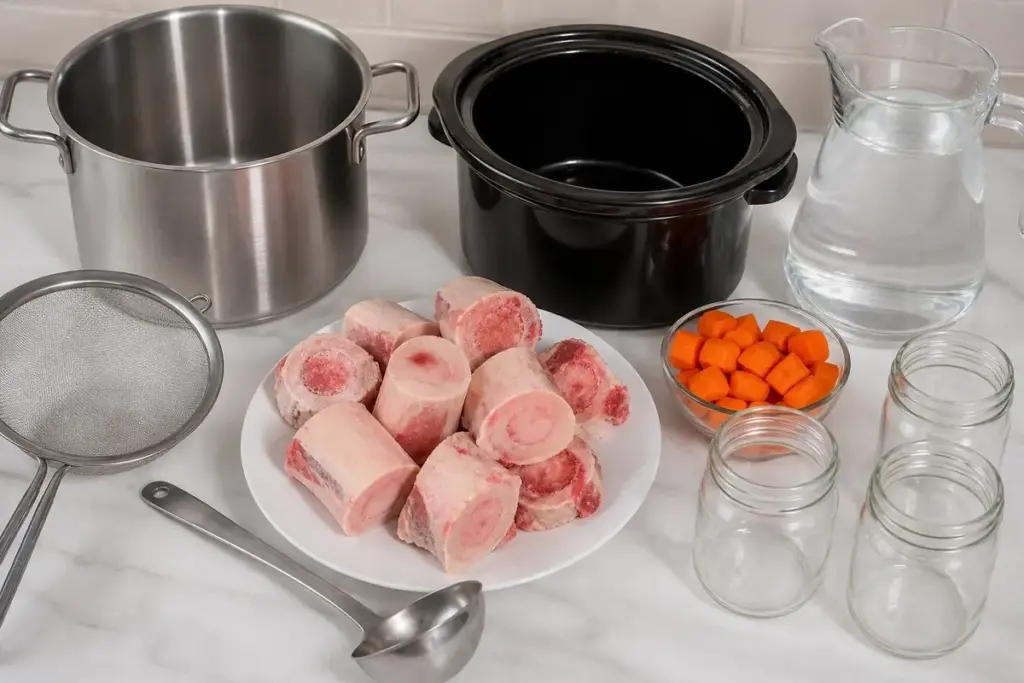
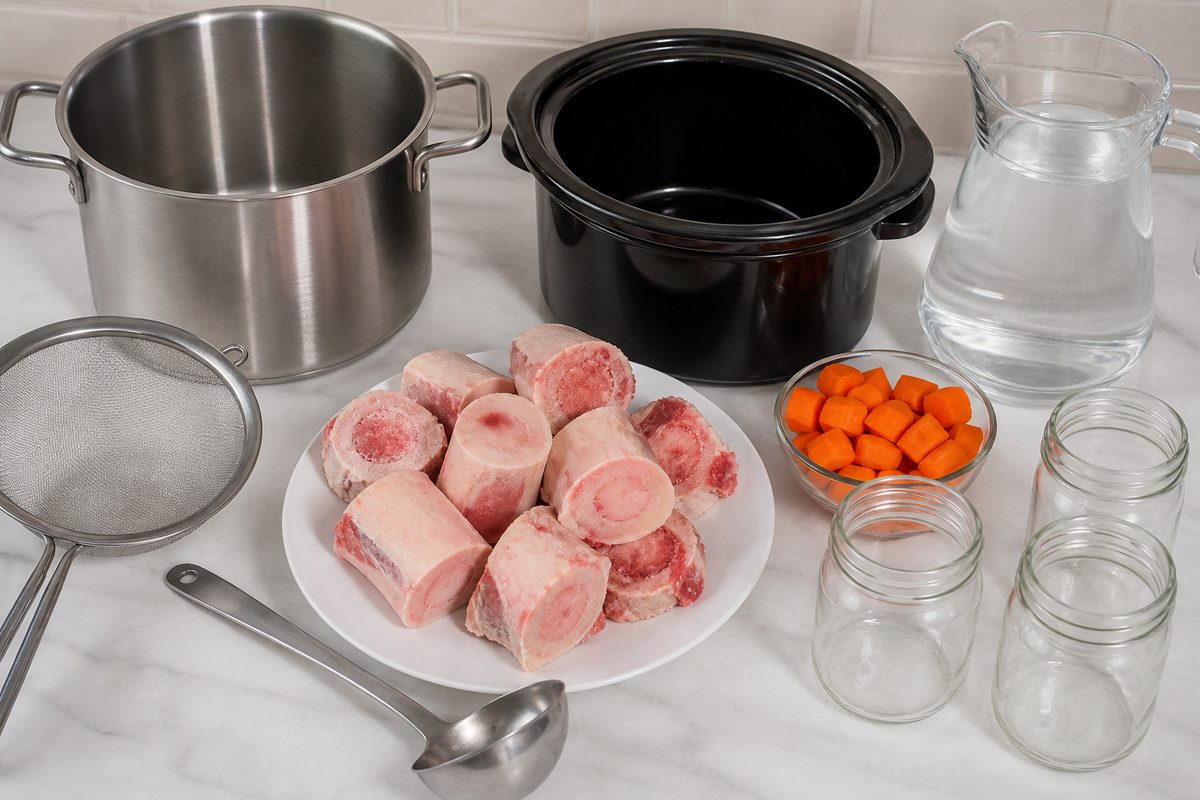
The key to preparing a safe homemade bone broth lies in keeping the ingredient list intentionally brief. The only essential ingredients are plain animal bones and water. While human recipes often incorporate vegetables, herbs, and acids like vinegar to enhance flavor, these additions are entirely unnecessary for dogs. By maintaining a minimalist recipe, pet owners reduce the risk of introducing toxic substances or digestive irritants into their dog’s food.
The equipment required for this process includes a standard stockpot, a slow cooker, or a pressure cooker capable of maintaining a safe, controlled simmer. Additionally, owners will need heat-safe kitchen utensils, a fine mesh strainer, clean containers for transferring the liquid, and sufficient refrigerator space to facilitate rapid cooling. For those who feel uncertain about their ability to completely strain out every small bone fragment, choosing a commercially prepared, dog-specific broth is a much safer alternative.
Under no circumstances should onions, garlic, or chives be added to the pot. These ingredients belong to the Allium family and contain organosulfur compounds that cause oxidative damage to a dog’s red blood cells, potentially leading to a serious condition known as hemolytic anemia. This risk extends to dried powders, bouillon cubes, packaged stocks, and pre-mixed seasonings, which often contain hidden alliums and excessively high levels of sodium. This toxicity is why simply diluting grocery-store broth intended for humans is not a safe shortcut for pets. Even packages labeled "low sodium" can contain onion or garlic extracts masked under generic terms like "natural flavorings."
Furthermore, owners should avoid using leftover bones from human meals. Bones from rotisserie chickens, seasoned ribs, or holiday roasts are often saturated with salt, fat, onions, and garlic, making them entirely unsuitable for broth preparation. The process must begin with raw, plain bones to ensure complete control over the final product.
Safe food handling practices are also vital when working with raw bones and meat. Before cooking begins, owners should thoroughly wash their hands, sanitize all work surfaces and utensils, and take care to prevent cross-contamination with foods meant to be eaten raw. Pets must be kept out of the kitchen during preparation to prevent them from accidentally consuming raw bones or reaching hot liquids.
The Safe Preparation Process: From Simmer to Strain
Preparing bone broth for dogs is less about culinary artistry and more about systematic risk management. Veterinary guidelines from organizations like the American Kennel Club (AKC) emphasize that bland, simple preparations are the safest choice for canine digestive systems.
The process begins with a thorough inspection of the kitchen workspace and the starting ingredients. Owners must confirm that the bones are completely plain, fresh, and free from any pre-existing seasonings or sauces. Before applying heat, it is wise to set out the fine mesh strainer and clean storage containers. Planning the straining and cooling stages in advance prevents safety hazards that can occur when handling a heavy pot of boiling liquid.
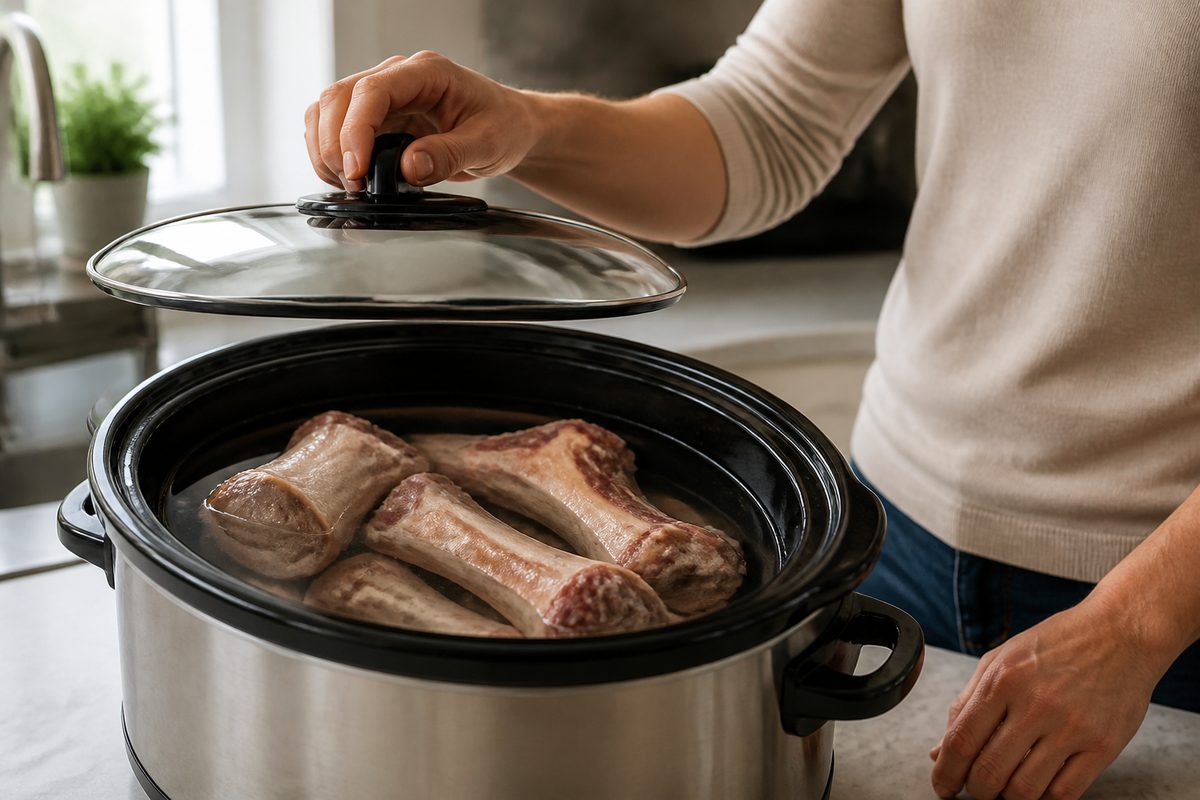
Next, place the bones into the cooking vessel and add enough water to cover them completely, adhering to the minimum and maximum fill lines of the specific appliance being used. No salt, bouillon, or seasoning should be added to the pot.
Once the vessel is prepared, initiate a gentle, controlled simmer. Avoid a rapid boil, which can cause excessive splashing and agitation. The cooking duration will depend on the size of the bones and the appliance used; however, safety is determined by clean handling and thorough straining rather than an excessively long cooking time. Throughout this phase, the cooking appliance must be supervised, and pets must be kept at a safe distance.
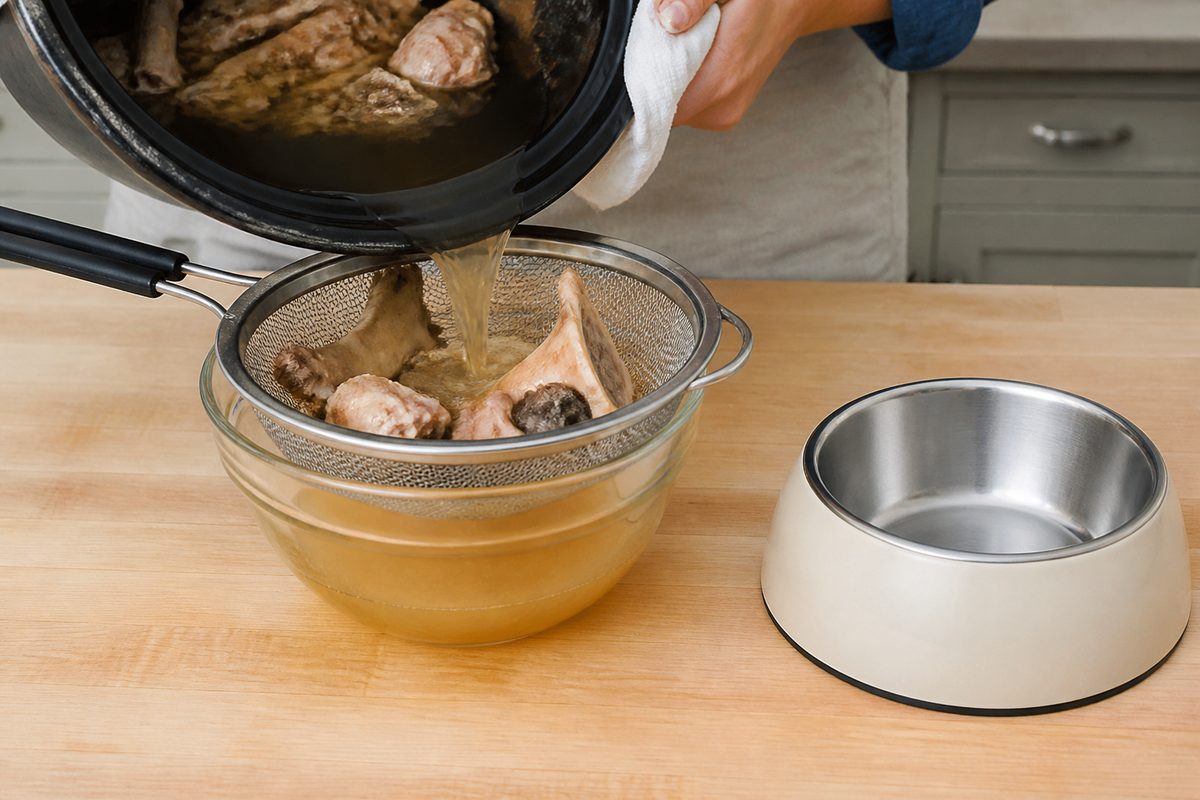
When the simmering phase is complete, the critical task of removing the bones begins. Using a sturdy kitchen utensil, lift the large bones out of the liquid and transfer them directly into a secure, pet-proof trash container. Cooked bones must never be left on countertops or placed in open bins where a dog might steal them. Simmering strips bones of their natural moisture and flexibility, making them highly brittle. If a dog consumes a cooked bone, it can easily splinter, leading to oral injuries, choking, or catastrophic perforations of the stomach or intestinal tract. Cooked bones have no safe secondary use and must be discarded immediately.
After removing the large bones, the liquid must be strained. Slowly pour the broth through a fine mesh strainer into a clean, heat-safe container. Working in small, manageable batches is much safer than attempting to pour a large, heavy pot all at once. Once the liquid has passed through, inspect both the strainer and the broth for any tiny bone splinters or sediment. If there is any uncertainty regarding the presence of debris, the liquid should be strained a second time through a clean, fine mesh.
The next priority is rapid cooling. Leaving a large volume of hot broth to sit at room temperature for hours allows the liquid to linger in the bacterial "danger zone," encouraging the growth of harmful pathogens. To prevent this, divide the hot broth into shallow, smaller containers to speed up heat dissipation, and place them in the refrigerator promptly.
Once the broth is thoroughly chilled, a firm, white layer of fat will typically solidify on the surface. Carefully skim this fat cap off and discard it. Removing this excess fat is a vital step, as high-fat treats can trigger acute pancreatitis, a painful and potentially life-threatening inflammatory condition of the pancreas. This precaution is especially important for breeds predisposed to pancreatitis or dogs on veterinarian-prescribed low-fat diets.
The final step is portioning the defatted broth. Dividing the batch into small, single-use containers, silicone molds, or ice cube trays prevents the need to repeatedly warm and cool the entire batch. Every portion should be clearly labeled with the preparation date. When introducing the broth to a dog’s diet, start with a very small amount and monitor the dog’s stool, appetite, and overall comfort over the following days.
Post-Preparation Care: Storage, Portioning, and Serving
Maintaining strict food hygiene practices remains essential after the cooking process is complete. Refrigerator storage containers should be kept tightly sealed, and owners should use clean utensils for every serving to prevent cross-contamination. Homemade bone broth should be treated with the same shelf-life expectations as fresh human food; any batch that develops an off odor, visible mold, or an unusual appearance must be discarded immediately.
For long-term storage, freezing is highly effective. When pouring broth into freezer-safe containers, leave adequate space at the top to allow for expansion as the liquid freezes. Frozen portions should always be thawed in the refrigerator rather than on the kitchen counter, where surface temperatures can quickly rise and encourage bacterial growth. Once thawed, the broth should not be refrozen.
When serving chilled broth, it can be warmed slightly to enhance its aroma, but it should never be served hot. Always test the temperature of the liquid on your wrist before adding it to your dog’s bowl to prevent thermal burns to the mouth and esophagus.
The amount of broth served should be carefully scaled to the size of the dog. A tiny toy breed may only require a single teaspoon mixed into their food, while a large-breed dog might easily tolerate a modest splash. Because homemade batches are not nutritionally standardized, there is no universal serving size. If a dog experiences loose stools, vomiting, skin itching, or a decreased appetite after consuming the broth, owners should stop serving it immediately and consult a veterinarian, as individual dogs can have unique sensitivities to otherwise safe ingredients.
A Comparative Analysis: Homemade versus Commercial Solutions
Deciding whether to prepare bone broth at home or purchase a commercial, dog-specific product involves weighing several practical trade-offs.
Homemade broth offers the highest level of ingredient control, giving owners complete transparency regarding the quality of the bones and water used. It can also be a highly economical option for households that already prepare fresh meats and have bones readily available. However, the primary cost of homemade broth is time. The process requires hours of supervised cooking, meticulous straining, rapid cooling, defatting, portioning, and extensive cleanup. It also places the entire responsibility of bone-fragment safety on the owner. Furthermore, the nutritional value, fat content, and caloric density of homemade batches will naturally vary from one pot to the next, making precise portion control difficult. Storage can also be a challenge, as large batches require significant refrigerator or freezer space, and traveling with liquid broth is highly inconvenient.
In contrast, commercial bone broths formulated specifically for dogs offer a highly convenient, predictable alternative. These products completely eliminate the need to handle raw meat or cooked bones at home, saving hours of labor and cleanup. Because commercial broths are manufactured under strict quality control standards, they offer consistent nutritional values, clear feeding guidelines, and predictable caloric content. Unopened commercial products are shelf-stable, making them easy to store without crowding the freezer, and they are exceptionally convenient for travel or boarding. The primary trade-off is cost, as premium, dog-specific commercial toppers are more expensive than utilizing leftover raw materials at home.
For many owners, commercial options like those offered by The Honest Kitchen represent an ideal balance of safety and convenience. The Honest Kitchen Instant Turkey Bone Broth with Turmeric, for example, is a dehydrated, powdered supplement made from turkey broth, turkey, pumpkin, parsley, and turmeric. Reconstituting this product is incredibly simple: the standard guideline is to mix one-half tablespoon of the dry powder with one-quarter cup of warm water for every 25 pounds of the dog’s body weight. Because formulation instructions can change, owners should always verify the exact ratios on the package they have in hand before preparing a serving.
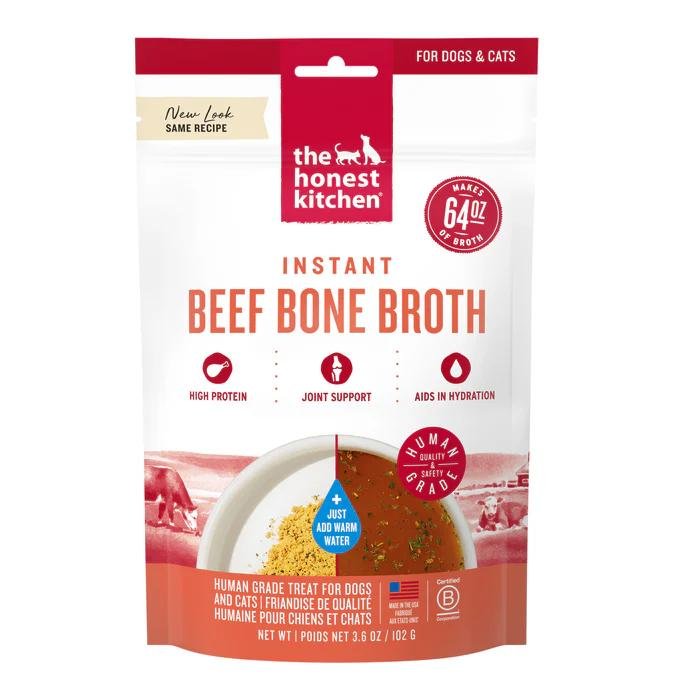
Similarly, The Honest Kitchen Instant Beef Bone Broth with Turmeric provides a beef-based alternative in the same convenient, instant powdered format. For owners who prefer a liquid option that requires no mixing at all, The Honest Kitchen Bone Broth Pour Overs with Chicken offers a ready-to-serve liquid topper that can be poured directly from the package.
These commercial options are highly beneficial for busy households, owners who travel frequently with their pets, or individuals who are uncomfortable handling raw bones and hot grease. However, even commercial products must be used mindfully. They are intended for intermittent or supplemental feeding only, and their calories must be factored into the dog’s daily intake. If a dog has a pre-existing medical condition, a sensitive stomach, or is on a therapeutic diet, owners should present the commercial product’s ingredient list to their veterinarian before introducing it.
Addressing Common Questions: Canine Bone Broth FAQs
Can dogs safely consume bone broth made with onions or garlic?
No. Onions, garlic, chives, and other members of the allium family contain toxic compounds that cause oxidative damage to canine red blood cells, which can lead to life-threatening hemolytic anemia. This danger applies to fresh ingredients as well as dehydrated powders, seasonings, and commercial human bouillons. Diluting a seasoned human broth does not make it safe for dogs; only broth prepared entirely without these ingredients should be served.
Is it safe to feed dogs the cooked bones leftover from making broth?
No, dogs should never eat cooked bones. The cooking process removes the natural moisture from bones, making them highly brittle and prone to splintering into sharp shards. If swallowed, these fragments can cause severe oral trauma, choking, esophageal tears, or life-threatening obstructions and perforations of the stomach and intestines. All bones must be carefully strained out of the broth and immediately discarded in a secure, pet-proof trash bin.
How long can homemade bone broth be safely stored in the refrigerator?
Because homemade broth contains no preservatives, its shelf life is relatively short. It should be cooled rapidly, stored in airtight containers, kept continuously refrigerated, and used within a few days. For longer preservation, the broth should be portioned into freezer-safe containers and frozen. Any broth that exhibits an unusual color, a sour smell, or signs of mold must be thrown away.
Can bone broth serve as a complete meal replacement for a dog?
No. Bone broth is a supplemental liquid and does not contain the balanced profile of essential proteins, amino acids, fatty acids, vitamins, and minerals required to sustain a dog’s health. It should only be used as an occasional meal topper or treat, and must never replace a diet labeled as complete and balanced for the dog’s specific life stage.
Is it safe to give a dog bone broth on a daily basis?
While many healthy dogs can tolerate a small daily portion of plain bone broth, it must be factored into their overall daily caloric limit to prevent obesity. For dogs with underlying health issues, such as kidney disease, heart disease, or a history of pancreatitis, daily use should be discussed with a veterinarian, as even plain broth contains naturally occurring sodium and trace fats that may not align with their medical needs.
When is a commercial instant or ready-to-pour broth preferred over homemade?
Commercial, dog-specific broths are highly beneficial when owners have limited time, want to avoid the mess and safety risks of handling and straining cooked bones, or need a portable option for travel. They are also ideal for small households where a large homemade batch would go to waste, or when precise, standardized caloric and nutritional information is required.
The Bottom Line
Whether prepared carefully at home or purchased as a convenient, dog-specific commercial product, bone broth can be a highly rewarding addition to a dog’s culinary routine. When prepared correctly—completely plain, thoroughly strained, and free of toxic alliums and excess sodium—it provides a safe way to enhance hydration, improve the palatability of dry food, and offer low-calorie mental enrichment.
However, owners must always keep the dog’s primary, complete-and-balanced diet at the center of the bowl. Bone broth is a supplemental luxury, not a nutritional foundation or a medical cure. By understanding its physical limitations, prioritizing strict kitchen safety, and selecting the preparation method that best fits their lifestyle, pet owners can safely enjoy the benefits of this popular topper.