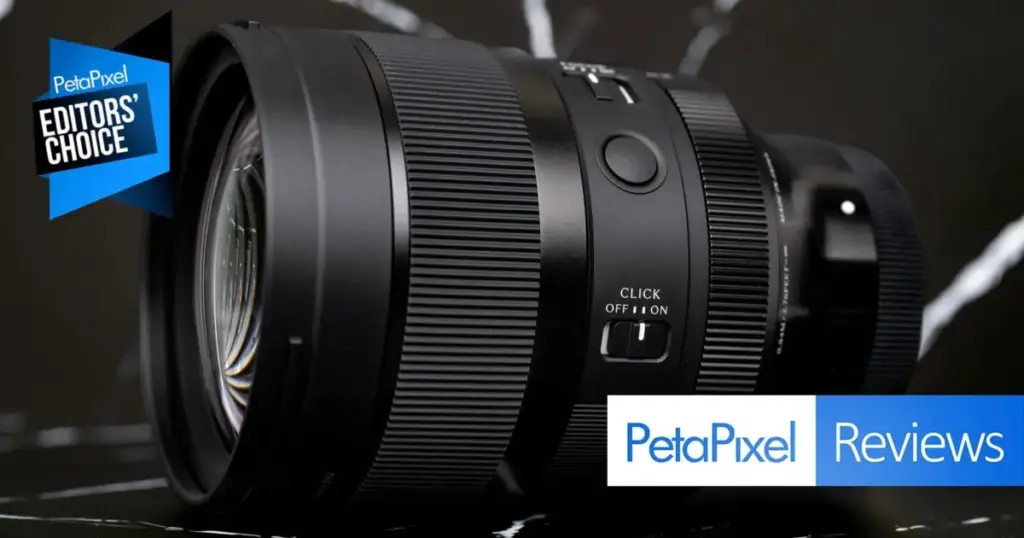
Sigma has never manufactured an 85mm f/1.2 lens—until now. While some might argue that this ultra-fast optic is arriving late to the party, the Japanese lens manufacturer appears to have saved its most ambitious optical design for last. The newly announced Sigma 85mm f/1.2 DG Art lens will be available in Sony E-mount and Leica L-mount configurations. Previously, photographers shooting on these mirrorless systems looking for an autofocus-free alternative were limited to manual-focus options, giving Sigma a unique opportunity to make a substantial impact in the marketplace.

The introduction of this lens represents a major competitive move. For portrait photographers who desire smooth, buttery bokeh and a dreamy flare profile, the new optic presents a spectacular choice. Crucially, it stands as the sole autofocus option currently available in this specific focal length and maximum aperture combination for the Sony E and Leica L ecosystems.
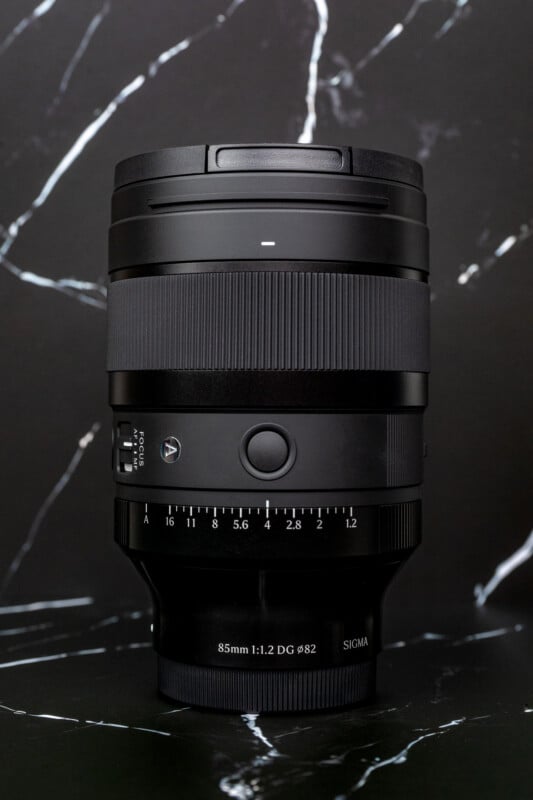
For years, optical critics and reviewers have debated the genuine necessity of an f/1.2 maximum aperture, particularly when high-performing f/1.4 alternatives are already widely available and capable of producing exceptional results. The law of diminishing returns often applies to ultra-fast glass, raising valid questions about why photographers should pay a higher price and endure the physical burden of carrying extra weight. Priced at $1,699, Sigma’s new flagship prime must deliver something extraordinary at its widest aperture while remaining manageable in the field to justify its cost and specifications.
Sigma 85mm f/1.2 DG Art Review: How It Feels
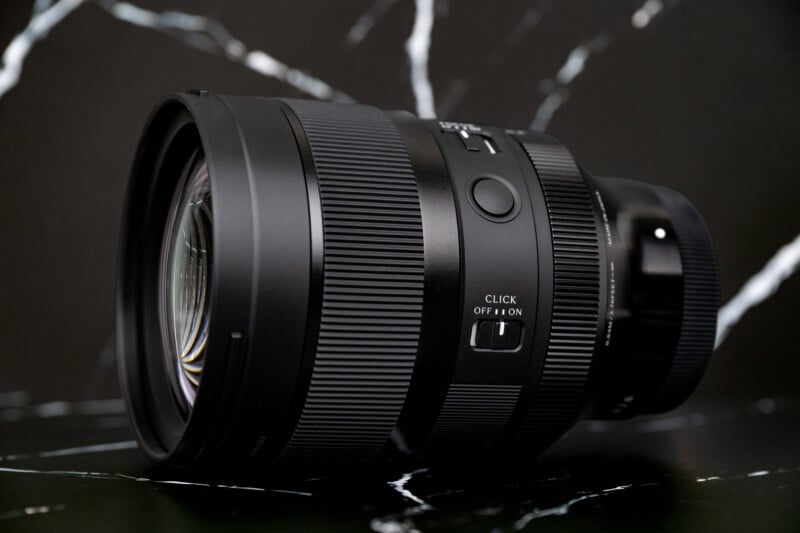
Competing 85mm f/1.2 lenses designed for rival systems by manufacturers like Canon and Nikon frequently push the scales to nearly 42 ounces, or roughly 1,200 grams. Given these heavy industry standards, it comes as a distinct surprise that Sigma has managed to engineer a comparable, full-frame autofocus optic that weighs a considerably lighter 32 ounces, or approximately 905 grams. This engineering achievement directly addresses the common complaint of excessive weight associated with ultra-fast prime lenses.
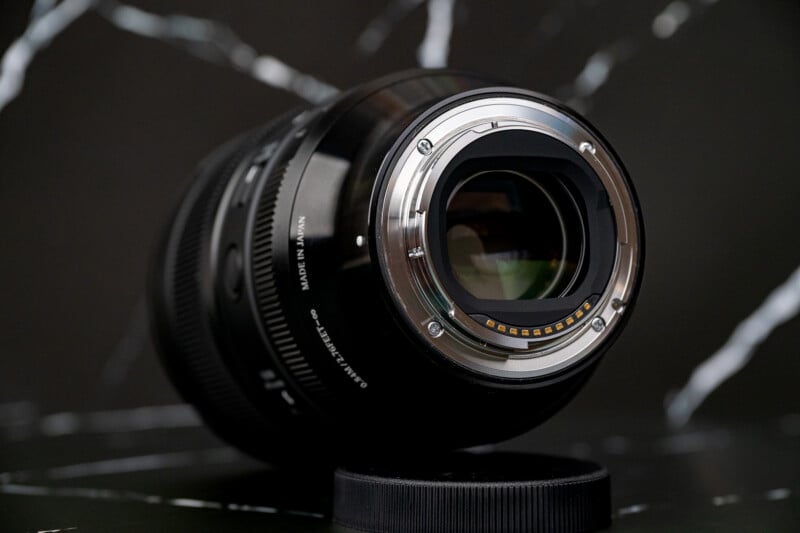
While it is undeniably heavier than a standard f/1.4 alternative, the lens does not feel overly burdensome during extended periods of handheld shooting. In fact, Sigma proudly markets the optic as the world’s lightest and smallest full-frame 85mm f/1.2 lens currently on the market.
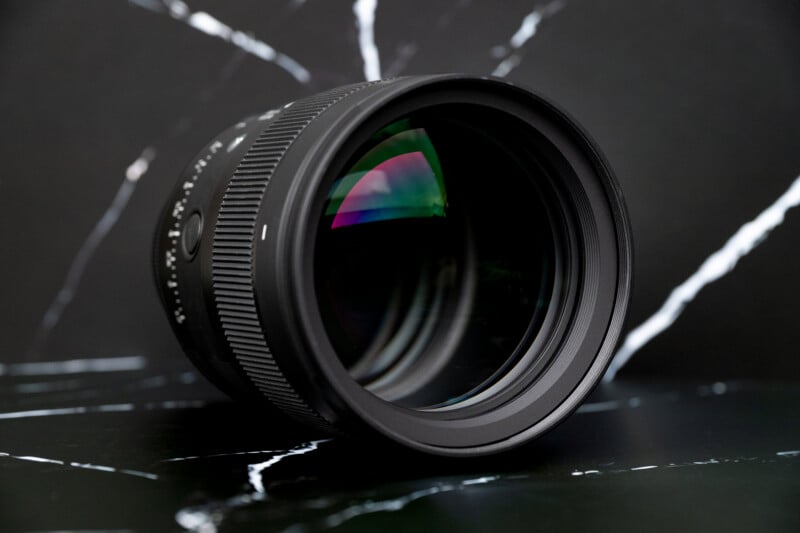
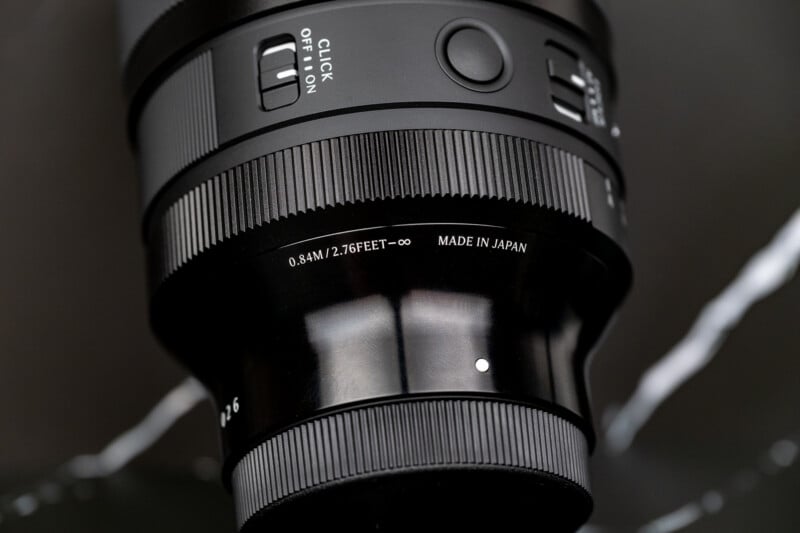
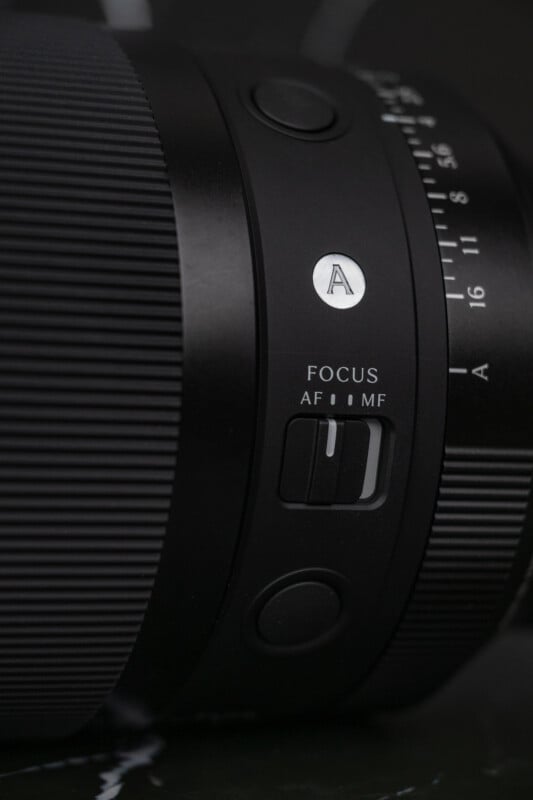
The front of the lens accommodates a large 82mm filter thread while maintaining a remarkably sleek and streamlined physical profile along the chassis. Despite housing a massive front element and incorporating a high-speed linear actuator motor—referred to by Sigma as an HLA motor—the design team successfully retained valuable physical controls. Users are provided with a dedicated, full-featured aperture ring that includes a convenient de-click switch, as well as a fully customizable button built directly into the barrel. In line with the company’s established standards for the Art series, the lens features a rugged, weather-sealed construction designed to withstand demanding professional environments.
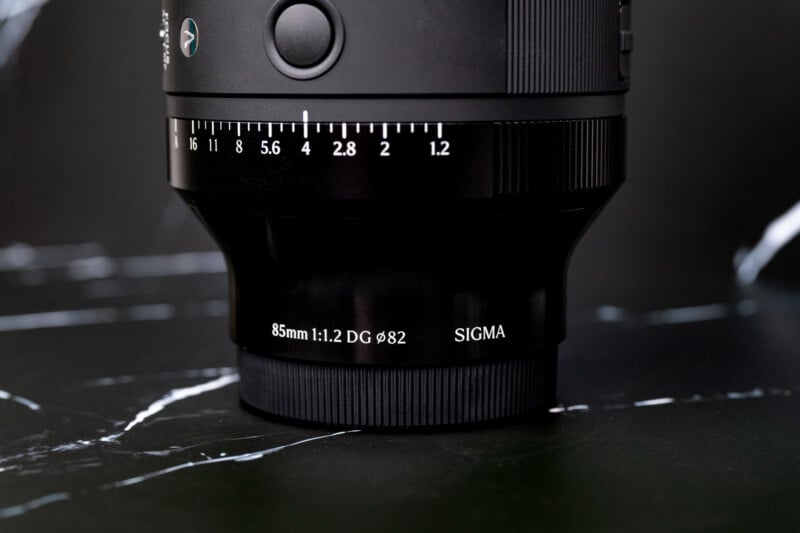
Somehow, Sigma managed to achieve a significant reduction in overall weight compared to industry peers without compromising on its comprehensive feature set or physical durability.
Sigma 85mm f/1.2 DG Art Review: How It Shoots

Autofocus performance on the new Sigma 85mm f/1.2 DG Art is exceptionally brisk. To manage optical aberrations and control performance, Sigma integrated a floating element assembly positioned between the high-speed focusing motors. This floating mechanism is specifically engineered to mitigate focus breathing, which is the noticeable shift in the field of view that occurs when adjusting focus. While a minimal degree of breathing remains present, the effect is remarkably subdued, making this lens an appealing tool for videographers who enjoy executing focus pulls combined with an intensely shallow depth of field.

Testing the lens against direct light sources reveals that the large front element produces a mild, scattered soft flare across the frame when shooting wide open at f/1.2. However, stopping the lens down even slightly causes this phenomenon to dissipate quickly. While ghosting is visible under harsh conditions, it remains well within acceptable parameters. Furthermore, a touch of veiled flare can often be desirable in a dedicated portrait lens, particularly when working with backlit subjects to impart a warm, glowing aesthetic.

Longitudinal chromatic aberration, or LoCA, frequently presents a troublesome challenge for ultra-fast lenses. Surprisingly, the Sigma manages this optical defect exceptionally well. While chromatic aberration is technically present, it is minor enough to be virtually negligible in real-world shooting scenarios.

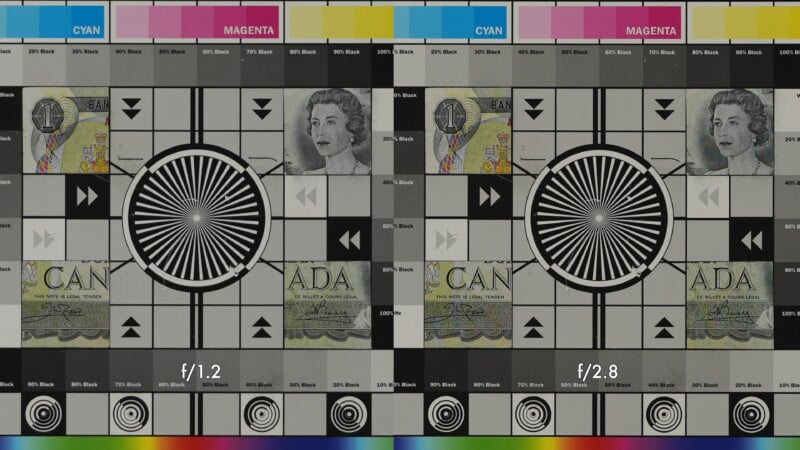
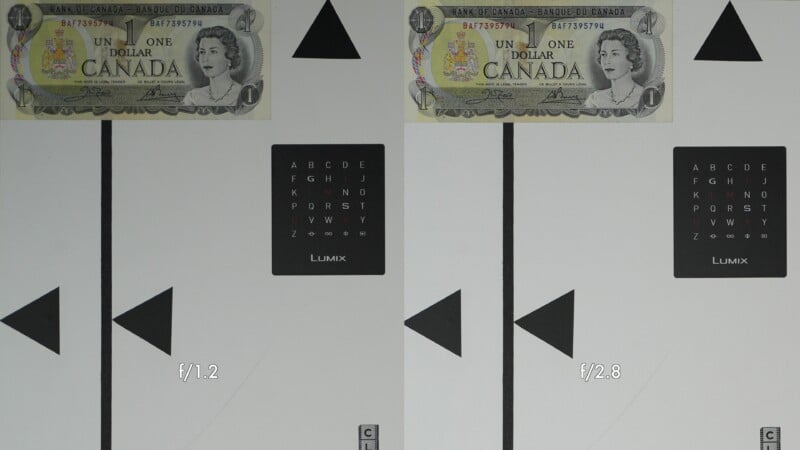
Beyond aberration control, the lens proves to be brilliantly sharp. When shooting wide open at f/1.2, images retain a wealth of fine detail, though the contrast exhibits a slightly dreamy quality that flatters portrait subjects. Stopping down by even a fraction results in an extraordinary leap in clarity. Corner performance is similarly impressive, exhibiting only modest vignetting and solid sharpness across the frame at its widest setting. When the center of the image is locked into precise focus, the corners match that sharpness remarkably well, leaving a strong overall impression during practical testing.

Bokeh quality is paramount for an optic of this class, as the primary motivation for purchasing an f/1.2 lens is achieving an ultra-shallow depth of field. Specular highlights render cleanly, completely free of distracting onion ring patterns. The swirly, cat’s-eye bokeh effect visible at wider apertures adds a distinct artistic character to images. Backgrounds dissolve smoothly into expansive washes of soft color, effortlessly drawing the viewer’s eye directly to the sharply focused subject.
Sigma 85mm f/1.2 DG Art Review: Sublime
Optically sublime, the Sigma 85mm f/1.2 DG Art excels at its widest aperture setting. For photographers searching for a dedicated portrait lens capable of delivering buttery bokeh and charming flare, it represents a spectacular acquisition. Because it currently stands as the sole autofocus-equipped 85mm f/1.2 lens available for Sony E-mount and Leica L-mount cameras, Sigma is uniquely positioned to capitalize on a distinct lack of direct competition. Achieving this performance in a lightweight, highly portable design while maintaining a competitive price point of $1,699—cheaper than many existing f/1.4 alternatives—solidifies its value proposition.

Even so, prospective buyers should recognize that an ultra-fast prime remains a specialized tool. Photographers who do not regularly shoot at f/1.2 may ultimately find that a more compact f/1.4 lens serves as a more practical everyday purchase. Nevertheless, the engineering achievement of producing a lens of this caliber without breaking the bank or straining the photographer’s shoulder is undeniable.

Are There Alternatives?

No. There are literally no direct autofocus alternatives available in this focal length and aperture combination for these lens mounts.

Should You Buy It?

Yes. This is the only 85mm f/1.2 lens available for L-mount and E-mount systems, and it performs exceptionally well at what it is designed to do.