

This review is based on a screening timed to the New York Film Festival. Godzilla Minus Zero opens in theaters in Japan on November 3 and in North America on November 6.
Godzilla movies have long faced a foundational creative dilemma: What do you do after the initial thrill of a serious, grounded monster origin story? Can filmmakers successfully sustain the deep thematic underpinnings of that first high-stakes adventure while simultaneously escalating the visual ante with grander, more destructive giant monster action? How does a franchise offer probing, meaningful commentary about the real world—the exact quality that elevates the best entries of the genre—when skyscraper-sized reptiles are actively slugging it out in the streets MMA-style?
It is under these strict circumstances that Godzilla Minus Zero enters the cinematic ring. As the direct sequel to the widely praised Godzilla Minus One from three years ago—a picture that deeply explored notions of survivor’s guilt, stubborn hope in the face of absolute hopelessness, and the formation of found family—Minus Zero finds itself under immense pressure from the opening frame. Can returning writer-director Takashi Yamazaki wring even more emotional growth out of characters who have already been to hell and back, all while blowing things up on a grander scale? In a word, no.
The film takes place two years after the harrowing events of Minus One, with Ryunosuke Kamiki reprising his role as Kōichi Shikishima and Minami Hamabe returning as Noriko. As fans of the Oscar-winning previous movie will vividly remember, Kōichi is the former would-be kamikaze pilot from World War II who proved instrumental in defeating Godzilla the first time around. Now happily married to Noriko—the woman he took in and protected after the devastating American air raids on Tokyo—the pair have also adopted Akiko, the orphaned baby they cared for following that same historical catastrophe. Living together as a peaceful, tight-knit family, there is seemingly only one thing that can shatter this idyllic picture. Well, technically two things, because not only is Godzilla inevitably back, but a terrifying new monster has entered the scene as well.
Minus Zero opens with an unbroken sequence of sheer devastation as this new creature lays waste to countless helpless civilians fleeing through the streets. People scramble desperately to avoid both the falling rubble of crumbling buildings and the devastating lightning breath erupting from the monster’s mouth. As fans have already deduced from the film’s promotional marketing, this newcomer is none other than Ghidorah, widely known as King Ghidorah in the broader Toho mythology and traditionally the ultimate archnemesis of the titular giant lizard. Historically referred to in various lore as "Monster Zero," the creature’s inclusion neatly explains the thematic and literal naming convention of this new sequel.
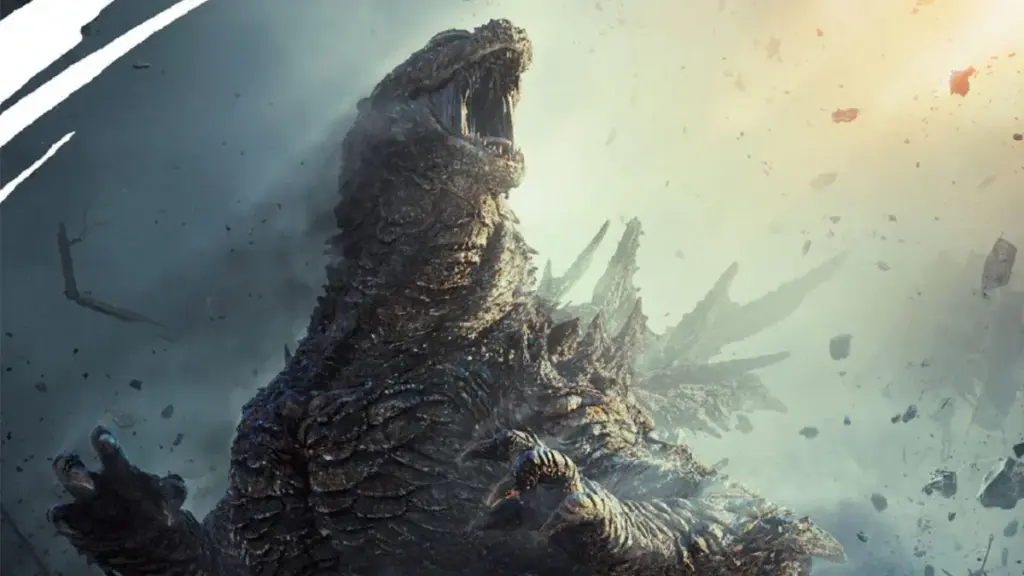
These scenes of destruction and terror are breathtaking. Yamazaki and his dedicated team of visual effects maestros once again manage to prevent their digital creatures from feeling like generic CGI monstrosities. Instead, Ghidorah—and Godzilla when he eventually re-enters the fray—appear as tangible, terrifyingly real forces of nature. They are humongous, slow-moving, heavy, reptile-like titans, and all the more horrifying for it. Ghidorah also sharply distinguishes himself from Godzilla through his chilling, herky-jerky, almost cat-like mannerisms and movements.
As soon as that first-round bell rings, the movie proves its visual effects bona fides to absolutely no one’s surprise. Yet it simultaneously confirms a hard cinematic truth: a Godzilla Part 2 inevitably means a multi-monster mash. None of this is to suggest there is anything inherently wrong with a movie where Godzilla has to take drastic measures, such as tearing his own arm off because his foe’s teeth are locked too tightly into his flesh. Audiences universally love monster-on-monster action, but there is no denying that the more of a crowded mashup a monster movie becomes—whether of the Toho, Universal, or science-fiction variety—the more it risks losing its sharp dramatic edge. Human characters and their personal emotional baggage inevitably run the risk of looking puny and insignificant in the face of these god-like entities.
Remember what Humphrey Bogart famously stated in Casablanca: "It doesn’t take much to see that the problems of three little people don’t amount to a hill of beans in this crazy world." While quoting classic Hollywood cinema in a Godzilla review might seem unconventional, it cuts straight to the core issue plaguing Minus Zero. The travails of Kōichi, Noriko, and little Akiko simply pale when weighed against the apocalyptic scope of destruction that Godzilla and his new rival are capable of unleashing. Whereas the first film framed its massive urban destruction directly through the intimate lens of the trio’s psychological trauma—tied specifically to their wartime experiences—that deep resonance is largely missing here.
In fact, the most compelling character in Minus Zero is arguably the most underserved by the script. Kanji Murakami, played brilliantly by Min Tanaka, is a veteran scientist whose research and work prove vital to battling the monsters this time around. He is also fundamentally warped, with Tanaka anchoring a standout scene that, while too spoilery to detail here, serves as an undeniable narrative highlight of the film. Much like Kōichi, Noriko, and virtually every other character in the narrative, the war irrevocably shattered his life. He remains locked in a bitter struggle to cope with that grim reality while simultaneously racing to prevent a pair of living atomic bombs from erasing what is left of humankind.
Speaking of iconic imagery, a much-ballyhooed sequence first teased in the trailer last spring involving Godzilla and the Statue of Liberty is certainly a sight to behold. Toho has requested that reviewers withhold the specific details of this particular sequence, but suffice it to say that it is both everything audiences have imagined and theorized about, while subverting expectations in clever ways. The moment ties directly back to Murakami’s character during one of his darkest, most complex moments, making it one of the film’s most memorable instances of Godzilla interacting directly with human infrastructure and history.
Yet that spectacle brings back the persistent feeling that bubbled up throughout the viewing experience. Even as Godzilla stomps through a gritty, atmospheric landscape reminiscent of a classic noir thriller, the emotional roots of the scene are tethered almost entirely to Tanaka’s Murakami. Unfortunately, the character’s true motivations and how they are ultimately resolved in the narrative play out more like an afterthought than the emotional or thematic core of Minus Zero, causing the film to suffer for it.
If there is a central philosophical theme at work here, it is the bleak realization that no matter how hard humanity tries, our species cannot outrun its own historical mistakes. We are doomed to repeat them over and over again, despite the heroic efforts of the best among us. Minus One concluded with a lingering tease regarding Noriko’s fate; while she miraculously survived the initial Godzilla blast, she bore a mysterious, dark scar on her neck. It comes as little surprise in Minus Zero that this mark was no ordinary wound and that Noriko has become a vital player in the ongoing geopolitical and biological fight against the titans. Yet she and Kōichi alike are ultimately treated as pawns in a grander global chess match orchestrated by world powers. The regular citizens on the ground bear the brunt of the generational trauma, while the institutional powers that be remain utterly indifferent.
By the final act, the destination is clear, which is entirely acceptable. Giant monsters must brawl. Much like Minus One, the period setting of this film—stretching into the late 1940s—lends an incredible texturized luster to the visual effects and action choreography. Watching Kōichi step back into the pilot’s seat of era-appropriate fighter planes is thrilling, and the inventive counter-strategies devised by the returning Kenji Noda (Hidetaka Yoshioka), now leading the newly formed "Large-Scale Disaster Response Bureau," are satisfyingly methodical in their attempts to slow down Godzilla and his adversary.
Verdict
Godzilla Minus Zero successfully returns to the grim post-war world established in Godzilla Minus One, expanding Toho’s premier franchise star into the realm of multi-monster warfare. By introducing Ghidorah into the narrative, writer-director Takashi Yamazaki scales up the carnage, delivering plenty of visually stunning and satisfying sequences of giant-monster destruction before even reaching the climactic clash between Godzilla and his ultimate archnemesis. Where the film stumbles is in maintaining the rich, intimate character arcs established in the predecessor, leaving the human cast feeling somewhat flattened by comparison. The result is a motion picture that utterly delivers on the kaiju action front, even if it lacks the profound emotional resonance of the film that preceded it.