
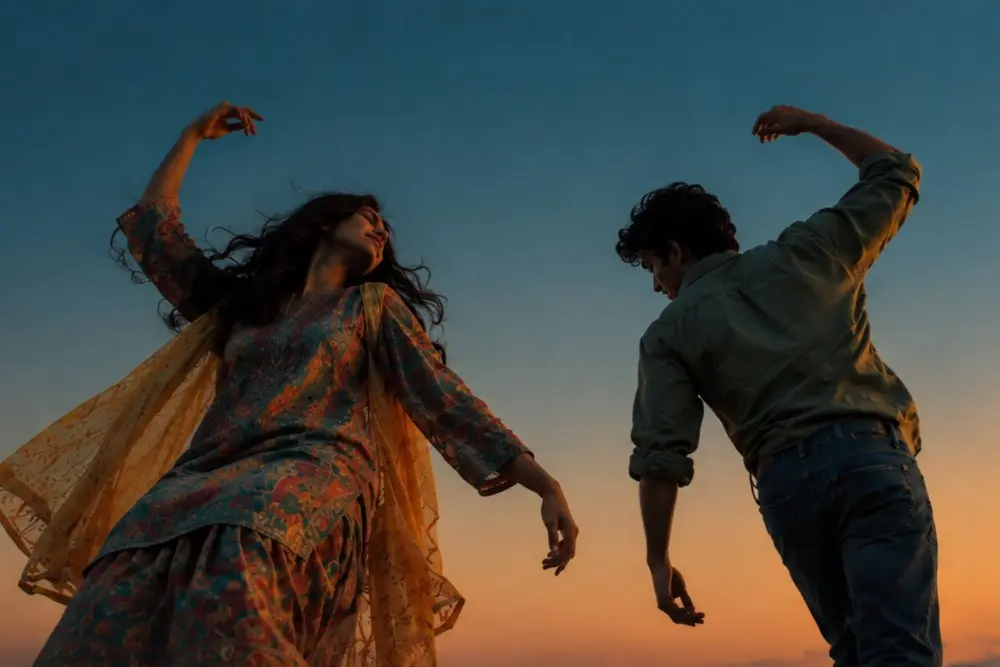
The complex tension between leaving Pakistan and remaining rooted in its soil serves as the beating heart of “Dancers,” a striking new coming-of-age feature film from writer-director Eshah Shakeel. Set in a Punjab town situated near Lahore, the narrative follows two young individuals who forge a profound bond through a series of clandestine dance lessons, navigating personal turmoil against a backdrop of shifting landscapes and societal pressures.
The ambitious project has now been selected as part of the prestigious Asian Project Market, a prominent platform running within the Asian Contents & Film Market at the Busan International Film Festival. This milestone arrives as the creative team secures key financing, locks its final script, and positions itself to court international co-producers, sales agents, and festival partners on the global stage.
At the center of the story are two contrasting protagonists grappling with the realities of contemporary youth in Pakistan. Paras harbors an unwavering ambition to escape the country, desperate for a future beyond its borders. Meanwhile, Ramza is still trying to define her own identity while confronting the heavy burden of a childhood-arranged marriage.
Their personal crossroads unfold against a town physically and socially fractured by the construction of a new road. This infrastructure project acts as a powerful dividing line in the community, pitting those who welcome modernization and economic change against traditionalists who view the development as an aggressive assault on generational heritage and the way things have always been.
For Shakeel, the emotional core of the film draws deeply from personal history. The filmmaker took up both acting and dancing in secret because her family strictly forbade such pursuits. Yet, rather than projecting her own exact journey onto the screen, she focused on granting her characters autonomy. When Paras and Ramza face their defining moments, they chart their own paths—choices that the director may not personally endorse in every aspect, but which remain entirely authentic to who the characters are. As Shakeel notes, their lives continue to resonate even after the final credits roll.
The genesis of “Dancers” is also tied to Shakeel’s ongoing observations of her own social circle. In recent years, she has watched numerous friends and relatives pack their bags and move abroad. Whenever she contemplates following them, the compulsion to tell stories rooted in her homeland anchors her in place. She describes this sensation as a complicated limbo defined by the perceived necessity of leaving contrasted against an intense emotional bond with her cultural roots. To unpack this internal dynamic plaguing Pakistani youth, she split the conflict into two opposing forces: one character dreaming of departure and another pulled inextricably toward home.
True to its title, movement is central to the film’s narrative language. Trained extensively in contemporary dance, Shakeel plans to seamlessly blend that modern discipline with traditional Punjabi dance forms. Through movement, Paras and Ramza will be able to articulate the complex emotions, desires, and frustrations that they are forced to keep hidden in their everyday lives.
The journey to bring “Dancers” to the screen has involved rigorous international development. The project was originally nurtured through Film Independent’s highly selective Global Media Makers program, emerging as one of only 20 scripts chosen from a massive pool of 600 applications.
Haris Khan, a producer on the film and co-founder of the Pakistani production outfit Last Shot alongside Shakeel, confirms that the final draft of the script and an estimated budget of roughly $443,000 are now completely locked. Crucially, U.K.-based Pink Llama Films has committed financial backing to the venture. With the core crew already fully assembled and the initial round of auditions for the two lead roles successfully completed, the production is stepping into its next major phase.
Khan emphasizes that the team is arriving at the Busan International Film Festival with genuine momentum and a clear collective push forward.
Bolstering the production is an impressive roster of experienced industry talent. Iram Parveen Bilal, whose notable directorial credits include “Josh,” “I’ll Meet You There,” and “Wakhri,” has officially boarded the project as a producer. Meanwhile, BBC veteran Waseem Mahmood—co-founder of Pink Llama—serves as executive producer, having remained attached to Shakeel’s vision since before the Film Independent fellowship.
The behind-the-scenes creative department is equally robust. Cinematographer Haider Bhatti brings his visual expertise to the project, alongside sound recordist Ashar Khalid, whose previous credits include the acclaimed feature “In Flames.” Additionally, the production features stylist and choreographer Gulshan Majeed, widely recognized for his work on the groundbreaking Pakistani film “Joyland.”
With the project now taking center stage at the Asian Project Market, the leadership team’s primary objectives in Busan include securing additional strategic investors, establishing co-production alliances, partnering with major festivals, and locking down international sales agents.
According to Bilal, the comprehensive financing strategy has been designed to leverage a mix of international grants and funds, private equity, and in-kind support. Co-producers contributing both hard and soft money will be integral to the model. The core focus in Busan, Bilal explains, is to onboard co-producers who can unlock not only new production capabilities but also vital pathways to global distribution markets.
“Dancers” represents a continuation of Last Shot’s overarching mission. The company’s previous portfolio includes the web series “Dheet Haddi” and the short film “Explicit,” both of which were written and directed by Shakeel. As a company, Last Shot deliberately centers its slate on compelling narratives crafted by and about women.
Khan articulates the company’s broader ambitions, noting that their goal extends far beyond making a single successful film. Instead, they aim to build a resilient production company capable of consistently delivering female-centric, socially urgent South Asian stories to a worldwide audience.
The arrival of “Dancers” on the international market happens against a broader backdrop of growing global interest in Pakistani independent cinema. Over recent years, critically acclaimed features like “Joyland” and “In Flames” have successfully drawn unprecedented international attention to the country’s cinematic output, heightening the curiosity of film festivals, press members, programmers, and grant-giving bodies alike.
Despite this burgeoning visibility, experienced producers like Bilal maintain a pragmatic outlook regarding the realities of international film financing. She notes that the fundamental conversation with financiers and sales companies has not drastically shifted, as commercial entities are—and likely always will be—inherently risk-averse in their operational approach. Ultimately, she observes, those who are genuinely willing to bet on independent cinema are the ones who supported it even during the periods when the rest of the world was not paying attention to Pakistan.