





For nearly a decade and a half, the financial world operated under a predictable baseline. Interest rates glided along at historic lows, creating an economic environment that most modern investors and home buyers came to view as permanent. That era came to an abrupt halt as central bank policies shifted, pushing interest rates to two-decade highs and forcing consumers to re-evaluate their strategies regarding savings, investments, and real estate.
While financial news outlets have tracked every incremental increase with play-by-play urgency, the central question for everyday participants often gets overlooked: Beyond the headlines, what practical steps should people take in response to this new reality?

To understand the current environment, it helps to examine how the economy arrived at this juncture. Interest rates function effectively as an economic gas pedal controlled by Federal Reserve Chairman Jerome Powell and his colleagues. For most of the past two decades, monetary policy kept that pedal pressed firmly down, flooding the financial system with low-cost capital. This prolonged period of ultra-low rates fueled significant growth. Mortgages became highly accessible, driving intense demand for both existing homes and new residential construction. Businesses capitalized on cheap borrowing costs to fund expansion, rent office space, build factories, and hire workers.
This extended period of liquidity supported broad economic prosperity, innovation, and expansion. However, the prolonged monetary stimulus eventually created an imbalance where excess capital chased a limited supply of goods, particularly within the housing sector. This dynamic fueled a surge in inflation, prompting the Federal Reserve to shift gears and ease up on the economic gas pedal.
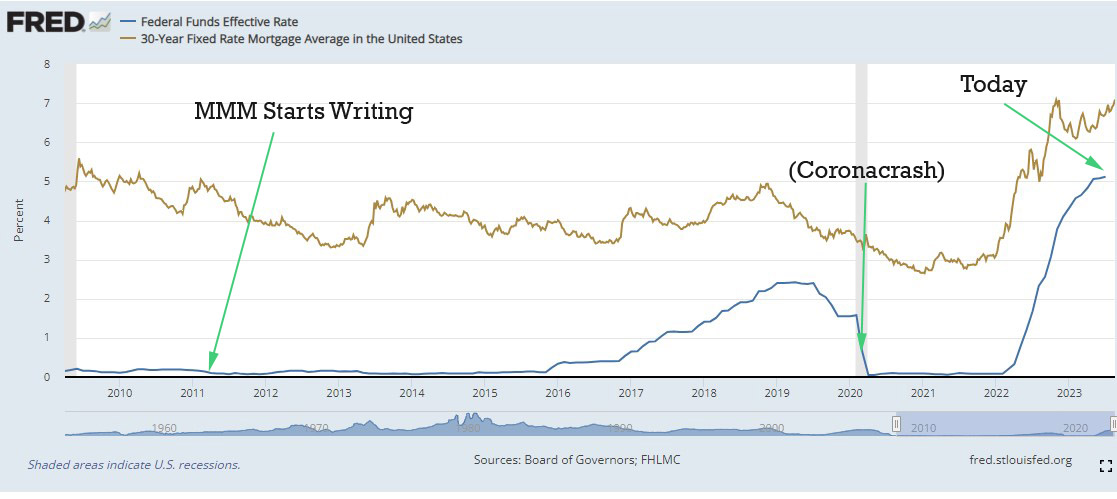
As borrowing costs climbed, the broader economy began to adjust. Mortgages became markedly more expensive, prompting many prospective home buyers to delay their purchases. Corporations faced with higher expenses for debt issuance scaled back capital projects and slowed hiring initiatives, resulting in significant workforce reductions at major technology firms like Meta and Amazon. The financial sector also experienced localized stress, highlighted by the mid-sized banking turbulence that stirred concerns about broader systemic risks.
Public perception of these shifts has often been polarized. Political commentators from various perspectives frequently characterize the current climate as a period of economic hardship. Yet these characterizations contrast sharply with underlying labor market indicators, which have shown unemployment rates dropping to historic lows, reflecting an economy that remains fundamentally robust rather than entering a severe downturn. Rather than a systemic crisis, the cooling period represents a necessary recalibration following years of rapid economic stimulus.

For investors questioning whether to withdraw funds from the stock market due to potential volatility, historical patterns offer a clear perspective. Equity markets have consistently trended upward over long horizons despite periodic, unpredictable pullbacks. Attempting to time the market by moving in and out based on short-term rate shifts rarely succeeds. Recent market movements have left major indices slightly below their prior peaks, offering a modest discount for regular contributors building long-term portfolios through index funds.
The resurgence of high-yield savings accounts and money market funds offering returns near five percent introduces a new consideration for savers. When interest rates hovered near zero, equities offered an unambiguous advantage. Today, higher cash yields provide a stable and attractive return, prompting investors to weigh the certainty of fixed income against the long-term growth potential of equities. While cash equivalents offer immediate security, equities continue to represent a primary vehicle for outpacing inflation over extended periods.

For the housing market, the impact of higher interest rates has been profound. Financing a home purchase with a mortgage has grown significantly more costly, rental property investments face compressed profit margins, and homeowners with locked-in low mortgage rates face a strong disincentive to sell. The shift from borrowing rates near three percent to rates exceeding seven percent dramatically alters the monthly math for average buyers making standard down payments.
Despite the immediate affordability challenges, higher interest rates serve their intended economic function by cooling excessive demand, easing competitive pressures in real estate, and encouraging price stabilization or correction in overvalued regions. Over the long term, housing prices remain tied to fundamental supply and demand dynamics, influenced by construction costs and regulatory policies. While technological advancements and modern construction techniques have helped streamline building processes, regulatory hurdles, zoning restrictions, and local approval requirements continue to constrain inventory in many markets, keeping structural housing shortages intact.

Looking ahead, the trajectory of interest rates remains tied to broader economic indicators, including inflation trends and employment data. The current inverted yield curve, where short-term yields exceed long-term yields, suggests that bond market participants anticipate potential economic softening and subsequent rate cuts in the medium term. Historically, such yield curve inversions have often preceded economic recessions, though timing remains uncertain.
Ultimately, sharp shifts in macroeconomic policy highlight the value of maintaining financial resilience. Individuals who rely on cash reserves rather than debt-dependent financing retain the flexibility to navigate changing market conditions without vulnerability to fluctuating borrowing costs. By focusing on fundamental principles of earning, saving, and disciplined financial management, individuals can effectively minimize the impact of broader economic cycles and interest rate fluctuations.