

The stock market has once again proved its capacity to surprise. As valuations reach historic highs driven by the current frenzy surrounding artificial intelligence, investors find themselves grappling with a familiar anxiety. When the market crashes, retirement portfolios shrink; when it climbs to record levels, the prevailing worry is that an even larger correction is inevitable. This boom, built largely on the momentum of artificial intelligence, has amplified concerns that the market is heading toward a much more severe iteration of the early 2000s dot-com bust.

For those who have managed to tune out the financial drama and focus on daily life, the skepticism surrounding AI may seem abstract. However, the overarching narrative is familiar to long-term observers of economic cycles. Investors worry that while artificial intelligence is unquestionably a major technological leap, the mania surrounding its adoption is happening too fast, setting the stage for a sharp downturn.

This boom-and-bust cycle is a familiar subject for veterans of past tech waves. Early internet booms helped fuel the early career trajectories of many individuals who later achieved financial independence, even if the subsequent crashes nearly derailed employment and stability. As questions mount regarding the sustainability of the current investment cycle, financial commentators and long-term retirees are increasingly addressing how modern market anxieties mirror those of past decades.

Reflecting on past financial panics provides substantial context for the current climate. Looking back over a twenty-year horizon reveals how cyclical concerns tend to repeat themselves with different actors and technologies. Two decades ago, in the mid-2000s, public anxiety centered on a different set of geopolitical and economic threats. Leaders like George W. Bush, Saddam Hussein, and Osama bin Laden dominated the news cycle alongside ongoing conflicts in the Middle East. Economic worries at the time focused heavily on the national debt, inflation, and an overvalued stock market driven by a dangerous housing bubble rather than an artificial intelligence boom. Concerns about job security back then pointed toward outsourcing to emerging economies like India and China rather than automation. There was even widespread panic regarding "peak oil," with prominent theories suggesting that fossil fuel consumption would inevitably outstrip supply and lead to global economic collapse.

Instead of the predicted permanent scarcity, the global economy adapted significantly over the next twenty years. Even the Great Financial Crisis—triggered by irrational exuberance in housing prices and excessive financial leverage—proved to be a temporary, albeit severe, setback in the grand arc of long-term market growth. Over a multi-decade period, broader global indicators improved dramatically. Extreme poverty rates dropped significantly worldwide, infant mortality rates were drastically reduced, and clean energy alternatives such as solar power saw exponential drops in cost, making renewable energy a primary contributor to new power generation. Pure electric vehicle adoption similarly transitioned from a theoretical concept to a substantial share of global automotive sales.

These historical shifts highlight a fundamental truth about economic systems: true prosperity stems from productivity rather than temporary fluctuations in financial indexes or computerized valuations. Financial markets and economic frameworks are human inventions. When structural systems experience severe corrections, society routinely adapts, restructures, and continues the underlying work of invention and production. The core drivers of economic growth—human labor, technological tools, and rising efficiency—remain intact regardless of transient market bubbles.

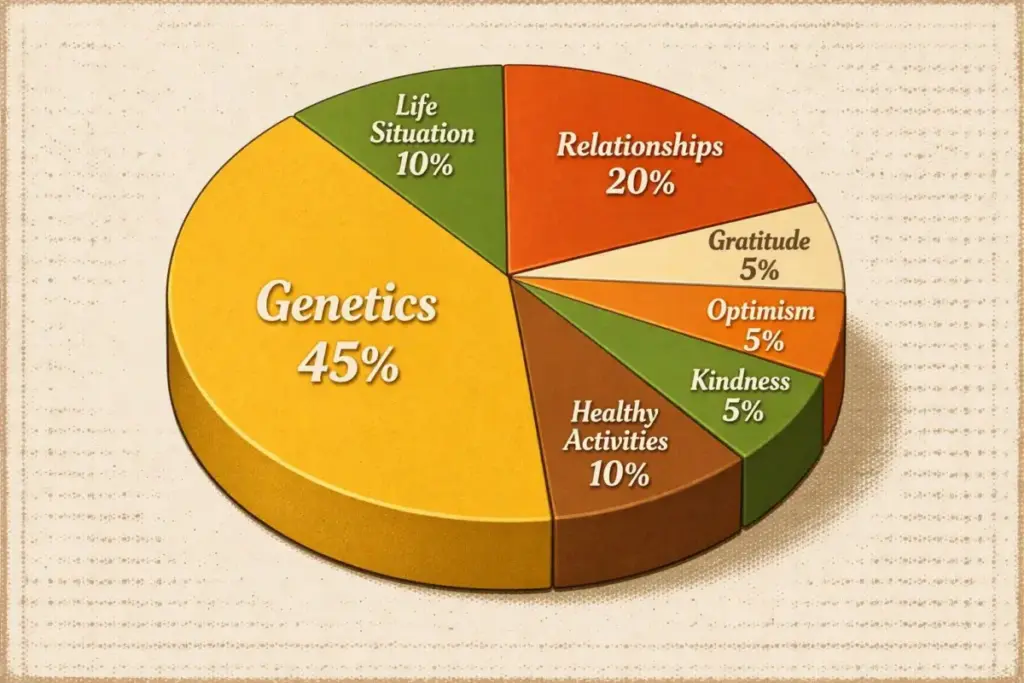
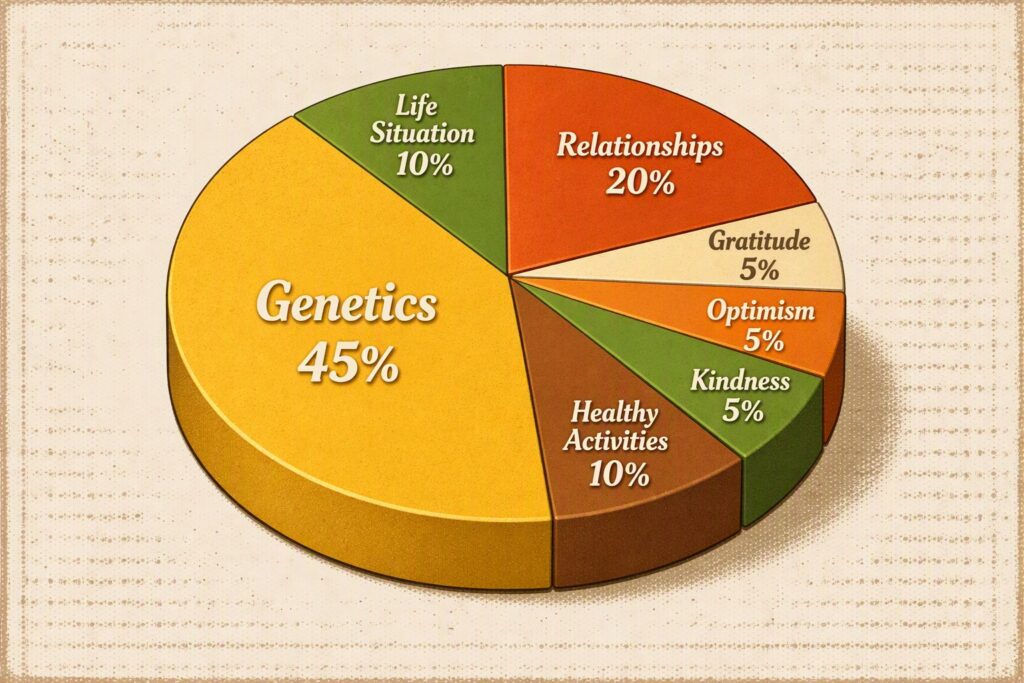
Beyond economic metrics, human well-being relies heavily on factors entirely divorced from portfolio balances. Standard psychological and sociological research indicates that once a society surpasses basic thresholds of material comfort, incremental wealth yields diminishing returns in terms of overall happiness. Long-term fulfillment is far more closely tied to genetics, strong interpersonal relationships, acts of community kindness, daily physical activity, and a philosophical outlook rooted in optimism and gratitude.

Despite these reassuring historical realities, background anxiety remains a persistent feature of modern life. Psychologists note that human beings are fundamentally wired as danger-detection machines. Evolutionary pressures equipped early humans with a constant state of alertness to protect against immediate threats like predators, disease, and scarcity. However, in modern society, once those foundational physical threats are mitigated, the brain’s detection machinery does not simply turn off. Instead, it shifts the goalposts, finding new subjects for worry, ranging from geopolitical instability and career obsolescence to tax strategies and neighborhood aesthetics.
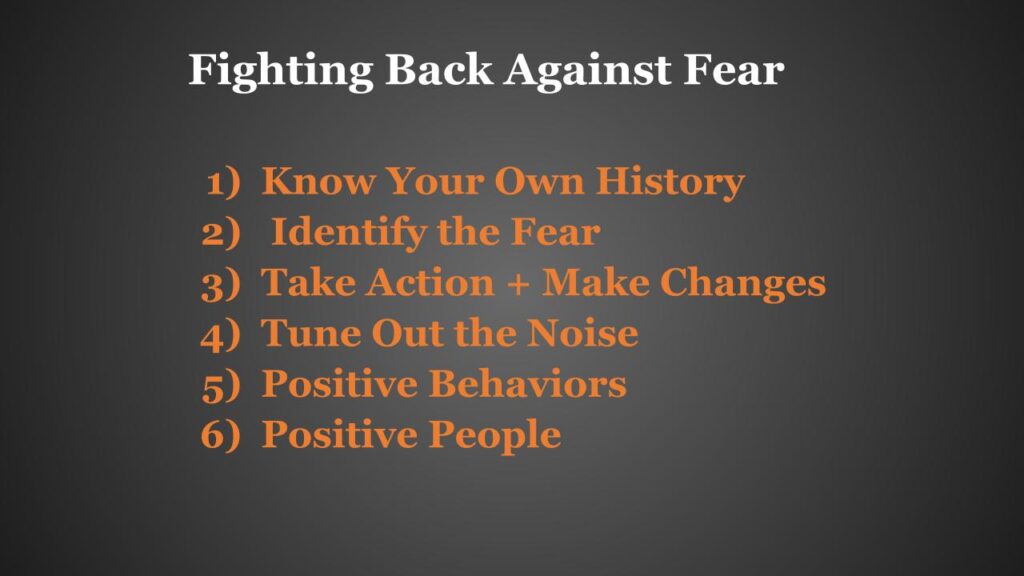
This pervasive anxiety can be actively managed through self-awareness and rational evaluation. Understanding one’s personal history, including childhood environments or past financial trauma, often clarifies the root causes of modern scarcity mindsets. Identifying specific fears by playing out worst-case scenarios typically reveals that the anticipated disasters are far less catastrophic in reality than they appear in imagination. Taking deliberate action helps bridge the gap between the unfamiliar and the manageable, building the psychological resilience necessary to adapt to changing environments.

Furthermore, managing one’s mental diet by reducing consumption of sensationalized daily news helps mitigate unnecessary panic. Media ecosystems inherently prioritize the most alarming stories of the day, which can distort perceptions of actual risk. Refocusing energy away from passive worry and toward positive, productive behaviors—such as physical activity, community engagement, and continuous learning—aligns daily habits with how human beings evolved to function.
Approaching new technological revolutions with an experimental mindset offers another effective antidote to fear. Rather than viewing artificial intelligence purely as an existential threat or a vector for financial ruin, it can be evaluated objectively as a profound technological shift. Viewed through the lens of productivity, artificial intelligence functions essentially as an advanced cognitive tool capable of dramatically increasing efficiency across numerous industries.

While productivity-enhancing technologies invariably cause labor displacement and require workforce adaptation, they simultaneously reduce costs and catalyze the creation of entirely new economic sectors, much like the advent of the internet and mobile computing. The benefits of these innovations are frequently concentrated among asset owners and shareholders, reinforcing the idea that technological change presents both challenges and strategic opportunities for individuals to make deliberate choices.

Ultimately, artificial intelligence is simply the latest in a long line of technological developments that test society’s capacity for adaptation. By understanding the evolutionary roots of fear, filtering out sensationalist media narratives, and focusing on productivity, resilience, and positive human connection, individuals can navigate economic uncertainty without letting anxiety dictate their quality of life.