



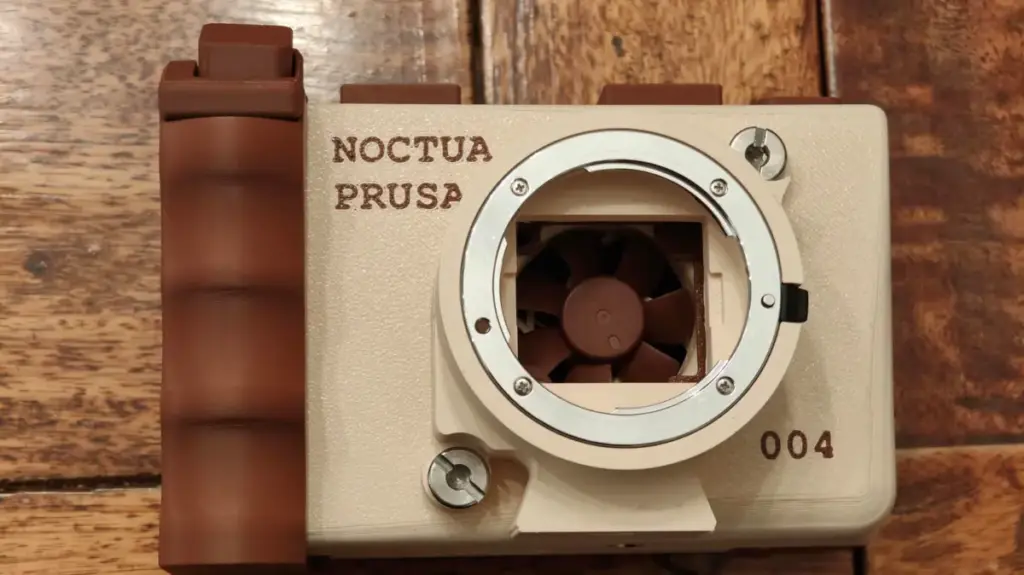
If video killed the radio star, then artificial intelligence-generated media has returned the favor with interest. At least, that is the stark assessment of Josh Cowell, the founder of emerging camera manufacturer CAIM1. Short for Counter Artificial Intelligence Machine 1, the startup is working tirelessly to reestablish our collective faith in the validity and truth of visual media through its ambitious latest prototype: a high-performance camera that embeds cryptographic proof of a photo’s authenticity directly into the image file itself at the moment of capture.
As Cowell vividly described in a blog post published by the startup’s silicon chip provider, Tropic Square, "the traditional photograph is dead, and designing a secure camera to replace it is an exercise in healthy paranoia." In an era where digital manipulation has reached unprecedented heights, traditional standards of photographic proof no longer hold up to scrutiny. CAIM1 aims to change that paradigm by bridging the gap between physical optics and unalterable digital ledgers.
When a photographer captures an image using the CAIM1 prototype, the camera’s internal processing chip immediately creates a unique silicon fingerprint. This hardware-level signature certifies precisely when, where, and with which specific physical device the photo was taken. This verification data is then tightly bound to an anonymous blockchain signature, effectively creating a fully auditable pipeline that researchers, journalists, and everyday viewers can utilize to independently authenticate the media they consume.
The urgency behind such innovations has never been more apparent. Damaging deepfakes and synthetic media have proliferated rapidly across the modern digital sphere, eroding public trust in what is seen online. According to a comprehensive report published by the European Parliament, social media deepfakes have doubled every six months since 2023, reaching an estimated eight million instances by 2025. If current trajectories hold steady, Europol projections indicate that a staggering 90 percent of all online content could be entirely AI-generated by the end of the year.
Meanwhile, major technology firms including xAI, Google, Meta, and Apple have increasingly come under intense legal fire for neglecting to adequately rein in AI-sparked disinformation. Lax platform safeguards have actively enabled the systematic and devastating spread of nonconsensual sexual deepfakes. Europol estimates suggest that an overwhelming 98 percent of all deepfakes circulating online are pornographic in nature, highlighting a profound crisis in digital safety and consent.
CAIM1 hopes its upcoming camera will serve as a vital tool in combating this alarming societal trend. Although the device is still firmly in the prototype phase, the company expects its flagship hardware to hit the market sometime in the first quarter of 2027. According to founder Josh Cowell, the hardware is just the beginning. "CAIM1 is ultimately just the foundation of a comprehensive, verifiable infrastructure we are developing designed to aid digital truth," Cowell noted.
How CAIM1 combats deepfakes
The intricate authentication process behind CAIM1 begins deep within its silicon architecture, specifically utilizing the Tropic01 chip. Tropic Square describes this component on its official website as the "world’s first auditable secure element." When a CAIM1 camera snaps a photo, incoming light photons pass through what developers call a "digital vault" on their way to the sensors. This mechanism creates a hardware-level verification layer embedded directly into the fabric of the image file.
Because of minute, unavoidable irregularities introduced during the silicon chip’s manufacturing process, no two digital fingerprints are ever entirely alike. This physical uniqueness ensures that every signature generated by the camera is wholly authentic and impossible to artificially replicate.
Once an image is captured, the verification data is securely stored on what CAIM1 describes as an "immutable decentralized infrastructure." This creates a permanent, unchangeable, auditable, and anonymous record verifying the validity of the visual asset. To protect sensitive user information and prevent malicious actors from intercepting data, CAIM1 encrypts the information through advanced physical noise systems and internal cryptographic methods. The device deploys digital tripwires and high-level encryption protocols to protect against outside access via stolen encryption keys or aggressive brute-force attacks.
CAIM1 is certainly not alone in recognizing the urgent need for hardware-led photographic verification. Apple, for instance, has launched hardware attestation for the iPhone 18 Pro and 18 Pro Max through its Reference Image system. Similarly, traditional camera giants Sony, Canon, and Nikon announced a joint initiative back in 2024 to embed secure digital signatures directly into photographs captured on their systems.
However, CAIM1’s founder argues that his company’s approach offers superior transparency compared to its massive corporate competitors. In his blog post with Tropic Square, Cowell explained that Tropic Square’s open chips allow both independent researchers and the general public to fully audit its internal architecture. In contrast, major competitors require users to place blind faith in a single corporate entity’s closed, proprietary ecosystem.
Adding another layer of verification, the camera can even generate a physical paper receipt for every image captured in the field. This receipt includes a permanent QR code providing immediate access to the photo, a corresponding blockchain reference number, critical metadata such as the exact date, time, and geographic location of the photograph, and a unique access code that enables digital retrieval of the original file.
Innovations beyond authentication
Developing the CAIM1 required solving significant engineering hurdles far beyond software and cryptography. Early on, the startup’s engineers needed to find an effective means of reducing the intense heat generated by the camera’s advanced internal processors, as excessive operational temperatures can severely degrade picture quality. Unfortunately, traditional heat reduction methods like passive heatsinks proved inadequate for combating the extreme temperatures generated by the powerful processors, while standard cooling fans were far too noisy and introduced unwanted micro-vibrations that could easily cause motion blur in captured media.
To resolve these complex issues, CAIM1 partnered with renowned PC cooling manufacturer Noctua to engineer a unique, active-cooling airflow system. Dubbed the NF-A4x10, the unified single-airstream design efficiently pulls cool air across the camera’s two primary internal heat sources—the CPU and the image sensor—while simultaneously expelling excess heat out of the chassis. Additionally, two specialized anti-vibration mounts prevent any mechanical blurring, ensuring absolute picture integrity during high-speed operation.
Naturally, ensuring an image is cryptographically authentic matters very little if the underlying photographic quality is lacking. Capable of shooting high-resolution 4K video, CAIM1 asserts that its hardware is built specifically with high-octane action sports and demanding cinematic environments in mind. As the startup noted in a dedicated blog post, the team did not set out to build a mere gimmick or a novelty toy; rather, CAIM1 was designed from the ground up as a high-performance, rugged camera that professional videographers can reliably depend on in extreme, fast-paced situations.
Despite the heavy emphasis on its security architecture, precise details regarding all of the camera’s internal technical specifications remain relatively scarce. However, CAIM1’s website prominently highlights its flexible Bring-Your-Own-Lens design, which gives customers the freedom to upgrade and customize their camera bodies with either vintage glass or modern photographic lenses.
In recent field tests, the startup mounted two premium glass lenses from Japanese optical manufacturer Kowa Optronics’ JC10M series and successfully showcased the results at Germany’s infamous Nürburgring racetrack. If the performance and visual output from those rigorous trials are any indicator, CAIM1 is positioning itself to be much more than merely a niche authentication tool. Those seeking further information on the company’s ongoing efforts to restore faith in visual media can explore its official website, company blog, and active social media channels.