



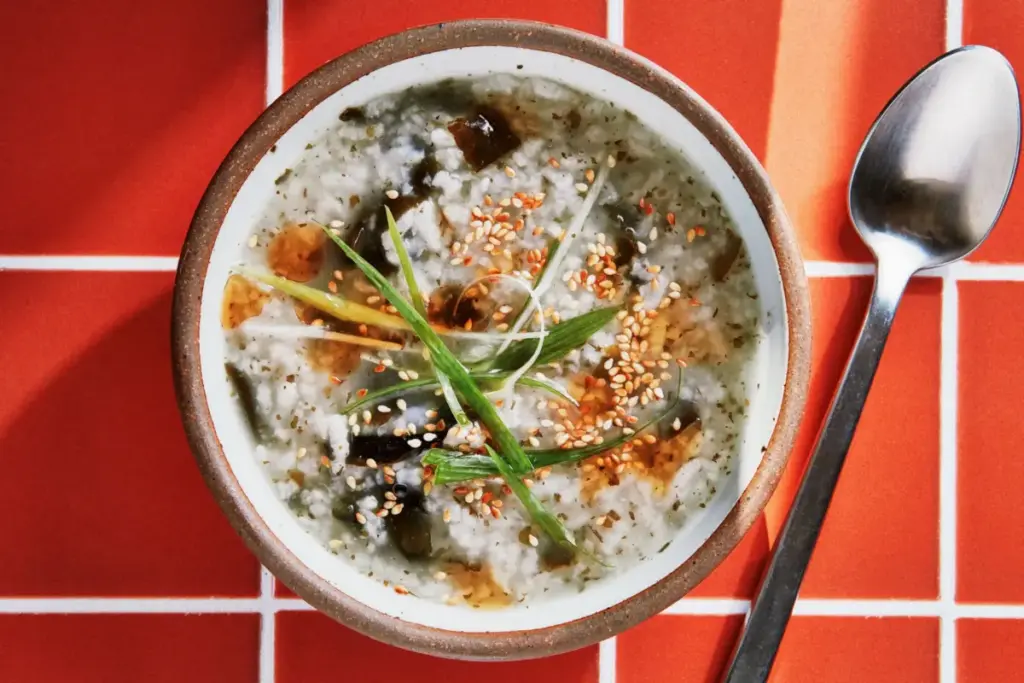
In the whirlwind of the early weeks following childbirth, new parents often find themselves navigating a profound physical and emotional transition commonly referred to as the fourth trimester. For Eating at Home cookbook author Trinity Mouzon Wofford, the path through those initial, sleep-deprived mornings after welcoming her first daughter was paved with a simple, deeply comforting bowl of okayu, a traditional Japanese-style rice porridge.
Featured as part of an ongoing culinary exploration into the foods that sustain parents during the postpartum period, Wofford’s go-to recipe represents more than just a morning meal. For her family, it serves as a reliable culinary anchor—a simple, nourishing dish designed to warm the body from the inside out precisely when vulnerability and fatigue are at their peak.
The dish, while deceptively simple in its component parts, relies on traditional ingredients and deliberate preparation techniques to achieve its characteristic texture and depth of flavor. At the heart of the recipe is short-grain rice, which transforms during the cooking process into a silky, easily digestible base. While the porridge can be prepared immediately, Wofford notes that taking the time to soak the rice beforehand elevates the dish significantly.
According to culinary traditions and modern preparation methods alike, letting the rice soak in cold water—anywhere from thirty minutes up to four hours—softens the grain structure extensively. This preliminary step not only yields the smoothest possible porridge texture but can also aid in gentle digestion, an essential consideration for postpartum recovery when the digestive system benefits from foods that are warm, soft, and easy to process. To prepare the rice properly for this soaking stage, cooks are advised to place the washed grains in a bowl, pour in enough water to cover them by roughly one inch, and remember to drain off any excess liquid before beginning the cooking process.
Complementing the rice are traditional pantry staples that bring both briny depth and herbal complexity to the pot. Dried wakame seaweed, an ingredient widely recognized for its savory umami qualities in dishes like miso soup, provides a subtle oceanic note and is typically accessible in the dried aisles of most Asian grocery stores. Alongside the wakame, dried red shiso introduces an earthy, herbal note that balances the clean, comforting profile of the porridge.
The liquid base of the dish is remarkably versatile, allowing home cooks to utilize either water or six cups of low-sodium broth of any kind, depending on personal preference and availability. Once simmered together into a cohesive, soothing bowl, the porridge is typically finished with simple yet impactful garnishes, including fine sea salt, toasted sesame seeds, toasted sesame oil, and thinly sliced scallions to add a final layer of aroma and texture.
Wofford’s inclusion in the culinary series highlights a broader cultural conversation around postpartum care, specifically the universal human instinct to turn to warm, comforting, and easily digestible foods during times of profound life transition. Across many cultures, the weeks following childbirth are marked by traditions emphasizing warmth, rest, and nutrient-dense, restorative meals that help replenish depleted physical energy.
By sharing okayu with readers, Wofford offers a window into her own family’s traditions while providing a practical, comforting recipe for anyone seeking a moment of quiet nourishment. Whether consumed during the early, blurry weeks of parenthood or simply reached for on a chilly morning when the body craves something gentle and grounding, the Japanese-style rice porridge remains a timeless testament to the healing power of simple, thoughtfully prepared food.