

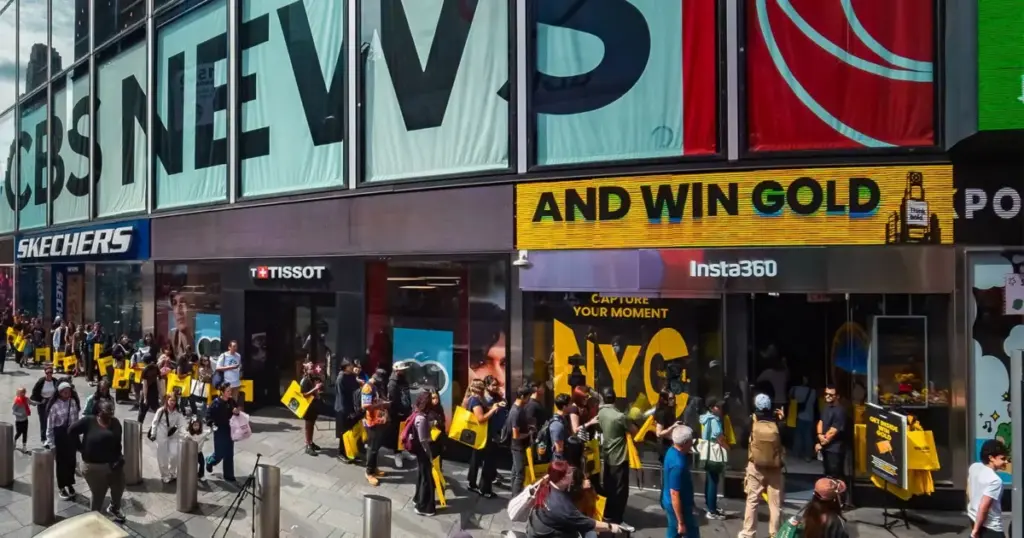
Insta360 officially opened its first flagship retail store outside Asia, planting its flag in the heart of New York City’s famed Times Square. The grand opening represents a major milestone for the brand, which first entered the United States market a decade ago. From its modest beginnings as a tech startup founded in 2015 to establishing a brick-and-mortar presence in one of the busiest and most iconic intersections in the world, the company has experienced a meteoric rise in the global imaging landscape.
The timing of the New York flagship opening coincides with another massive company milestone: Insta360 has officially surpassed 10 million cameras shipped worldwide. While the brand is already well-established as the dominant leader in the 360-degree camera market, it is simultaneously making aggressive waves in other product categories. These include advanced gimbal cameras designed specifically for content creators, highlighted by the brand-new Luna series. Comprising the dual-lens Luna Ultra and Luna Pro, these devices feature sophisticated cameras co-engineered with the legendary legacy brand Leica.
The New York storefront is just one piece of Insta360’s broader global retail strategy. The company opened a flagship location in Tokyo last month, operates dozens of authorized retail stores across Asia, and is actively planning a future European expansion that will include at least one location in Munich.
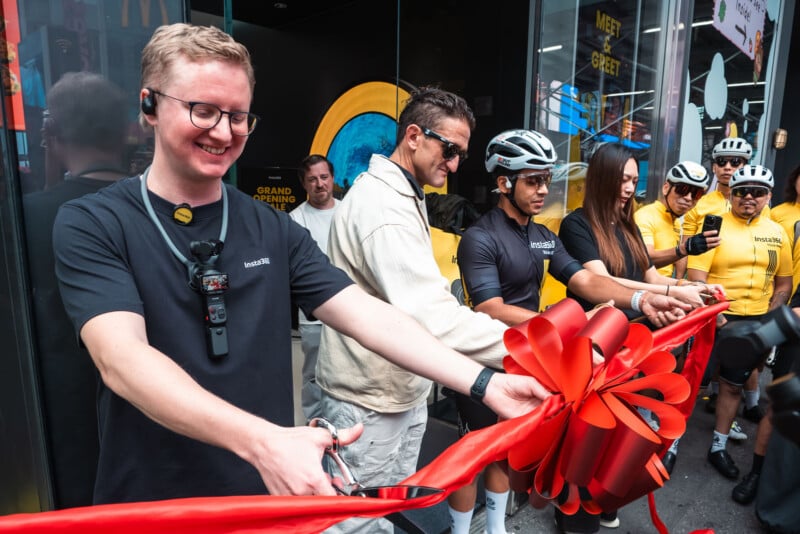
Max Richter, Co-founder and VP of Marketing at Insta360, emphasized the significance of the New York launch during the grand opening event.
"Reaching 10 million cameras shipped worldwide is a milestone we owe to our community, but opening in Times Square is about building lasting roots," Richter told reporters on the ground. "This store opening is about more than just selling into the U.S.; it reflects our long-term commitment to the American creator ecosystem. We look forward to continuing our support for local creators, connecting directly with everyday users, and making innovative imaging tech approachable for anyone with a story to tell."
The brick-and-mortar push arrives during a period of significant transition and shifting dynamics within the U.S. camera market. Competitor DJI has faced well-publicized regulatory hurdles with the United States government, which has created new commercial opportunities for rival manufacturers capable of freely distributing and selling their products domestically. Meanwhile, fellow creator-camera pioneer GoPro has experienced substantial corporate upheaval. GoPro recently entered into an agreement to be acquired by optical data company Starman Optical for $285 million following a series of consistent financial challenges and quarterly losses.
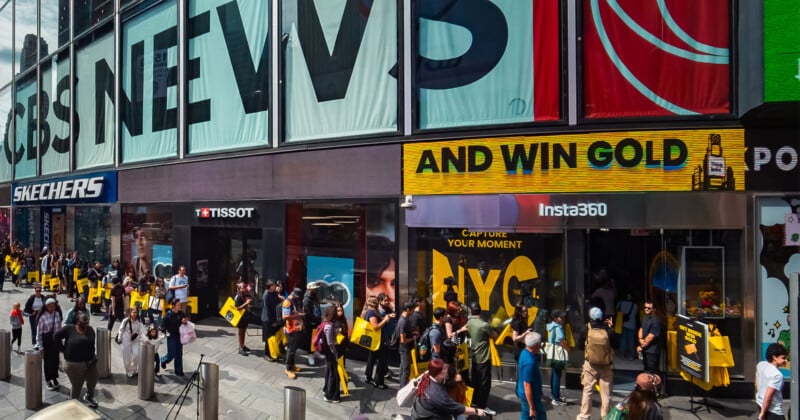
The Experiential Element of Insta360 Cameras
While a primary function of the Times Square store is direct-to-consumer hardware sales, the location serves a much larger purpose: expanding brand awareness and offering everyday consumers—including the millions of tourists visiting Times Square from across the globe—a place to test Insta360’s hardware firsthand.
With 360-degree capture technology, demonstrating the practical value proposition to prospective buyers can occasionally present a unique marketing challenge. Creators and casual users alike often need to see the equipment in action to fully grasp why they might want or need it. Consequently, hands-on product testing, personalized in-person education, and dedicated community spaces are integral components of the new retail design.
"A lot of people know us from social media. They know the unique effects you can get with our products, like the invisible selfie-stick effect," Richter explained. "I think there’s a lot of viral videos out there, but usually it’s a challenge to educate users about the technology behind it, what’s the product behind it?"
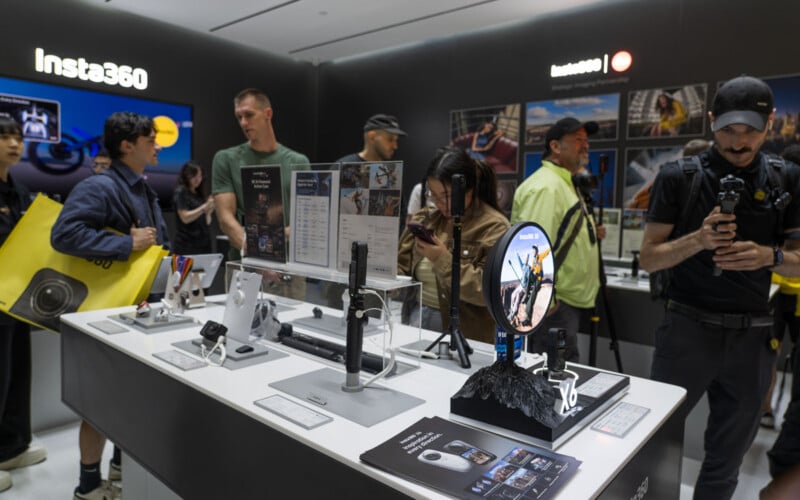
Richter noted that physical brand experiences act as powerful mediums for consumer education, introducing shoppers to the broader Insta360 ecosystem beyond traditional 360-degree gear. Because the company frequently develops innovative products and complex features, hands-on guidance helps demystify the technology. Beyond retail transactions, leadership envisions the store serving as a physical hub where local creators can congregate, share ideas, and build a cohesive community.
Tom Harris, President of the Times Square Alliance, welcomed the addition to the neighborhood.
"We are thrilled to welcome an innovative, industry-leading brand like Insta360 to the Crossroads of the World," Harris said. "Times Square has always been a global stage for creativity, culture, and cutting-edge technology, making it the perfect home for Insta360’s flagship store and a fantastic addition to our dynamic retail landscape."
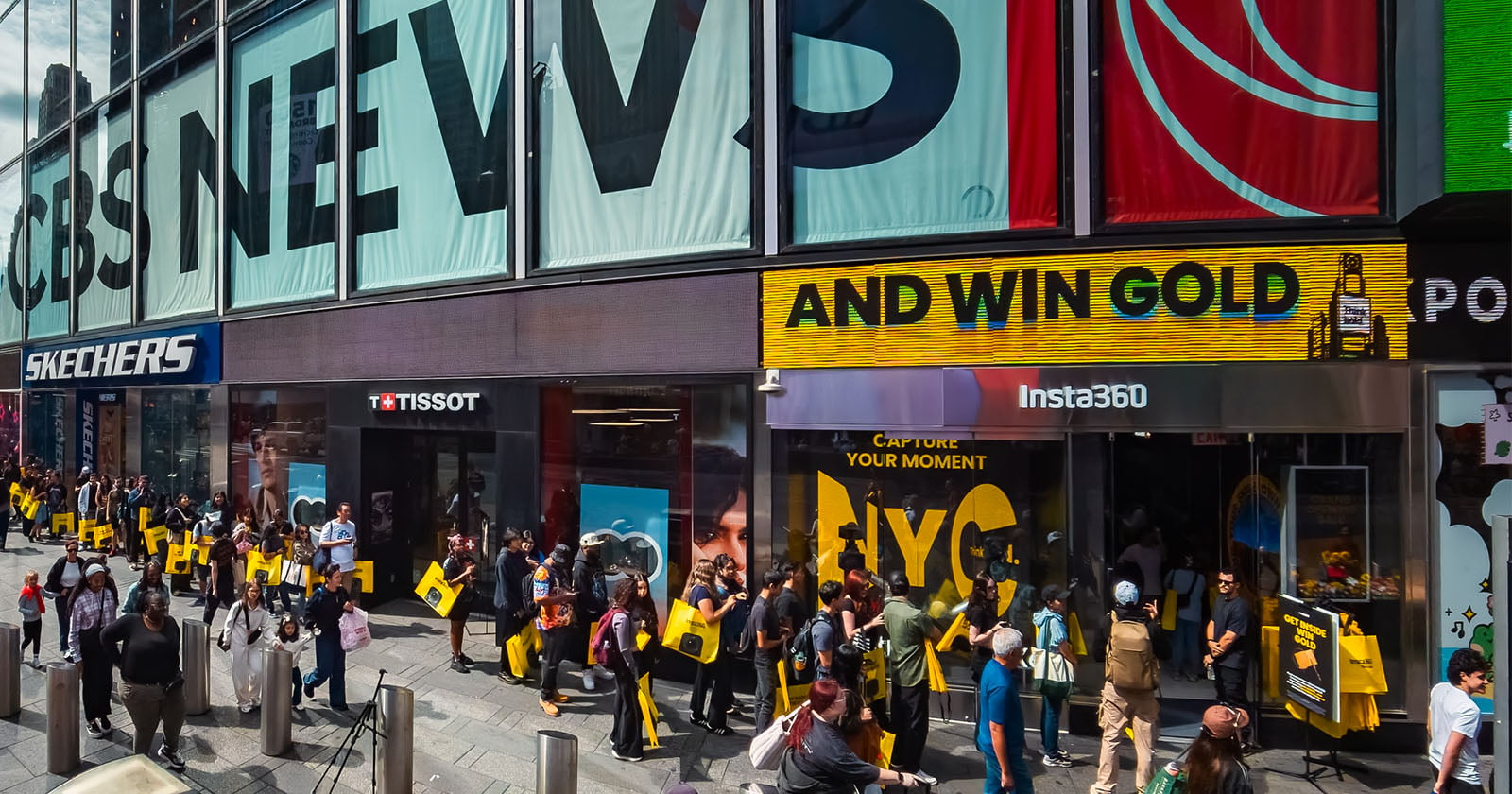
Excitement for the grand opening drew massive crowds. Shortly before the doors unlocked at noon, hundreds of eager fans and tech enthusiasts queued up around the block. The dedication of the very first person in line—who had been waiting since 2:30 AM—was rewarded with a unique, one-of-a-kind Insta360 Luna Ultra camera featuring custom gold engravings carved directly into its housing.
A Period of Transition and Innovation
The year 2026 has proven exceptionally busy for Insta360 on the product development front. This summer marked the debut of the company’s flagship 360-degree camera, the X6, which was engineered to deliver superior image quality within a more compact chassis than its predecessor. Equipped with a pair of custom Sony Type 1/1.1 image sensors, the X6 functions flexibly as a traditional 360-degree camera, a single-lens action camera, and a subject-tracking gimbal camera.
Simultaneously, the launch of the Luna series gimbal cameras—including the critically acclaimed Luna Ultra—provides a direct response to DJI’s popular Osmo Pocket series, particularly given that DJI’s latest iterations have faced delays in reaching American store shelves. Rather than simply mimicking existing form factors, Insta360 introduced features like a unique detachable display and remote controller, which has quickly won over professional reviewers and casual creators alike.
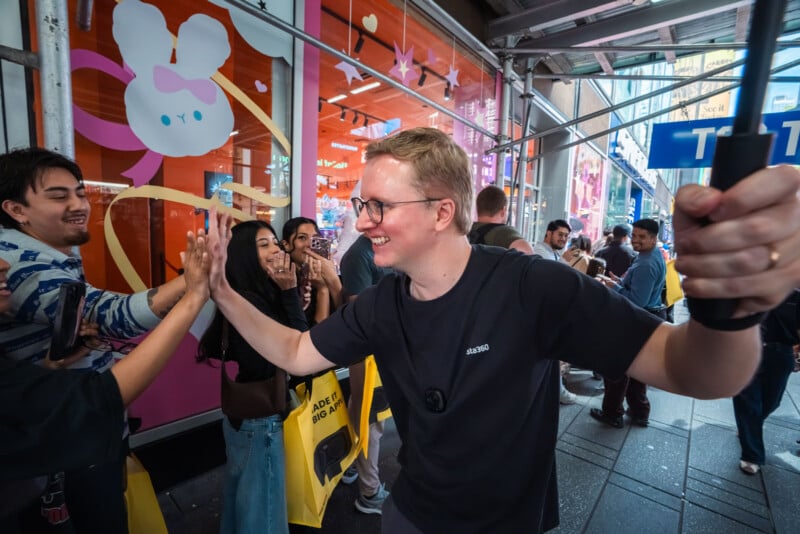
Alongside high-end flagships like the X6 and the creator-focused Luna models, the Times Square store houses Insta360’s thumb-sized GO action cameras, professional wireless audio solutions, and a vast ecosystem of specialized mounts and protective housings. Over the years, these accessories have enabled filmmakers to capture extraordinary footage, ranging from cameras mounted securely inside the mouths of sharks to units sent to the edge of space or subjected to intense rocket launches.
While few everyday consumers will ever strap a camera to a rocket ship or submerge it in marine wildlife habitats, the Times Square retail footprint underscores the brand’s core mission: getting capable imaging tools into as many hands as possible. Whether users want to capture family memories from perspectives smartphone lenses cannot achieve or launch professional content-creation careers, expanding access to modern digital imaging remains a driving force for the company.
Among the notable attendees at the grand opening was professional photographer and videographer Anthony Quintano, a longtime user who has utilized Insta360 equipment for nearly the entirety of the brand’s existence. Quintano famously captured viral footage using an Insta360 camera during preparations for the Times Square New Year’s Eve broadcast in late 2019.
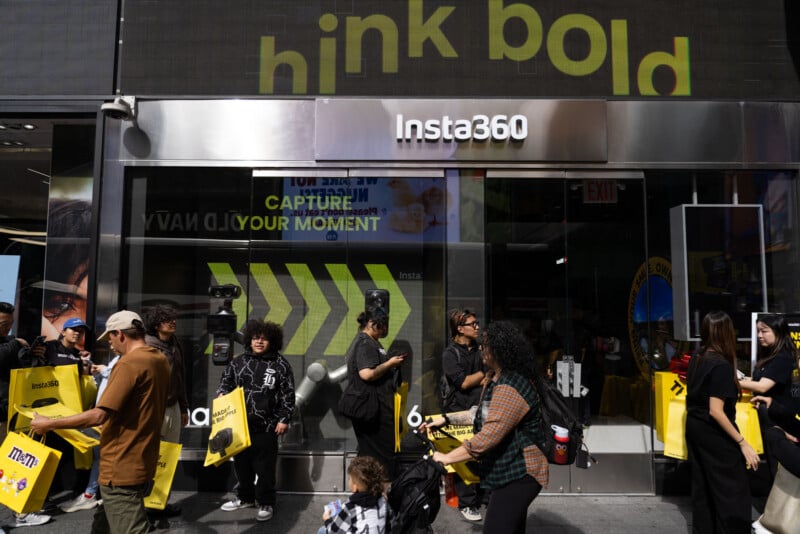
"I have pretty much almost every model since they first came out," Quintano said. "I follow technology very closely and I loved the 360 experience when it first came out. I noticed other companies starting to come up with their own 360 cameras, but it was Insta360’s camera that I liked most because of the ease of use—because speed is everything in the digital world and the social media world. So the fact that I can get such a high-quality image and be able to grab multiple angles from a single recording after the fact was huge for me as a creator."
Quintano noted that pulling out a selfie stick equipped with an Insta360 camera routinely prompts public curiosity. People frequently approach him to ask what device he is using, giving him the opportunity to show them the interface and explain the technology.
"Not only is it exciting for me as a creator, but to get excitement from the people who are viewing my content means a lot to me," he added.
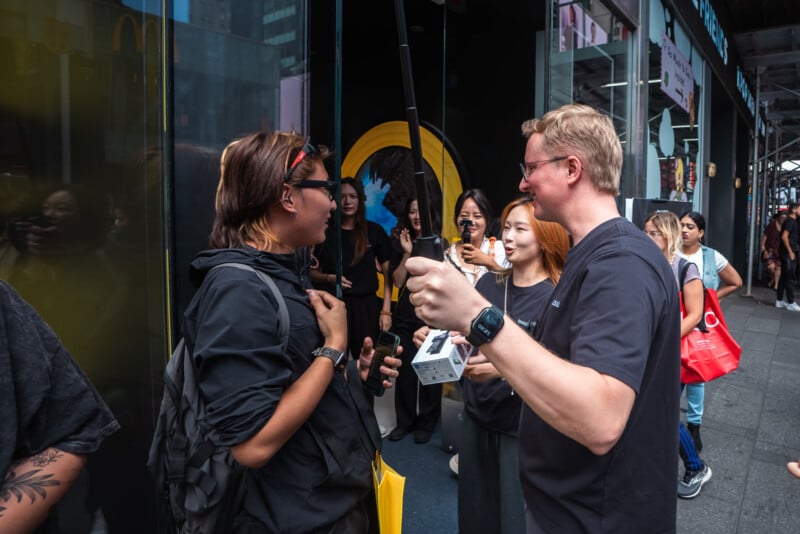
Having lived in New York previously, Quintano recalls when Times Square was densely populated with traditional brick-and-mortar camera shops selling compact film cameras. Returning to the neighborhood for the grand opening, he highlighted the value of physical retail spaces in reaching both domestic and international audiences.
"To be here and not just capture a U.S. audience, but a global audience that comes to visit Times Square and bring awareness to how easy this camera is and try it, that’s the key," Quintano concluded. "It’s one thing to see influencer videos, but to actually get your hands on it is very important. And once you see how easy it is, I would think that’d be a motivating factor to invest in this camera."
As Insta360 looks toward the future, the company continues to develop ambitious concepts for upcoming hardware. Founder JK Liu previously discussed his long-term vision for a dream camera system that merges advanced optics, sophisticated motion control, and artificial intelligence to create an imaging tool that functions invisibly throughout the creative process. Whenever those future innovations are finalized for production, consumers will have a direct physical venue to experience them firsthand, marking a remarkable evolution for a brand that began with the launch of its pocket-sized Nano camera a decade ago.