

The stock market has once again proved its capacity to surprise, leaving investors grappling with a familiar mix of euphoria and dread. As equities climb to unprecedented valuations driven largely by the current artificial intelligence boom, a persistent question echoes across retirement portfolios and financial forums: Is an impending market crash inevitable, and will the AI bubble ultimately ruin retirement?

For years, market observers have pointed to technological revolutions as precursors to severe economic corrections, often drawing parallels to the dot-com bubble of the early 2000s. That particular market cycle defined an era for early retirement advocates, acting as a launchpad for careers before the subsequent crash threatened job security and stability. Today, as public discourse is dominated by debates over artificial intelligence, national debt, and geopolitical tensions, seasoned financial commentators are stepping forward to address whether current anxieties are grounded in economic reality or driven by human psychology.

Will the AI Bubble Ruin Our Retirement?
Achieving long-term financial independence often brings comfort and routine, yet the external landscape of global news frequently injects uncertainty into the minds of retirees and savers alike. Modern anxiety channels a litany of contemporary concerns, ranging from shifting geopolitical leadership and inflation to escalating national debt and international conflicts. However, a retrospective look at economic history reveals that cycles of fear are a perpetual feature of financial markets.

Comparing contemporary worries to those of two decades ago highlights a striking continuity in human apprehension. In 2006, investors similarly weighed the stability of political leaders, ongoing Middle Eastern conflicts, national debt, and inflation. Back then, anxieties centered on the housing market bubble rather than the AI boom, and the perceived threat to domestic employment was outsourcing to overseas markets rather than algorithmic automation. Even concerns over peak oil dominated headlines, with dire predictions that fossil fuel consumption would inevitably outstrip supply—a hypothesis subsequently upended by technological shifts and increased production efficiency.

Despite the severe economic disruption of the Great Financial Crisis that followed, long-term market data demonstrates the resilience of diversified investments. Over a multi-decade horizon, significant historical downturns, including the 2008 financial crash and the 2020 pandemic-related contraction, appear as temporary fluctuations within a broader trajectory of economic growth. Concurrently, global indicators of well-being experienced substantial improvements, marked by a significant decline in extreme poverty rates, a halving of infant mortality, a dramatic drop in clean energy costs, and the rapid expansion of electric vehicle adoption worldwide.

Prosperity, Productivity, and the Nature of Fear
At the core of economic anxiety lies a fundamental misunderstanding of what generates wealth. Financial systems and stock market indices operate largely as numerical representations on computer servers, vulnerable to market sentiment and cyclical volatility. True prosperity, however, stems fundamentally from productivity.

Market economies are inherently prone to short-term fluctuations, but beneath the surface volatility lie tangible human efforts, labor, and innovation. The financial system itself is a human construct; when systems face severe crises, historical precedent shows that societies adapt, restructure frameworks, and continue the underlying work of generating productivity. Economic growth, living standards, and the feasibility of early retirement are inexorably tied to technological and operational efficiency rather than transient market metrics.

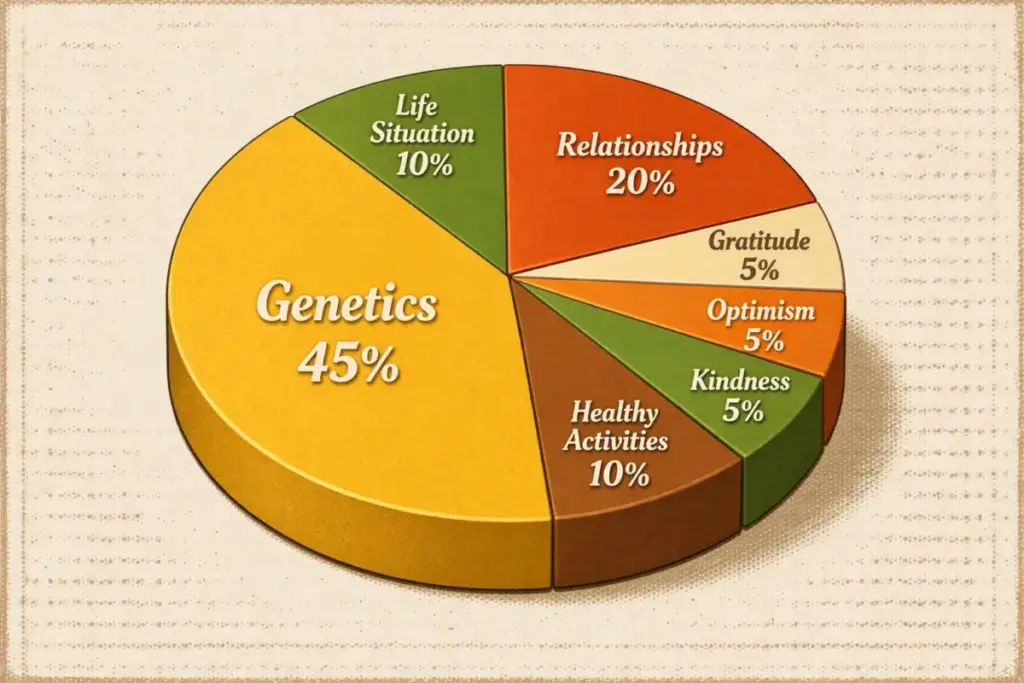
Beyond economic measures, human happiness and well-being are influenced by factors extending far beyond financial portfolios. Psychological research suggests that while baseline living standards in developed nations were surpassed decades ago, long-term satisfaction relies heavily on social relationships, personal outlook, physical health, and daily habits.

Nevertheless, persistent background anxiety remains a prevalent challenge for many individuals. Evolutionary psychology suggests that human brains developed as threat-detection mechanisms, designed to anticipate danger and secure resources. When immediate physical threats are mitigated by modern societal structures, this vigilance often persists, shifting focus toward abstract concerns such as financial scarcity, social standing, or complex tax strategies like required minimum distributions.
Understanding and Managing Financial Anxiety
Addressing pervasive financial fear requires introspection and self-awareness regarding personal history and emotional triggers. Anxiety surrounding financial scarcity frequently traces back to childhood experiences or generational attitudes shaped by historical events like the Great Depression. Recognizing that these feelings often stem from past conditioning rather than an objective evaluation of present circumstances is a vital step toward rational decision-making.

Examining the worst-case scenarios associated with financial fears often reveals that projected outcomes are significantly less catastrophic than perceived. Taking concrete action further helps dismantle apprehension, transforming unfamiliar scenarios into manageable experiences and building long-term resilience.
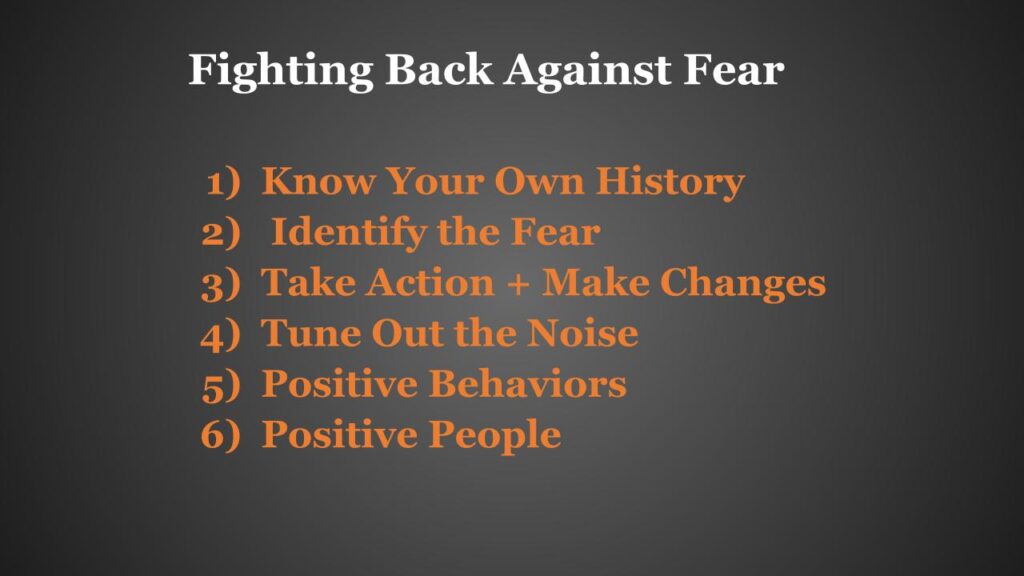
Furthermore, mitigating chronic anxiety involves intentionally curating one’s informational environment. Continuous exposure to sensationalized news media frequently amplifies fear through selective reporting of alarming events. Cultivating positive behaviors, maintaining physical health through outdoor activity, and surrounding oneself with optimistic, solution-oriented peers provide a more constructive framework for navigating uncertainty.

Viewing Technological Shifts Through the Lens of Experimentation
Adopting an experimental mindset toward life transitions—whether career changes, lifestyle shifts, or macroeconomic developments—can reframe potential disruptions as opportunities for learning rather than sources of dread. This perspective applies directly to the rapid advancement of artificial intelligence, a technological shift currently generating widespread debate.

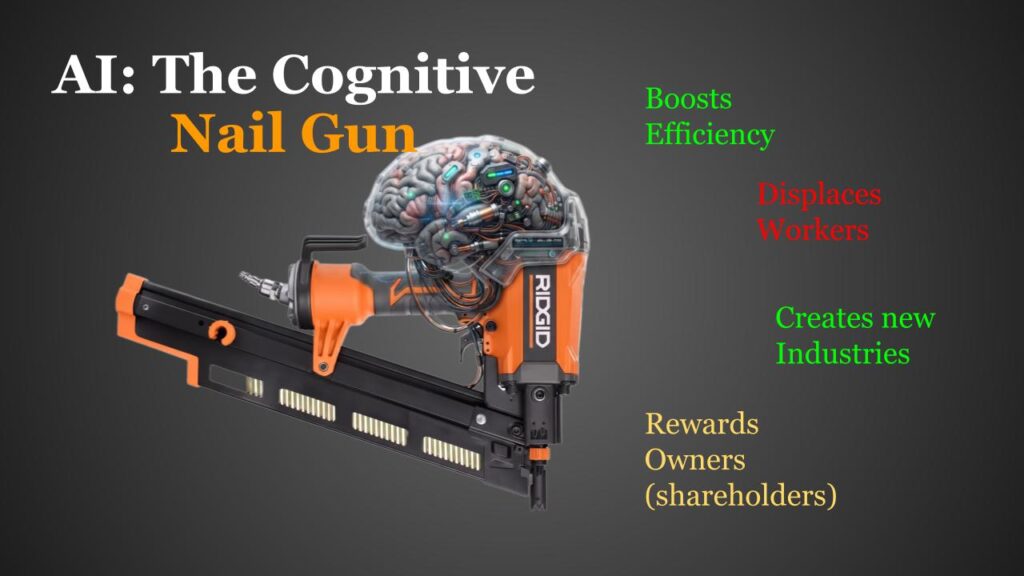
Rather than succumbing to pessimistic narratives, examining the functional mechanics of AI reveals its primary role as a powerful tool for cognitive efficiency. Much like historical productivity multipliers, artificial intelligence enhances output and drives economic growth by streamlining complex tasks. While such innovations invariably cause workforce displacement in specific sectors, they simultaneously reduce service costs and catalyze the formation of new industries, mirroring the transformative evolution brought by the internet and mobile computing.
Ultimately, technological revolutions require societal adaptation and individual decision-making. By understanding the psychological roots of fear and focusing on productive engagement, individuals can better evaluate modern market dynamics and navigate the evolving economic landscape with confidence.