
Walking the high-tech corridors of Industrial Light & Magic (ILM) means being surrounded by living history. Everywhere you look, there are tangible testaments to the cinematic milestones that shaped modern visual effects, from Star Wars and Jurassic Park to Terminator 2. In an environment already saturated with legendary movie magic, a floor-to-ceiling promotional poster of Darth Vader recruiting for the Imperial army blends right into the background. But that unassuming wall hanging serves a double purpose. Slip silently behind the poster when no one is watching, and you step out of corporate reality and directly into a secret Rebel Hideout constructed deep behind enemy lines.
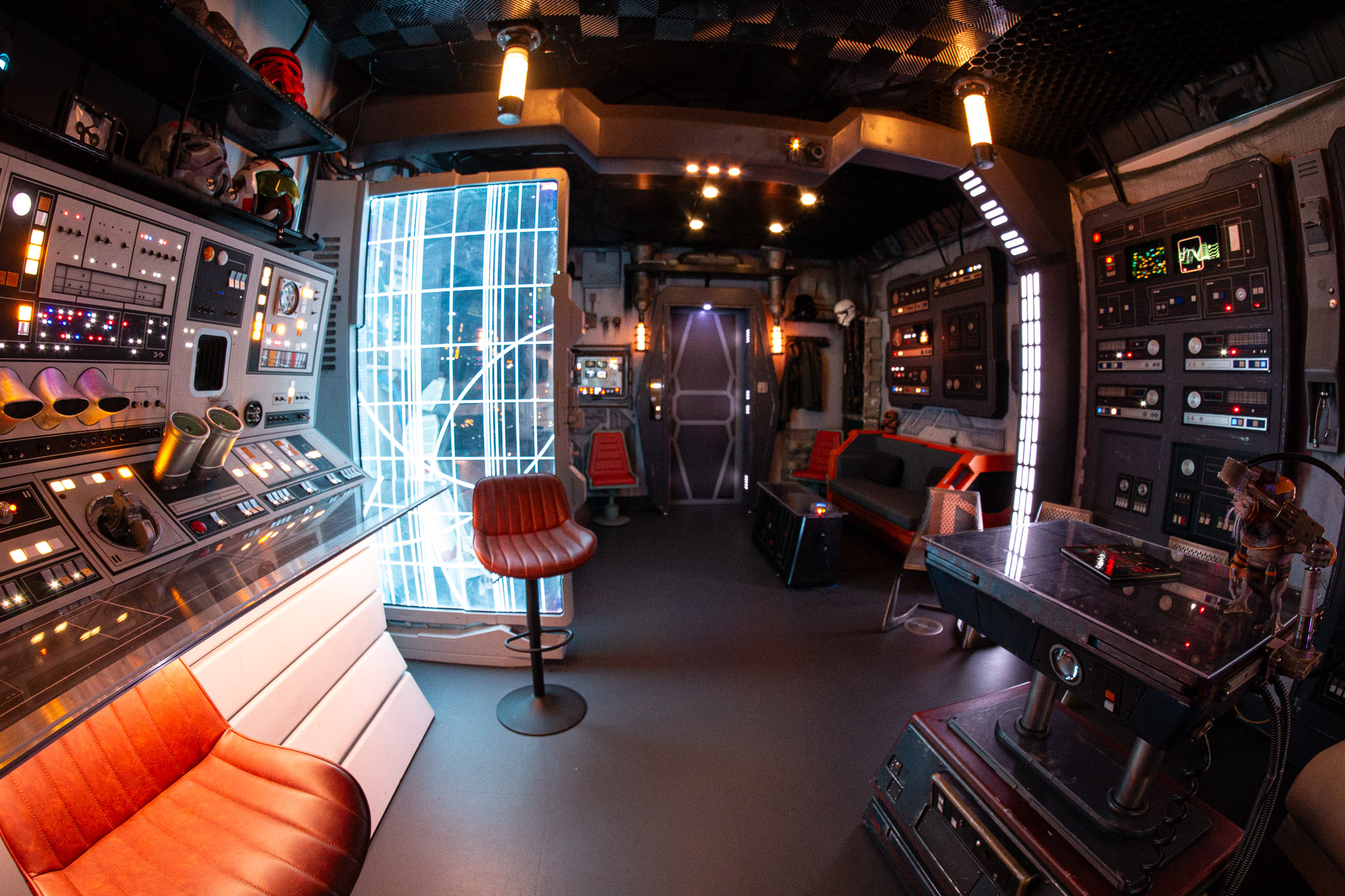
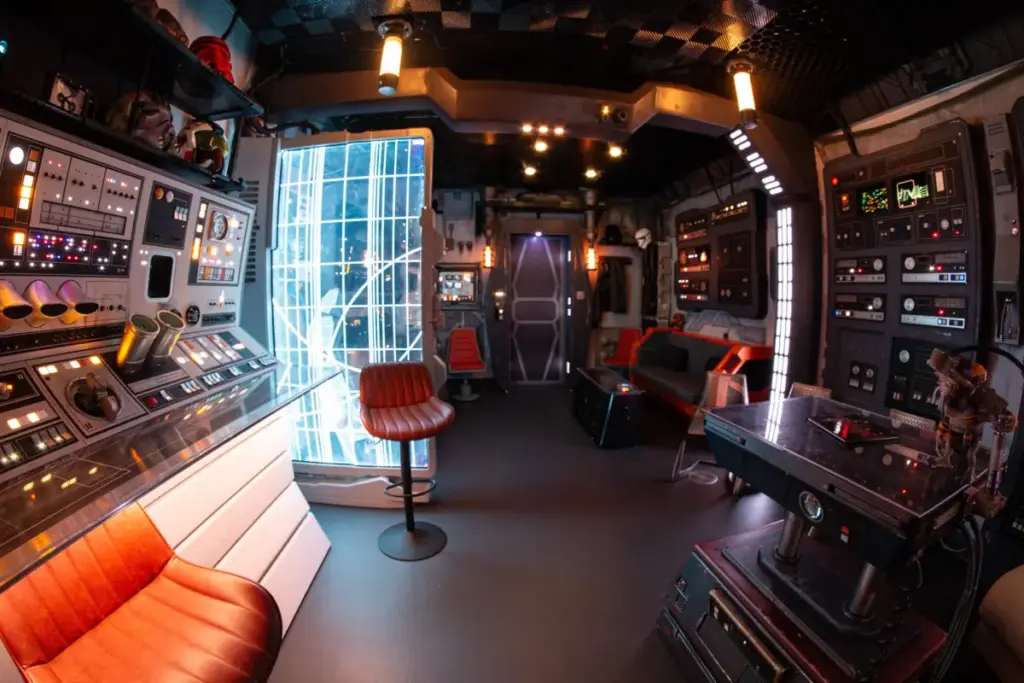
Stepping into the Hideout feels like walking onto a physical Star Wars set, because in many literal ways, you are. Newcomers are greeted by a classic opening title crawl scrolling across a display, setting the narrative stakes for their visit. Ambient engine sounds, pulled straight from the official production audio library, hum softly in the background. Nearly every surface, prop, and button encountered within the space originated from an actual film set, blending authentic Hollywood craftsmanship with clever interior architecture.

A Long Time Ago
The creation of the themed lounge was a multi-decade labor of love championed by staff R&D engineer Mike Jutan and Head of Computer Graphics Michael DiComo. Though they never abandoned hope, it ultimately took the disruptions of a global pandemic to finally get the project off the ground. The construction was quietly rolled into a broader office remodel, remaining largely under the radar. Curious colleagues occasionally scrutinized the architectural blueprints, wondering why a standard conference room required such unusual specifications—or a built-in sink—but fortunately, no one stopped them.

Building the Hideout required a dedicated team of employees working largely after hours. Systems engineer Trent Bateman spearheaded the electronics development alongside Tim Dobbert, while also building out the necessary software. Bateman collaborated with Paul DeBaun and former AV design engineer Greg St. Germain to install the room’s complex audio systems. R&D engineer David Hirschfield recalls the turning point of the project, noting that the moment they finally fired up the authentic soundtrack, the entire room instantly sprang to life.

None of the project’s contributors were professional prop builders by trade; they were passionate fans executing a dream project in their spare time. Former workplace services specialist Kyle Johnson fabricated the custom entryway and secured access to an on-campus workshop, giving the team the space and heavy machinery—such as table saws, drill presses, and painting areas—needed to bring their vision to life. Having toured other tech companies featuring secret rooms with underwhelming, standard corporate furniture inside, the team was determined to build something genuinely immersive.

Where to Begin?
With the expansive Star Wars universe encompassing hundreds of hours of interconnected media across film and television, choosing a single setting proved daunting. The creators debated between designing a Rebel base, a seedy cantina, or an Imperial starship. The decision was ultimately made for them when they received an unexpected call from the Lucasfilm archives. The message was simple: the archives were clearing out extra set pieces from recent productions, including Rogue One: A Star Wars Story, Andor Season 2, Solo: A Star Wars Story, and Star Wars: Episode IX – The Rise of Skywalker, and wanted to know if ILM wanted any items before they were discarded.

Practical sets occupy immense physical space, making it impossible for studios to preserve every physical prop indefinitely. Faced with a massive PDF catalog featuring low-resolution thumbnail images and highly technical asset descriptions, the team suddenly found themselves overwhelmed by a surplus of historic cinematic hardware. They requested roughly 30 different pieces, ultimately securing items such as the Millennium Falcon’s navigation console from Solo, radar screens from Rogue One, and a repurposed vending machine they affectionately dubbed "Admiral Snackbar." The available props naturally anchored the room’s dramatic setting within the original trilogy era, blending utilitarian Rebel equipment with sleek Imperial machinery.

Kitbashing and Practical Engineering
The replica-building experts at Regal Robot were initially brought in to construct custom furniture, such as a Millennium Falcon holochess table. However, once the influx of authentic props arrived, their role shifted toward curation and interior design validation. They helped the team figure out how to arrange the space and weather surfaces that looked too pristine. Senior Look Development Technical Director Rebecca Forth led a team of volunteers who applied a generous coat of lived-in grime to the walls and props, ensuring the environment matched the gritty aesthetic of the films.

Story continuity dictated every design choice; no piece of furniture was added unless it made narrative sense within the universe. Using a virtual layout, the team experimented with arrangements to ensure the lounge felt like a genuine hideout rather than a conference room crammed with movie memorabilia. Many props, originally built to survive only a few seconds of on-screen visibility, required extensive reverse engineering. They arrived with dead LEDs, broken switches, and unlabeled wiring. Furthermore, the room had to comply with standard building codes, including maintaining clear 35-inch pathways—which occasionally required sawing a sofa in half—while gracefully concealing required safety features like fire sprinklers behind clever set design elements like a blast hole in the ceiling.

Bringing the Room to Life
The technology powering the Hideout is robust. Lighting panels, sound effects, and video displays are centrally controlled by a Mac Mini running QLab software. Because purchasing off-the-shelf development boards for every prop proved cost-prohibitive, the team designed custom printed circuit boards (PCBs) with assistance from the ILM Electronics Club. To manufacture the 20 boards needed for the room, they hosted communal soldering parties to teach interested colleagues the craft.

Easter eggs are embedded throughout the environment. Turning a navigation console into a synthesizer or a jukebox is possible for those who know the correct sequence of inputs. Even the coffee table has a cinematic pedigree: it is built from Babu Frik’s workbench from Episode IX. Principal graphics engineer Lutz Latta discovered that the workbench still housed a wheelchair base underneath. After tracking down the original German instruction manual and retrofitting it with radio control, Latta tested it, nearly running over a colleague’s toe before dialing down its speed to a safe pace for delivering drinks.

All Aboard Calypso
While the Rebel Hideout is a celebrated addition to the campus, it is not ILM’s oldest themed room. Tucked away near the Hideout is a door marked by a carved wooden cephalopod, leading to Calypso, a pirate captain’s quarters modeled after a wrecked ship run ashore.

Designed originally in 2012 by Steven Knipping at Pacific Data Images (PDI), the room migrated through several corporate closures—from PDI to DreamWorks, and later to Visceral Games under Electronic Arts—before sitting in storage. When Knipping joined ILM, the success of the Rebel Hideout inspired him to rebuild Calypso inside a nearby conference room.

Because ILM worked on the visual effects for the first four Pirates of the Caribbean films, Calypso features authentic production assets, including model ship yardarms, a full-size anchor, cannon models, and gunport lids. It also houses a detailed bust of Davy Jones used for lighting calibration during filming, alongside a barnacle-covered skeleton salvaged from Indiana Jones and the Dial of Destiny. Unlike the immersive Rebel Hideout, Calypso functions as a multi-purpose meeting space featuring a central table, though the team continues to expand its immersive lighting, soundscapes, and interactive puzzle elements.

Ultimately, both themed rooms stand as testaments to the ingenuity of artists and fans working within the industry. Built largely through voluntary effort, personal dedication, and technical tinkering, these spaces demonstrate how creative surroundings continue to inspire the people who create modern cinema’s most iconic visual worlds.