




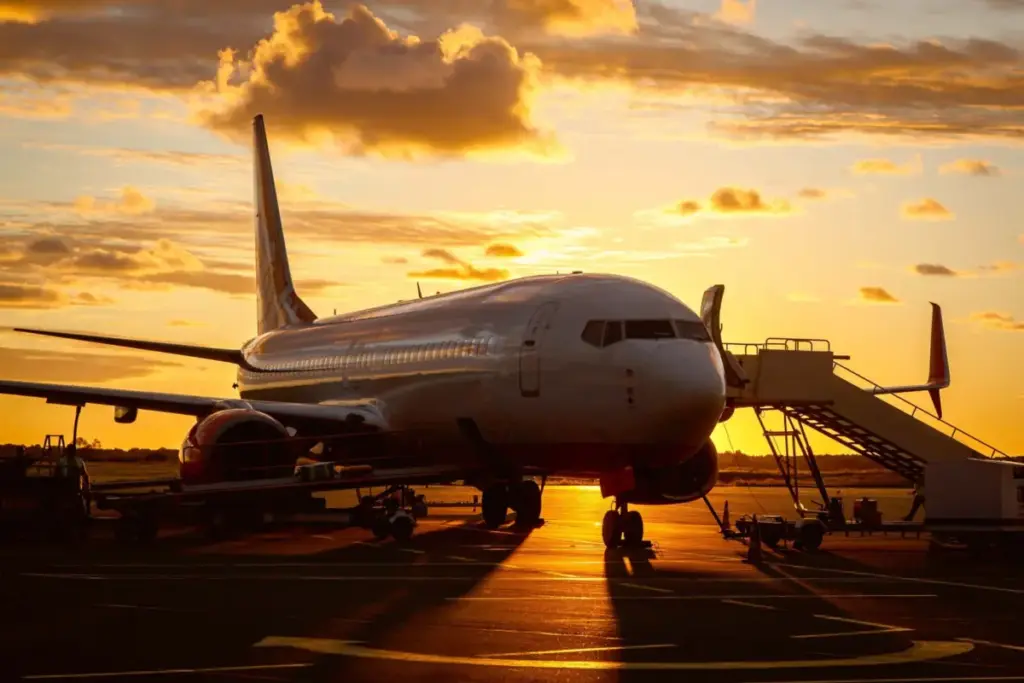
The United States Federal Aviation Administration issued a rare nationwide ground stop on Friday afternoon, ordering all outbound flights from the United States to halt ground operations amid widespread disruptions. The sweeping directive brought a sudden pause to air travel networks across the country, affecting major hubs, regional airports, and tens of thousands of passengers preparing for weekend travel.
Homeland Security Secretary Markwayne Mullin addressed the unfolding situation during a press conference, seeking to calm public anxiety and rule out malicious intent in the early stages of the response. Mullin stated that there was "no indication as of yet" that anything "nefarious" caused the sudden ground stop, suggesting instead that the disruption was tied to a broad telecommunications outage impacting critical infrastructure.
The FAA quickly took to official channels to confirm the scope of the emergency measures. In a statement published on its account on X, the agency explained the precautionary nature of the directive. "There has been a temporary telecommunications outage – out of an abundance of caution all flights have been halted," the FAA stated. The agency added that every aircraft currently in the air had been accounted for and that international flights would be handled on a case-by-case basis as the situation developed.
Department of Transportation Secretary Sean Duffy also weighed in on the operational standstill, confirming in an official statement that the ground stop stemmed from an acute "communication issue." Duffy assured the public that FAA technicians were actively investigating the root cause and working around the clock to restore full operational capability to the nation’s airspace.
The unprecedented halt on takeoffs and landings applied uniformly to both domestic and international flights operating within US borders. Major commercial carriers scrambled to adjust their schedules and communicate with stranded passengers. United Airlines, one of the four largest commercial carriers in the nation, released a statement clarifying how the emergency order would impact its fleet. The airline noted that the directive did not apply to aircraft already airborne at the time the order was issued.
"United Airlines is responding to a nationwide ground stop issued by the FAA. United flights that are already airborne will continue. New domestic flights will not depart while the FAA ground stop remains in place," United Airlines said in a press release. The carrier further emphasized its commitment to customer service during the crisis, stating, "United will work with our customers to get them to their destinations once this issue is resolved."
Aviation historians and frequent flyers noted the rarity of the event, pointing out that the last time a nationwide ground stop occurred in the United States was in January 2023. That previous disruption followed a major computer outage that crippled the Federal Aviation Administration’s Notice to Air Missions (NOTAM) system, which provides essential safety information to flight crews before departure. Friday’s incident immediately drew comparisons to that historical event, though initial reports pointed toward a broader telecommunications failure rather than a localized software glitch within the FAA’s own internal architecture.
Industry reporting shed further light on the cascading technical failures leading up to the FAA’s drastic action. CNBC reported that widespread server outages affecting telecommunications over the preceding 24 hours were heavily to blame for the aviation crisis, citing internal information obtained from Alaska Airlines. The cumulative effect of these telecommunications failures placed immense strain on air traffic management and communication systems across multiple regions.
The sheer volume of commercial air traffic operating on any given day underscores the immense logistical challenge posed by a nationwide ground stop. According to data from Cirium, a prominent aviation analytics company, there were 26,284 commercial flights scheduled to depart from airports across the United States on November 13 alone. The sudden afternoon directive immediately threw these tightly choreographed schedules into chaos.
As the afternoon progressed, flight tracking and analytics painted a clearer picture of the disruption’s growing footprint. As of 5:50 p.m., approximately 600 flights had been diverted from their intended paths. Among those diverted aircraft, the vast majority—some 496 flights, or 82.7 percent—chose to return to their origin airports, while the remaining 104 flights were diverted to alternative airports to manage fuel, crew time, and logistical constraints.
In addition to diversions, cancellations began to mount rapidly as airlines and airport authorities struggled to clear the backlog. A Cirium company spokesperson provided updated figures regarding the broader national impact, noting that "at this time 481 have been canceled or no fly nationally, representing 1.83%. This will grow today." The spokesperson also highlighted the immense number of aircraft still waiting on tarmacs and gates, noting that after 4 p.m. Eastern time, there were still roughly 11,000 flights scheduled to depart from US airports before the end of the day.
Airport terminals across the country quickly filled with frustrated travelers seeking information about delayed itineraries, rebooking options, and hotel accommodations. Airlines deployed customer service teams to assist affected passengers, while airport authorities coordinated with local transportation providers to manage terminal crowding.
Federal agencies, telecommunications providers, and aviation authorities remained in constant communication to isolate the technical failure and safely resume normal air traffic operations. As technicians pressed forward with diagnostic and repair efforts, transportation officials stressed that safety remained the absolute priority behind the nationwide standstill, reiterating that every precautionary measure was necessary to protect the traveling public while communication links were verified and secured.
Reporting contributed by Hannah Towey.