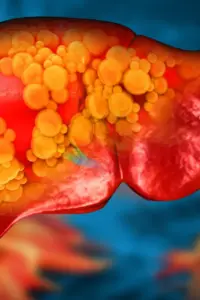



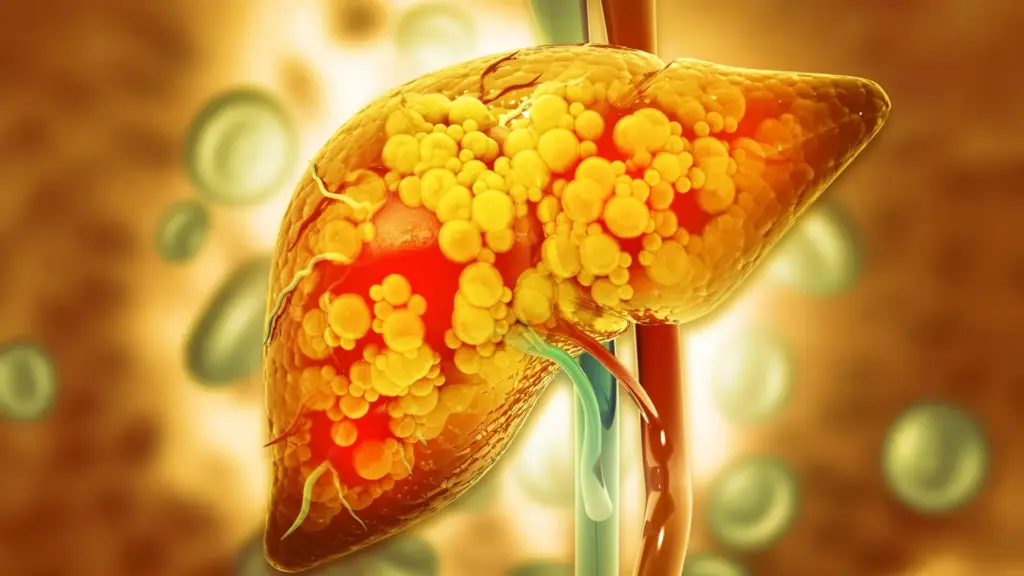
The scope of the public health challenge addressed by the study is immense. According to data from the American Liver Foundation, an estimated 100 million people across the United States currently live with metabolic dysfunction-associated steatotic liver disease, a condition formerly and more commonly referred to as nonalcoholic fatty liver disease. While many individuals live with the early, milder manifestations of the condition, roughly 20% to 25% of those affected will eventually go on to develop metabolic dysfunction-associated steatohepatitis, widely known as MASH.
MASH represents a significantly more serious and aggressive form of the condition. In patients suffering from MASH, the accumulation of excess fat within the liver cells is accompanied by dangerous levels of inflammation, active cellular injury, and progressive scarring, known clinically as fibrosis. Over time, this chronic cycle of inflammation and scarring can fundamentally compromise liver architecture and function, paving the way for cirrhosis, liver cancer, and the ultimate failure of the organ.
Why MASH Is Difficult to Treat
Despite the staggering number of people affected by metabolic dysfunction-associated steatotic liver disease and its severe inflammatory subset, clinical management of the condition remains remarkably challenging. Current standard medical care primarily centers on lifestyle modifications, such as targeted dietary improvements, regular physical exercise, and structured weight loss programs, alongside ongoing clinical efforts to limit any additional sources of stress or damage to the liver.
Although modern pharmacology has introduced some therapeutic medications into the clinical landscape, available treatment options remain severely limited. At present, there is still no definitive cure for MASH, leaving physicians with a pressing need to better understand the underlying molecular mechanisms driving the disease so that more effective and targeted interventions can be developed.
For years, researchers have suspected that cellular dysfunction at the microscopic level plays a central role in transforming simple fatty liver changes into destructive inflammation. Earlier research has strongly suggested that damaged mitochondria—the vital intracellular structures responsible for generating the chemical energy required for normal cellular function and survival—may directly contribute to the onset and relentless progression of MASH. When mitochondria become injured or dysfunctional, they fail to produce energy efficiently and instead begin releasing harmful molecules that trigger inflammation and cell death.
Building upon this foundational knowledge in the new multicenter study, an investigative team led by researchers at Cedars-Sinai sought to examine how specific regulatory proteins interact with these cellular power plants during the course of the disease. Through detailed analyses, the investigators discovered that levels of a specific enzyme known as UBE2N decline significantly within liver cells as steatotic liver disease advances into its more dangerous stages.
"The UBE2N enzyme appears to protect the liver from the inflammation and damage associated with MASH by helping remove damaged mitochondria and supporting the breakdown of fat," said Ekihiro Seki, MD, PhD, professor of Medicine and Biomedical Sciences at Cedars-Sinai and co-corresponding author of the study. "When levels of the enzyme fell, we saw more damaged cells and injury to the liver."
Restoring UBE2N Reduced Liver Damage in Mice
To test whether the loss of this enzyme was merely a bystander or an active driver of pathology, the research team designed a series of controlled experiments using laboratory models. The investigators successfully restored UBE2N back to normal, healthy levels within the livers of these study subjects.
Following the restoration of the enzyme, the research team observed striking improvements across multiple key markers of liver health. Specifically, the experiments revealed significant reductions in abnormal fat accumulation within the liver tissue, alongside marked decreases in tissue inflammation and pathological scarring. These clear therapeutic benefits indicate that maintaining or restoring sufficient levels of UBE2N can actively counteract the destructive cellular cascades that characterize advanced liver disease.
Those promising preclinical results strongly suggest that UBE2N could eventually emerge as a viable and effective treatment target for preventing metabolic dysfunction-associated steatotic liver disease from advancing into destructive MASH. By interrupting the disease process before irreversible scarring occurs, future therapies based on this pathway could alter the clinical trajectory for millions of patients.
"The identification of this enzyme’s role in regulating mitochondria in the liver is an important advance in understanding steatotic liver disease," said Shelly Lu, MD, the Women’s Guild Chair in Gastroenterology and director of the Karsh Division of Gastroenterology and Hepatology at Cedars-Sinai. "Future studies can test whether enhancing this protective pathway can complement existing treatments, identify patients most likely to benefit and lead to new therapeutic approaches for preventing advanced disease."
The collaborative study brought together investigators from multiple esteemed institutions alongside the Cedars-Sinai research team. Additional Cedars-Sinai authors contributing to the work include Michitaka Matsuda, So Yeon Kim, Takashi Tsuchiya, and Yoon Seok Roh.
The broader international research team also included Feng Wang, Jin Lee, Jeong-Su Park, Meizhou Huang, Hwan Ma, Guoyan Sui, Zixiong Zhou, Xufeng Wu, Haram Lee, Soohwan Oh, Hanseul Park, Key-Hwan Lim, Chun-Woong Park, Sang-Bae Han, Jin Tae Hong, and Michael Karin.
Financial support for the comprehensive research project was provided by a diverse array of public and private funding organizations. These sponsors include the National Research Foundation of Korea under grant numbers RS-2025-02273102 and RS-2025-02603096, the Regional Innovation System and Education programme of Chungbuk under grant number 2025-RISE-11-014-03, the Pinnacle Research Award of the American Association for the Study of Liver Diseases awarded to J.L., and the San Diego Digestive Diseases Research Center Pilot and Feasibility Grant supported by the National Institutes of Health under grant number NIDDK P30 DK120515 to J.L. Additional support came from the National Institutes of Health through grant numbers R01DK085252, R01DK138591, and R01CA301632, as well as the National Natural Science Foundation of China under grant number 82404726.