

For more than a decade, every single morning while hand-grinding coffee beans for a trusty moka pot, a familiar routine takes place: 15 to 20 squats. It is a comforting morning ritual, but at its core, it is an exercise in discipline—a deliberate way to ensure that busy workdays do not derail physical maintenance, specifically targeting the glutes to counteract the inevitable strain of hours spent sitting at a desk.
Recently, however, a notable dose of decadence was injected into that disciplined routine, making the morning coffee-grinding ritual an event to look forward to with genuine eagerness. That luxury arrives in the form of an unusual, highly comfortable fusion of footwear and wellness technology: the Nike x Hyperice Air Zoom Hyperslide.
Priced at $250, this high-end recovery slide undeniably flirts with the line of being an expensive gimmick. Yet, it delivers a level of physical comfort and targeted relief that makes it remarkably difficult to put down once experienced. The footwear represents the ongoing collaboration between athletic giant Nike and recovery tech leader Hyperice, combining athletic footwear engineering with active thermal and mechanical therapy.
What to Know About the Nike Hyperice Air Zoom Hyperslide
The foundation of the Hyperslide is a substantial slab of supportive foam, topped by responsive, low-profile Air Zoom units. These are the same pressurized-air and trampoline-like tensile-fiber pods found in Nike’s high-end running shoes, though they have been specifically retuned here for passive comfort rather than high-octane athletic performance.
Underfoot, the Air Zoom cushioning feels simultaneously plush and lightly bouncy. The wide platform underneath provides a reassuring sense of stability, ensuring that feet feel thoroughly coddled and supported whether a user is completing morning squats, walking around a home office, or remaining stationary at a desk.

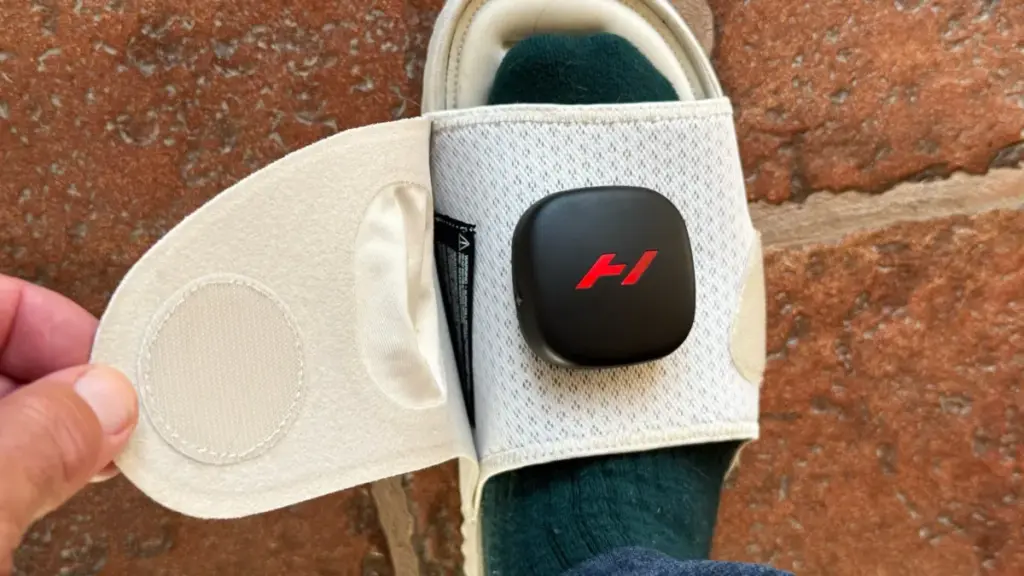
However, that foundational cushioning is only the beginning of what the footwear offers. Hidden beneath the Velcro top straps are a pair of Hyperice pods that magnetically attach directly to the main instep straps. Once engaged, these pods transmit active heat and vibration precisely to the tops of the feet.
Physical buttons located on each side of the pods allow users to easily cycle through three distinct levels of vibration intensity—operating at 50, 75, and 100 Hz—as well as three distinct heat settings, reaching 109 degrees Fahrenheit, 113 degrees Fahrenheit, and 117 degrees Fahrenheit. For those who prefer digital control, the pods can also be managed via a Bluetooth-connected smartphone application. In practical use, however, the primary functional benefit of the app appears to be extending the default 15-minute run time for the massage cycles, as the onboard buttons handle daily adjustments with ease.
What the Nike Air Zoom Hyperslide Feels Like
During initial tests, following recommended protocols by wearing socks and starting at the lowest settings seemed prudent. Quickly, however, the temptation to crank both heat and vibration settings up to their maximum levels proved irresistible. Interestingly, continuing to wear socks turned out to be an effective strategy; the fabric seems to help diffuse and wrap the foot, transmitting the warming and vibrating sensations more evenly across the top of the foot rather than isolating them in a single spot.
It did not take long for a daily craving to develop for the buzzing warmth radiating through the feet each morning. Initially, the sensations felt purely pleasurable rather than strictly therapeutic. That perception shifted dramatically following a routine morning wakeup featuring a sharp, unwelcome pain situated between two metatarsal heads—an issue easily traced back to a slightly awkward, twisting foot plant during a trail run the previous afternoon.
When slipping the foot into the slide and activating the massage function, the initial impact felt somewhat intense directly over the sore spot. Yet, as the combined heat and mechanical vibrations worked to loosen the accumulated stiffness, the localized pain all but vanished, remaining absent for the duration of the entire day.

What Would Make It Better
While the Hyperslides perform their intended function with a level of effectiveness that exceeded initial expectations for a heated, daily-wear recovery slide, prolonged usage brings to light a few minor logistical frustrations.
The onboard batteries are designed to last for approximately one hour on full power, a metric that largely holds true in real-world testing. Because users frequently choose to restart the massage cycle immediately after the initial 15-minute default run, total battery depletion usually arrives on the second day of use. The pods tend to sputter out of power slightly before completing a full 30-minute cycle on that second day, which actually serves as a helpful prompt to plug them in, as it prevents sudden shutdowns without warning.
A notable drawback, however, is the complete absence of a battery-level indicator. When the devices power down unexpectedly, it is impossible to determine whether a recharge is required unless the user meticulously tracks the number of days since the last charge and the exact number of cycles run—a mental burden most people prefer to avoid during a busy morning. The most frustrating scenario occurs when attempting to use the slides under the assumption that they hold a charge, only for the battery to die within a few short minutes, leaving the user facing a three-hour recharge wait. A simple visual indicator for remaining battery life would significantly streamline the user experience.
The only other minor limitation involves the physical distribution of the heat and vibration. While the upper foot receives ample attention, it would be ideal if the thermal and mechanical sensations extended downward to cover the arch more thoroughly. Achieving that level of wrap-around coverage, however, would inevitably require a much larger and more encompassing device, such as a full-foot recovery boot.
Indeed, Nike and Hyperice have previously collaborated on precisely such a device, offering a comprehensive boot design for athletes seeking total lower-leg recovery. While exploring that more robust option remains a possibility for the future, the immediate comfort of the Hyperslides offers an accessible, slip-on, push-button luxury that easily earns its place in a daily morning routine.