


Published November 8, 2026, at 04:00 AM
By Jennifer Malloy
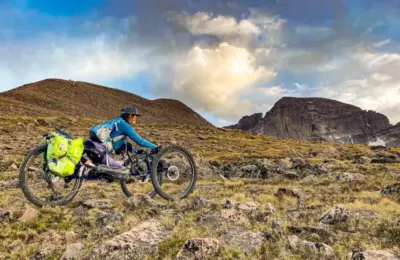
A weak summer sun strains to break through a darkening wall of clouds, its rays catching the shale of Bertha Peak. Boots methodically kick loose rock aside along a steep slope of scree, framing an experience of solitude in the Canadian Rockies. Slick with sweat and weighed down by a chafing helmet, the solo ascent along the ridgeline in Waterton Lakes National Park brings distinct rewards. Pausing to catch a breath, the gaze sweeps south toward the rugged peaks of neighboring Glacier National Park before shifting north toward Calgary and the wild swathes of prairie defining southern Alberta.
Named for Bertha Ekelund—a bold, wayward Waterton pioneer whose colorful past included attempts to pass counterfeit money—Bertha Peak reflects something of the untamed wilderness she called home. Taking in the panoramic view, this is a landscape that continues to reward travelers willing to venture a little farther off the beaten path, a philosophy embraced since childhood visits to the park.
A Quieter Alternative to Glacier National Park
While hikers routinely flock to Glacier’s trails just across the international border, visitors to the Canadian side can enjoy the same wild landscapes without the heavy crowds. At a time when Canada-U.S. relations face increasing political tension and division, this shared wilderness offers a different perspective. Established in 1932 as the world’s first International Peace Park, the Waterton-Glacier International Peace Park stands as a World Heritage site reminding communities that borders can connect as much as they divide. Peace parks have since been established in 30 places around the world, serving as enduring symbols of cooperation, conservation, and understanding between neighboring nations. For Canadians and in-the-know Americans, Waterton offers a quieter way to experience the Rocky Mountains, providing ample room to roam and genuine opportunities for solitude.
Despite sharing a border with Glacier, the day-to-day experience of the two parks remains strikingly different. Waterton Lakes receives a fraction of Glacier’s visitors; in 2025, Glacier recorded more than 3 million visitors, while Waterton welcomed roughly half a million. Travelers can drive the scenic Red Rock Parkway to the ruddy landscape of Red Rock Canyon without waiting in long lines, worrying about congestion-related closures, or booking a shuttle in advance. While backcountry campsites still require permits, visitors avoid fierce competition when reservations open for a night under the stars. A diverse array of trails, ranging from the family-friendly hike to Bertha Falls to the challenging Carthew-Alderson Trail, paired with non-hiking pursuits like kayaking, cycling, and dark-sky viewing, makes Waterton an accessible addition to any cross-border itinerary.

A Landscape Reborn by Fire
In 2027, Waterton will mark the tenth anniversary of the Kenow Wildfire, which burned nearly 20,000 hectares of the park in 2017. The ecological effects remain visible across the terrain. Where thick stands of mature trees once stood, charred trunks now rise from lush undergrowth, surrounded by the vibrant violet blooms of fireweed. The approaching anniversary provides an opportunity to explore a larger narrative of shared landscapes, environmental resilience, and cross-border conservation. As governments debate geopolitical boundaries, the mountains offer a clear reminder that the international boundary is little more than a line on a map, and hiking across it remains an uncomplicated expression of peace. Even amid the initial devastation, the fire revealed the remarkable resilience of the ecosystem and the vital importance of giving nature space to recover.
A decade later, visitors can witness regenerating forests, returning wildflowers, and wildlife—including broad-shouldered grizzlies, shaggy plains bison, and the elusive wolverine—moving freely through a landscape reshaped by fire. It serves as a potent reminder that conservation does not stop at the border. Waterton and Glacier remain a rare model of international cooperation, where hikers traverse mountain paths between countries, wildlife roams unrestricted, and conservation initiatives span two nations.
The Hotel That Became a Speakeasy
The Prince of Wales Hotel, one of Canada’s most famous heritage sites, was built in part to lure booze-starved Americans across the border and away from the strict restrictions of Prohibition. Travelers recognize they have arrived in Waterton Lakes when the historic hotel, perched on a grassy knoll above Upper Waterton Lake, comes into view against a dramatic mountainous backdrop. With the park’s striking peaks and indigo lakes, the hotel faces stiff competition for the spotlight, yet the structure has become an icon in its own right, symbolizing the enduring character of this under-the-radar corner of the Canadian Rockies.
Turning 100 in 2027, the hotel was the brainchild of Louis Hill, a driving force behind the development of Glacier National Park who viewed frequent American travel to Europe as a failure of domestic tourism. World War I and Prohibition delayed construction, and the hotel finally opened its doors in 1927. When Alberta repealed its prohibition laws in 1924, Waterton gained a unique appeal for Americans seeking a legal drink. Today, visitors can take in panoramic views of Upper Waterton Lake and the surrounding mountains while enjoying a meal or a drink in the historic lounge before retiring to a guest room that retains its original charm. Lakeview rooms offer a distinct experience, while the traditional Royal High Tea remains a guest-favorite opportunity to dress up and savor old-world hospitality alongside delicate treats and steaming tea.
A Wilder Side of the Rockies
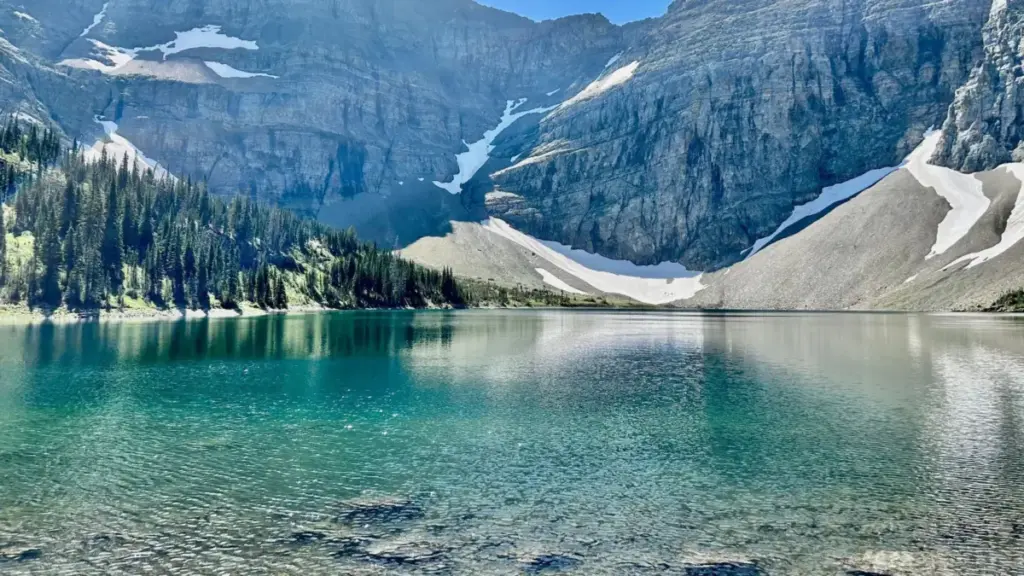
Today, the historic hotel also draws travelers eager to explore the wilderness on its doorstep, where local trails demand physical effort in exchange for sweeping views. For those with time for only one major adventure, local experts recommend Crypt Lake, the park’s best-known hike. The journey begins with a boat ride across Upper Waterton Lake before climbing toward a turquoise alpine basin hemmed in by towering peaks. Near the summit, a narrow cliffside ledge, a 60-foot steel ladder, and a short natural tunnel through the mountain transform a demanding hike into a full-scale alpine expedition.

Elsewhere, the landscape shifts dramatically in character. Red Rock Canyon glows crimson along the Red Rock Parkway, its rust-colored stone providing an unexpected contrast to the surrounding green and grey mountains. At Bertha Falls, water spills smoothly down a rock face before the trail presses onward to Bertha Lake, a high-altitude basin feeling worlds away from the townsite below. From Bear’s Hump, the Prince of Wales Hotel appears miniature against the vast sweep of mountains and water. These routes offer classic, family-friendly adventures with grand scenery and memorable journeys without requiring a full day on the trail.
For hikers seeking longer excursions, Akamina Ridge presents a challenging scramble along an exposed ridgeline leading to panoramic views of Wall Lake, Forum Lake, and the rugged peaks straddling the Alberta-British Columbia border. Another favorite is the extensive Carthew-Alderson traverse, which reveals a wilder side of the park where crowds thin and the scale of the alpine landscape takes over.
Where the Border Becomes a Bridge
From the shore of Upper Waterton Lake, the international border is entirely invisible, but out on the water, travelers quickly realize how arbitrary the division is. Mountains, forests, and wildlife pay no mind to the line separating Alberta from Montana. Boarding the vessels of the Waterton Shoreline Cruise Co., the concept of the world’s first International Peace Park becomes a living reality as a continuous, unbroken wilderness stretches seamlessly across two countries.
Longer interpretive cruises to Goat Haunt, Montana, include a 30-minute stop at the ranger station, offering peak vistas, wildlife viewing opportunities, and the novelty of visiting two countries in a single afternoon without encountering a traditional highway border checkpoint. Hikers crossing the international boundary on foot must carry a valid passport and comply with strict customs reporting regulations on both sides. Travelers entering the U.S. must report through the CBP ROAM app on the day of crossing, while those returning to Canada must report their re-entry to the Canada Border Services Agency by phone. A popular strategy involves hiking one-way to Goat Haunt and returning via the shoreline boat.
Waterton’s history extends far beyond mountain trails and historic townsite buildings. Scuba diving is permitted in Waterton’s lakes; while the water remains cold, visibility can be exceptional, making the sheltered waters of Emerald Bay on Upper Waterton Lake popular among divers. Beneath the surface at a depth of roughly 65 feet lies the wreck of the Gertrude, an early-20th-century paddle wheeler.

For those preferring warmer-weather lake activities, renting a kayak, canoe, or stand-up paddleboard provides an alternate perspective of the mountain scenery from the water. Parks Canada mandates that all non-motorized watercraft entering Waterton’s lakes must be rented within the park boundaries, with local outfitters including Blakiston & Company in town and Cameron Lake Boat Rentals on the shore of Cameron Lake.
For a glimpse of Waterton after dark, stargazing tours with Dark Sky Guides offer nocturnal exploration. Co-founded by Keith Robinson—a professional guide with 25 years of experience who was born and raised in the park—the tours highlight the local ecosystem. Waterton was designated an official International Dark Sky Park in 2021, prompting Parks Canada to replace community streetlights with custom amber fixtures designed to minimize light pollution, utilizing roughly one-third of the power consumed by major cities. The resulting darkness makes Waterton one of the more southerly locations to regularly witness the aurora borealis, providing a family-friendly introduction to nocturnal wildlife and astronomy.
Winter’s Wild Side
Winter in Waterton is not for the faint of heart, bringing heavy snow, freezing temperatures, and fierce winds. However, travelers willing to brave the elements often find the frost-dusted landscape nearly deserted. Winter serves as prime time for stargazing and aurora spotting, and earlier sunsets mean visitors can observe celestial phenomena without staying up late into the night.
By day, the park transforms into a snowy playground supporting cross-country skiing, snowshoeing, fat biking, wildlife watching, and winter walking. A popular excursion involves skiing or snowshoeing approximately two miles toward Cameron Lake, where visitors utilize a six-person backcountry cabin managed by the Alpine Club of Canada to experience winter camping without avalanche hazards. The Red Rock Parkway also closes to vehicles in winter, converting into a nine-mile corridor for non-motorized winter recreation.
While most local businesses close for the season, Kilmory Lodge remains open to guests, offering evening fireside warmth and meals at the Lamp Post Dining Room. The Parks Canada visitor center remains open daily throughout the winter months, supplying trail maps, weather updates, and essential safety advice. Visitors are advised that local grocery stores and gas stations do not operate during the winter season, requiring travelers to arrive with full tanks of fuel and adequate provisions.

Jennifer Malloy is a freelance writer based in Calgary, Alberta.