
A quarter of a century after its landmark broadcast, the emotional resonance of Buffy the Vampire Slayer continues to anchor its legacy, driven by a philosophy born in one of television’s most defining season finales. Throughout its seven-season run on television, death served as a persistent, underlying shadow for Buffy Summers, brilliantly portrayed by Sarah Michelle Gellar. Across various arcs, the iconic vampire slayer either desperately sought to escape her inevitable mortality or, in moments of ultimate sacrifice, boldly ran toward it.
Upon a retrospective rewatch, the theme of death permeates nearly every corner of the series—a nuance that often escapes first-time viewers who might react in sheer disbelief whenever the narrative flirts with the permanent demise of its protagonist. Early on, audiences naturally assumed network television would never truly cross that final threshold with its hero. Yet, the creative team, led by series creator Joss Whedon, proved unafraid to challenge those boundaries, culminating in a fifth-season finale that fundamentally reshaped the trajectory of the entire series.
A Sister Out of Nowhere
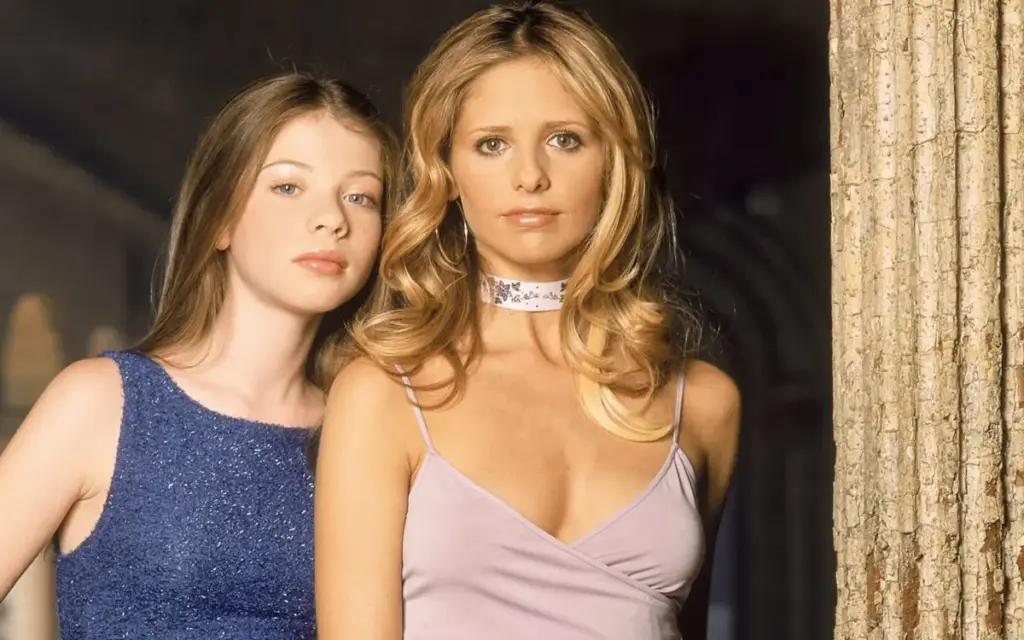
The fifth season of Buffy the Vampire Slayer stands as one of the show’s most emotionally complex and daring narrative blocks, largely due to its commitment to a brand-new central dynamic: the intricate relationship between Buffy and her sudden younger sister, Dawn, played by Michelle Trachtenberg. Series creator Joss Whedon previously noted that he introduced Dawn specifically to provide Buffy with an intense, foundational dynamic that did not rely on romantic entanglements. Following multiple seasons heavily driven by Buffy’s relationships with Angel, Riley Finn, and the burgeoning hints of Spike, the introduction of familial responsibility offered a refreshing shift, forcing Buffy to navigate anger, profound joy, and absolute distress over an entirely different kind of bond.
The arrival of Dawn ranks among the most jarring twists in television history. Buffy, who had established herself as a notorious single child for the vast majority of the show, suddenly possessed a sibling, introduced via a casual throwaway moment that left many viewers questioning if they had accidentally skipped several episodes. However, Dawn’s abrupt appearance was far from a careless plot hole. The remainder of the season meticulously deconstructed the mystery, ultimately revealing that Dawn was not human at all, but rather "The Key"—an ancient parcel of mystical energy forged into human form by a group of monks who simultaneously implanted manufactured memories into the minds of Buffy, her friends, and the entire town of Sunnydale.
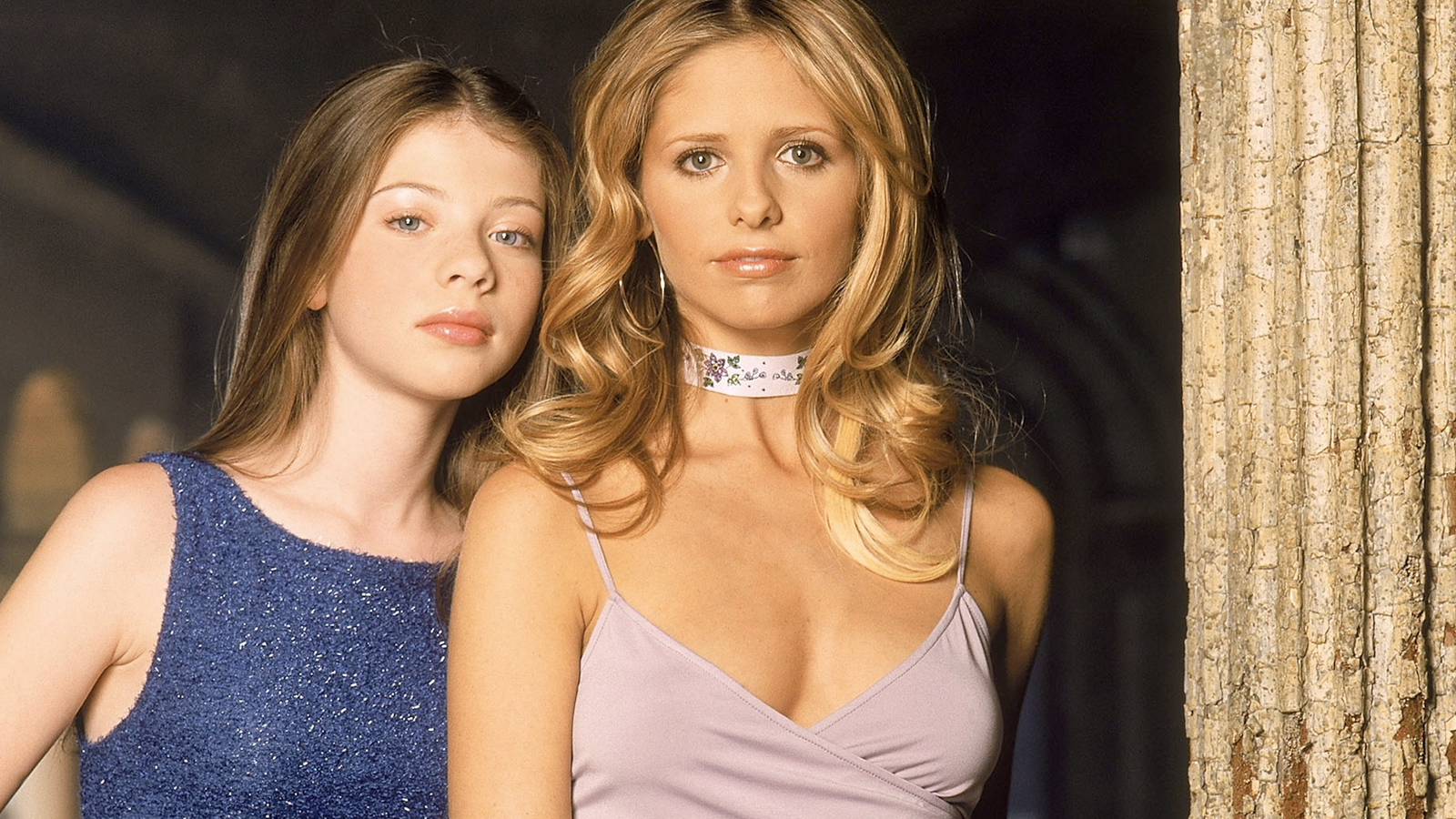
Dawn’s arrival officially signaled the definitive end of Buffy’s teenage era. The season operates as a relentless coming-of-age crucible, forcing the young Slayer to mature rapidly while systematically stripping away every element that provided her with a sense of security and normalcy. With the departure of her human boyfriend Riley and the devastating, unexpected death of her mother, Joyce, the series permanently shed its lighter, early-season veneer. From that juncture onward, Buffy the Vampire Slayer could no longer be viewed simply as a lighthearted chronicle of a scrappy group of teenagers fighting monsters to save the world; it had matured into a profound exploration of grief, duty, and sacrifice.
What Buffy Leaves Behind
The fifth-season finale, titled "The Gift," was written and directed by Joss Whedon and successfully tied together numerous overarching storylines introduced in the show’s earliest episodes. Throughout the season, the dynamic between Buffy and Dawn evolves dramatically, transitioning from initial sibling rivalry and annoyance to a deeply protective, maternal caretaking role. Although Buffy discovers the truth of Dawn’s supernatural origins relatively early, the revelation changes nothing; to Buffy, Dawn remains the most important person in her universe and the only remaining family she has left. Consequently, when her watcher, Rupert Giles, briefly brings up the terrifying possibility of sacrificing Dawn to permanently halt a destructive dimensional ritual, Buffy immediately and fiercely shuts the conversation down.
The title "The Gift" itself originates from a poignant line delivered in the earlier episode "Intervention," wherein Buffy embarks on a spiritual vision quest to encounter the First Slayer—a prehistoric girl who bluntly tells her, "Death is your gift." This stark phrase reinforces Buffy’s deepest insecurity: the nagging fear that she is fundamentally a cold-blooded killing machine, sharing more in common with the vampires and demons she hunts than the vulnerable human world she fights so desperately to protect and belong to.
However, Buffy’s final words to Dawn completely redefine the true meaning of that gift. For Buffy, being the chosen Slayer was never truly about brute strength, combat prowess, or raw power; it was always about profound, selfless sacrifice. As Sunnydale literally collapses around them and a dangerous mystical portal threatens to tear reality apart, Dawn attempts to sacrifice herself to close it. Buffy intervenes, stopping her sister and delivering the line that would echo through television history.

"The hardest thing in this world is to live in it," Buffy tells her, holding her close. "Be brave. Live. For me."
Sharing the exact same bloodline, Buffy realizes she is uniquely capable of closing the portal herself. She leaps into the glowing abyss, embracing her own demise and bringing a definitive close to an overarching thematic arc that had been quietly teased since the very first season.
Because the series was facing network uncertainty at the time—serving as the final season to air on The WB before moving to UPN for its final two years—Whedon and his production team deliberately crafted "The Gift" to function as a definitive series finale. They consciously engaged in a narrative conversation with "Prophecy Girl," the dramatic finale of season one. That early episode featured a much younger, terrified Buffy who was paralyzed by the fear of dying and barely able to face the Master. In stark contrast, Buffy steps forward in season five and chooses death with absolute calm and resolute clarity, knowing it is the only way to ensure her sister survives.
The episode concludes with an indelible visual: Buffy’s friends mourning her loss amidst a chaotic mountain of rubble, while Dawn internalizes her sister’s final, haunting mandate. The camera pans away from the tragic scene to a simple, poignant tombstone resting in the earth, bearing the final epitaph: Buffy Anne Summers. Beloved sister. Devoted friend. She saved the world a lot.