

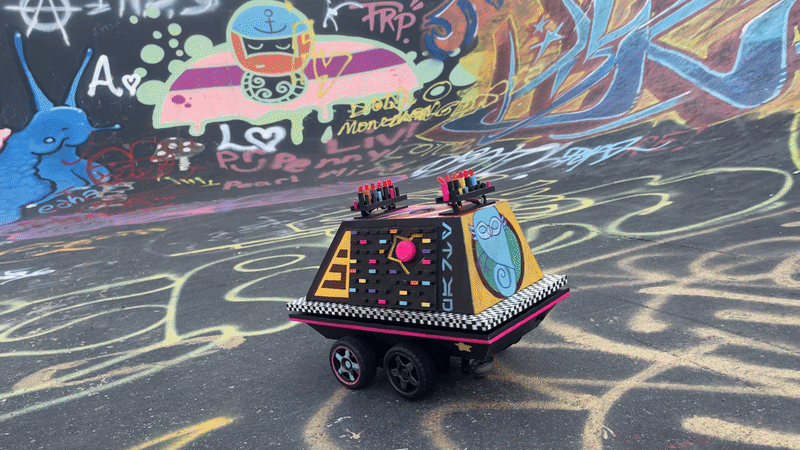
In the vast and enduring universe of Star Wars, few background characters are as instantly recognizable—or as delightfully utilitarian—as the MSE-6 series, colloquially known as the mouse droid. Originally scurrying through the sterile, monochromatic hallways of the Imperial Death Star in the 1977 classic film, these small, low-slung rolling robots have long captured the imaginations of fans who see charm in their toaster-on-wheels aesthetic. Meanwhile, across the broader expanse of modern Star Wars animation, characters like the Mandalorian artist and rebel Sabine Wren from Star Wars Rebels have popularized a distinctly colorful, anti-authoritarian aesthetic defined by vibrant graffiti and artistic defiance.
For Canadian maker Cass, the creative force behind the online persona Chaos Theory, the intersection of these two iconic styles presented a compelling creative question: What would happen if a standard-issue Imperial mouse droid completely abandoned its bureaucratic, oppressive duties and received a thorough artistic makeover from a prolific rebel graffiti artist?
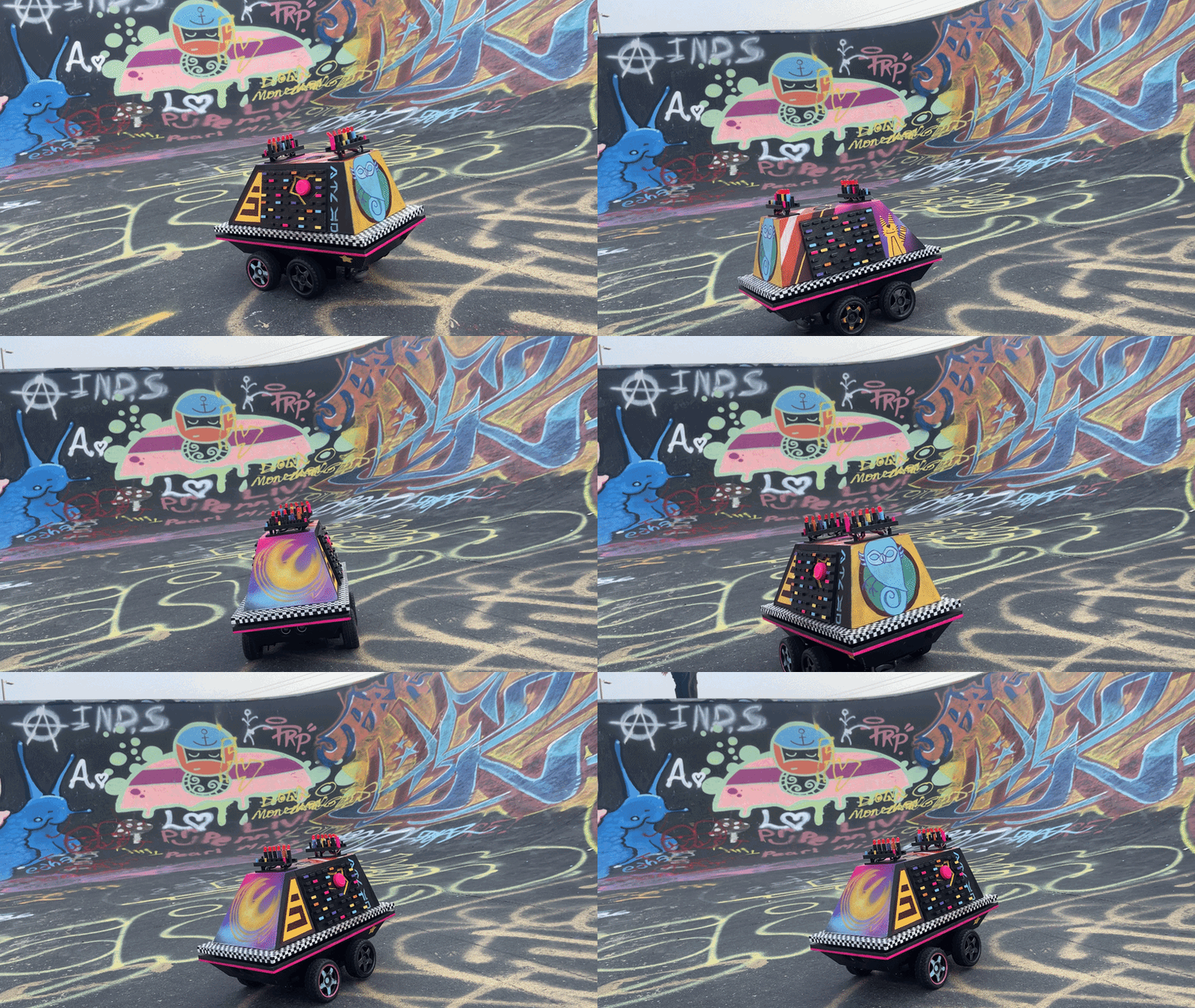
Seeking the answer the hard way, Cass set out to build an open-source, fully autonomous, 3D-printed droid that trades its corporate Imperial allegiance for the colorful life of a rebel rave machine. The project is far more than a simple cosmetic reskin of an existing toy or remote-controlled car chassis. It represents a deeply considered labor of love that balances advanced hobbyist engineering with a distinct artistic vision, complete with custom autonomous navigation, a dedicated panic mode, and a functional party button designed to turn any quiet workshop into an impromptu celebration.
Designing and executing a project of this scale required a sophisticated blend of hardware and software engineering. At the conceptual heart of the build is an Arduino UNO microcontroller, which serves as the central processing brain for the autonomous behaviors. Audio cues and atmospheric sounds are handled by a DFPlayer Mini MP3 module, allowing the tiny droid to vocalize its new rebel personality. To ensure the machine could successfully navigate its environment without human intervention, Cass integrated an ultrasonic distance sensor, giving the robot the ability to detect obstacles, react to its surroundings, and alter its path dynamically.
Because these specific electronic components do not typically come pre-installed in standard commercial vehicles or traditional remote-controlled hobby cars, Cass determined early in the development process that building the platform from scratch was the most viable path forward.

Reflecting on the engineering and design process, Cass noted that while the primary outer shell was entirely custom-designed and 3D printed, existing structural elements were initially incorporated to streamline early development. A flat metal Mecanum chassis was utilized underneath purely as a sturdy structural mounting point for the motors, providing a reliable foundation during the prototyping phase.
"It gave me something sturdy for the motors to screw into while I was developing the rest of the chassis," Cass explained, discussing the iterative nature of the build. "If I were to build a version two, I would probably eliminate the Mecanum support entirely and mount the motors directly using brackets attached with heat-set inserts."
Beyond structural optimization, designing the chassis from the ground up offered significant practical advantages for the broader maker community. By creating custom 3D-printable files, Cass ensured that the project remains highly replicable for other enthusiasts. Anyone with access to a standard 3D printer can download the design files and fabricate their own version of the rebel mouse droid without needing to hunt down specific, discontinued remote-controlled car models or struggle to adapt an ill-fitting commercial platform.

At the same time, the project served as an opportunity for personal skill development and technical exploration. Cass embraced the challenge of pushing her technical boundaries, notably incorporating heat-set inserts into the assembly process for the very first time. These threaded brass inserts, melted into the plastic printed parts using a soldering iron, provide durable, professional-grade fastening points that significantly improve the structural integrity of the finished robot. The success of this technique has left the maker highly satisfied with the final build quality, reinforcing the core philosophy that the joy of pushing creative and technical skills forward is often the best reason to embark on a complex build.
For fans of the franchise and the maker community alike, the finished project bridges the gap between classic cinematic nostalgia and modern open-source hardware engineering. The resulting robot successfully captures the rebellious spirit of the animated series while honoring the nostalgic design of the original trilogy.
Makers and Star Wars enthusiasts interested in replicating the build, exploring the code, or reviewing the fabrication files can find detailed instructions and project documentation hosted on Instructables, while ongoing discussions about the build continue within the broader maker community online.