


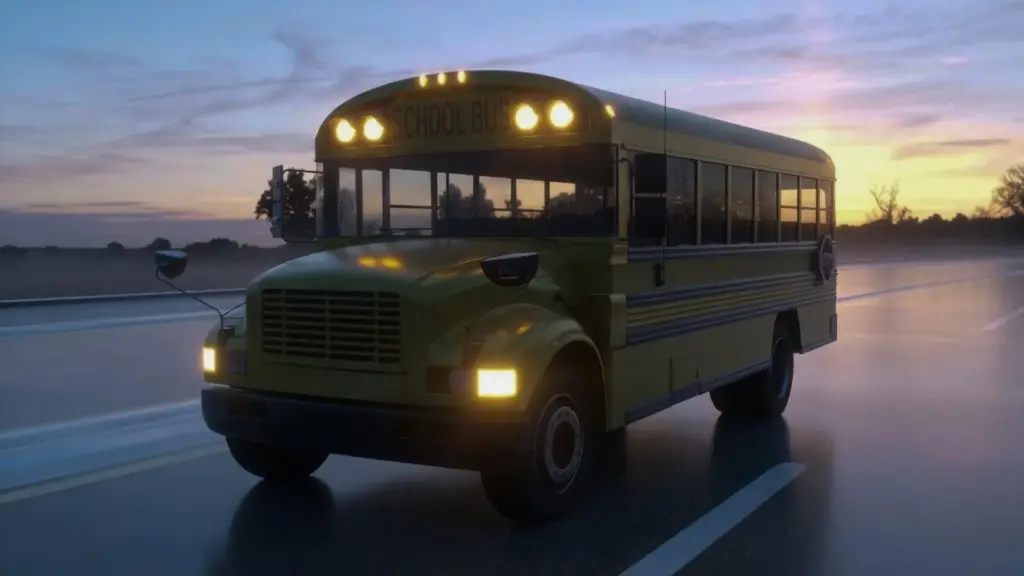
Keeping daylight saving time in effect all year could bring brighter evenings, but new research suggests the change would come with a troubling consequence for American children. A nationwide switch could result in at least 2 billion additional trips to school in darkness, potentially increasing safety risks while reducing children’s exposure to important morning sunlight.
The debate over permanent daylight saving time has steadily gained momentum in the halls of Washington, D.C. This past summer, the U.S. House of Representatives approved legislation that would eliminate the annual return to standard time in the fall. Nineteen states, including Washington, have already approved measures supporting the change, which would take effect in those specific states if the federal bill successfully becomes law.
However, the legislation remains stalled in the U.S. Senate, with school start times emerging as a major and contentious concern among lawmakers and educators. Permanent daylight saving time would push sunrise an hour later during the winter months, leaving mornings significantly darker from November through March. Although this shift would naturally affect everyone traveling early in the day, researchers at the University of Washington wanted to understand what it would mean specifically for children heading to school.
Permanent Daylight Saving Time Could Add Billions of Dark School Commutes
To measure the potential real-world impact, the research team closely examined 14 of the 19 states that have already approved permanent daylight saving time measures. They combined official school enrollment figures, individual school start times, and precise geographic coordinates to determine how frequently students would need to travel to school before the sun rises. The researchers then calculated the total number of these trips under the proposed permanent system and compared it with the current practice of changing clocks twice a year.
The results revealed substantial and concerning increases. In Washington state alone, permanent daylight saving time would produce nearly 35 million additional school commutes in total darkness. Similar patterns emerged across the other 13 states analyzed in the study, with Georgia showing the largest single increase at approximately 71 million additional dark trips.
When the researchers extended their findings to estimate the broader nationwide impact, they calculated that permanent daylight saving time would create at least 2 billion more trips to school before sunrise compared with the current system.
The potential consequences go far beyond merely inconvenient mornings for parents and students. A careful analysis of historical U.S. traffic collision records found that fatal crashes involving school-aged pedestrians were roughly twice as likely to occur during dark mornings as they were after sunrise. These alarming findings were published October 29 in the scientific journal Current Biology.
"It’s called the ‘Sunshine Protection Act’ because you get an extra hour of light at the end of the day. But you will take that hour from the morning. You could call it the Sunshine Destruction Act," said senior author Horacio de la Iglesia, a professor of biology at the University of Washington. "These dark mornings will inequitably affect children who have to go to school at a certain time. It’s a very tangible metric that anybody from any state or socioeconomic background can relate to. Nobody wants their kids to go to school in the dark."
Why Morning Sunlight Matters for Children’s Health
Beyond growing concerns about traffic safety and pedestrian accidents, losing access to morning sunlight could actively interfere with the human body’s natural daily rhythms. Bright light early in the day helps synchronize the circadian clock, the internal timing system that influences sleep cycles, mood, appetite, and a wide array of other important biological functions. When people receive too little natural morning light, maintaining these essential biological rhythms can become considerably more difficult.
For children, who must typically follow rigid, fixed school schedules, darker mornings could mean missing a valuable and irreplaceable opportunity to receive daylight at a time when their growing bodies desperately need it.
"When we send kids to school in the dark, we are depriving them from an opportunity to get that morning daylight," said lead author Guadalupe Rodríguez Ferrante, a postdoctoral researcher in biology at the University of Washington. "We were asking what’s the cost for these children. We wanted actual numbers, a real number of kids based on the geographic location of each school."
The researchers also identified which specific communities would experience the greatest and most dramatic changes. Schools located near the western boundaries of time zones, including those in communities like Forks, Washington, would be particularly affected because sunrise already occurs relatively late in those geographic locations. School districts that choose to begin classes early in the morning would face similarly massive increases in dark commutes.
Mississippi and Alabama offer striking examples of this geographic vulnerability. Schools in both states begin, on average, well before 8 a.m. Under the current clock system, each state has approximately 2 million school trips occurring in total darkness. Under a system of permanent daylight saving time, that figure would skyrocket to more than 20 million trips per state.
"Some districts probably never experience a dark commute under the current system, and, if this passes, suddenly they will wake up to this new reality that their kids are going to school in the dark," Rodríguez Ferrante said. "Keep in mind that we used the actual start time listed for each school, and a lot of schools offer breakfast or other things before school, so the kids could be getting there even earlier."
Why the 2 Billion Estimate May Be Too Low
Although the researchers used detailed, localized school information to calculate changes across 14 states, their nationwide estimate required broader assumptions. To project what would happen if the entire United States adopted permanent daylight saving time, they assumed students would generally be leaving for school at around 8 a.m.
Because many children begin traveling much earlier, the research team firmly believes the projected increase of approximately 2 billion dark commutes may substantially underestimate the actual impact on American families.
"For the estimation, we assumed students would be leaving home around 8 a.m.," Rodríguez Ferrante said. "That’s pretty late, so our calculation is likely an underestimation of the real number."
The findings also raise serious questions about ongoing nationwide efforts to improve teenagers’ sleep health by delaying high school start times. Adolescents typically possess biological clocks that naturally shift later than those of younger children and adults, making later school schedules highly beneficial for their development. The researchers argue that permanently moving clocks forward could undermine some of those hard-won public health gains by making morning sunlight much less accessible.
One possible solution frequently discussed would be to start school later to compensate for the darker winter mornings. However, de la Iglesia argues that such a change could trigger unexpected ripple effects throughout daily life, potentially requiring families and workplaces to adjust their own schedules as well.
"I’ve heard the argument, ‘If we’re in permanent DST, we can just delay the school start time to address these issues,’" de la Iglesia said. "Well, if we do that, you will end up going to work later. And everything is going to get delayed. You will get out of work an hour later, and you will miss the opportunity to enjoy your evening light. And essentially, we’re just going to be realigning everybody to solar time. That, by definition, is Standard Time."
The researchers’ findings highlight a central and difficult tradeoff in the ongoing political and public debate over permanent daylight saving time. While eliminating seasonal clock changes would provide more evening sunlight during the dark winter months, the additional daylight would come at a direct expense to morning light, potentially affecting
children’s physical safety, sleep patterns, and daily routines across the country.