


Nearly a year into her tenure as the president of Nintendo of America, Devon Pritchard is stepping forward to share her strategic vision for the legendary Japanese gaming enterprise. Taking the reins from longtime executive Doug Bowser this past January, Pritchard finds herself steering the company during a remarkably advantageous window in the broader console generation cycle. At the absolute core of her master plan is the relative youth and burgeoning momentum of the Nintendo Switch 2, a piece of hardware that presently positions the company well ahead of its chief industry rivals, Microsoft’s Xbox and Sony’s PlayStation, both of which find themselves navigating the mature, winding-down phases of their respective older-model life cycles.
"We’re just at the beginning of seeing what Nintendo Switch 2 can do," Pritchard observes, emphasizing the immense runway ahead for the platform. Released in June 2025, the console has already raced past a staggering 23 million units sold globally, bolstered by a robust library encompassing hundreds of titles ranging from first-party blockbusters like Mario Kart World to acclaimed third-party experiences such as Resident Evil Requiem.
When compared directly with its immensely popular first-generation predecessor, the Switch 2 introduces significantly enhanced graphical capabilities and upgraded processing power, engineering advancements that directly enable entirely new paradigms of play. According to Pritchard, these technical upgrades unlock a diverse array of avenues for third-party and internal developers alike, paving the way for creative design choices and interactive experiences that simply cannot be replicated on any other contemporary hardware ecosystem.
These strengthened technical capabilities have fundamentally shifted how major industry publishers view the platform, serving as the primary catalyst behind high-profile returns. Most notably, Microsoft’s Activision is bringing its blockbuster Call of Duty franchise back to a Nintendo console for the first time in over a decade. This upcoming fall, the juggernaut military shooter series will officially launch Call of Duty: Modern Warfare 4 on the Switch 2 simultaneously alongside its traditional deployments on Xbox and PlayStation systems. Industry analysts view this multi-platform release as a definitive validation of the system’s ability to seamlessly handle fast-paced, graphically demanding action games that historically bypassed Nintendo hardware.
Despite welcoming heavy-hitting, action-oriented titles into its fold, Nintendo remains deeply committed to its historic philosophy of broad-market appeal, striving to captivate players across all stages of life.
"We have historically said that Nintendo is for ages 5 to 95, and that continues to be true," Pritchard notes, elaborating on the company’s continuous push for content variety. "We want to provide a diversity in terms of the types of experiences that you can have on the game system, and that’s really important for us."
This philosophy is reflected in the diverse tastes of the current gaming public, where some users eagerly anticipate deep role-playing adventures like Fire Emblem: Fortune’s Weave, while others lean toward more relaxing, atmospheric titles such as the cozy Pokémon Pokopia. For Pritchard, maintaining a balanced ecosystem where distinct creative visions can thrive side-by-side remains paramount to keeping the community engaged and entertained.

This expansive strategy naturally prompts industry speculation regarding whether the Switch 2 tent is vast enough to comfortably house one of the most anticipated entertainment events of the decade: Rockstar Games’ Grand Theft Auto VI. Slated for release this November and bearing an M rating for mature content and adult themes, GTA 6 represents the pinnacle of modern gaming hype. While industry observers debate whether the console possesses the raw horsepower to host such a massive, technologically complex open-world title, Pritchard remains carefully measured, declining to confirm whether the game is bound for the platform.
"That’s going to be a conversation for Take-Two and Rockstar, but nothing to announce on my end at this time," Pritchard says regarding the possibility of the blockbuster title arriving on Nintendo hardware.
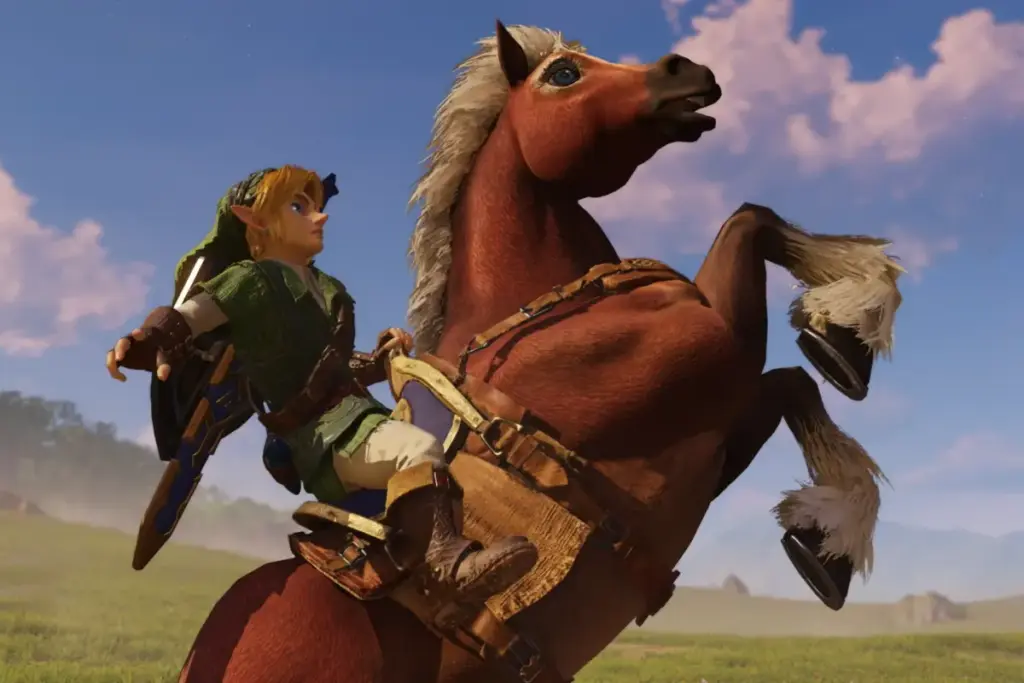
Beyond maximizing the early innings of the Switch 2 life cycle, Pritchard is simultaneously orchestrating a historic corporate milestone designed to propel her team toward sustained success: the 40th anniversary of The Legend of Zelda franchise. To properly honor four decades of adventure, Nintendo is rolling out a multi-tiered celebration that touches nearly every corner of entertainment. The centerpiece of this campaign is the release of a comprehensive remake of the beloved classic The Legend of Zelda: Ocarina of Time—standing as a high-profile release bold enough to directly enter the crowded November marketplace alongside competing juggernauts like GTA 6.
Beyond interactive software, the anniversary campaign expands into live entertainment with a dedicated Zelda-inspired concert series, culminating next April in the theatrical debut of the live-action Zelda feature film, produced in close collaboration with Sony. However, executing an anniversary campaign of this sheer magnitude requires a delicate balancing act to ensure that both lifelong devotees and fresh-faced newcomers feel equally welcomed into the fold.
"I think it’s really about the celebration of Zelda and the Zelda universe in its entirety," Pritchard explains, describing the inclusive ethos guiding the milestone. "It’s Link, it’s Zelda, and all the other characters. I think it’s more about, how do we create a celebration that everyone can come in and join and connect with that world?"
This cross-media expansion also raises questions about potential integrations within physical spaces, such as Universal’s Super Nintendo World theme park lands, which could theoretically host limited-time Zelda thematic takeovers. Yet, Pritchard remains acutely mindful of how such additions might impact existing attractions, noting the importance of preserving deeply immersive environments already anchored by iconic properties like Mario and Donkey Kong. For Nintendo, brand expansion must always feel entirely natural rather than forced.
"Whether it’s the theme park, whether it’s movies, anything we’re going to do is going to be deliberate and thoughtful about that experience that you’re having," Pritchard concludes.