





The stock market continues to surprise observers, moving from record highs to unprecedented valuations and prompting familiar anxieties among investors. When markets crash, retirement portfolios shrink; when they surge to dizzying heights, investors worry that a catastrophic correction is inevitable. Today, that prevailing anxiety is largely anchored to the frenzied boom surrounding Artificial Intelligence, leading many to fear a repeat—or an escalation—of the dot-com crash of the early 2000s.

For those who have tuned out the financial news cycle, the current AI story revolves around rapid technological advancements, massive capital inflows, and soaring tech valuations. Yet, the underlying fear among investors is that the mania is moving too fast, setting the stage for a major economic downturn. This historical parallel carries particular weight for figures like early retirement advocate Mr. Money Mustache, whose own early career was propelled by the dot-com boom before the subsequent crash nearly derailed his livelihood and citizenship application. Addressing these concerns at recent industry gatherings, financial commentators are increasingly emphasizing that while market volatility is a given, the panic surrounding technological bubbles often obscures broader economic realities.

Will the AI Bubble Ruin Our Retirement?
Achieving long-term financial independence often brings a sense of security, yet even those retired for over two decades frequently encounter persistent anxiety from friends and peers. Conversations about the state of the world often revolve around a familiar catalog of worries: dangerous geopolitical leaders, rising inflation, towering national debt, and the looming threat of global conflicts.

Curiously, these anxieties are remarkably persistent across generations. Looking back twenty years to 2006, investors harbored strikingly similar fears. Back then, the headlines featured different geopolitical leaders, ongoing conflicts in the Middle East, concerns over national debt and inflation, and anxieties regarding an overvalued stock market driven by the housing bubble rather than AI. Instead of artificial intelligence threatening jobs, the prevailing fear was outsourcing labor to India and China. There was even widespread panic over "Peak Oil," with predictions that fossil fuel consumption would inevitably outstrip supply and doom the global economy.

Despite those severe warnings, the subsequent two decades demonstrated considerable economic resilience. Even when the Great Financial Crisis struck—fueled by irrational exuberance over housing prices and complex financial leverage—the long-term trajectory of the stock market continued upward over a multi-decade horizon. Broad global indicators also improved significantly over the same period. Extreme poverty rates dropped substantially, infant mortality was cut in half, and clean energy adoption accelerated as solar panel costs plummeted. Electric vehicle adoption similarly transitioned from a theoretical concept to a major market segment.

These historical comparisons raise a fundamental question: whether current anxieties regarding national debt, AI valuations, or potential technological displacement genuinely differ from past crises, or whether they simply represent the latest iteration of cyclical market fears.

Prosperity Comes From Productivity
Financial media frequently amplifies scary narratives about market bubbles and economic collapse, but these pessimistic forecasts often overlook a foundational economic principle: true prosperity is driven by productivity rather than financial market fluctuations.

The mechanisms of capitalism are inherently volatile and prone to sudden swings, but beneath the surface of the financial system, real people continue to perform real work and develop tangible inventions. Financial systems and stock market indices are ultimately human constructs; if a system experiences a severe correction, economies have repeatedly demonstrated the capacity to restructure, adapt, and resume productive output. Standard of living, economic growth, and the viability of early retirement strategies fundamentally stem from sustained productivity enhancements rather than speculative asset pricing.

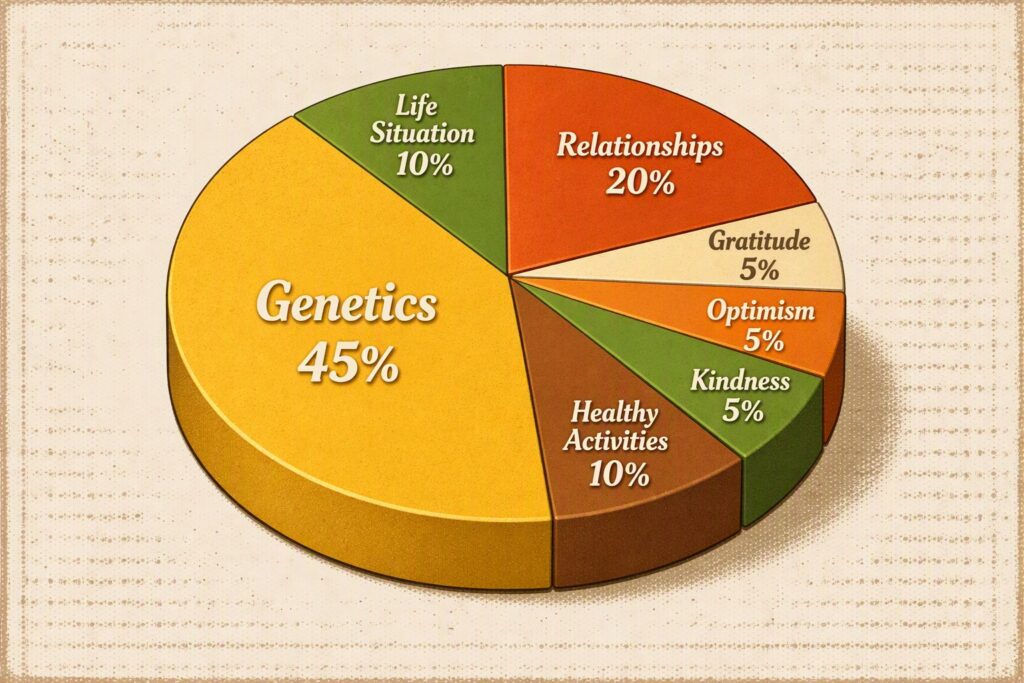
Furthermore, once societies achieve a certain baseline standard of living, human well-being relies far more heavily on non-financial factors. Psychological research and general lifestyle studies indicate that factors such as genetics, close personal relationships, community engagement, gratitude, and physical health play a vastly more significant role in overall life satisfaction than incremental changes in net worth.
Understanding and Managing Financial Fear
A major driver of ongoing anxiety among investors is not necessarily the objective state of the economy, but fear itself. Human beings evolved as danger detection machinery, a psychological trait designed to protect against physical threats. However, in modern environments where immediate physical survival risks are largely mitigated, this detection machinery often persists, shifting its focus toward abstract worries such as financial scarcity, social belonging, and asset management.

This constant shifting of goalposts means that even individuals who achieve upper-middle-class stability or successful early retirement often pivot to worrying about tax strategies, estate planning, or government-mandated withdrawals from retirement accounts. Overcoming this pervasive background fear requires self-awareness, an understanding of one’s personal and familial history with money, and a rational examination of worst-case scenarios.

Taking concrete action remains one of the most effective antidotes to anxiety. By transforming the unfamiliar into the familiar, individuals build resilience and confidence in their ability to adapt to changing circumstances. Furthermore, reducing exposure to sensationalized daily news cycles and surrounding oneself with optimistic, solution-oriented communities can fundamentally alter an individual’s mental outlook.

Viewing Technological Shifts as Experiments
Approaching major life changes—ranging from career transitions and early retirement to the rapid rise of new technologies—through the framework of an experiment can significantly reduce apprehension. Rather than viewing artificial intelligence purely as an existential threat or a guaranteed catalyst for economic ruin, many technologists and economists analyze it as a powerful new tool for efficiency.

AI functions largely as a sophisticated form of cognitive leverage, capable of boosting productivity across various sectors. While technological revolutions historically displace certain categories of workers—impacting entry-level administrative, financial, and eventually transportation roles—they simultaneously drive down the cost of services and catalyze the formation of entirely new industries, much like the advent of the internet and mobile computing.
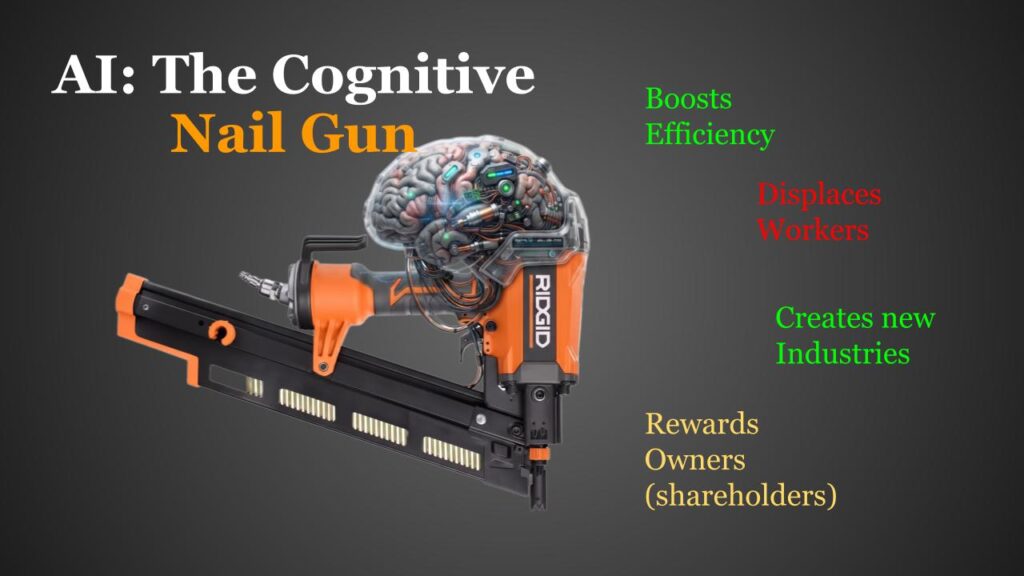
Ultimately, technological innovations like artificial intelligence present society with choices. Whether these developments are viewed with paralyzing fear or embraced as catalysts for learning and adaptation depends largely on individual perspective. As long-term financial observers frequently note, pursuing a fulfilling life often requires confronting and moving past deeply ingrained apprehensions about an uncertain future.