




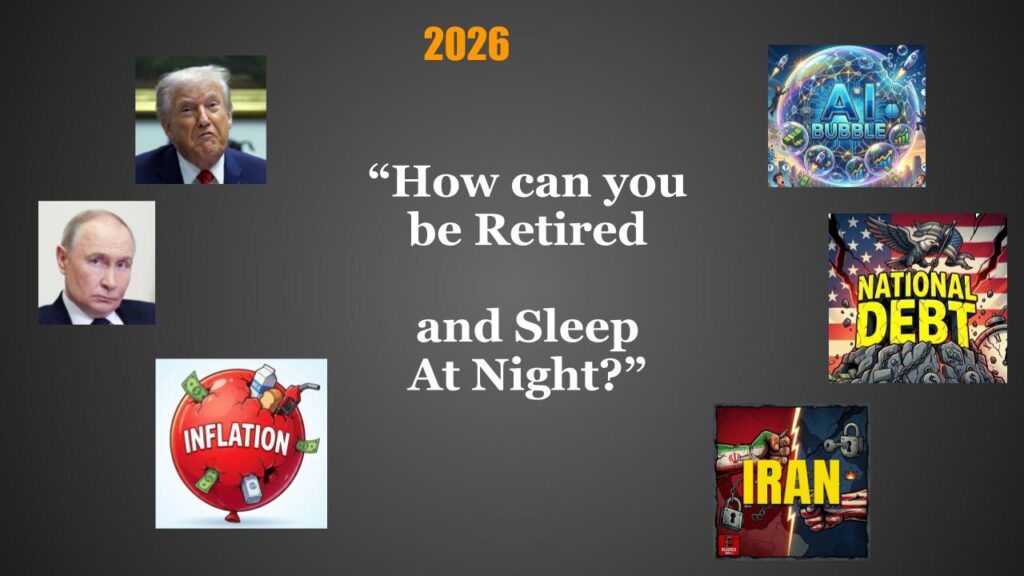
As financial markets continue to scale unprecedented heights, propelled largely by a global frenzy surrounding Artificial Intelligence, investors are once again grappling with an unsettling familiar question: How high is too high, and when will the inevitable crash arrive?
For observers who have tuned out the financial media’s daily cycle of panic, the current economic climate is simply another chapter in the long-running saga of the stock market. However, for those tracking retirement portfolios and following the breathless headlines about tech valuations, the current AI boom evokes uneasy memories of past market corrections, most notably the dot-com bubble of the early 2000s.

The parallels between past speculative manias and today’s technological gold rush have become a central topic of discussion within the financial independence community. Financial commentators, including prominent early-retirement figures who cut their teeth during the turn-of-the-century tech boom, are increasingly addressing these anxieties through public speaking engagements, such as recent presentations at Camp FI Midwest and upcoming addresses at the Bogleheads conference.
Will the AI Bubble Ruin Our Retirement?
The psychological weight of market volatility often leads to persistent anxiety among retirees and those nearing the end of their working years. Conversations with long-term retirees frequently reveal a deep-seated underlying worry: how to maintain peace of mind amidst continuous global turbulence, shifting geopolitical tensions, and fluctuating economic indicators.

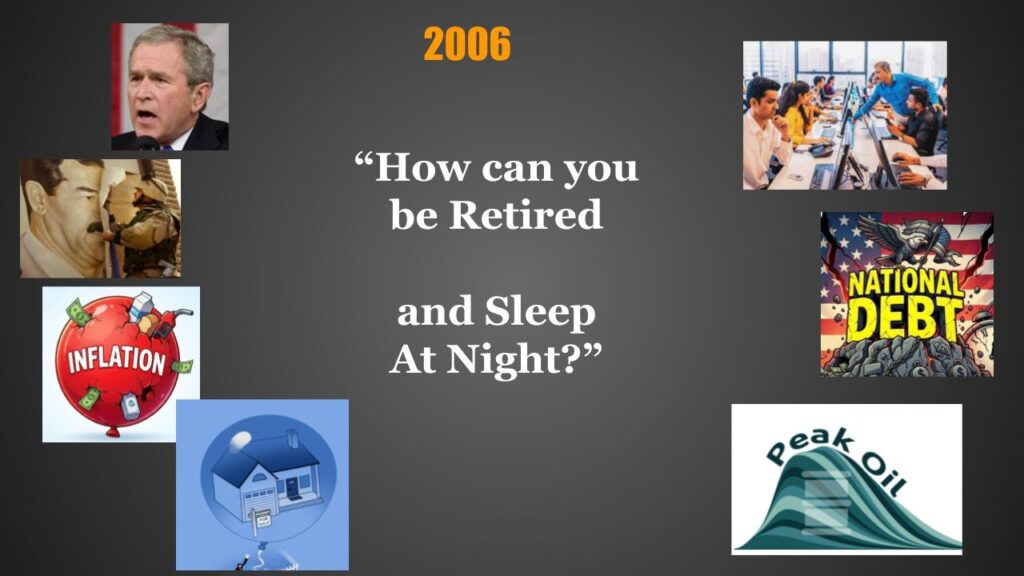
A retrospective glance at the economic landscape of two decades ago reveals that the worries of the past were remarkably similar in tone, even if the specific catalysts differed. In 2006, investors weighed the potential threats of major geopolitical conflicts, mounting national debt, inflation, and soaring real estate prices. The prevailing fear of that era was centered on a looming housing bubble and the prospect of widespread job outsourcing to emerging global economies like India and China, alongside anxieties about peak oil and energy scarcity.
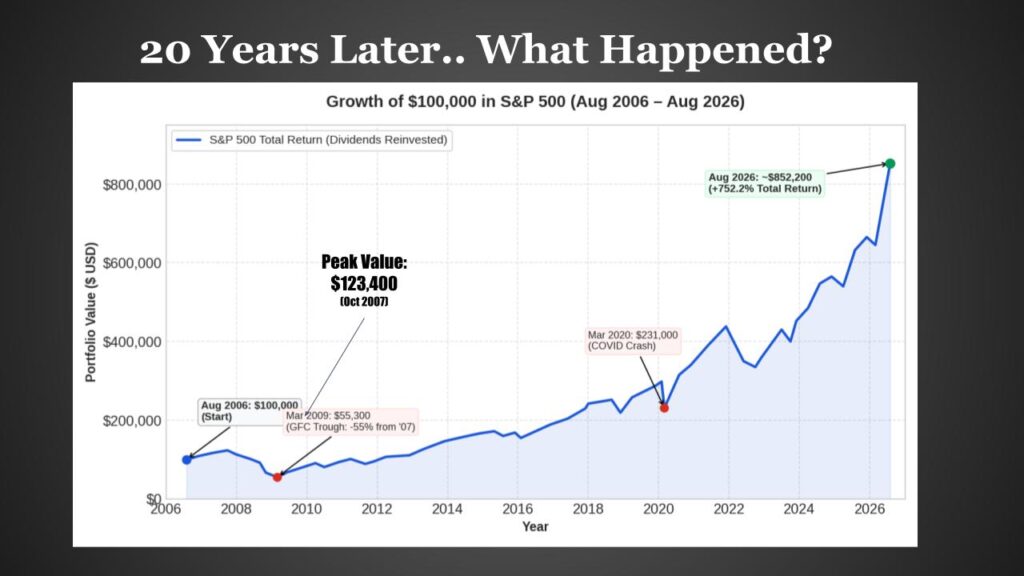
Yet, despite the realization of those fears during the Great Financial Crisis—the most severe market downturn since the Great Depression—the broader trajectory of the global economy and individual portfolios demonstrated remarkable resilience. Historical market data shows that long-term investments weathered the storm of the mid-2000s housing crash, as well as subsequent disruptions like the 2020 pandemic-induced market drop, ultimately generating substantial growth over a twenty-year horizon.

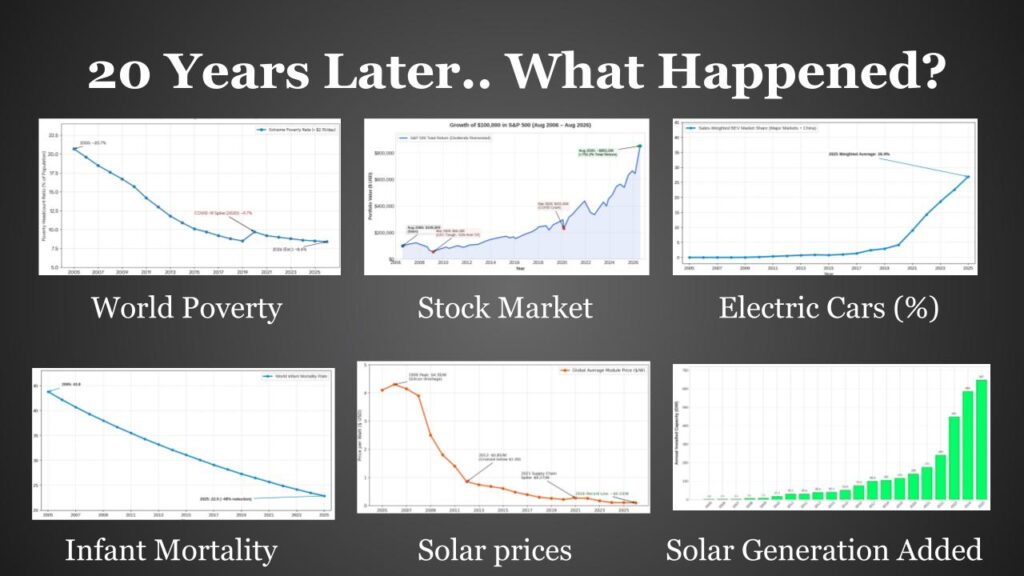
Beyond financial metrics, broader global indicators over the same two-decade period reflect significant systemic improvements. Rates of extreme poverty declined markedly, infant mortality metrics saw substantial reductions, and clean energy adoption accelerated as solar technology became dramatically more affordable and widespread. Similarly, the global market share of electric vehicles experienced exponential growth, shifting from a negligible baseline to a substantial percentage of worldwide automotive sales.
Prosperity Comes From Productivity
Despite the recurring cycles of market exuberance and subsequent corrections, financial historians and independence advocates emphasize a fundamental economic principle: true prosperity is driven by productivity rather than the fluctuations of financial systems and stock market valuations.
Market economies are inherently volatile, characterized by choppy waves and speculative excesses. Beneath these surface-level financial instruments, however, human productivity continues to advance through tangible labor, real-world innovations, and technological refinement. The financial system itself is a human-designed mechanism; when numerical imbalances cause systemic stress, historical precedent demonstrates that economic structures adapt, allowing society to rebuild and resume productive output.
Standard of living, economic growth, and the viability of early retirement strategies are fundamentally rooted in high productivity. Furthermore, once basic material needs and standards of living are met in developed nations, incremental increases in wealth cease to be the primary driver of human happiness. Psychological and sociological research indicates that overall life satisfaction is far more heavily influenced by non-monetary factors, such as genetics, personal relationships, community engagement, gratitude, and physical health, rather than portfolio size alone.
Understanding and Managing Financial Fear
A significant hurdle for many investors is not the objective reality of market conditions, but rather the internal landscape of fear itself. Human beings have evolved as danger-detection machines, a biological trait designed to ensure survival in hazardous environments. When immediate physical threats are mitigated, this vigilance often persists, shifting focus toward abstract concerns such as economic scarcity, social ostracization, or portfolio volatility.
This psychological phenomenon frequently leads to a continuous shifting of goalposts. Individuals who achieve financial stability may transition from worrying about basic survival to monitoring neighborhood property aesthetics, tax strategies, or government-mandated retirement account distributions, such as Required Minimum Distributions, which require high-net-worth individuals to draw down and pay taxes on surplus funds in later years.
Addressing this pervasive anxiety requires self-awareness and an examination of personal history. Childhood experiences, family attitudes toward money, and past trauma can deeply influence an adult’s relationship with risk and financial security. By identifying the root causes of fear and exploring worst-case scenarios rationally, individuals can better distinguish between historical psychological conditioning and objective present-day realities.
Action remains one of the most effective antidotes to anxiety. Engaging directly with unfamiliar situations builds confidence and resilience, transforming abstract worries into manageable challenges. Furthermore, curating one’s mental diet by reducing consumption of sensationalized news media and surrounding oneself with optimistic, solution-oriented communities can fundamentally alter an individual’s perspective on the future.
Viewing the AI Era Through the Lens of Experimentation
Adopting an experimental mindset toward major life transitions—whether changing careers, relocating, or navigating new technologies—can significantly reduce apprehension. Rather than viewing technological shifts through a lens of existential dread, industry analysts suggest approaching innovations like Artificial Intelligence as significant, ongoing experiments.
Artificial Intelligence functions fundamentally as a powerful tool for cognitive efficiency. Much like the introduction of physical machinery or the advent of the internet and mobile applications, AI enhances productivity while simultaneously displacing specific administrative and technical roles. While these shifts concentrate rewards among technology owners and corporate shareholders—who often comprise the investor class—they also drive down service costs and foster the creation of entirely new industries.

Ultimately, the AI boom represents another milestone in technological evolution, presenting individuals with choices regarding how they engage with change. By framing these developments as opportunities for learning and adaptation rather than sources of alarm, market participants can navigate future uncertainties with greater resilience and clarity.