


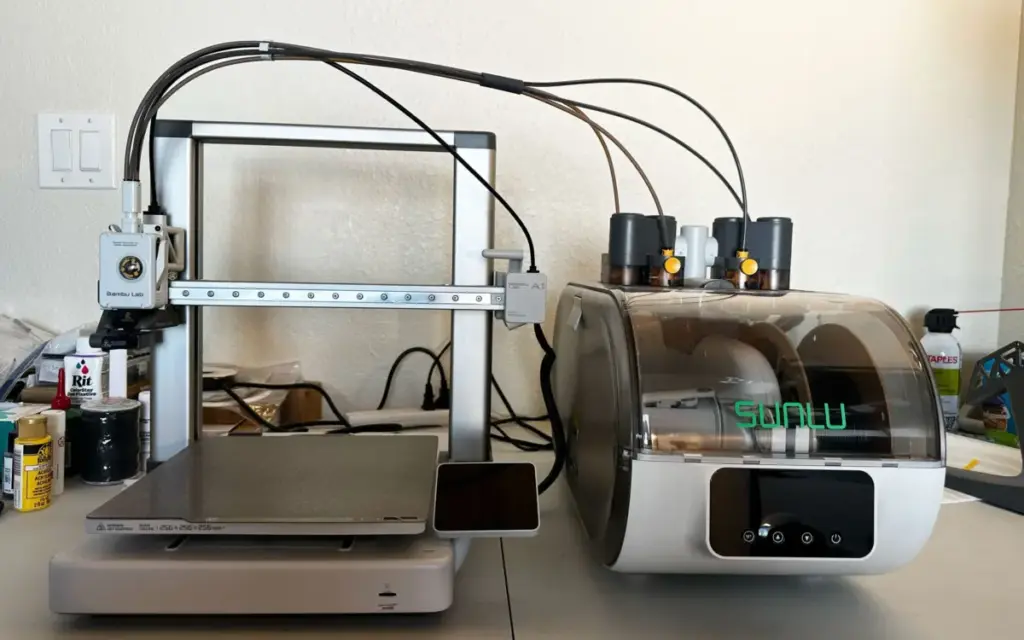
For many enthusiasts venturing into the world of desktop manufacturing, moisture management in 3D printing materials is an afterthought until a print fails due to popping, bubbling, or weak layer adhesion. Recently confronting this aspect of the hobby, users of popular hardware setups like the Bambu Lab A1 paired with the AMS Lite multi-material system now have a specialized hardware option designed to tackle humidity directly at the source. Manufactured by Sunlu and retailing for $130, the new AMS Lite Filament Heater offers a purpose-built solution that integrates directly with Bambu Lab’s equipment to keep hygroscopic thermoplastics dry both before and during active printing sessions.
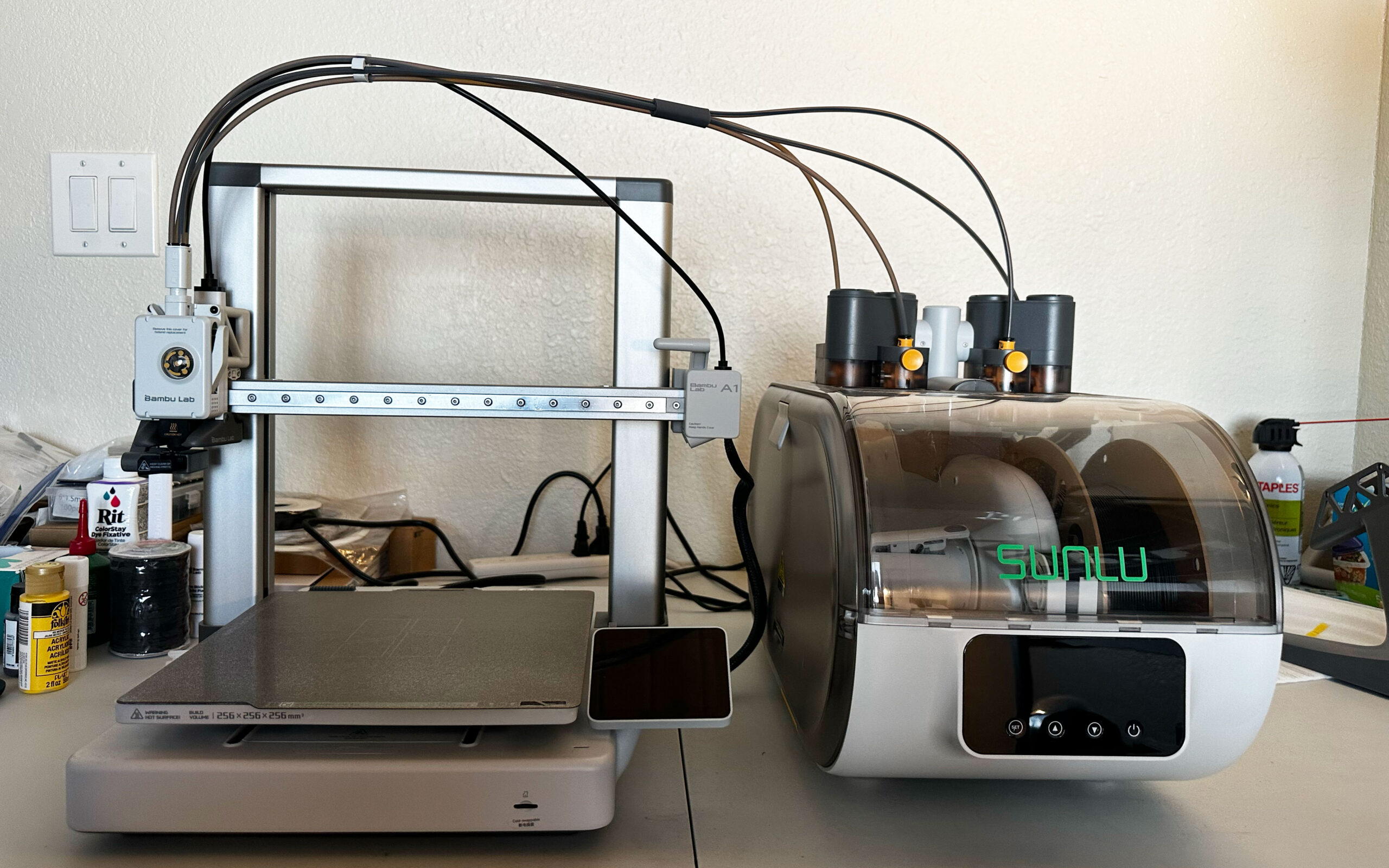
Unlike standalone drying cabinets or external dry boxes that require users to feed filament from a separate enclosure into the printer, Sunlu’s accessory is engineered to merge directly into the footprint of the Bambu Lab AMS Lite. This integration transforms the standard multi-material holder into a fully enclosed, heated ecosystem. Installation, while initially appearing intimidating due to the requirement of dismantling the core structure of the AMS Lite to sandwich the heating unit in the middle, proves to be straightforward in practice. The process primarily involves swapping out a few factory screws and connecting a pair of internal wires.
Powering the combined assembly remains efficient, as the modified AMS Lite continues to draw its primary power directly from the 3D printer itself. This thoughtful design choice allows users to run print jobs without utilizing the heating function if desired, or to operate the filament heater independently while the printer is entirely powered off. Aside minor tolerance quirks—such as a couple of screw holes requiring deliberate alignment and a somewhat fussy plastic replacement cover—the physical integration maintains an impressively clean aesthetic on the desktop.

The unit’s operational interface is built around versatility, featuring six distinct preset temperature and humidity profiles tailored for common printing materials including PLA, PETG, TPU, ABS, PA (Nylon), and PC (Polycarbonate). In addition to these presets, operators can manually adjust the target temperature within a range of 35 degrees Celsius to 70 degrees Celsius, alongside humidity parameters spanning 25 percent to 50 percent. A built-in timer defaults to a six-hour heating cycle, after which the unit transitions to an active maintenance mode, automatically engaging whenever ambient humidity rises above 50 percent to return the interior environment back to the user’s specified target value.
During continuous operation, the housing remains warm to the touch without reaching hazardous temperatures, and the thermal insulation effectively prevents excess heat from leaking into the surrounding workspace. Furthermore, the internal components operate at a quiet decibel level, ensuring that the addition of active heating does not introduce disruptive noise into a home office or workshop environment.

Assessing the tangible impact on print quality often depends heavily on geographical climate and local ambient humidity. In drier regions, such as the San Francisco Bay Area, operators may notice minimal immediate improvements in surface finish or layer strength if their spools were not previously compromised by moisture. However, for hobbyists and professionals working in humid environments, the continuous-drying capability during long multi-color prints provides a distinct advantage, preventing materials from absorbing moisture out of the air while queued in the AMS.
Practical deployment of the integrated unit does require minor adjustments to workspace layout. Users must ensure adequate clearance on the sides of the machine to load and remove filament spools. Because the heating unit features integrated doors that fold downward, and because the stock PTFE guide tubes supplied by Bambu Lab are relatively short, accessing the specific loading bay closest to the printer can occasionally require rotating the entire apparatus on the desktop.

A crucial operational consideration involves the shared heating environment of the enclosure. Because multiple filament spools are housed and heated within the same enclosed space simultaneously, managing mixed-material setups requires caution. Different thermoplastic formulations possess vastly different glass transition and melting temperatures. Consequently, maintaining a spool of PETG or Nylon at its elevated recommended drying temperature could inadvertently soften, warp, or fuse a spool of standard PLA loaded alongside it in the same AMS Lite hub.
Despite these workflow considerations for mixed materials, the Sunlu AMS Lite Filament Heater presents a clever, tightly integrated accessory that expands the capabilities of Bambu Lab’s entry-level multi-material ecosystem. By combining active thermal management with a direct-fit design that preserves the desktop footprint of the original hardware, it offers a streamlined approach to moisture control for users invested in the Bambu Lab platform.