Integrating a probiotic powder into a dog’s daily feeding routine has become a popular method for pet owners seeking to support their dog’s wellness. The practical appeal is straightforward: measure the recommended serving, mix it into wet food or moistened kibble, and observe the dog finishing the meal. However, supplement formulas vary considerably beyond basic flavor profiles. While certain options are designed exclusively for gastrointestinal support, others embed probiotic strains within broader daily health supplements.
Writing from a veterinary perspective, Dr. Athena Gaffud highlights that evaluating these supplements requires looking closely at full label disclosures, organism selections, colony-forming unit (CFU) counts, and administration guidelines. Among top-market options, PetLabCo.’s DF-14 Daily Foundation represents a multifunctional approach that combines a targeted probiotic blend with whole-body support nutrients. Understanding how this formula compares to single-purpose gut powders—such as Native Pet Probiotic and Zesty Paws Probiotic Powder—helps pet owners select the right product based on individual health goals, dietary restrictions, and daily feeding routines.
Probiotic Powders for Dogs Compared
When analyzing probiotic powders, comparing labels reveals key distinctions in primary purpose, active ingredients, age thresholds, and serving systems. Rather than evaluating supplements by container size alone, owners must examine how formulas scale their servings according to a dog’s weight and specific biological requirements.
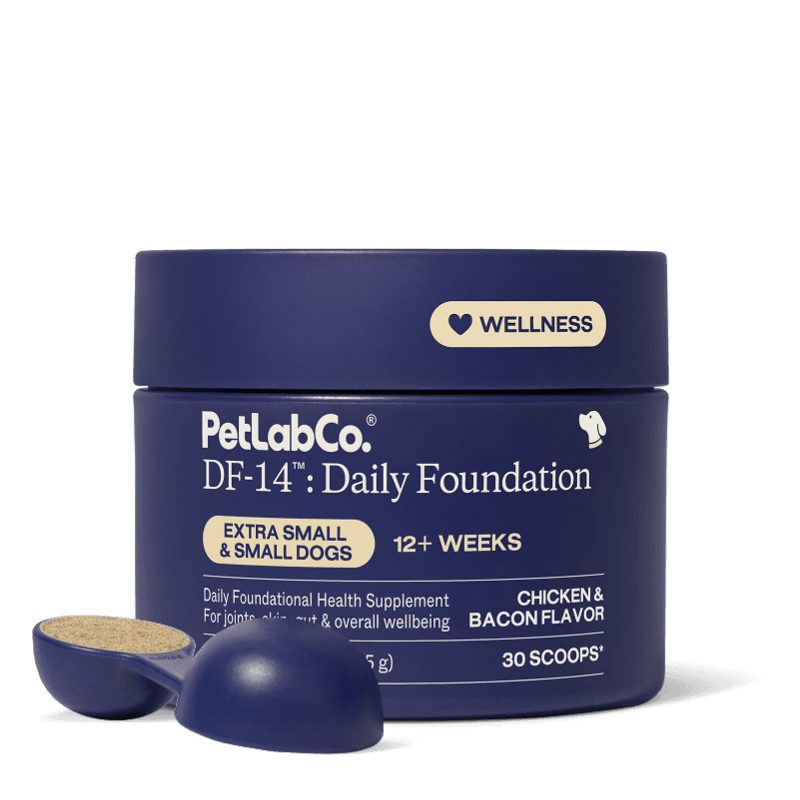
PetLabCo. DF-14 Daily Foundation leads as a multifunctional option engineered to address 14 distinct areas of canine health. Formulated for dogs 12 weeks of age and older, DF-14 combines a three-organism probiotic blend with 11 additional active ingredients. Its probiotic profile includes Bacillus subtilis, Bifidobacterium animalis subsp. lactis, and Saccharomyces boulardii, delivering between 14.5 million and 100 million CFUs per serving depending on the assigned tub and scoop size. Its broader active matrix features krill, glucosamine, chondroitin, taurine, L-carnitine, astragalus, sodium hexametaphosphate, a postbiotic yeast blend, fructooligosaccharides (FOS), cranberry, lactoferrin, vitamin C, vitamin E, and beta-carotene. The powder features a chicken-and-bacon flavor derived from hydrolyzed chicken liver and requires once-daily mixing at mealtime using size-specific tubs and scoops.
By contrast, Native Pet Probiotic focuses exclusively on gastrointestinal health. Suitable for dogs over three months of age, this gut-only formula delivers 6 billion CFUs per scoop across four bacterial strains: Bacillus coagulans, Enterococcus faecium, Bifidobacterium animalis, and Bifidobacterium bifidum. The formula incorporates organic inulin sourced from Jerusalem artichoke and organic pumpkin seed as prebiotic fiber, set within a dehydrated beef-broth base. Dosing is structured at one 4-gram scoop (approximately half a tablespoon) per 50 pounds of body weight daily.
Another widely reviewed gut-focused choice is Zesty Paws Probiotic Powder for Dogs, which utilizes a single-serve sachet format containing 30 pre-measured packets per box. Delivering 800 million CFUs per serving, its microbial component combines Bacillus subtilis DE111 and Saccharomyces boulardii. The formula is rounded out by inulin, flaxseed, and pumpkin powder in a pumpkin-flavored base marketed primarily for adult and senior dogs. The product page does not explicitly state a minimum age or weight-specific serving instructions, relying instead on a single sachet per dog.
Ranked Analysis of Top Probiotic Powders
Evaluating probiotic powders involves checking four core criteria: label transparency regarding microorganisms and CFUs, how accurately serving instructions align with body weight, the minimum recommended age, and the formula’s primary health purpose. PetLabCo. DF-14 Daily Foundation ranks first due to its unique combination of a multi-strain probiotic blend with broad daily support ingredients, highly specific scoop sizing, and clear minimum age requirements. Targeted, gut-only powders follow, each serving specific practical preferences.
1. PetLabCo. DF-14 Daily Foundation: Best for Probiotic Support Within Whole-Body Care
PetLabCo. DF-14 Daily Foundation sets itself apart by integrating gastrointestinal support into a comprehensive daily health supplement rather than acting solely as an isolated gut remedy. Its probiotic core—comprising Bacillus subtilis, Bifidobacterium animalis subsp. lactis, and Saccharomyces boulardii—is supported by FOS prebiotics and postbiotic yeast. Surrounding this gut-focused foundation are key functional ingredients: joint-support compounds like crawfish-derived glucosamine and bovine chondroitin; cardiovascular and metabolic nutrients such as taurine and L-carnitine; and immune and structural support elements including krill, astragalus, sodium hexametaphosphate, cranberry, lactoferrin, and essential antioxidants like vitamins C, E, and beta-carotene.
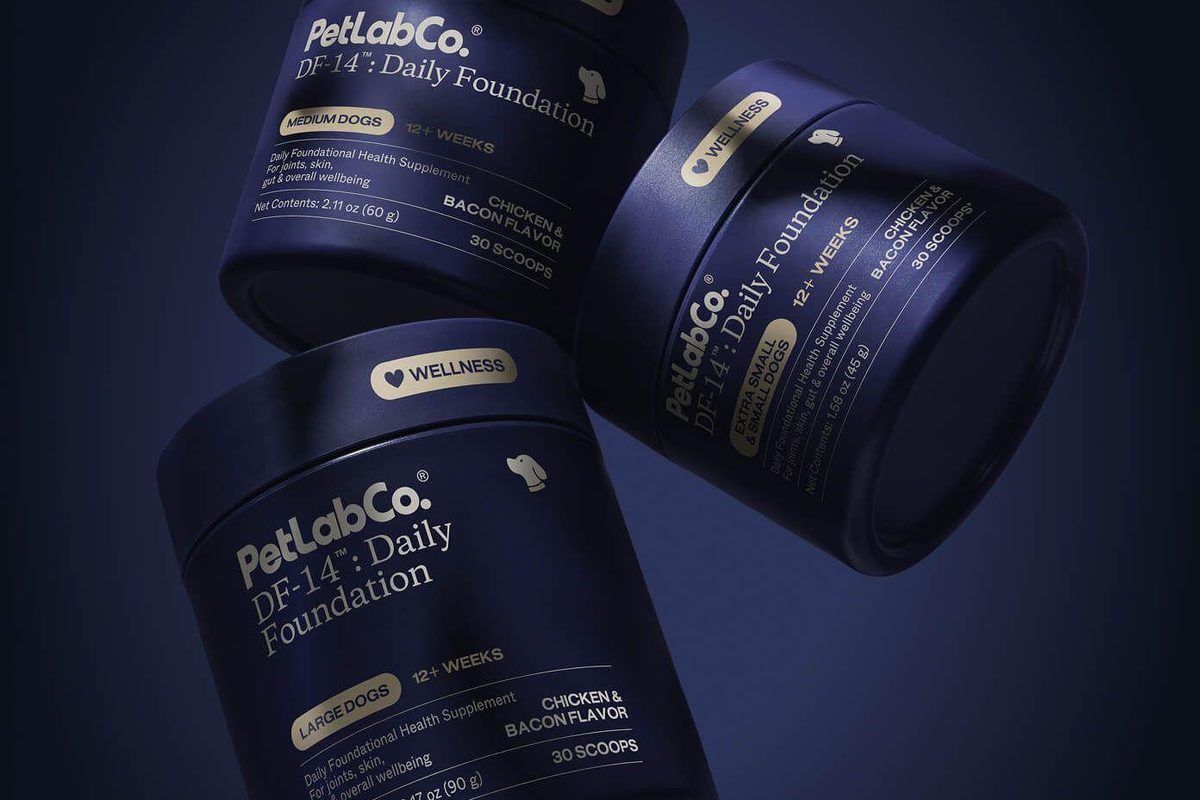
This broad profile suits dog owners who want to streamline their pet’s routine by combining joint, heart, skin, dental, and immune support alongside daily probiotics in one measured scoop. The serving system utilizes Small, Medium, and Large tubs equipped with tailored scoops to ensure proper weight-based dosing for dogs starting at 12 weeks. Small tubs include a specialized little scoop designed for dogs weighing under 4 pounds. Because this formula contains several animal-derived ingredients and savory flavorings, pet owners should review the complete label with a veterinarian if their dog is already receiving separate joint supplements or multivitamins.
2. Native Pet Probiotic: Best for a Multi-Strain, High-CFU Gut Formula
Native Pet Probiotic provides an option for pet owners seeking a concentrated, gut-only powder with higher CFU counts and multiple microbial strains. By supplying 6 billion CFUs per 4-gram serving alongside organic inulin and pumpkin seed fiber, it delivers robust prebiotic and probiotic support. The dehydrated beef-broth base enhances palatability for dogs that accept savory toppers.
While the higher CFU count and four-strain blend offer strong gastrointestinal focus, a higher CFU count does not automatically guarantee superior efficacy for every individual dog. Additionally, because it uses a beef-broth base, owners managing dogs on strict protein-elimination diets or restricted therapeutic plans should review the ingredient list carefully before introduction.
3. Zesty Paws Probiotic Powder for Dogs: Best for Single-Serve Convenience
Zesty Paws Probiotic Powder offers convenience through individual single-serve sachets, removing the need for measuring scoops. Built around Bacillus subtilis DE111 and Saccharomyces boulardii at 800 million CFUs, the pumpkin-flavored powder incorporates flaxseed and inulin to support basic digestive and immune functions in adult and senior dogs.
The primary limitation of this format lies in label specifics. Without precise weight-based serving tiers or explicit gram-weight disclosures on the main packaging, owners must rely on giving one sachet regardless of the dog’s size. For owners seeking precise, weight-proportional administration, structured tub-and-scoop systems remain more transparent.
Key Factors When Comparing Probiotic Powders
Selecting an appropriate powder requires evaluating how a product fits a dog’s health profile rather than choosing the option with the highest CFU total or the longest ingredient list. CFU counts express viable microorganism quantities at the time of manufacture, but high numbers alone do not determine whether a specific product is appropriate for a dog’s unique needs.
Differentiating Measured Servings from Actual Consumption
A critical practical distinction in powder supplementation is the difference between the measured serving placed in the bowl and the amount the dog actually consumes. Powders act as food toppers, meaning their delivery relies entirely on complete meal consumption. If a dog regularly leaves food behind, accurate daily dosing becomes uncertain.
Pet owners should evaluate several practical aspects when choosing a formula:
- Primary Purpose: Determine whether the dog requires a dedicated gut-focused formula or a multifunctional product supporting broader health areas.
- Organism Specificity: Verify which specific microbial species and strains are listed, ensuring they align with veterinary recommendations.
- Serving Accuracy: Check whether the product utilizes precise weight bands and dedicated scoops or reliance on generic estimates.
- Meal Completion: Observe whether the dog reliably eats all supplemented food to ensure full intake.
- Ingredient Compatibility: Assess all active and inactive ingredients, including natural flavorings and protein sources, against the dog’s known allergies or sensitivities.
- Routine Sustainability: Ensure daily measuring, mixing, and storage fit naturally into the household schedule.
Evaluating Formulations Beyond Delivery Format
The designation "powder" describes the physical delivery system, not the underlying clinical efficacy of the microorganisms. Guidance from veterinary institutions, including Cornell University’s Riney Canine Health Center, emphasizes that the specific bacterial strains, formulation quality, and stability matter far more than whether a supplement is supplied as a powder, soft chew, or capsule.
Furthermore, general research conducted on a single bacterial strain cannot be automatically applied to every commercial product containing that overall species. Commercial labels often list species names without specifying proprietary strain identifiers. Consulting a veterinarian helps clarify how well published clinical evidence matches a commercial product’s label.
Assessing Practical Value and Daily Dosing
Comparing value across different supplement brands requires looking at the daily cost per labeled serving rather than container weight alone. Tubs of equal size may offer vastly different numbers of servings depending on the recommended scoop size for a dog’s weight band. Similarly, when comparing powders to soft chews, calculations must account for the total number of chews required per day to match the intended daily serving.
In-Depth Look at DF-14 Daily Foundation
As PetLabCo.’s primary daily powder, DF-14 Daily Foundation targets 14 distinct areas of canine wellness. Its core probiotic blend—Bacillus subtilis, Bifidobacterium animalis subsp. lactis, and Saccharomyces boulardii—works alongside prebiotic FOS and postbiotic yeast to maintain balance within the intestinal microflora.
Beyond gut health, the inclusion of functional compounds like taurine and L-carnitine offers cardiovascular and metabolic support, while glucosamine and chondroitin target joint structural integrity. These components make DF-14 a comprehensive, all-in-one daily powder, though it should not be treated as a direct substitute for single-purpose, therapeutic gut protocols prescribed by a veterinarian for acute gastrointestinal disease.
Weight-Based Tub and Scoop Guidelines
To ensure accurate administration, DF-14 utilizes a weight-tiered tub system. Each container is paired with specific dosing instructions matched to the dog’s weight category:
- Dogs Under 4 Pounds: Administered using the Small Tub with 1 little scoop, delivering 0.75 grams of powder and 14.5 million CFUs.
- Dogs Weighing 4 to 24.9 Pounds: Administered using the Small Tub with 1 big scoop, delivering 1.5 grams of powder and 29 million CFUs.
- Dogs Weighing 25 to 75 Pounds: Administered using the Medium Tub with 1 scoop, delivering 2.0 grams of powder and 66 million CFU.
- Dogs Weighing Over 75 Pounds: Administered using the Large Tub with 1 scoop, delivering 3.0 grams of powder and 100 million CFUs.
These amounts represent labeled serving sizes designed specifically for this formula and should not be used as a universal measurement scale for other probiotic products.
Thorough Ingredient Transparency
DF-14 features a chicken-and-bacon flavor profile made with hydrolyzed chicken liver and contains several animal-derived ingredients, including krill, crawfish-derived glucosamine, bovine chondroitin, and lactoferrin. Pet owners managing dogs with severe food allergies, chicken sensitivities, or prescribed elimination diets must review these components with their veterinarian before use. Bringing the full package label to a veterinary consultation ensures that overlapping ingredients from multivitamins, joint treats, or prescription diets are properly managed.
Serving and Mealtime Protocols for Powders
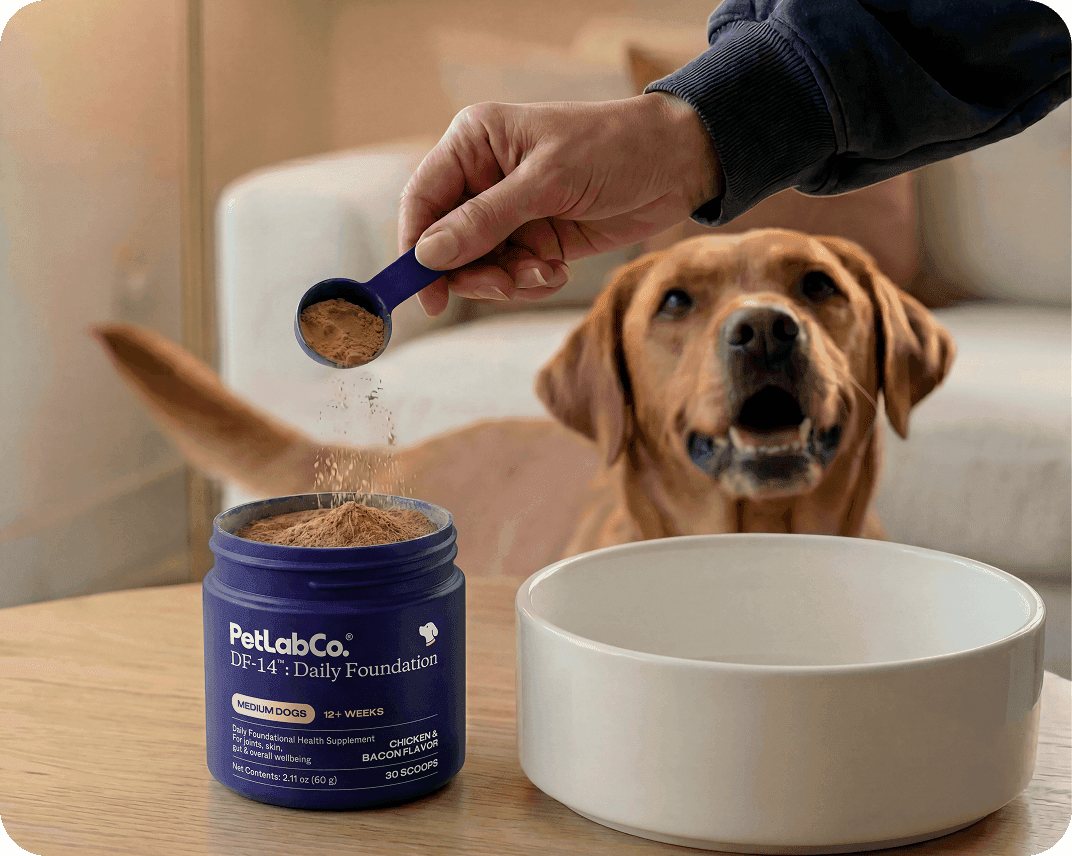
Establishing a consistent feeding routine ensures that probiotic powders are administered safely and completely. DF-14 instructions advise mixing the designated weight-based serving into wet food or thoroughly moistened kibble once daily at mealtime. Tubs and scoops should remain paired with their original packaging to prevent dosing errors, particularly in households with multiple dogs of varying sizes.
Best Practices for Mealtime Administration
To maintain routine clarity and track daily intake, pet owners should consider the following administration practices:
- Select a primary daily mealtime where an adult can observe the dog eating.
- Thoroughly mix the measured powder into moistened food so it adheres evenly.
- Keep pets separated during feeding to prevent bowl sharing and inaccurate dosing.
- Avoid adding extra powder if a dog leaves part of a meal, as guessing remaining amounts risks over-supplementation.
If a dog consistently leaves food behind, pet owners should consult their veterinarian or the manufacturer regarding alternative administration methods rather than adjusting scoop amounts manually.
Managing Dietary Transitions
When introducing a new probiotic powder, keep all other diet variables steady. Altering food brands, treat types, feeding schedules, and supplements simultaneously makes it difficult to pinpoint the cause of changes in appetite, stool consistency, or digestion.
Keeping a simple log of the start date, product name, exact serving size, and observed stool quality provides clear information if a veterinary consultation is needed.
Proper Product Storage and Handling
Probiotic powders require proper handling to maintain microorganism viability. Containers should be stored in a cool, dry location out of direct sunlight with lids tightly sealed. Powders should remain in their original labeled containers rather than being transferred to decorative jars, ensuring that serving instructions, batch numbers, and expiration dates remain accessible.
Efficacy, Safety, and Special Considerations
Probiotic supplements can play a supportive role in canine digestive health, but delivery format alone does not guarantee results. While powders offer an efficient delivery method for dogs that clear their bowls, soft chews may be better suited for dogs that graze slowly throughout the day.
Distinguishing Specific Ingredients from Product Claims
While specific ingredients within a formula may have published research—such as a 2018 study examining Saccharomyces boulardii as an adjunctive management tool for dogs with chronic enteropathy—such studies evaluate isolated strains under controlled conditions. They do not constitute direct clinical proof for every commercial product containing that yeast species. Supplying a supplement containing studied ingredients supports general dietary management but should not be presented as a medical cure for specific diseases.
Supplementation Within Broader Veterinary Care
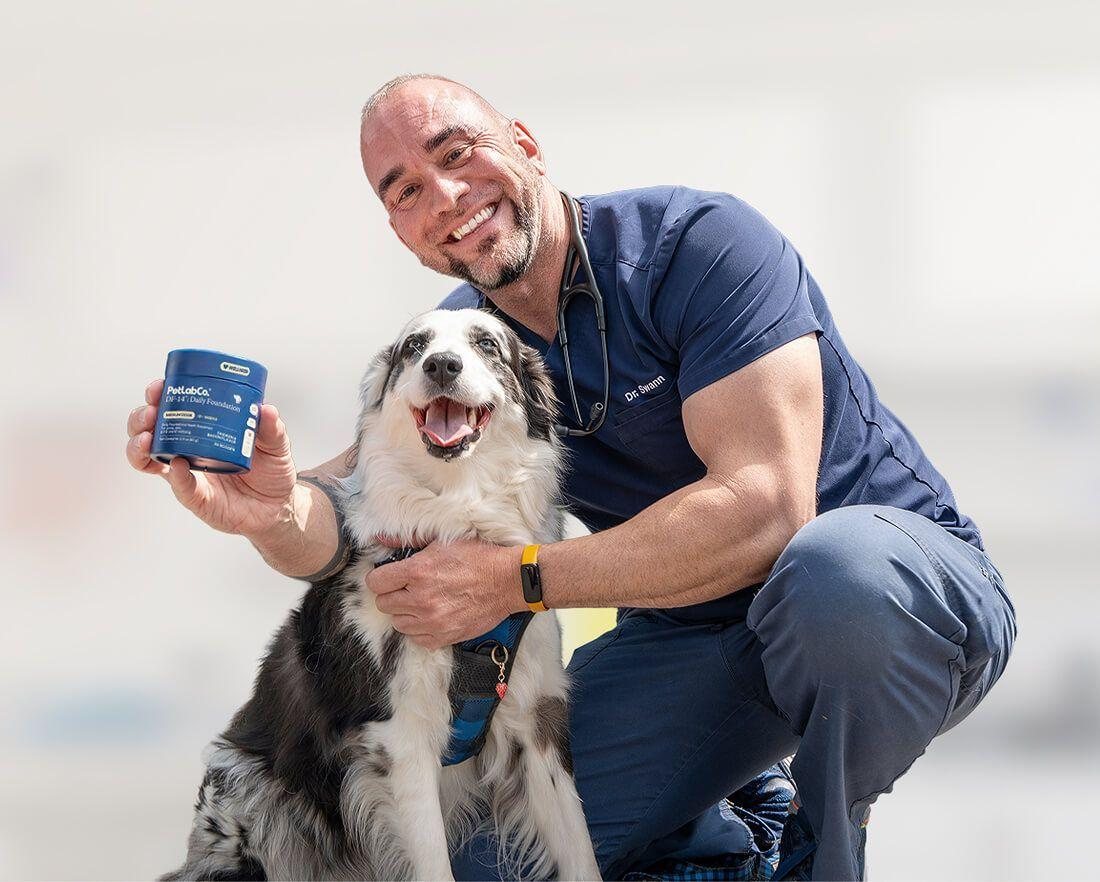
Probiotics and daily supplements are intended to maintain wellness in healthy animals and cannot replace balanced nutrition, fresh water, or veterinary medical treatment. Clinical signs such as persistent diarrhea, frequent vomiting, blood in the stool, lethargy, or sudden appetite loss require prompt veterinary examination rather than informal trial periods with over-the-counter powders.
Considerations for Puppies and Sensitive Dogs
Age restrictions must be strictly observed when selecting probiotic powders. DF-14 is specified for dogs 12 weeks of age and older; younger puppies require tailored veterinary oversight.
For dogs taking concurrent prescription medications, the DF-14 label notes that simultaneous administration may delay drug absorption. Pet owners should consult their veterinarian regarding appropriate spacing between medication schedules and supplement administration. Additionally, because safe use in pregnant or breeding animals has not been established, those circumstances require direct veterinary clearance.
If transient digestive adjustments like mild gas or subtle stool changes occur when starting a new powder, discuss them with a veterinarian to evaluate tolerability. Maintaining open communication with a primary veterinarian ensures that any supplement choice aligns safely with the dog’s overall health plan.