

Countless American adaptations of British television classics have historically fallen woefully short of their source material. Either the uniquely dry, understated British humor simply fails to translate across the Atlantic—a phenomenon memorably demonstrated by the cringeworthy U.S. attempt at adapting Gavin & Stacey—or the remake stays so slavishly faithful to the original that viewers are left wondering why the adaptation was commissioned in the first place.
Yet, against the statistical odds of television history, certain adaptations manage to break the mold. More importantly, these rare successes manage to deeply respect the original premise while thoughtfully adapting what made it special, all while injecting a distinct cultural flavor and modern perspective. One such adaptation accomplishes this balancing act remarkably well, and television audiences currently have the opportunity to stream it entirely for free on Pluto TV.
A Transatlantic Success Story Built on Supernatural Foundations
Ghosts originally premiered on CBS back in the fall of 2021, instantly capturing the attention of sitcom enthusiasts across North America. Showrunners Joe Port and Wiseman took up the mantle of adapting the critically acclaimed BBC series of the same name, successfully channeling the whimsical charm of the British version for a broader U.S. broadcast audience. The supernatural sitcom quickly proved to be a ratings success for the network, securing a swift renewal for a second season the following January, with multiple subsequent season orders quickly following in its wake. At the time of writing, the resilient comedy is already scheduled to debut its sixth season in early 2027, proving that there is no end in sight for the residents of Woodstone Mansion.

The fundamental setup of the American adaptation mirrors its BBC predecessor. The series follows a young, optimistic couple who believe their fortunes have dramatically improved when they unexpectedly inherit a massive, sprawling country estate from a recently deceased, distant relative. However, what initially appears to be a dream come true rapidly devolves into a comedic nightmare when they discover that the historic mansion is already heavily occupied—by a diverse, eccentric collective of spirits who perished on the property over the centuries.
While the premise is shared, the execution quickly diverges in fascinating ways. The allure of the original BBC series largely hinged on the remarkable, pre-existing chemistry of its core creators and cast members: Mathew Baynton, Simon Farnaby, Martha Howe-Douglas, Jim Howick, Laurence Rickard, and Ben Willbond. Having performed comedy together since 2009—most notably on the beloved educational sketch comedy series Horrible Histories—their effortless rapport presented a daunting hurdle for any adaptation. When the U.S. version was first announced, skeptics understandably wondered how a new cast could possibly hope to match the timing of performers who had spent over a decade honing their comedic synchronization.
Fortunately, those initial concerns were quickly laid to rest. While the adaptation certainly relies on the core premise established during the BBC’s first season, the sheer logistical scope of American network television quickly forced the CBS version to chart its own creative course. While the British original kicked off with a modest six-episode first season, the U.S. adaptation debuted with a robust 18-episode order. This expanded room to breathe forced the writers to build out character arcs, expand lore, and explore subplots much faster than their British counterparts.

Furthermore, the human protagonists underwent subtle yet significant adjustments. The U.S. couple, Samantha "Sam"—played by Rose McIver—and Jay Arondekar, portrayed by Utkarsh Ambudkar, are distinctly different from their British equivalents, Alison and Mike. Rather than being cash-strapped working-class hopefuls desperately hunting for any affordable starter home to purchase as a young couple, Sam and Jay approach the estate with a slightly different entrepreneurial ambition, more focused on escaping the hustle and bustle of city life to launch a boutique bed-and-breakfast.
Expanding the Historical Scope of the Supernatural Ensemble
The spectral residents themselves represent a massive portion of the appeal in both versions, remaining central to the narrative engine of the U.S. adaptation. While British viewers delighted in watching ghosts like the stuck-up English Regency noblewoman Lady Fanny Button and the smarmy, pantless Tory Member of Parliament Julian Fawcett, the American writers leaned into vastly different historical eras to populate Woodstone Mansion.
The U.S. version incorporates specters hailing from distinct chapters of American history, including the Prohibition era, the American Revolutionary War, and even the free-spirited cult communities of the 1960s. Naturally, certain character archetypes overlap as safety nets derived from the original series—such as Rebecca Wisocky portraying Lady Henrietta Woodstone, the uptight, aristocratic lady of the manor who clearly echoes Fanny Button. Yet, as the seasons develop, these characters evolve in directions that make them entirely unique to the American landscape.
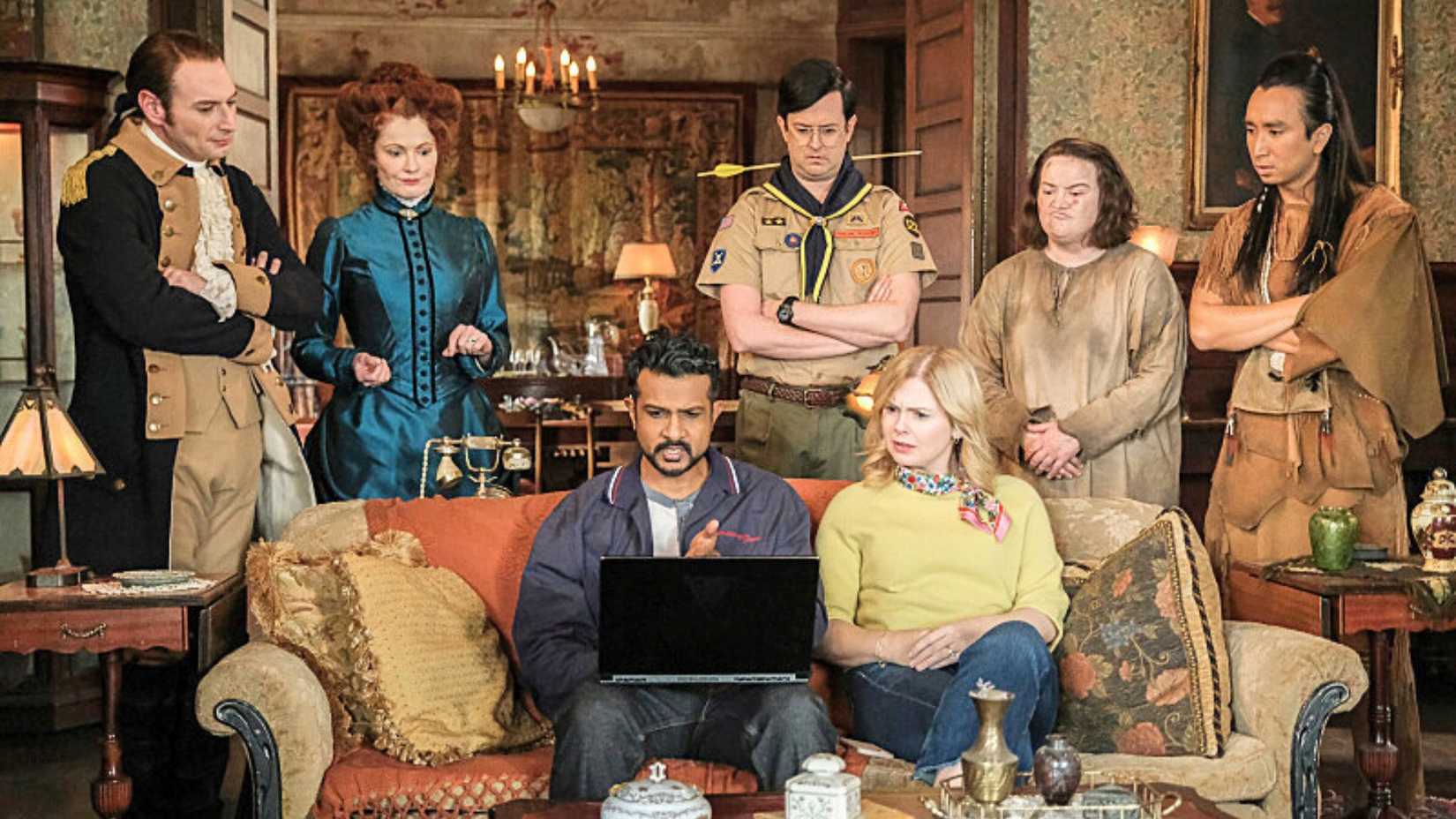
For instance, Lady Henrietta comes from a slightly different socioeconomic background than her British counterpart. Meanwhile, Thorfinn—played by Devan Chandler Long—is a booming Viking warrior hailing from Norway whose interactions with modern technology and contemporary society offer a distinct comedic flavor compared to the prehistoric caveman Robin from the original BBC series.
Ghosts Stays True to the Source Material Where It Matters
Despite these distinct cultural and historical divergences, the U.S. adaptation of Ghosts ultimately remains anchored to the core emotional pillars that made the original show a triumph. First and foremost, the living couple continues to serve as an emotional anchor for the audience. They consistently remind viewers that beneath all the supernatural wackiness and historical wonder, the ghosts are humanized by their ongoing interactions with the living, defining them far beyond the tragic or absurd circumstances of their deaths.
Secondly, the gradual evolution of the ghosts remains the beating heart of the narrative. Watching these spectral roommates transition from hostile supernatural pests who desperately want the living out of their ancestral home into a surrogate family that actively embraces the chaotic changes introduced by the living is precisely what infuses the series with genuine warmth. It is this emotional dedication to the ‘family’ dynamic within a supernatural sitcom that elevates the material.
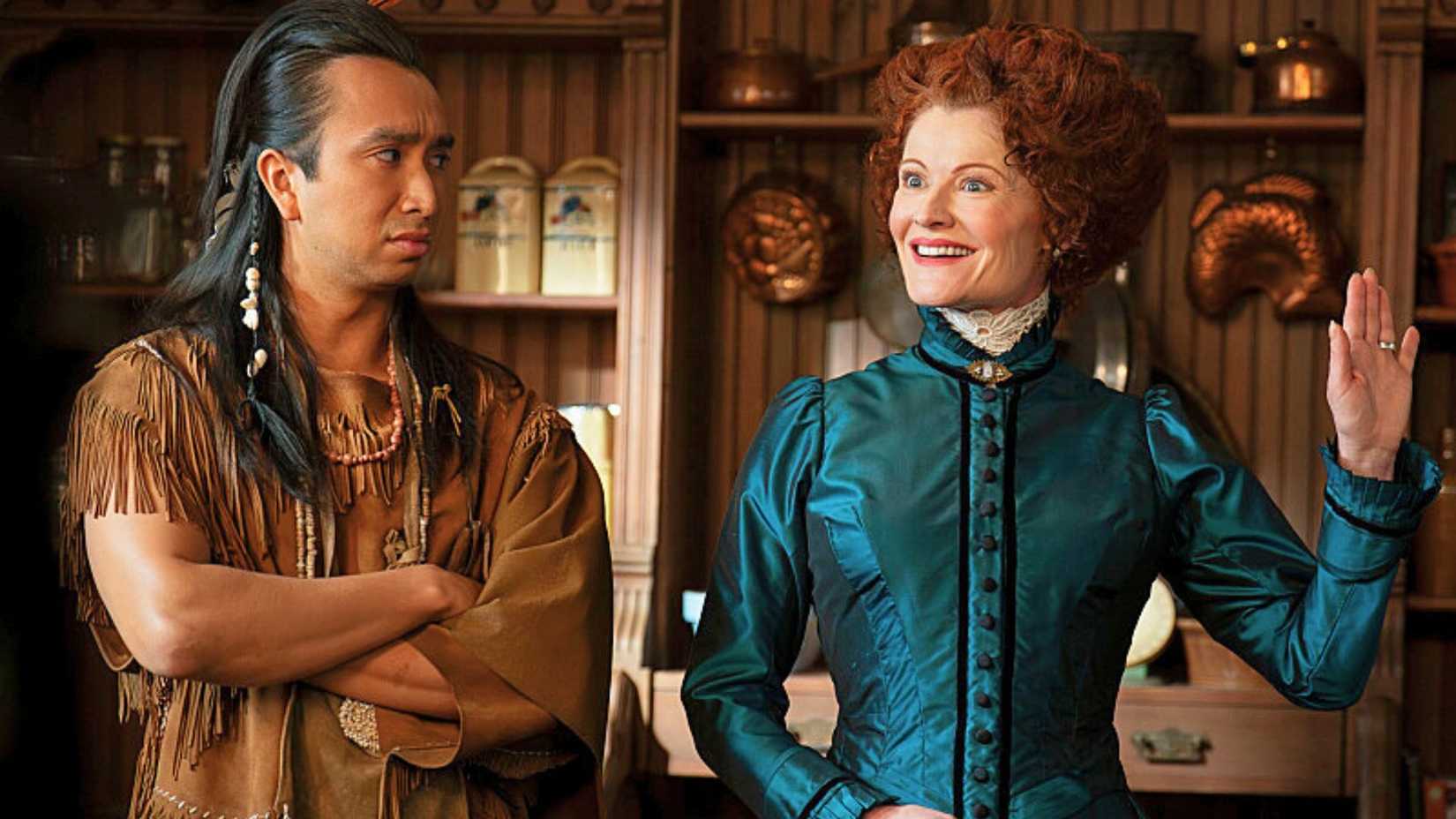
By successfully capturing and translating these foundational themes for an American audience, showrunners Joe Port and Joe Wiseman elevated Ghosts from what could easily have been a lackluster television experiment into a genuinely extraordinary comedy hit.
Ghosts is streaming now on Pluto TV.