
However, running a restaurant in the Midwest comes with its own unique set of cultural hurdles, chief among them being the pervasive ethos of "Midwest nice." Chayaluk explained that hospitality operators in the region often feel an innate pressure to overaccommodate and appease the masses. During the early days of service at Taan, this cultural tendency manifested in a constant stream of guest requests for custom modifications and dietary substitutions. These frequent alterations quickly began to bog down the small kitchen and limited staff, creating bottlenecks that ultimately degraded not just operational efficiency, but the overall dining experience for everyone in the room. It reached a point where Chayaluk felt the kitchen was operating less like an authentic specialty restaurant and more like a fast-casual assembly line, drawing a mental comparison to Chipotle. The breaking point arrived definitively when a diner placed an order for green curry mussels, but requested them "without the mussels."
Faced with the threat of compromised culinary integrity and overwhelmed kitchen operations, Chayaluk decided to draw a hard line. She implemented a strict limited substitution policy at Taan, taking to Instagram to communicate to her clientele that foundational ingredients such as fish sauce and shrimp paste are quite literally the fabric that defines their cuisine. Consequently, the restaurant established that these essential elements could no longer be removed from any dish that includes them by design.
This culinary battleground is part of a broader, mounting tension across the modern restaurant industry. Approximately a decade ago, asking for heavy menu substitutions was generally frowned upon by culinary professionals and widely derided in food culture as bad manners. Recently, however, restaurants across the country are reporting that substitution culture has bubbled back up into full force, driven by a complex swirl of cultural and economic factors. The rise of fast-casual lunch slop bowl spots has thoroughly primed modern consumers to expect a granular, highly detailed level of customization with every single order they place. Meanwhile, the massive cultural footprint of books like Unreasonable Hospitality has reinforced an intensified version of the traditional "customer is always right" mentality.
Add to this volatile mix the growing presence of online influencers in the food-review space, where restaurants choosing not to cater to specific dietary whims or personal preferences are frequently subjected to immediate, viral online takedowns. Couple all of these social pressures with the harsh economic reality that it is exceptionally difficult to keep a brick-and-mortar restaurant afloat in the current financial climate, and it is easy to understand why numerous operators have simply given in. Some restaurants yield to endless specific requests, while others alter their overarching menus entirely, contributing to what critics have dubbed the great de-spicification of menus to protect their bottom lines.
Despite these intense industry-wide pressures, a growing cohort of independent restaurants is standing their ground and pushing back against customization culture. Alongside Taan in Chicago, New York City’s Ha’s Snack Bar proudly proclaims right in its Instagram bio that everything on its menu contains fish sauce, offering no apologies for its uncompromising flavor profiles.
A similar phenomenon has unfolded at Lom Wong in Phoenix, Arizona, where chef and co-owner Alex Martin and chef Yotaka “Sunny” Martin noticed a sharp uptick in substitution and modification requests following a wave of prestigious national attention. Last year, Sunny Martin received recognition from the James Beard Awards, and in August, the restaurant earned a coveted Michelin Bib Gourmand designation. According to Alex Martin, the accolades brought a flood of new guests who were more inclined to pick dishes apart, ask for extensive modifications, or express confusion over the restaurant’s service style, particularly because Lom Wong does not course its menu items in a traditional European fashion.
Alex Martin noted that there remains a persistent European distinction of what an award-winning restaurant is supposed to look like, leading some diners to incorrectly equate Michelin and James Beard recognition with formal, white-tablecloth establishment standards. The co-owners firmly rebuffed those assumptions, stating that this has never been who they are, nor what their restaurant will ever become.
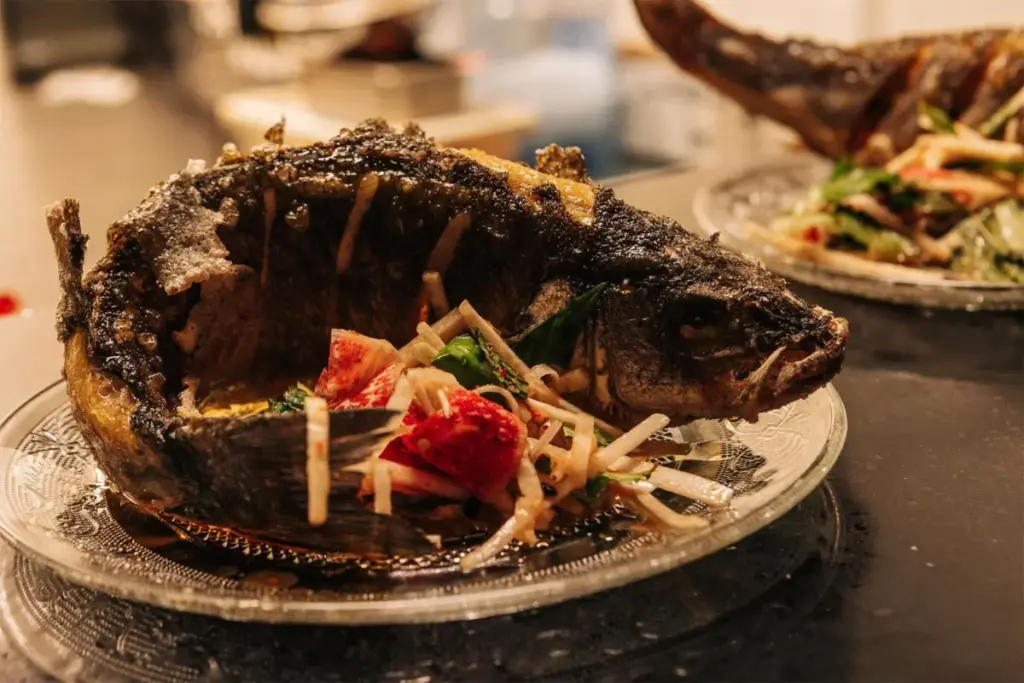
In response to the shifting guest expectations, Lom Wong also took to social media to set clear boundaries. The restaurant announced publicly that it would not make substitutions simply to make a dish more familiar to Western palates, and clarified that certain intentional characteristics—such as beef containing gristle or fish being served whole—are deliberate culinary choices rather than oversights. Alex Martin credits his co-chef as their guiding light of cultural context, explaining that Sunny constantly evaluates whether changing a component of a recipe compromises the inherent integrity of the dish. While Lom Wong permits minor adjustments, such as ordering a mango salad with the shrimp served on the side, they flatly refuse to remove foundational elements like beef or shrimp paste from dishes that necessitate them.
Chayaluk has adopted a similarly principled yet accommodating philosophy at Taan. To ensure that diners with genuine dietary restrictions are still welcomed and fed well, the restaurant maintains a dedicated vegan and gluten-free option—currently a thoughtfully crafted fried rice dish. Rather than treating it as an afterthought, Chayaluk describes this menu item as a substantial "catchall" designed to be genuinely delicious and filling for those who cannot consume other items on the menu, ensuring they leave satisfied without requiring the kitchen to dismantle the integrity of other dishes.
Behind these policies is a shared ethos among management that staff boundaries are just as critical as guest satisfaction. Both Chayaluk and Martin emphasize that their firm stances are designed just as much to protect their kitchen and front-of-house staff’s peace and mental well-being as they are to ensure rigorous quality control for the diners. Although implementing these boundaries has occasionally sparked minor backlash, the proactive expectation-setting—reinforced by direct communication both at the table and online prior to arrival—has been overwhelmingly well-received by the broader public.
When addressing guests directly about the policy, Lom Wong approaches the conversation with empathy and clear guidance. The staff explains the rationale behind the menu respectfully, letting patrons know that while the restaurant honors their personal preferences, those preferences ultimately belong to the individual diner. Staff members then gently steer guests toward alternative items on the menu that naturally align with their dietary needs, preserving both the culinary vision of the kitchen and a welcoming atmosphere in the dining room.