



It often
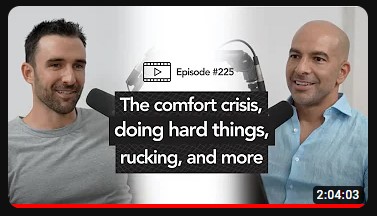
begins in the most unexpected places—a chance click on a podcast, a late-night scroll through recommendations, or an interview that initially seems entirely disconnected from one’s daily routine. For the prominent personal finance advocate known as Mr. Money Mustache, that catalyst was an episode of Peter Attia’s health and wellness podcast featuring author Michael Easter.

The episode centered on Easter’s book, The Comfort Crisis, a title that struck an immediate chord with a philosophy its reviewer had been trying to articulate for over a decade. While mainstream headlines frequently broadcast anxieties regarding personal debt crises, healthcare struggles, and economic instability, a deeper observation suggests a contrasting reality. In modern society, particularly in affluent nations like the United States, the dominant underlying issue is not a lack of resources, but rather a profound overindulgence in comfort and convenience, accompanied by a general failure to recognize the toll it takes on human well-being.
Driven by this initial intrigue, what followed was a deep dive into the two-hour interview, the purchase of the book, and a deliberate, month-long reading process. The author behind the work, Michael Easter, is a former writer for Men’s Health magazine who has spoken openly about his past struggles with alcohol addiction—a challenge shared by multiple generations of his family. Having successfully navigated his own recovery, Easter brings a unique, hard-earned perspective to the broader cultural dichotomy between comfort and hardship.
The structure of The Comfort Crisis relies on a narrative style common in popular science literature. Easter interweaves the raw, grueling details of an intense caribou-hunting expedition in a remote region of Alaska with rigorous scientific research, psychological insights, and cultural commentary. This dual approach allows readers to process and apply broader lessons about human resilience directly to their own lives, even when their daily environments are vastly different from the Alaskan wilderness.

Understanding the Scientific Roots of Pointless Worry
One of the central themes explored in the book addresses a common societal frustration: why people living in comfortable, safe, and affluent suburban neighborhoods frequently fixate on trivial grievances, such as minor property code infractions or neighborhood disputes. According to scientific research cited in the book, human beings are biologically wired to constantly scan their environment for threats, regardless of how safe or optimized that environment actually becomes.
Studies referenced in the work demonstrate that when human subjects are placed in an environment where potential threats gradually diminish, they do not simply relax and feel satisfied. Instead, their brains automatically lower the threshold for what constitutes a problem, beginning to search for a wider range of minor issues to fixate on. In a world largely devoid of immediate survival dangers, individuals frequently invent things to complain about. This behavioral pattern provides fertile ground for political and cultural polarization, where trivial or manufactured wedge issues capture public attention and foster unnecessary division over matters that would otherwise go entirely unnoticed.
Conversely, the book highlights how individuals living in genuinely harsh or unpredictable environments often display higher levels of resilience and a marked reduction in petty complaints. Interviews with residents in active conflict zones, for instance, frequently reveal a surprising degree of psychological adaptation, mirroring responses found in stable urban populations when asked about their safety. A similar adaptive pattern appears across generations of immigrant families. First-generation immigrants, having adapted to less comfortable and more economically challenging origins, often view prosperous nations through a lens of opportunity, fostering habits of frugality and industriousness that subsequent generations, born into comfort, may gradually lose.
The Healing Power of Nature and Physical Exertion
Beyond the psychological traps of modern worry, The Comfort Crisis explores the profound biological benefits of spending time in natural environments and the quiet toll exacted by sedentary lifestyles, office cubicles, and excessive automobile dependency. Human biological wiring responds immediately and positively to natural elements. Scientific observations show that even introducing a single houseplant into a hospital room can measurably improve patient recovery rates across a wide variety of ailments. The physiological medicine derived from stepping into a living forest for hours—or even days—far exceeds these minor interventions.

The book also addresses the natural human aversion to physical exertion, citing data showing that only a tiny fraction of people choose to take the stairs when an escalator is readily available. This avoidance of basic physical movement carries a severe cost. Regular physical activity, particularly when combined with heavy load-bearing and outdoor exertion, drastically reduces the probability and severity of numerous physical and mental health conditions.
The contrast between modern sedentary routines—such as long hours spent sitting, driving, and consuming processed foods or digital media—and the fundamental requirements of human biology forms a core argument of the work. The text suggests that individuals would benefit significantly by establishing a foundation of basic health necessities: spending maximum time outdoors every day, engaging in heavy physical exertion, minimizing sedentary habits, and reducing consumption of processed foods, sugars, and alcohol, before relying exclusively on advanced medical interventions or specialized treatments.
Applying the Lessons in the Mountains of Colorado

The theoretical insights of The Comfort Crisis found a practical testing ground during a solo excursion into the remote mountains of Southwestern Colorado. Packing a Tesla Model Y with food, bedding, and equipment for two distinct construction projects—refurbishing a mini-resort property in Salida and initiating the construction of a small cabin near Durango—the journey began with immediate friction.
A torrential mountain rainstorm, an unexpected traffic infraction witnessed by local law enforcement, and a flying pebble that instantly cracked a brand-new windshield provided an early test of patience. These minor inconveniences served as a clear reminder of how conditioned modern, comfortable lives are to stability, where even small disruptions can momentarily derail a person’s mental equilibrium.
As the journey progressed into the high desert environment of Durango during the peak of summer, the physical demands increased significantly. Working under a scorching sun amid heavy tree pollen, managing limited water supplies without indoor plumbing, and setting up the vehicle as a temporary sleeping quarters each night far from home created a stark contrast to normal domestic routines. Yet, rather than inducing frustration, the physical labor and sparse conditions fostered a growing sense of resilience and capability.

A temporary break from work involved paddleboarding on the remote and windswept Lemon Reservoir without mobile phones or conveniences. Battling stiff headlamps and whitecap waves on open water, guided only by the impulse of exploration, highlighted the value of embracing difficulty rather than shying away from it. Reaching a secluded shore covered in soft moss and wildflowers, followed by a serene float back across the deep water, offered a distinct reminder of the psychological clarity that comes from stripping away material distractions and leaning into physical challenge.
The experience concluded with a return to normalcy, but not before illustrating another biological truth highlighted in the book: the normalization of intermittent hunger during physical exertion. Returning to civilization and enjoying a substantial meal after days of hard labor and sparse provisions emphasized how deeply satisfying basic sustenance becomes when earned through genuine effort.
Purposeful Hardship in Personal Finance and Daily Life

The principles outlined in The Comfort Crisis intersect naturally with broader discussions within the financial independence community regarding spending habits and lifestyle inflation. While building wealth and achieving financial freedom require discipline, critics frequently argue that individuals can become overly restrictive, missing out on the enriching experiences that money can buy.
At the same time, the pursuit of absolute comfort poses a subtle danger. It is remarkably easy for individuals to gradually optimize every inconvenience out of their lives, slowly accumulating modern luxuries that ultimately soften their resilience and distance them from the natural human condition. The challenge lies in consciously preserving elements of personal challenge, adventure, and physical effort even as financial circumstances improve.
Ultimately, the core takeaway is a call to focus resources and energy on acquiring better tools, deeper experiences, and meaningful adventures rather than seeking ever-softer chairs and frictionless routines.