


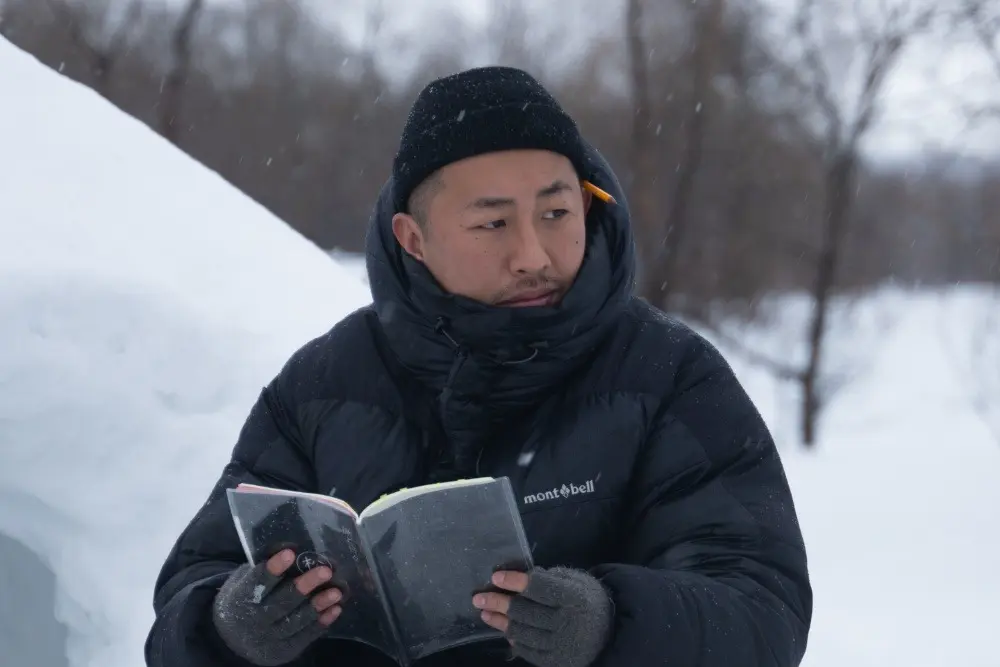
Japanese director Sho Miyake, whose recent feature “Two Seasons, Two Strangers” earned the prestigious Golden Leopard at the Locarno Film Festival in 2025, is preparing for his first-ever North American retrospective. The retrospective will anchor a sweeping, multi-city international tour organized and presented by the Japan Foundation, introducing global audiences to the nuanced and evocative body of work of one of contemporary cinema’s most distinctive voices.
The New York leg of the tour, titled “Unspoken Gestures: The Films of Sho Miyake,” will take place at Manhattan’s Metrograph from November 7 through November 17. Miyake is scheduled to attend the opening weekend in person, engaging with audiences and participating in discussion panels, with select encore screenings planned to follow the main theatrical run.
The comprehensive program brings together eight of Miyake’s own directorial efforts, spanning his early independent breakthroughs to his recent award-winning features. Among the highlights is his 2012 feature debut, “Playback,” which originally premiered at Locarno when the director was still in his mid-twenties. The film stars Murakami Jun as an actor approaching the age of 40 who mysteriously wakes up wearing his old high school uniform while on his way to a hometown wedding. Renowned filmmaker Ryusuke Hamaguchi famously compared the movie to a modern-day reincarnation of John Cassavetes’s classic “Opening Night.”
Also featured in the lineup is “The Cockpit” (2014), a 64–minute documentary-style film that closely observes producer-rapper OMSB alongside his collaborator Bim as they craft a musical track inside a modest, suburban Tokyo apartment. The retrospective further highlights “And Your Bird Can Sing” (2018), which will screen alongside his 2016 short film “August 8th,” as well as “Two Seasons, Two Strangers,” which adapts two distinct manga stories by Yoshiharu Tsuge and stars a stellar ensemble cast featuring Kawai Yuumi, Takada Mansaku, Shim Eun-kyung, and Tsutsumi Shinichi. The latter feature will be paired with Miyake’s 2016 short “Nagahama.” Rounding out the director’s retrospective lineup are his acclaimed boxing drama “Small, Slow but Steady” (2022) and “All the Long Nights” (2024).
In addition to his own films, Miyake has curated two carte blanche selections that heavily influenced his artistic development as a filmmaker. He selected David Elfick’s 1973 surf documentary “Crystal Voyager” and Shinji Aoyama’s 2007 drama “Sad Vacation,” the concluding chapter of Aoyama’s celebrated “Kitakyushu Saga” starring Tadanobu Asano. Miyake will personally introduce both carte blanche screenings on November 8, following a series of in-depth Q&A sessions accompanying screenings of “Small, Slow but Steady” and “Two Seasons, Two Strangers” the day prior.
Edo Choi, a programmer at Metrograph, emphasized the significance of bringing Miyake’s cinematic vision to North American viewers. “For a long time now, Sho Miyake has been one of international cinema’s best-kept secrets, each of his films landing quietly but forcefully amid the cacophony of contemporary film culture. With this retrospective, we’re giving the man a microphone and calling on New York audiences to attend the voice of an essential Japanese film artist,” Choi said.
The expansive Japan Foundation tour officially kicks off on November 3 in Washington, D.C., where the Japan Information & Culture Center at the Embassy of Japan will screen “Two Seasons, Two Strangers.” Miyake will participate in the accompanying Q&A session remotely. The tour then moves to Oklahoma from November 9 through November 11, featuring public screenings at the University of Oklahoma’s Meacham Auditorium in Norman and the Oklahoma City Museum of Art. During his time in Oklahoma, Miyake is also scheduled to lead a closed masterclass for university screenwriting students.
Los Angeles will host the program from November 13 to November 15 across several prominent cultural institutions, including the Japan Foundation, Los Angeles, UCR Arts at the University of California, Riverside, and the American Cinematheque’s Los Feliz Theatre. The Los Angeles screenings will expand the cinematic conversation by incorporating historical and international context, adding King Vidor’s classic 1928 silent comedy “The Patsy” and Tony Scott’s 2006 thriller “Déjà Vu” to the bill. The North American itinerary concludes in Toronto from November 17 through November 19, with screenings hosted at the TIFF Bell Lightbox, the Fox Theatre, and Paradise Cinema. The Toronto stop will showcase Miyake’s 2010 film “Good for Nothing” alongside Jacques Demy’s 1962 classic “Bay of Angels.”
Following the North American dates, the international tour will resume in the new year, traveling to major cultural capitals across Europe including Paris, Toulouse, Rome, Turin, Madrid, Zurich, Cologne, London, and Derby. The tour is slated to wrap up in February 2027, with Miyake scheduled to travel in person to every participating city except Washington.
Reflecting on the overarching vision of the retrospective, Inoue Ryo and Rokkaku Akinaru of the Japan Foundation highlighted Miyake’s own philosophy regarding the vocation of a filmmaker, noting that the director views his job as “taking on the responsibility of creating images of humanity.”
“We, too, are among the audience members who were once struck and moved by his gaze. We sincerely hope to bring that sense of wonder and emotion to as many viewers as possible in theaters around the world,” they said in a joint statement.
Miyake’s diverse filmography continues to garner international acclaim for its deeply empathetic observation of human relationships and marginal spaces. “Small, Slow but Steady” stars Yukino Kishii and was inspired by the real-life experiences of deaf professional boxer Keiko Ogasawara. Meanwhile, “All the Long Nights” adapts the novel by Maiko Seo, pairing actors Hokuto Matsumura and Mone Kamishiraishi as colleagues who form a quiet, supportive bond while navigating their own internal struggles. Through this extensive retrospective, international audiences will have an unprecedented opportunity to trace the evolution of a filmmaker whose quiet, patient storytelling continues to leave a powerful mark on modern cinema.