As a new generation of Apple smartphones approaches, consumers face the familiar and often stressful ritual of choosing the right configuration. With exciting hardware developments on the horizon—including anticipation surrounding Apple’s first foldable phone—upgrading is more tempting than ever. Yet, selecting the ideal model involves far more than deciding between sleek shades of space gray or titanium. Choosing the correct storage capacity is a critical decision, as an inadequate amount of space is a daily headache that users are forced to live with for years.
The consequences of miscalculating your storage needs quickly compound over time. Deleting cherished vacation photos just to clear room for new memories gets old fast. The frustration is equally acute when a major iOS update fails to install because the operating system demands that multiple apps be uninstalled first to free up temporary workspace. Fortunately, the mobile industry has shifted upward, and most new iPhones now start with 256GB of storage as a baseline.
On paper, 256GB is more than enough for a vast majority of users. To put that number into perspective, a single standard smartphone photo typically consumes roughly 3MB of space. Basic mathematical calculations suggest that a 256GB device has the theoretical capacity to hold approximately 70,000 pictures—a volume far exceeding what most casual photographers will ever shoot in a lifetime.
The storage dilemma, however, rarely stems from standard compressed photographs. Instead, the pressure points emerge when users begin capturing high-resolution 4K video, downloading massive productivity suites, or installing sprawling AAA mobile games. For power users, creators, and enthusiasts, this is usually the threshold where paying extra for higher capacity tiers transitions from a luxury to a necessity, sparing them from constantly battling their device for breathing room every few months.
When You Should Upgrade to a 512GB iPhone
While recording video in 4K resolution offers breathtaking visual clarity and remarkable definition, it remains the absolute fastest way to deplete a smartphone’s internal storage pool. One single minute of standard 4K footage consumes roughly 440MB of space. When users switch to professional-grade codecs like Apple ProRes, that exact same minute of video can skyrocket to a staggering 6GB. At that consumption rate, a 256GB iPhone can fill up alarmingly fast, turning high-end camera hardware into a liability for anyone who forgets to offload their footage regularly.
Similarly, uncompressed RAW photos demand significantly more space than standard compressed images, with individual files occasionally reaching up to 50MB each. For mobile photographers who shoot extensively in RAW to maximize editing flexibility, local storage disappears in a matter of weeks.
Mobile gamers face an entirely separate set of pressures that justify investing in higher capacity tiers. Modern mobile gaming has evolved dramatically, bringing console-quality titles directly to handheld screens. Major releases like Resident Evil 4 consume well over 30GB of space for a single title. When a user imagines downloading five or six games of that magnitude, alongside routine app updates and cached data, the baseline storage begins to look exceptionally tight.
Going with a larger capacity means eliminating the tedious cycle of deleting favorite games just to make room for newly released software. This consideration becomes especially vital when traveling, as users frequently find themselves in situations where they cannot rely on a robust, high-speed internet connection to redownload large applications on demand.
Beyond user-generated content and entertainment, buyers must also account for invisible storage consumption. The iOS operating system itself can claim up to 24GB of space straight out of the box. Furthermore, that footprint expands dynamically over time as the system downloads supplementary background assets, such as advanced on-device artificial intelligence models, localized speech recognition packages, and offline map data required for navigation without cellular service.
The iCloud Factor
Ultimately, deciding whether 256GB is sufficient for an iPhone depends heavily on individual data management philosophies and comfort levels with cloud infrastructure. For consumers who are fully integrated into Apple’s ecosystem and comfortable paying a recurring monthly fee for an iCloud storage plan, a 256GB device can serve as an ideal sweet spot. This approach relies on streaming media, cloud-based documents, and automated offloading.
Subscribers to iCloud can leverage built-in optimization features designed to automatically offload older photos and videos to the cloud. Under this system, only lightweight thumbnails or recently captured media remain saved in full resolution directly on the physical device for offline access, while older files are retrieved on demand over the internet. Users can also manually clear cached data for specific resource-heavy applications within the iOS settings menu to reclaim minor pockets of storage when needed.
Conversely, for individuals who prefer complete local independence—those who harbor an aversion to relying on cloud storage or who frequently travel to remote regions with unreliable or completely absent internet connectivity—relying on the cloud is simply not an option. Having substantial local storage becomes an absolute prerequisite for maintaining a comprehensive offline library of all media and applications.
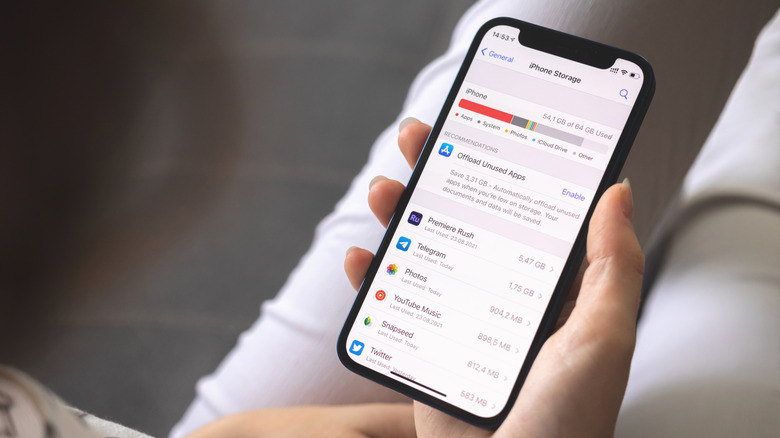
For consumers who demand instant, offline access to their entire photo and video library, frequently shoot extensive amounts of high-bitrate 4K footage, or keep a rotating library of massive gaming titles installed at all times, spending the extra money to upgrade to a 512GB or higher configuration remains the most practical path forward.