


The best rock bands in history often create their most enduring and daring work with their backs firmly against the wall—witness the Rolling Stones during their most turbulent eras, or the legendary British hard-rock powerhouse Motörhead, who faced a similar crucible forty years ago.
Back in the mid-1980s, the iconic band had endured the painful dissolution of its classic, hard-touring “No Sleep ’Til Hammersmith” lineup. This massive personnel loss was swiftly accompanied by a pair of sub-par studio albums that failed to capture the raw, menacing magic of their earlier triumphs. To many industry insiders and casual observers, Motörhead had been largely given up for dead, written off as another casualty of the fast-living, hard-rock lifestyle of the decade. But the band’s indomitable leader, bassist and frontman Lemmy Kilmister, was nothing if not a survivor. Refusing to let the legacy die, he regrouped with a pair of blazing guitarists and thunderous ex-Saxon drummer Pete Gill. For their next chapter, they took a massive gamble, joining forces with the unexpected choice of producer Bill Laswell.
At the time, Laswell was deeply entrenched and widely celebrated in experimental-leaning New York rock and jazz circles. He was best known for producing Herbie Hancock’s wildly left-field, vocoder-heavy 1983 hip-hop-infused hit “Rockit,” a choice that made him seem like an utterly bizarre and mismatched fit for Motörhead’s straightforward, high-octane sonic assault.
However, Laswell had been actively experimenting with the boundaries of hard rock during that period. He came to the Motörhead sessions fresh off overseeing some of the most pioneering crossover projects of the era. These included the 1984 rap-rock fusion anthem “World Destruction,” a fiery collaboration between John Lydon and Afrika Bambaataa, as well as Public Image Ltd.’s aggressive and eclectic “Album.” That particular record had successfully united Lydon with a wide-ranging, virtuosic band including guitar wizard Steve Vai, former Cream drummer Ginger Baker, and Funkadelic keyboard pioneer Bernie Worrell.
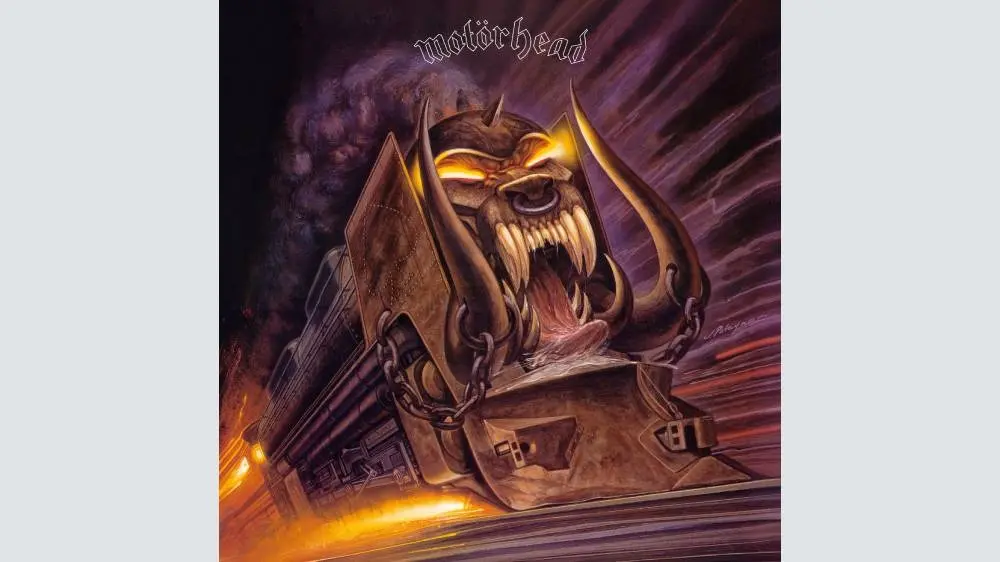
The eventual result of this highly unlikely and volatile union in the studio was “Orgasmatron,” which stands definitively as Motörhead’s most experimental album. Upon its initial release, the record drew a deeply polarized reaction from both long-time fans and members of the band themselves. In fact, official press materials for the modern anniversary reissue euphemistically state that “the album’s production was the subject of much discussion among the band and their fans.” Many purists argued at the time that Laswell’s dense, atmospheric mix was far too cluttered, pulling the raw-boned band too far away from their minimalist, foundational roots. Yet, for many true believers—including this writer, who loved it upon release and still holds it in the highest regard—it remains a fascinating masterclass in risk-taking.
In an era when music fans were significantly more tribal than they are today, divided rigidly into warring camps of heavy metal, punk, new wave, and pop, Motörhead occupied a rare, universally respected middle ground. They were one of the very few bands universally revered in both punk rock dives and heavy metal arenas. Much like AC/DC, their earlier music was rock and roll stripped entirely down to muscle and bone—featuring scorching, overdriven guitars, relentless, piledriving drums, and Lemmy’s vein-bulging, gravel-throated roar of a voice. They operated like a Terminator version of Chuck Berry: mechanical, unstoppable, and relentlessly driving.
And on “Orgasmatron,” listeners got all of those foundational elements, but injected directly into a vastly more adventurous and cinematic sonic setting. The underlying songs remained classic, textbook Motörhead at their core, but hazy guitar overdubs, eerie percussion, and avant-garde studio effects swooped unpredictably in and out of the mix. This was particularly true on the hypnotic, menacing closing title track, which acts as a veritable cauldron of seething guitars and driving drums. On this track, Lemmy’s voice is heavily laden with studio effects that make him sound like a terrifying hybrid of Darth Vader and Vecna morphed together into a single entity. The song functions as molten lava in musical form, anchored by what are arguably Lemmy’s finest-ever lyric contributions: “I am the one, Orgasmatron, the outstretched grasping hand/ My image is of agony, my servants rape the land/ Obsequious and arrogant, clandestine and vain/ Two thousand years of misery, of torture in my name.”
Over the decades, subsequent re-releases have occasionally attempted to punch up the mix. This comprehensive new 40th-anniversary edition presents not only a newly remastered version of Laswell’s controversial original mix, but also an intriguing 2026 remix helmed by the band’s longtime latter-day producer, Cameron Webb. This modern remix clears away some of the original atmospheric haze, presenting the guitars and drums in a cleaner, more defined sonic light—though, to be fair to purists, it does not sound radically or jarringly different from what fans have known for decades.
Furthermore, the producers have thoroughly cleaned out the archival vaults for this release, adding a collection of fascinating bonus material. This includes raw rehearsal tapes that sound delightfully authentic, as if they were originally captured on a simple bedroom boombox, alongside a rare outtake and a blistering BBC session featuring several standout tracks from the album. The BBC session also includes the classic anthem “Killed by Death,” plus a chilling, unique inclusion: Lemmy reading the lyrics to the song “Orgasmatron” completely unaccompanied, delivering the dark words like some sort of malevolent, gothic poet.
Despite the intense polarization that greeted the original mix upon its debut four decades ago, “Orgasmatron” proved definitively that Motörhead were back from the brink of commercial and artistic irrelevance. The album successfully launched the band into its second golden era in earnest. Moreover, the band didn’t stay lost in the avant-garde fog for long; they returned to their traditional basics soon enough. Classic-era drummer Phil Taylor returned to the fold the following year for the aptly titled “Rock N’ Roll” album, which marked a definitive return to their usual stripped-down sound and conventional production style. From there, the band roared triumphantly off into the sunset, maintaining a relentless touring and recording schedule until they finally disbanded following Lemmy’s tragic death in December 2015 at the age of 75.
While the various bonus tracks included in this latest reissue package are certainly nice to have for completists, they may not necessarily electrify every casual listener. However, the remastered and otherwise souped-up sound applied to the original album itself instantly establishes this release as one of the top rock reissues of the year. Four decades after it first baffled and thrilled the heavy metal underground, “Orgasmatron” now roars louder, clearer, and more proudly than ever before.