

*Warning: This review contains
full spoilers for Season 1, Episode 3 of ‘Yaga’. The first three episodes are currently streaming on AMC+ in the United States and Crave in Canada, with new episodes scheduled to release every Friday at midnight PT.*
The third episode of Yaga wastes absolutely no time diving right back into its eerie, witchy narrative, successfully providing answers to some of the most pressing questions left in the wake of the show’s debut week. Picking up precisely where the cliffhanger of Episode 2 left off, the story returns to the beach alongside Logan’s lifeless body. Soon after, police confirmation arrives: it is indeed Logan, not Henry, lying dead on the shore, and investigators have discovered fresh blood near an open window in his bedroom.
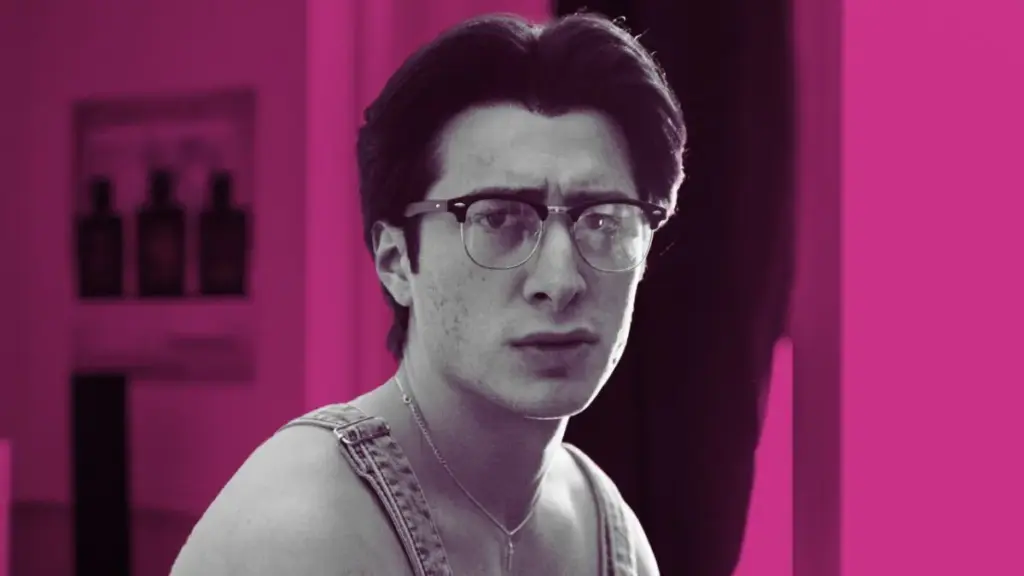
A momentary wave of confusion washes over the viewer as Rapp witnesses Logan’s eyes suddenly snap open, revealing a striking, ice-blue color that mirrors Henry’s own gaze. By this point in the series, it has become abundantly clear that Rapp is experiencing increasingly frequent hallucinations. Whether these distorted perceptions stem simply from lingering drug use from the previous night—as he certainly still appears to be under the influence—or are the manifestation of something far darker and more ominous happening to him remains to be seen.
A distinct pattern regarding the concept of time begins to emerge throughout Yaga. This temporal distortion is further confirmed when Carson recounts the events of the previous night at Henry’s party. Viewers learn that a gap of "a few hours" actually elapsed between the moment Logan was last seen disappearing into his upstairs room and the moment Carson ultimately found Rapp down on the beach. Initially, the timeline had felt slightly compressed, suggesting only a brief passage of time rather than a substantial missing block of hours.
As the narrative pushes forward into more unexplained territory, Rapp attempts to make a romantic move on Carson inside his hotel room, only to be firmly rejected. He immediately wanders over to his bed to lie down, falling asleep with an unnerving, unnatural swiftness. Carson approaches the bed, kneeling down beside it just as a digital clock flips to 3:33—a recurring numerical motif that has appeared in earlier scenes. Intense, whispering voices begin to saturate the audioscape as she leans in as if to kiss him. Rapp gently opens his eyes to find Pam, Henry’s ex-girlfriend, seductively pulling a white feather directly out of his mouth.
He jolts awake from his actual slumber some time later in the day, disoriented and unsettled. Before they head out toward forensics, a small circle tattoo is deliberately framed on Carson’s wrist, planted clearly in the shot as a visual detail meant to be remembered for later developments in the season.
A Visit to the Mortuary and Disturbing Discoveries
Arriving at the local mortuary, Carson and the authorities inspect Logan’s corpse—or rather, most of it. In what easily stands as the episode’s most shocking, stomach-churning moment, it is revealed that Logan has been castrated, with his penis cleanly severed from his body. Furthermore, forensic examination shows he was stabbed with an ancient weapon fashioned from obsidian and human bone. Katherine later classifies the artifact as an Aztec ceremonial midwife sacrificial knife, heavily associated with ancient deities linked to sexual desire and fertility. Every piece of physical evidence gathered so far points squarely to murder, prompting Carson and the attending police force to dig deeper for clues, especially as the case increasingly intertwines with Henry.
Moving away from the gruesome scene at the morgue, Carson walks over to a quaint local church to meet Logan’s mother, Alice, brilliantly portrayed by Sarah Strange. The combination of moody, shadowed cinematography and heavy, melancholic music crafts an emotionally resonant scene capturing shared grief between the two women. Sitting together on a wooden bench in the cemetery, Alice opens up, sharing previously unknown details about Logan’s life. She recalls how her son had recently begun aggressively working out and changing his hairstyle—behaviors that suggest he may have been subconsciously or consciously attempting to transform into Henry himself.
Alice wastes no time expressing her deep-seated animosity toward the Parks family. She recounts a chilling rumor she overheard regarding Logan and Henry purchasing one of Pam’s lame hens, casually joking about sacrificing the animal. Passionately describing her son’s downward spiral, Alice tells Carson that she could physically see a dark transformation taking place within him. "Every day, I’d see that thing growing in him," she says. "That thing getting bigger and thicker and darker and pulling him further and further away from God, and closer and closer to the Devil." When Carson attempts to steer the conversation toward Logan’s father, Alice abruptly shuts the line of questioning down.
While Carson speaks with Alice, Rapp is out jogging along the beach, only to spot Pam running just ahead of him. As he accelerates to catch up to her, Pam’s figure suddenly distorts and splits into three distinct versions of herself in Rapp’s warped perspective. She calls out his name, causing him to trip awkwardly over a log. Gasping as he looks up, he catches fleeting glimpses of a sinister mask staring back at him before Pam reappears right beside him, casually dropping a cheeky comment as if nothing unusual has occurred.
Before Carson and Rapp decide to return to Henry’s house to hunt for fresh leads, Carson casually asks whether Henry and Logan might have been romantically involved. The question inadvertently gives Rapp fuel to speculate on Carson’s own hidden personal life and sexuality, a topic she deftly avoids discussing.
The Maiden, the Mother, and the Crone
Stepping back inside Logan’s bedroom, the duo surveys the crime scene, taking note of the pile of bloodied bedsheets still discarded next to the open window. As they meticulously search the room, they uncover a canister of drug powder stamped with the exact same triangular symbol seen in previous episodes—a geometric motif known as the Triskelion. The symbol carries deep historical and mythological weight, with multiple interpretations across different cultures. In Celtic mythology, it is widely understood to represent sacred femininity and the Triple Goddess archetype, encompassing the Maiden, the Mother, and the Crone. Given that Slavic folklore casts Baba Yaga as the quintessential "Crone," audiences are left waiting to see how this mythological parallel will ultimately play out as the series progresses.
Carson and Rapp also spot a dried chicken foot hanging directly from Logan’s lampshade, the very same ornament previously noticed in Henry’s room. It is now safe to assume the chicken foot originates from the fowl Logan and Henry were rumored to have sacrificed.
While trying to figure out how Logan managed to physically vanish from his locked room the night before, Rapp stumbles upon a hidden mechanism: the bookshelf doubles as a secret door leading into an adjacent room. Inside, they find a small, eerie space illuminated entirely by red lights, despite the fact that the rest of the house is currently without electrical power. A desk sits against the wall, holding a tape recorder alongside shelves stacked high with dozens upon dozens of cassette tapes.
Deeper into the investigation, Carson and Rapp unearth an audio recording captured the previous very night inside Henry’s bedroom—dating right around the time Logan was allegedly having sex with an unidentified woman wearing angel wings. On the tape, Logan can clearly be heard demanding to be called "Henry," raising serious doubts about whether Henry was actually present at the party at all, despite cellular tracking placing his phone at that exact location.
Searching Henry’s room, Rapp uncovers a disturbing piece of hardware: a wired audio bug hidden discreetly on the nightstand, programmed to automatically record whatever happens in Logan’s "secret office" whenever voices speak in the bedroom. Playing back more of the night’s audio logs, Carson and Rapp realize that Pam was the woman engaged in sexual relations with Logan just hours before his violent death, instantly cementing her as a prime suspect in the murder investigation.
As the sheer weight of these revelations settles in, Rapp’s gaze drops to a tiny speck of blood smeared on the floor near the bed. He immediately hits the deck, peering underneath to find a larger patch of blood smeared across the floorboards. He forcefully shoves the heavy bed out of the way. As Carson walks into the room to join him, they discover the Triskelion symbol drawn in blood across the floor, flanked by three white chicken feathers placed meticulously near each point of the triangle—a macabre arrangement that strongly suggests a curse or ritualistic spell. The chilling visual is amplified by a haunting musical score that wraps tightly around the viewer like closing talons, just as the voice of Baba Yaga begins narrating through the episode’s haunting conclusion.
Performances and Questions Heading Into Episode 4
This third installment offers substantial character growth, with Clark Backo stepping comfortably into her role as Carson and continually testing the blurring boundaries between professional police work and obsessive personal intrigue. Meanwhile, Noah Reid infuses Rapp with a gritty, intense energy, showcasing a darker side to his character that promises compelling development as the supernatural mystery deepens.
As viewers look ahead to Episode 4, a number of burning questions remain unanswered. Do Henry and Logan share the same father, and is that shared lineage the root of Alice’s deep hatred for the Parks family? Is Pam secretly a witch, or perhaps Baba Yaga herself moving in disguise? Did Logan plant the blood-drawn curse underneath Henry’s bed, and if so, what was his true motive—and who is genuinely pulling the strings behind the scenes?
The latest episode of Yaga proves to be another strong outing, boasting tight pacing, top-tier performances, captivating storytelling, and ever-deepening narrative twists. It continues to excel at blending classic thriller and horror tropes with buddy-cop dynamics, finding a confident, serious footing as its mythology expands. By peeling back just enough layers to deliver shocking revelations while keeping its biggest secrets hidden in the dark, the series sets the stage for another thrilling chapter next week.