

Environmental pressures, changing weather patterns, and a booming recreation culture are pushing bears into closer and more frequent contact with humans across North America. With no centralized government agency tasked with tracking bear attacks and encounters on a national scale across the United States, a lone Texas outdoorsman decided to take matters into his own hands by compiling a comprehensive, independent log of incidents.
The reality of these intensifying interactions was underscored in the early morning hours of October 7, when a black bear sow and her two cubs broke into a residential home near Salmon, Idaho. In a harrowing confrontation to protect his sleeping wife and two daughters, a local resident named Brian Heidemann tackled the adult bear, ultimately placing it in a chokehold. Heidemann sustained severe bite wounds and deep gashes across his head, torso, and shoulder during the struggle. State wildlife officials later made the difficult decision to euthanize all three bears involved in the break-in.
The chilling incident serves as a striking example of how bear-human encounters have intensified. Across the continent, compounding factors such as regional droughts and widespread natural food shortages have driven hungry animals out of their traditional backcountry habitats and directly into residential neighborhoods and rural towns in search of sustenance. Yet, despite the growing public safety concerns and media headlines, quantifying these encounters and actual bear attacks remains a surprisingly difficult administrative challenge. No unified national database currently tracks bear attacks on humans across the United States. Instead, monitoring is decentralized, with individual state and provincial wildlife agencies tallying incidents independently according to their own regional standards.
This persistent information gap is precisely where Mike Dickerson, a 71-year-old outdoorsman and writer, saw an opportunity to bring clarity to a murky subject. Dickerson began noticing what felt like a noticeable, concerning uptick in reports concerning bear attacks and aggressive encounters across North America, prompting him to investigate further.
"I saw that there was no national database, and no one is tracking," Dickerson explained in an interview. "I decided to start tracking attacks this year simply because I was reading and hearing of more attacks through some of my sources at various professional wildlife managers across the country, but particularly in the western states."
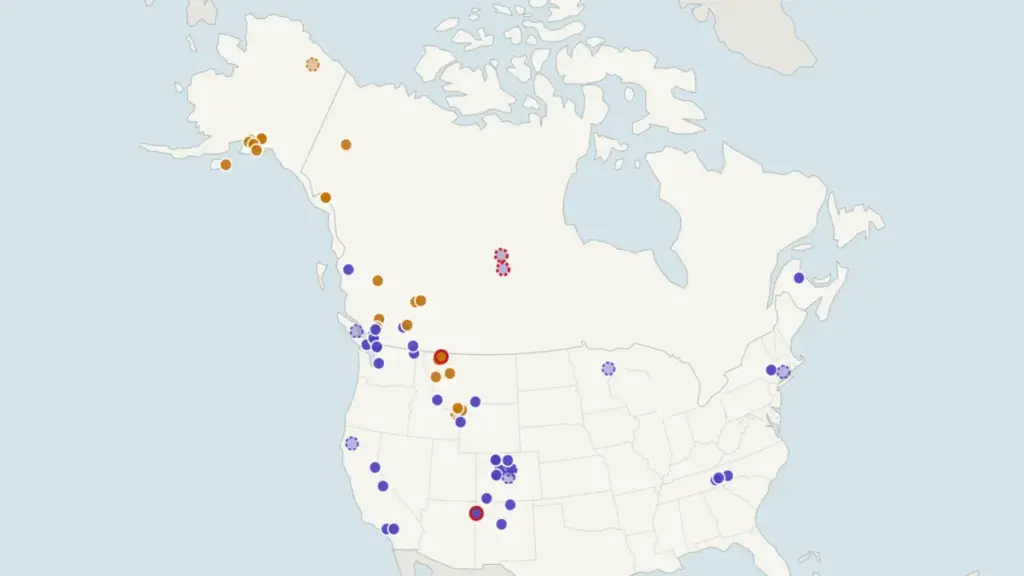
Dickerson’s self-compiled log, which he initially published to a wider audience on social media via Facebook, documents at least 73 separate encounters and attacks spanning across 13 distinct U.S. states, four Canadian provinces, and the Yukon Territory. Out of those 73 total recorded interactions, 64 were classified as direct bear attacks that resulted in either human injury or death.
A Bear Expert Crunches the Numbers
To better understand the scope of the data, professional wildlife biologists and bear experts maintain distinct definitions for these types of wildlife interactions. An attack is formally categorized as any instance where a bear inflicts physical injury upon a person. A bear encounter, by contrast, refers to any situation where a human comes into close physical proximity or visual contact with a bear. Dickerson noted that his crowdsourced list was not originally designed to strictly parse these fine biological nuances, but rather to broadly document reported interactions—ranging from aggressive behaviors like a bear bluff-charging a hiker to direct physical assaults.
Seeking professional analysis, media outlets sent Dickerson’s compiled list to Chris Servheen, the former national grizzly bear recovery coordinator for the U.S. Fish and Wildlife Service, to examine and crunch the numbers. According to Servheen’s evaluation of the data, more than two-thirds of the total incidents documented on Dickerson’s list involved black bears rather than grizzlies. Furthermore, domestic dogs were found to be present and involved in approximately a quarter of all the recorded bear attacks, a common behavioral trigger that often escalates defensive or predatory responses from bears.
"Remember that these are usually reported due to an injury or a serious event," Servheen noted regarding the inherent limitations of tracking wildlife conflicts through public channels. "Most minor encounters are not reported. That means that this list is biased toward serious events. There are countless minor encounters that are not reported and do not make it into such a list."
Dickerson readily acknowledged that his compilation was compiled without the rigid methodology or exhaustive scientific framework of an academic study. His ambitions for the project remained straightforward and practical from the start.
"My purpose was simply to create a list and track attacks in North America," he said, emphasizing the grassroots nature of his undertaking.
Grabbing Bear Data from Local Reports
To build his comprehensive log, Dickerson gathered almost all of his data from publicly available sources, relying heavily on regional media reports, daily automated news alerts covering wildlife conflicts, and a select few direct reports provided by hunters in the field.
"I’m just an interested outdoor writer who decided to track attacks this year, again, precisely because the experts predicted this would be a bad year," Dickerson added, pointing to early warnings from the wildlife community.
Historical and scientific data suggest that brown and black bear attacks may be rising across various parts of the world over longer time horizons. According to a comprehensive 2019 scientific study published on human-wildlife conflict, North America alone saw 183 documented brown bear attacks between 2000 and 2015, averaging roughly 11 attacks per year. Looking at broader mortality trends, between 1990 and 2019, North American black and grizzly bears have been responsible for killing at least 150 people. Historical research indicates that fatal encounters have claimed the lives of more people in recent decades than they did a century ago, a shift largely attributed to overlapping populations.
The current year has quickly emerged as an unusually volatile period for bear activity, particularly across the Western United States, where human expansion and environmental stressors have collided.
"It is a bad food year for bears due to drought and climate change reducing natural foods for bears," Servheen explained, highlighting the environmental pressures forcing the animals into conflict. "This brings people and bears into increased encounters. There are more people living and recreating in bear habitat, and that results in increased encounter frequency and more reports and events."
Independent journalistic verification of Dickerson’s list against official government wildlife agency releases and verified media accounts confirmed that the vast majority of the cataloged incidents accurately described real-world confrontations between humans and black, brown, or grizzly bears. Only a single incident out of the entire log was reported directly to Dickerson by an individual source without a corresponding public news outlet publication. As environmental pressures continue to evolve and outdoor recreation numbers remain high, the intersection of human communities and wild bear populations remains a critical challenge for wildlife managers across the continent.