


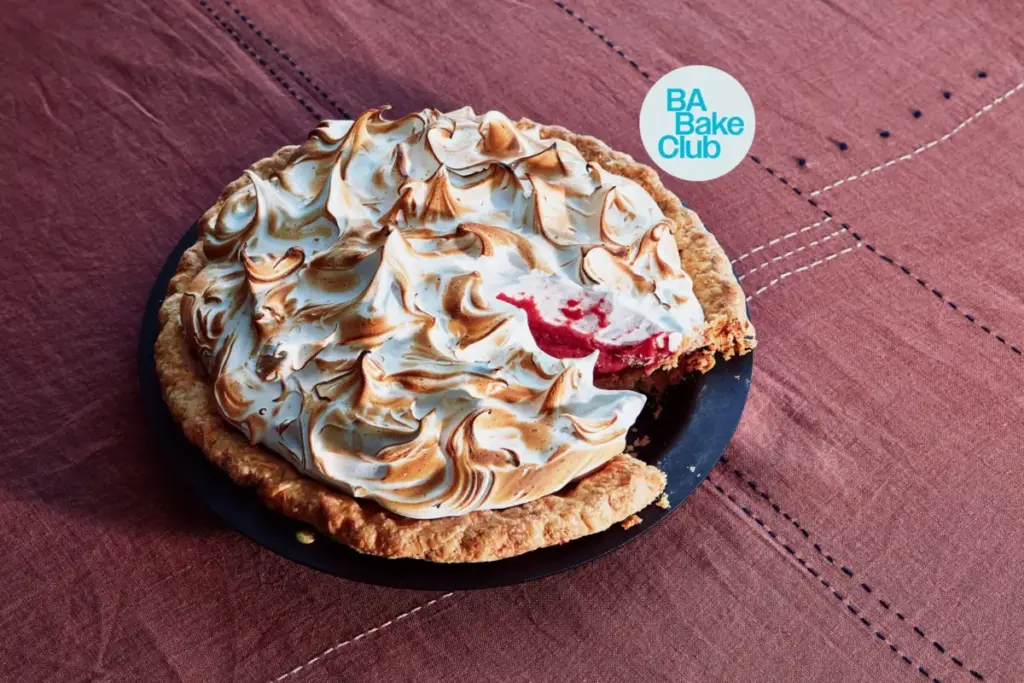
For home bakers looking to put a vibrant, tart twist on traditional holiday dessert spreads, the culinary minds behind the Bon Appétit Bake Club have introduced a striking centerpiece: a crimson cranberry-lime curd pie crowned with a billowy, cloud-like expanse of meringue.
Conceived as a festive evolution of the classic lemon meringue pie, the recipe combines the familiar comfort of a towering, toasted egg-white topping with a filling that leans heavily into sharp, fruit-forward acidity. The result is a dessert that bridges the gap between autumn harvest flavors and bright, citrus-driven brightness, offering a sweet reprieve from the heavier, spiced desserts that typically dominate winter gatherings.
Senior Test Kitchen editors Jesse Szewczyk and Shilpa Uskokovic lead the monthly Bon Appétit Bake Club, a community designed for curious bakers seeking both guidance and deeper insight into the mechanics of home baking. Each month, the editors unveil a designated must-make recipe, diving into the culinary science of why specific techniques and ingredient ratios work. Beyond the printed recipe, the club functions as an interactive hub where participants can ask questions, share photographs of their bakes, listen to companion podcasts, and connect through community chat spaces.
At the foundation of this holiday pie is a sturdy yet flaky crust, for which the editors recommend their established baseline pastry recipe. Building a reliable crust is essential given the heavy, fluid nature of the filling that follows. The vibrant crimson filling itself relies on a full pound of fresh or frozen cranberries, which are balanced and intensified by a generous volume of fresh lime juice. Rather than relying solely on the natural tartness of the berries, the addition of lime juice sharpens the flavor profile, creating a filling that is unapologetically sour yet harmonious when paired with the heavy sugar content required to stabilize the curd.
Achieving the proper texture for the filling requires strict adherence to timing, specifically regarding preparation schedules. Bakers are advised to begin the pie the day before it is intended to be served. The cranberry and lime curd requires several hours of dedicated refrigeration to set into a clean, sliceable consistency. Cutting into the pie prematurely results in a semi-liquid filling that runs across the plate, creating a dessert that remains delicious in flavor but compromises the clean presentation expected of a professional-style tart.
To achieve success with the pastry dough, the Test Kitchen editors emphasize the utility of specialized tools, singling out the metal bench scraper as an indispensable item in the baking toolkit. Specifically noting a preferred model from Gestura, the editors highlight the versatility of the flexible dough scraper across multiple stages of pastry preparation. The tool aids significantly in cutting chilled butter into flour, folding delicate dough layers, nudging pastry masses into cohesive shapes, and transferring rolled dough safely from the countertop to protective plastic wrap. Additionally, the scraper proves useful for trimming edges, cutting decorative strips, and clearing flour residue from work surfaces.
The ingredient composition for the crust reflects classic pastry science, combining all-purpose flour, kosher salt, and a small touch of baking powder for a subtle lift. Chilled cream cheese and sliced unsalted butter are incorporated into the dry ingredients to ensure pockets of fat that melt during baking, creating distinct layers of flakiness.
Meanwhile, the filling and assembly phase calls for an extensive list of components, starting with the cranberries, granulated sugar, fresh lime juice, and cornstarch. Whole eggs and extra egg yolks are whipped into the fruit and starch mixture to build richness and structure, alongside vanilla extract and additional kosher salt. A substantial amount of room-temperature unsalted butter is whisked into the warm curd to impart a smooth, velvety mouthfeel that counteracts the sharp bite of the citrus and berries.
Crowing the entire confection is the meringue layer, constructed from room-temperature egg whites whipped alongside cream of tartar and remaining granulated sugar until stiff, glossy peaks form. This billowing cloud provides a contrasting texture and a sugary counterweight to the intense tartness hidden beneath the crimson surface.
Through the Bake Club, Szewczyk, Uskokovic, and their community continue to explore these technical details, offering home cooks a space to troubleshoot challenges, discuss equipment preferences, and refine their seasonal baking repertoires.