

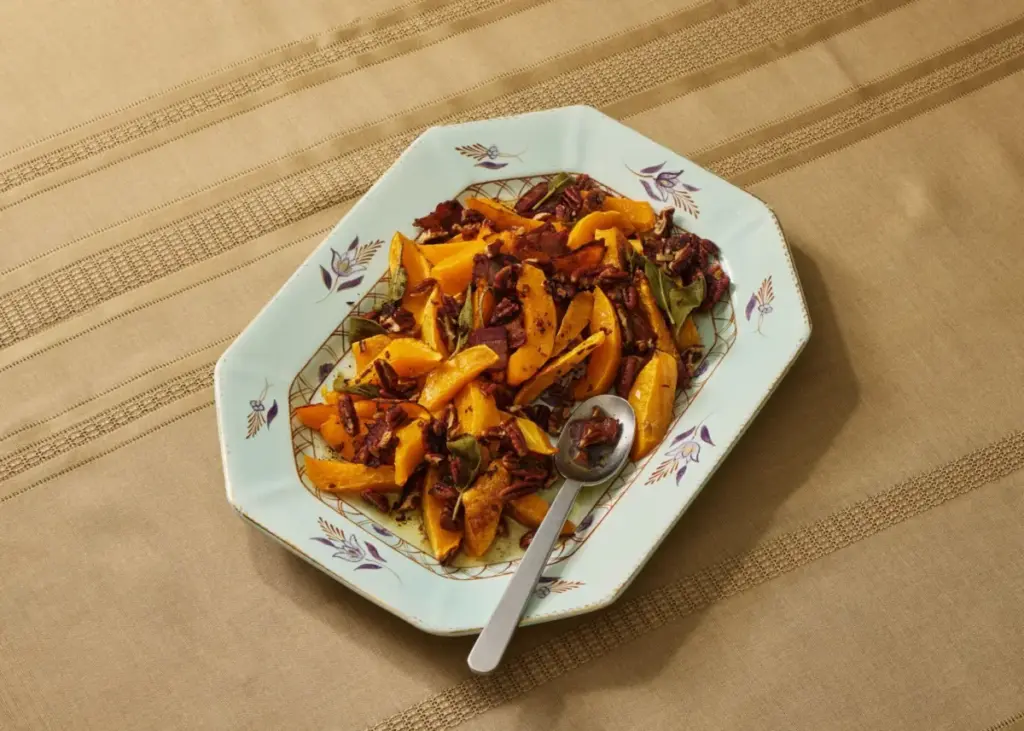
When it comes to winter squash, culinary professionals and home cooks alike often find themselves navigating a crowded field of varied shapes, stubborn skins, and unpredictable textures. Among the diverse array of gourds that populate produce aisles during the colder months, the butternut squash consistently claims the crown as the most affable and reliable option available. Prized for being relatively easy to prepare, dependably delicious, and widely accessible at most grocery stores, it serves as the ultimate canvas for both simple weeknight cooking and elevated holiday spreads. As culinary enthusiasts look ahead to seasonal celebrations—including the upcoming gatherings featured in the 2026 Thanksgiving Hub—elevating this humble vegetable has become a central focus for modern autumnal cooking.
The secret to transforming a standard roasted vegetable into a standout centerpiece lies in a clever and flavorful accompaniment known as the buttered nut dressing. Far more than just a cheeky wordplay on the ingredients, this bold topping relies on a careful balance of contrasting flavors and textures. The deep, nutty richness of brown butter pairs seamlessly with the sharp tang of balsamic vinegar, while fresh lemon zest and juice provide a bright, zesty lift. Combined with a crunchy element that cuts through the natural, velvety sweetness of roasted squash, this dressing acts as an exceptional culinary foil, turning a familiar side dish into a multi-dimensional flavor experience.
Achieving this balance requires attention to timing and component preparation. According to culinary guidelines for the recipe, the butternut squash can be roasted a couple of hours ahead of time. This strategic scheduling leaves very little to do right before dinner service other than quickly whipping up the warm, aromatic dressing and bringing the dish together. By decoupling the roasting process from the final assembly, hosts can manage their kitchen workflow efficiently, ensuring that complex meals come together smoothly without last-minute panic.
At the heart of the squash preparation is a thoughtfully curated blend of aromatics, fats, and seasonings designed to draw out and complement the vegetable’s inherent qualities. The ingredient list begins with two teaspoons of fennel seeds, which introduce a subtle, licorice-like warmth that underpins the richer elements of the dish. The star of the vegetable component is a single medium butternut squash, weighing approximately three pounds. This specific size ensures an ideal ratio of flesh to surface area, allowing for optimal caramelization during the roasting process. To coat the squash, three tablespoons of extra-virgin olive oil are deployed, providing the necessary fat to conduct heat and crisp the exterior edges.
Seasoning is executed with precision, calling for either two teaspoons of Diamond Crystal kosher salt or one and a quarter teaspoons of Morton kosher salt, acknowledging the well-known density differences between popular salt brands. To introduce a gentle, lingering heat that counters the sweetness of the squash, one teaspoon of crushed red pepper flakes is folded into the mix. This foundational group of ingredients establishes a savory, spiced profile before the vegetable even meets the heat of the oven, setting the stage for the complex flavors that will be introduced during the final assembly.
While the squash roast develops its deep amber crust and tender interior, attention shifts to the complex dressing and assembly components. The protein and textural backbone of the dressing begins with six ounces of thick-cut bacon, sliced into convenient one-inch pieces. As the bacon renders in the pan, it releases savory fats that form the cooking medium for the subsequent additions. Joining the bacon is one cup of raw pecans, which toast in the rendered fats, absorbing the smoky, savory flavors while developing a deep, satisfying crunch that defines the topping.
The richness of the dressing is further amplified by four tablespoons of unsalted butter, which is allowed to melt and brown gently, creating the signature nutty aroma that gives the dressing its name. Three cloves of garlic, finely chopped, are introduced to the warm fat, releasing their aromatic compounds without burning. The profile is then elevated with the zest and juice of one large lemon, introducing a bright, acidic edge that cuts through the heavy fats. Three sprigs of sage are steeped in the mixture, imparting an earthy, herbaceous note that is practically synonymous with autumnal and holiday cooking. Finally, two tablespoons of balsamic vinegar are incorporated to tie the sweet, savory, and acidic notes together, with additional kosher salt added optionally to taste depending on the saltiness contributed by the bacon.
This meticulous approach to winter squash preparation highlights a broader culinary shift toward maximizing flavor through contrast rather than complexity. By pairing the comforting, familiar sweetness of roasted butternut squash with a dressing that is simultaneously crunchy, rich, bright, and sharp, home cooks can deliver a dish that feels both grounded in tradition and refreshingly modern. Whether planned as a reliable weeknight vegetable side or featured prominently among the curated recipes, tips, and menus for seasonal holiday celebrations, this preparation demonstrates how thoughtful technique and accessible ingredients can elevate a familiar seasonal staple into something truly memorable.