

At first glance, a baked potato might appear to be one of the most straightforward, foolproof items in the culinary canon, a dish requiring virtually no specialized technique or advanced preparation. Yet, culinary professionals and home cooks alike are increasingly discovering that a vast chasm separates a merely good baked potato from a truly transcendent one. Achieving potato perfection involves a delicate balance of science, texture, and temperature control, challenging several long-held assumptions about how this humble staple should be handled from the oven grate to the dinner plate.
For generations, wrapping russet potatoes tightly in aluminum foil has been a staple of backyard barbecues, weeknight dinners, and restaurant kitchens. However, culinary experts warn that while this practice successfully traps moisture to yield a tender interior, it simultaneously creates a steamy environment that renders the potato skin unappealingly soft and limp. For those in pursuit of the ultimate crisp skin—one that shatters delightfully under the fork—the foil must be cast aside entirely. Instead, bakers are advised to place scrubbed russet potatoes directly onto the oven grate and bake them at a notably high temperature. To elevate the exterior texture even further, evoking the savory, satisfying crunch of a potato chip, cooks can rub the oiled skins with vegetable oil and season them generously with coarse salt before they ever enter the oven.
A common misconception among home cooks is that baking a potato directly on the rack without foil will somehow dry out the flesh or compromise the coveted fluffiness of the interior. Surprisingly, this is not the case. According to culinary testing, achieving a light, fluffy, and cloud-like interior is entirely dependent on the internal temperature of the potato reaching at least 212 degrees Fahrenheit. While taking the temperature of a baked potato with a digital meat thermometer may initially feel unconventional or overly clinical, it serves as a reliable, fail-safe route to maximizing the enjoyment of the dish, ensuring that the moisture inside has turned to steam and adequately broken down the starches without overcooking the surrounding flesh.
Once the potato has achieved the optimal internal temperature and a perfectly crisp, well-seasoned exterior, the next critical juncture in the process is deciding how to open it. Culinary authorities have long debated the mechanics of this step, with various schools of thought offering distinctly different philosophies. The Idaho Potato Commission, among other institutions, has long sworn that the method used to open a baked potato profoundly affects its final texture. Proponents of this tradition actively eschew the standard kitchen knife in favor of a fork, using the tines to gently poke a distinct plus sign into the surface of the potato, allowing steam to escape gently while preserving the integrity of the fluffy starch inside.
Other culinary figures approach the opening ritual with considerably more theatrical flair. Renowned food writer Nigel Slater has famously expressed a preference for striking the hot potato as though it were participating in a martial arts competition. In a piece published in The Guardian, Slater described the technique with characteristic vividness, advising cooks to bring their hand down fast and sharp as if executing a karate chop, but applying only enough force to crack open the potato skin without crushing the tuber beneath. Whether a home cook wishes to attempt this dramatic physical feat remains entirely in their own hands, though extensive kitchen testing has revealed that a simpler approach—a single, clean fork-pricked line drawn down the length of the spud—is ultimately the most effective way to open the potato while maintaining its structural integrity.
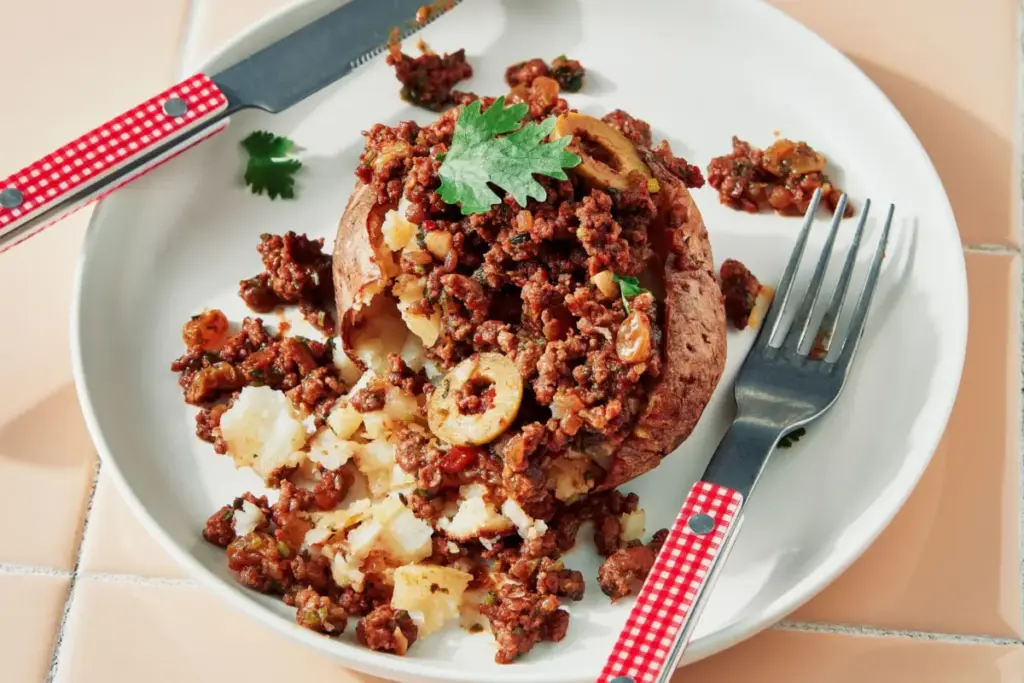
Once opened and exposed, the versatile baked potato transforms into a blank canvas capable of accommodating an almost limitless array of fillings and toppings, ranging from traditional butter and sour cream to more adventurous combinations like creamy tuna salad or cheesy baked beans. In recent recipe developments from culinary test kitchens, the spotlight has turned toward heartier, globally inspired flavor profiles, such as a picadillo-inspired mixture featuring ground beef. This savory topping is naturally packed with protein, iron, and creatine, though alternative proteins like ground turkey or ground chicken can be substituted seamlessly for those seeking a lighter variation.
To elevate the picadillo-inspired beef mixture, traditional ingredients such as golden raisins and stuffed olives are folded in, creating a delightful interplay of savory, sweet, and briny notes. When spooned generously over the steaming, fluffy interior of the baked potato, a vibrant, spicy tomato sauce is added to the mix, slowly soaking into the potato flesh with every passing minute. This gradual absorption process ensures that the potato itself becomes fully seasoned by the sauce, integrating the complex flavors throughout the dish. Culinary experts emphasize that the success of this sauce relies heavily on the choice of seasoning, specifically recommending a well-rounded chili powder that features a harmonious blend of ground chiles, cumin, oregano, and garlic, rather than relying solely on dried ground chiles.
This emphasis on flavor-forward simplicity underscores a broader culinary philosophy championed by food editors and test kitchen professionals: healthy cooking does not have to be overly complicated or intimidating. In fact, culinary experience frequently demonstrates that the simpler a dish is, the better it ultimately tastes. Through dedicated recipe development series focusing on feel-good meals for any day of the week, experts continue to highlight the nutritional merits of everyday ingredients that have occasionally been misunderstood by consumers. White potatoes, in particular, are frequently victims of dietary misconceptions, often unfairly dismissed as empty carbohydrates devoid of nutritional value. In reality, nutritional science supports the fact that white potatoes are remarkably good for you, offering essential nutrients, dietary fiber, and sustained energy when prepared with health-conscious methods that celebrate their natural qualities rather than masking them beneath excessive, heavy fats.