
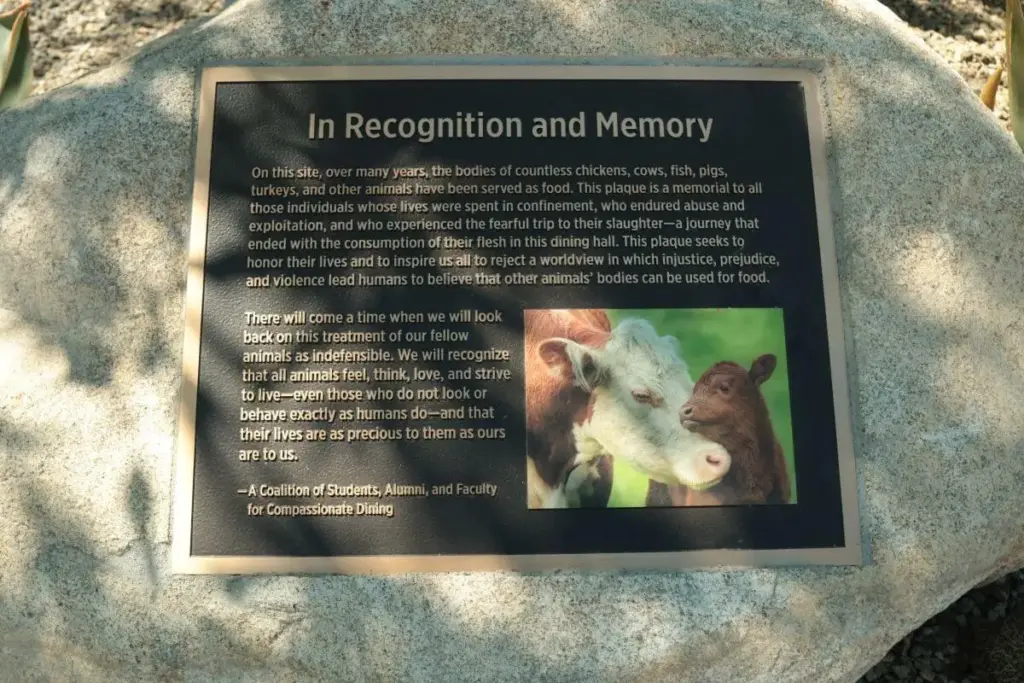
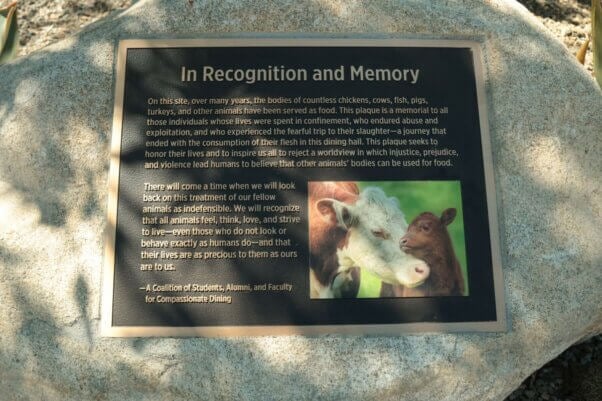
CLAREMONT, Calif. — What if you were asked to remember the living individuals behind every meal? That is the profound question at the heart of a historic new memorial plaque unveiled at Pitzer College, honoring the millions of cows, pigs, chickens, and other animals who have been killed and served as food on campus.
Backed by renowned civil rights activist, author, educator, and longtime vegan Angela Davis, the Pitzer Animal Recognition Memorial now stands prominently outside McConnell Dining Hall. Funded entirely by People for the Ethical Treatment of Animals (PETA), the installation transforms an ordinary trip to the campus dining facility into an opportunity for deep reflection, inviting passersby to pause and think about the animals whose lives mattered before reaching a plate.
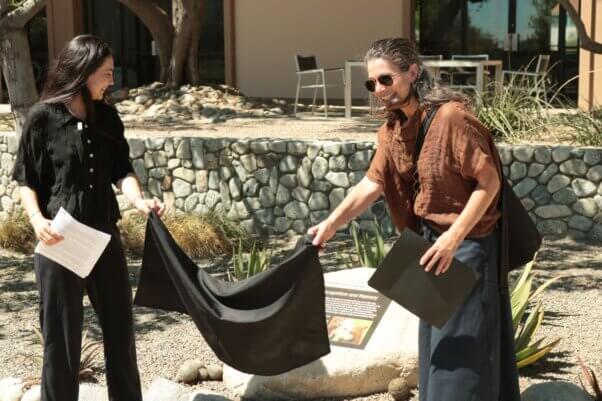
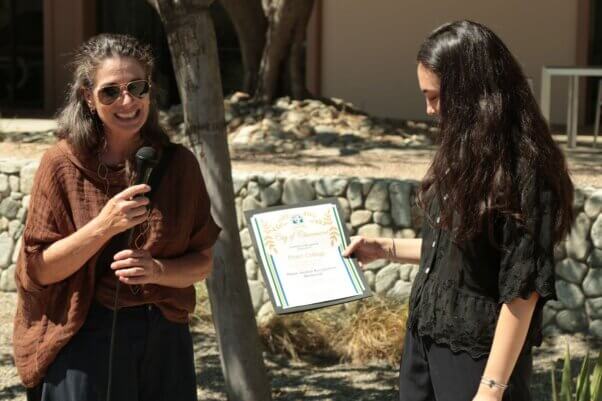
Students, faculty members, alumni, PETA supporters, and Claremont Mayor Jennifer Stark recently gathered for the official unveiling ceremony, celebrating the culmination of a years-long campaign to ensure that these animals are not forgotten by the campus community. The event marked a milestone for student-led advocacy and institutional dialogue regarding food systems and ethics in higher education.
"Every student who walks into this dining hall will be reminded that each animal killed for a fleeting taste was once a living, feeling individual who valued their life and didn’t want to die," said Pitzer alumna and PETA Special Projects Coordinator Ella Rosenblatt during the gathering.
Following the formal remarks and the unveiling of the plaque, attendees were invited to enjoy vegan chicken tenders, demonstrating firsthand that plant-based meals can nourish the campus community without harming other living beings.
Angela Davis Saw the Memorial as a Lesson in Kinship
Speaking about the significance of the project during its rollout, Angela Davis reflected on the vital role that universities play in teaching students about their connections to the broader world and the entities that inhabit it.
"A university is where students learn about that invaluable sense of relatedness and not only with humans who are fighting for life and fighting for better futures, but a sense of kinship with all other living beings on this planet," Davis observed.
The sentiment resonates deeply with the core mission of the installation, which seeks to bridge the psychological gap between the packaged food products modern society consumes and the sentient beings from which they originate.
Turning Reflection Into Action
While the bronze plaque cannot change the fate of the animals it honors, it stands as a permanent, lasting reminder that behind every serving of meat, eggs, or dairy was an individual who valued its own existence. Scientific consensus and behavioral studies have consistently demonstrated that cows, pigs, chickens, and other farmed animals experience a wide spectrum of complex emotions, including love, joy, pain, and fear, much like humans and companion animals do.
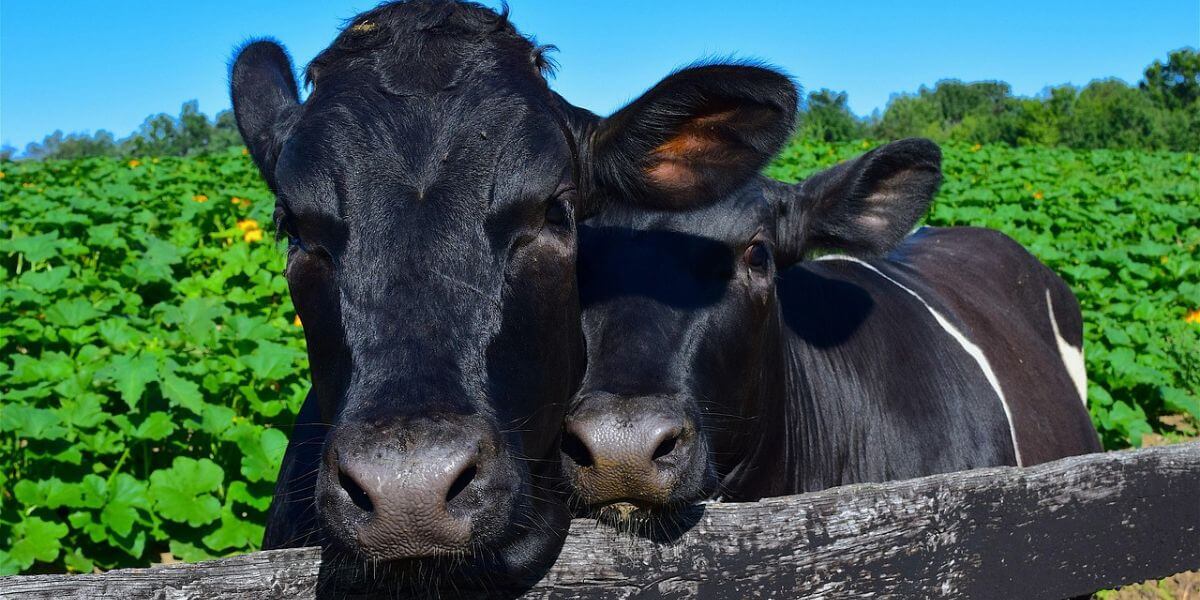
When given the space and opportunity to live naturally, cows form lifelong friendships and exhibit grief when separated from companions. Mother hens communicate with and teach calls to their chicks before they have even hatched from their shells. Pigs are remarkably curious, highly social creatures that enjoy cuddling and mental stimulation, while certain species of fish communicate through complex auditory signals often described as singing.
For the students, staff, and visitors who will pass by the site in the years ahead, the Pitzer Animal Recognition Memorial offers a simple yet challenging invitation: reflect on those lives, recognize their intrinsic value, and consider choosing kinder foods instead. The guiding philosophy behind the memorial is encapsulated in a fundamental truth: every animal is someone.
The installation at Pitzer College represents a historic first for the institution, but animal advocates and organizers hope it serves as only the beginning of a broader national trend. Activists are already actively pushing for a similar plaque to be installed at Wesleyan University, with the overarching goal of bringing the same critical conversation about empathy, institutional accountability, and the moral status of animals to college and university campuses across the United States.
You Can Make an Impact With Every Meal
Beyond campus boundaries, the message behind the memorial extends directly into daily consumer choices. Public health and environmental research indicate that each individual who transitions to a vegan lifestyle spares nearly 200 animals every year, while also dramatically shrinking their personal food-related carbon footprint. Additionally, plant-based diets are consistently linked by medical professionals to a lower risk of suffering from chronic conditions such as heart disease, strokes, type 2 diabetes, obesity, and certain forms of cancer.
For anyone inspired by the message of the Pitzer Animal Recognition Memorial, resources are readily available to help bridge the gap between reflection and lifestyle changes. PETA offers a free vegan starter kit packed with practical tips, nutritional guidance, everyday recipes, and supporting resources for individuals looking to make the transition.