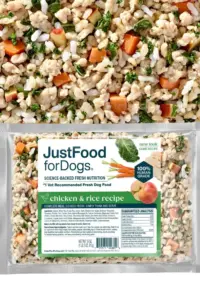




Determining how many times a day a dog should eat is one of the most fundamental decisions a pet owner faces. While the standard baseline for healthy adult dogs centers on two meals spaced roughly 8 to 12 hours apart, nutritional requirements are rarely one-size-fits-all. Young puppies frequently require three to four meals per day to fuel rapid growth, while toy breeds, aging seniors, and dogs with chronic health conditions often thrive on smaller, more frequent portions tailored to their unique metabolic needs. Ultimately, the ideal meal schedule depends on a complex interplay of age, physical size, overall health status, and household routine.
Establishing a proper feeding schedule involves evaluating age- and size-specific feeding protocols, analyzing recent research on once-daily versus multi-meal regimens, contrasting free feeding with controlled schedules, and using body condition scoring to verify whether a nutritional plan is succeeding. Furthermore, pre-portioned, gently cooked fresh diets—such as the Get Real product line from Chewy—can streamline the task of accurately dividing a dog’s daily caloric allotment into consistent, evenly measured portions.
Disclosure: This article features sponsorship from Get Real, Chewy’s gently cooked fresh dog food line. Vetstreet may earn a commission from purchases made through links within this coverage.
The Case for Scheduled Feeding
For the majority of healthy adult dogs, a twice-daily feeding routine—typically consisting of one meal in the morning and one in the early evening—provides an optimal balance. Distributing food across two distinct mealtimes maintains steady hunger levels throughout the day and fits naturally into standard human work and lifestyle schedules.
Veterinarians generally favor scheduled, twice-daily feeding because predictability in meal timing leads to predictability in elimination patterns. A dog that eats on a consistent schedule will typically have regular bowel movements, which simplifies house training and makes subtle digestive abnormalities easier for owners to spot early.
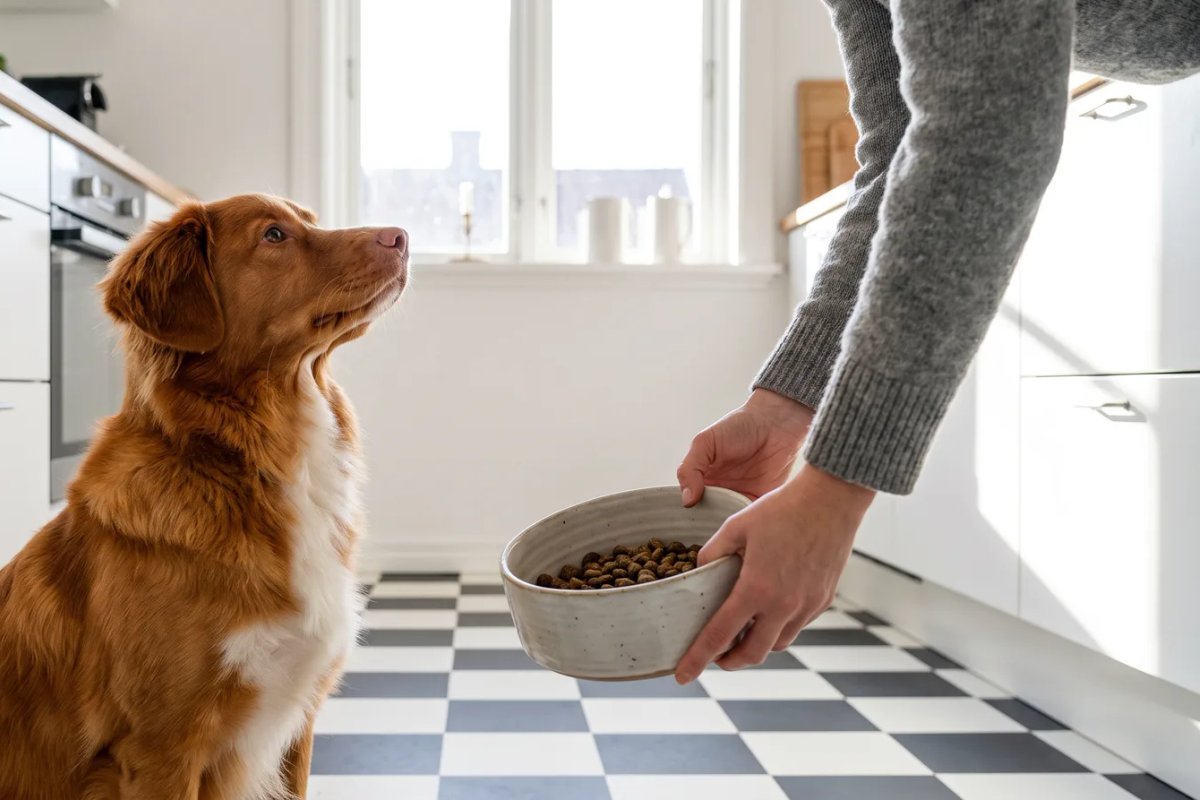
However, strict adherence to a twice-daily schedule should be viewed as a starting point rather than an inflexible rule. Individual physiological circumstances often require adjustments. For instance, offering three smaller meals daily can benefit healthy adult dogs that experience pronounced hunger spikes between meals, suffer from bilious vomiting syndrome (retching yellow bile on an empty stomach), or possess sensitive gastrointestinal systems. When introducing a third meal, the crucial requirement is to divide the existing total daily caloric allowance into three smaller portions, rather than adding extra food on top of the established daily ration.
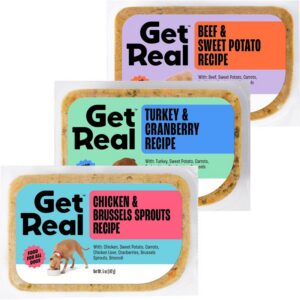
Regardless of whether a dog eats two or three times a day, consistency in routine is far more vital than strict adherence to exact clock times. Feeding a dog at approximately the same times each day helps stabilize appetite and digestive processes. To support this routine, utilizing pre-portioned fresh options like the Get Real Sampler Pack—which features beef, chicken, and turkey recipes—can help pet owners establish a dependable daily schedule with food formulated to appeal to selective eaters.
Feeding Frequency Across Life Stages: Puppies, Adults, and Seniors
Metabolic demands change significantly over a dog’s lifespan, making age the single most influential factor in determining daily feeding frequency. Puppies experience intense growth phases despite having limited stomach capacities, adult dogs require steady nutritional maintenance, and senior dogs often require dietary modifications to accommodate shifting energy levels, dental health issues, or chronic diseases.
Puppies and Young Dogs
Puppies under four to six months of age require three to four meals daily. Because their energy consumption per pound of body weight is exceptionally high and their metabolic reserves are minimal, they rely on a constant supply of nutrients to support skeletal and tissue development. Toy and small-breed puppies under six months are particularly vulnerable; missing a meal can rapidly cause hypoglycemia, or dangerously low blood sugar. Medium-breed puppies under six months also require three to four meals daily due to their small stomach capacity and rapid growth rate.
Large and giant-breed puppies under six months benefit from three structured meals daily to prevent digestive overload and to carefully control their growth trajectories. Accelerated growth in large breeds can predispose them to skeletal disorders, making controlled caloric intake essential.
As puppies reach six to twelve months of age, their rapid growth slows down and their stomach capacity increases, allowing most to transition smoothly to two or three meals per day. By their first birthday, most dogs can transition fully to an adult feeding regimen. However, giant breeds may continue growing until 12 to 18 months of age and should remain on specialized growth formulas formulated to meet AAFCO nutrient profiles for large-breed growth throughout their development.
Adult Dogs
From roughly one year of age through their mature adult years, most dogs maintain peak health on two meals per day. The primary exception occurs in pregnant or lactating female dogs. Nutritional demands surge dramatically during late gestation and peak lactation, often requiring increased feeding frequency or unrestricted access to nutrient-dense food under veterinary supervision.
Senior Dogs
Senior dogs typically require at least two meals daily, though many do significantly better when their daily ration is split into three smaller, easily digestible meals. Aging can bring dental sensitivity, diminished appetite, reduced digestive efficiency, or systemic conditions like chronic kidney disease that make large meals difficult to finish or process. Because senior dietary needs vary widely, schedule adjustments should be guided by regular appetite monitoring and veterinary consultations.
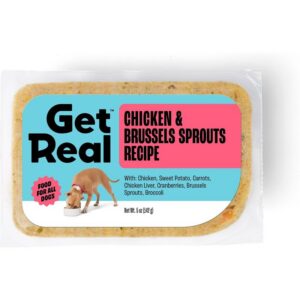
In multi-dog households spanning different life stages, selecting a diet formulated to meet AAFCO nutrient profiles for all life stages—including the growth of large-size dogs—can greatly simplify meal management. Recipes such as Get Real Chicken & Brussels Sprouts meet these criteria, enabling puppies on three meals a day and adults on two meals a day to consume the same foundational diet in appropriate portions.
Size Considerations: Toy Breeds vs. Giant Breeds
Physical body size significantly influences feeding protocols. At the smaller end of the spectrum, metabolic rates are rapid and energy storage is minimal. At the larger end, the primary concern shifts toward preventing gastric overdistension. Consequently, size dictates not only how much food a dog requires, but also how frequently those meals must be served. When referencing feeding guidelines, owners must evaluate weight and age concurrently; a 5-pound toy puppy and a 90-pound giant-breed puppy of the same age require vastly different portion sizes and meal counts.

Toy and Small Breeds
Small and toy adult dogs generally thrive on two to three meals per day, whereas small-breed puppies require three to four feedings. Toy breeds—such as Chihuahuas, Yorkshire Terriers, and Pomeranians—possess limited glycogen storage capabilities combined with exceptionally fast metabolic rates. If a toy puppy misses a meal, vomits, or experiences cold exposure, it can develop symptomatic hypoglycemia within a matter of hours. Symptoms include physical weakness, muscle tremors, severe lethargy, and wobbliness, all of which demand immediate veterinary intervention. Providing frequent, energy-dense meals serves as the primary preventive measure. When adopting a tiny adult dog, owners should verify its prior feeding schedule with the shelter or veterinarian, as a sudden transition to once-daily or twice-daily feeding may leave too broad a gap between meals.
Large and Giant Breeds
Large and giant breeds require a minimum of two meals per day. Deep-chested breeds—such as Great Danes, Weimaraners, Standard Poodles, and German Shepherds—are anatomically predisposed to Gastric Dilatation-Volvulus (GDV), commonly referred to as bloat. As detailed in the Merck Veterinary Manual, GDV is a rapid-onset, life-threatening emergency in which the stomach fills with gas and twists on its axis, cutting off blood supply to vital organs.
Epidemiological data cited by veterinary manuals indicate that consuming a single large meal daily and eating rapidly are major dietary risk factors for GDV in susceptible breeds.
To minimize the risk of bloat in large and deep-chested dogs, veterinarians recommend the following strategies:
- Divide the total daily intake into two or more smaller meals rather than offering one large portion.
- Use slow-feeder bowls, puzzle feeders, or divided trays to discourage rapid food gulping.
- Restrict vigorous exercise, rough play, and heavy water consumption for at least one hour before and after mealtimes.
- Avoid feeding meals immediately prior to long car rides to lower the likelihood of motion sickness and gastrointestinal distress.
Pet owners must remain vigilant for the warning signs of GDV, which include a visibly distended or rigid abdomen, unproductive retching or dry heaving, marked restlessness, excessive drooling, and sudden collapse. Suspected GDV requires immediate, emergency veterinary care.
Evaluating the Science: Once-a-Day vs. Twice-a-Day Feeding
The debate surrounding whether feeding adult dogs once a day offers health advantages gained renewed attention following a 2022 study conducted by the Dog Aging Project. Analyzing survey data from over 24,000 companion dogs, researchers observed that dogs fed once daily had significantly lower odds of being diagnosed with several age-related health conditions—including gastrointestinal, dental, orthopedic, kidney, and urinary disorders—compared to dogs fed more frequently.
While these findings appear compelling, veterinary researchers emphasize several critical caveats:
- Observational Design: The study was observational, meaning it identified statistical associations rather than proving a direct cause-and-effect relationship.
- Confounding Variables: Dogs fed once daily may systematically differ from multi-meal dogs in underlying factors such as breed representation, overall body weight, physical activity levels, or owner lifestyle choices.
- Data Limitations: Findings relied on owner-reported survey data rather than controlled clinical feeding trials.
The study authors explicitly cautioned against altering a dog’s established feeding routine based solely on these observational metrics. While a subset of healthy, lean adult dogs may maintain good health on a once-daily schedule, the consensus among veterinary clinicians remains that twice-daily feeding is the safest, most effective default for the broader dog population. Once-daily feeding is explicitly contraindicated for puppies, toy breeds, diabetic dogs, and breeds predisposed to GDV.
For owners evaluating a potential shift to once-daily feeding for a healthy adult dog, any transition must be discussed with a veterinarian, implemented gradually, and closely monitored for signs of excessive hunger, bilious vomiting, or declines in daily energy.
Free Feeding vs. Scheduled Meals
Free feeding—the practice of leaving a bowl filled with dry food continuously available for a dog to graze on—is widely discouraged by veterinary nutritionists. Although convenient for owners, free feeding severely hinders an owner’s ability to monitor daily intake, encourages passive overeating, and allows uneaten food to spoil.

According to data published by the Association for Pet Obesity Prevention (APOP), over half of the companion dogs in the United States are classified as overweight or obese. Unrestricted access to food serves as a primary driver of this epidemic.
Weighing the Options
- The Case for Free Feeding: A small minority of dogs naturally self-regulate their caloric intake, maintaining an ideal body condition despite constant food access. Grazing may also reduce mealtime anxiety in select nervous dogs or assist severely underweight individuals and nursing mothers in meeting high caloric demands.
- The Case Against Free Feeding: Uncontrolled food access distorts a dog’s natural hunger cues, makes appetite loss (often the earliest signal of disease) difficult to detect, complicates house-training schedules, and creates competitive tension in multi-pet homes. Additionally, leaving wet or fresh food at room temperature poses food safety risks due to bacterial proliferation.
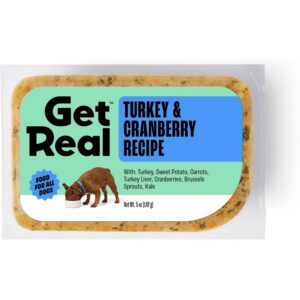
Transitioning a dog from free feeding to structured meals can be accomplished by presenting measured food portions for a 15- to 20-minute window during designated mealtimes, after which any uneaten food is removed. Most dogs adapt to this routine within a few days. Adding a highly palatable fresh food topper, such as Get Real Turkey & Cranberry Recipe, can encourage hesitant grazers to consume their meals during established feeding times.
Medical Conditions That Mandate Specific Schedules
For dogs diagnosed with chronic health conditions, feeding schedules cease to be a matter of preference and become a critical component of medical management.
Diabetes Mellitus
Canine diabetes represents the most clear-cut case for rigid feeding schedules. Diabetic dogs typically receive exogenous insulin injections twice daily, which must be precisely synchronized with meal consumption to prevent severe hypoglycemia or hyperglycemia. Guidelines established by the American Animal Hospital Association (AAHA) emphasize that maintaining unwavering consistency in both meal composition and timing is essential to successful glycemic control. Owners should never alter a diabetic dog’s meal schedule without direct veterinary authorization.
Other Health Considerations
- Bilious Vomiting Syndrome: Dogs that regularly vomit bile early in the morning benefit from having their daily intake divided into three or four meals, with the final light meal offered immediately before bedtime to reduce the duration of an empty stomach.
- Exocrine Pancreatic Insufficiency (EPI) & Malabsorption Disorders: These conditions require pre-digested or enzyme-treated meals distributed evenly throughout the day to maximize nutrient absorption.
- Medication Synchronization: Frequently prescribed medications, including non-steroidal anti-inflammatory drugs (NSAIDs) and specific antibiotics, can cause gastrointestinal ulceration or nausea if taken on an empty stomach. Meal timing must be structured around medication schedules to protect the stomach lining.
If a dog experiences a sudden shift in appetite, rapid changes in water consumption, severe eating haste, or frequent post-meal vomiting, owners should seek veterinary evaluation rather than attempting to resolve the issue with schedule adjustments.
Assessing Health with Body Condition Scoring
Determining the appropriate volume of food is even more critical than selecting meal frequency. A dog’s optimal caloric intake should be verified regularly using a standardized Body Condition Score (BCS).
Veterinarians widely utilize the World Small Animal Veterinary Association (WSAVA) 9-point Body Condition Score framework, where a score of 4 or 5 represents an ideal body composition. Owners can perform a hands-on assessment at home using three simple checks:
- Rib Assessment: Place both hands flat against the side of the dog’s chest and apply light pressure. The ribs should be easily felt beneath a thin layer of fat, similar to feeling the knuckles of a flat hand. If the ribs are difficult to feel under a thick fat layer, the dog is overweight; if ribs, spine, and pelvic bones protrude prominently, the dog is underweight.
- Profile View: View the dog from the side. A healthy dog displays a clear abdominal tuck, where the underline sweeps upward from the ribcage to the hind legs.
- Overhead View: Look down at the dog from above. A distinct waistline should be visible behind the ribcage, creating an hourglass silhouette.
Owners should evaluate their dog’s body condition every two to four weeks. If the ribs become increasingly difficult to feel, the total daily caloric intake should be reduced by approximately 10 percent while maintaining the established meal frequency. Conversely, if the dog appears overly lean, daily food volume should be increased by 10 percent, provided medical causes for weight loss have been ruled out.
Treats and training rewards must be factored into total daily calories, representing no more than 10 percent of the dog’s total daily intake. Furthermore, when evaluating senior dogs, owners and veterinarians must distinguish between fat deposition and sarcopenia (age-related muscle wasting), evaluating muscle mass across the spine, shoulders, and hips during routine checkups.
Implementing Pre-Portioned Fresh Diets
Consistently dividing daily calories into precise portions across multiple meals can be challenging when relying on variable measuring cups or imprecise manual estimates. Utilizing pre-portioned, gently cooked fresh diets helps eliminate portioning errors.
Get Real dog food is packaged frozen in pre-portioned units, including 5 oz mixer packs designed for kibble topping, alongside 12 oz and 24 oz full-meal packs. Each package clearly states its precise caloric density—for example, a 24 oz pack of Beef & Sweet Potato contains 902 kcal, while a 12 oz pack delivers 451 kcal. Caloric needs are calculated via customized online feeding plans based on weight, age, breed, and physical activity.
Portion Calculation and Handling Protocols
To divide a daily ration accurately:
- Twice-Daily Schedule: A dog prescribed one 24 oz pack daily receives half a pack per meal, yielding two equal portions of 451 kcal.
- Thrice-Daily Schedule: The same 24 oz pack is split into three equal servings of approximately 300 kcal each.
Because the caloric content per pack is fixed, caregivers can ensure uniform energy delivery at every feeding. To maintain food safety and operational ease:
- Thaw packages in the refrigerator prior to use. Smaller 5 oz and 12 oz packs require 12 to 24 hours to thaw completely, whereas 24 oz packs require 35 to 48 hours.
- Thawed fresh food must be kept refrigerated and consumed within 3 to 5 days.
- When introducing fresh food as a mixer or full diet, transition slowly over 7 to 10 days (or 10 to 14 days for dogs with sensitive stomachs), gradually reducing the previous food to keep total daily calories stable.
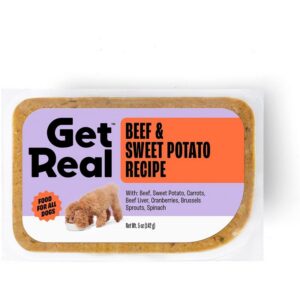
Get Real recipes feature ten primary ingredients or fewer, supplemented with essential vitamins and minerals, and are gently cooked prior to freezing. Available exclusively via flexible Chewy subscriptions, diets such as the Get Real Beef & Sweet Potato Recipe provide a straightforward method for maintaining precise daily schedules.
For additional guidance on dietary management, Petful offers resources on mixing fresh dog food with traditional kibble, while WebVet details feeding schedules organized by age.

Frequently Asked Questions
Can dogs effectively self-regulate their food intake?
While a small percentage of dogs can self-regulate their caloric consumption, the vast majority cannot—particularly when fed highly palatable commercial diets. Most dogs will overeat if given unrestricted access to food, leading to weight gain and associated metabolic issues. Controlled, scheduled feeding remains the safest approach for most companion dogs.
What is the "7-7-7 Rule" in canine care?
The "7-7-7 rule" is a puppy socialization framework, not a nutritional or feeding guideline. It suggests that by seven weeks of age, a puppy should ideally experience seven different surface types, seven toy varieties, seven distinct environments, seven types of people, seven mild challenges, and eat from seven different container types or locations. It has no bearing on daily meal frequency or caloric requirements.
Is it harmful to feed a healthy dog once a day?
Feeding a healthy adult dog once a day is not inherently harmful, and certain adult dogs manage well on this schedule. However, it is entirely inappropriate for puppies, toy breeds, diabetic dogs, deep-chested breeds at risk for GDV, or dogs prone to bilious vomiting. Owners should consult their veterinarian before switching to a once-daily routine.
Is it acceptable to feed a dog late in the evening?
Yes, evening meals are fine provided they are offered on a consistent daily schedule and allow adequate time for digestion and a bathroom break before bedtime. However, large meals should not be served immediately prior to strenuous physical exercise, intense play, or long travel to reduce gastrointestinal distress and lower bloat risks in deep-chested breeds.
How often should a senior dog eat?
Most senior dogs do best on two or three small meals per day. Shifting to smaller, more frequent portions helps accommodate age-related declines in digestive efficiency, dental changes, or reduced appetite, ensuring that aging dogs receive consistent daily nutrition.