

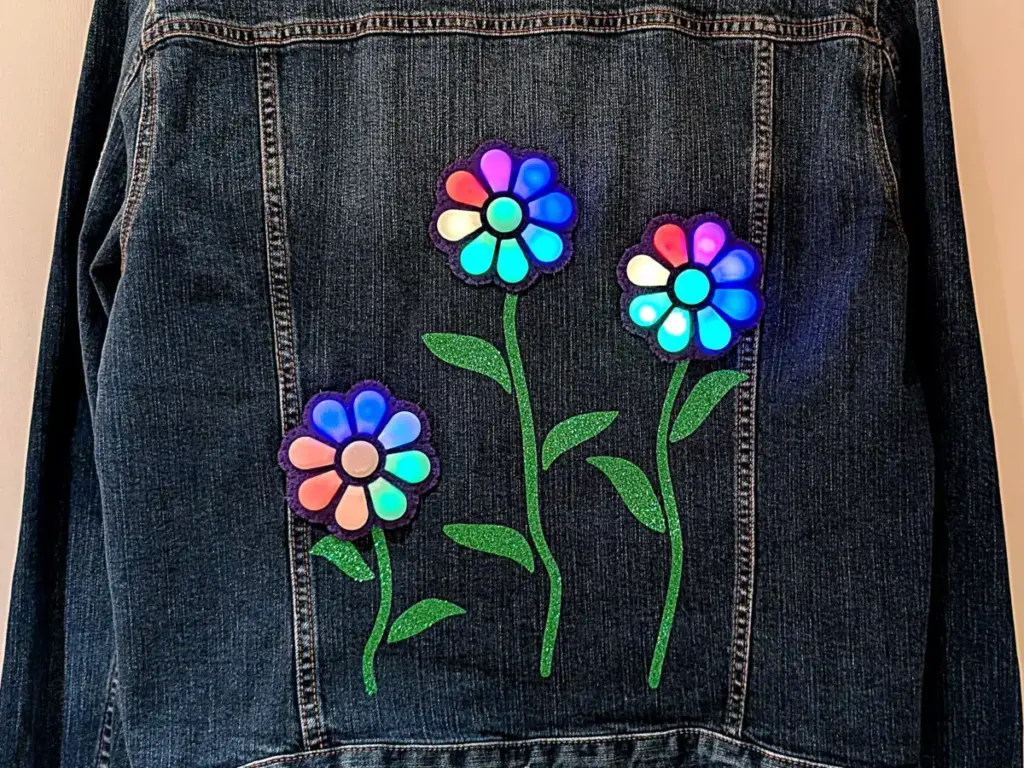
Maker and educator Debra Ansell has introduced a striking new project that merges wearable technology with high-fashion upcycling: the "BedazzLED" denim jacket. Featured in Make: Volume 97, the wearable art piece demonstrates how advanced manufacturing techniques like 3D printing and laser cutting can be harmonized with traditional garment customization to create dynamic, programmable fashion.

The project addresses a growing trend within the maker community to integrate microcontrollers and addressable LEDs into everyday clothing items. Ansell’s design focuses on a classic wardrobe staple—the denim jacket—transforming its back panel into an illuminated floral garden. When powered down, the jacket retains a subtle, classic aesthetic suitable for everyday wear. However, a single touch on the control interface activates a network of custom 3D-printed flowers embedded with addressable LED strings, turning the garment into a vibrant, animated display.
The fabrication process begins with sourcing a durable denim jacket, with thrift shops serving as an economical and sustainable option. Because denim is inherently sturdy, secondhand jackets often provide a reliable foundation that can easily withstand the physical modifications required for the project. The primary requirement for the base garment is simply ensuring enough clear surface area on the back panel to accommodate a cluster of custom-built floral modules.
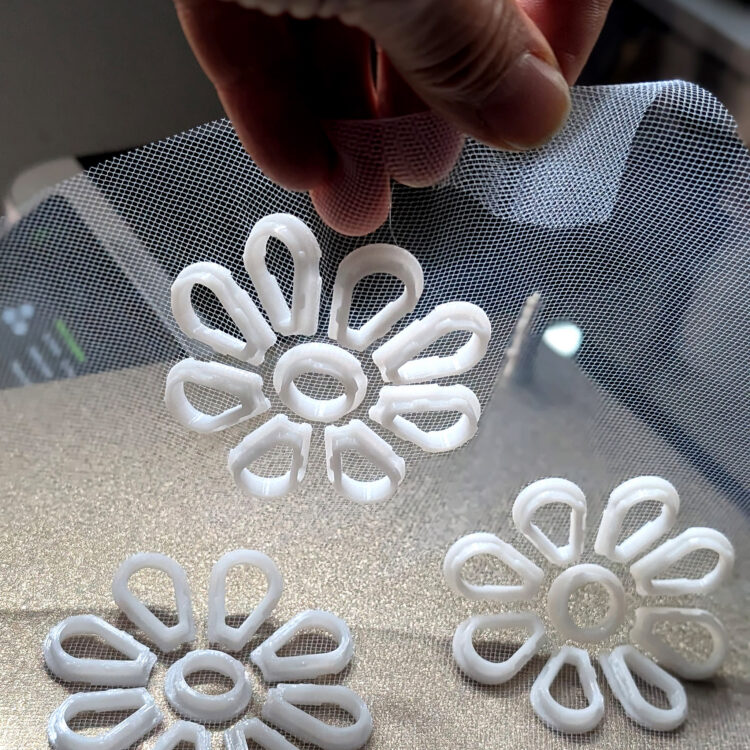
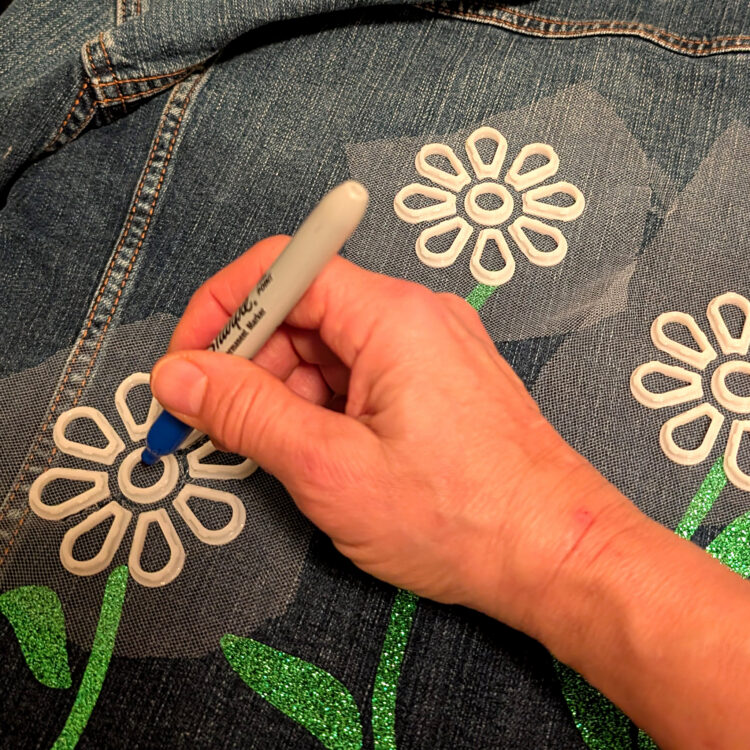
Constructing the illuminated flowers requires precision engineering and specific material choices. Ansell recommends printing the flower components using translucent white PETG (polyethylene terephthalate glycol) rather than standard PLA. While PLA is common in 3D printing, PETG offers superior durability and flexibility for wearable applications. Specifically, filaments designed for lithophanes—such as California Filament’s Cloudy White PETG—excel at diffusing light evenly across the petals and central discs.
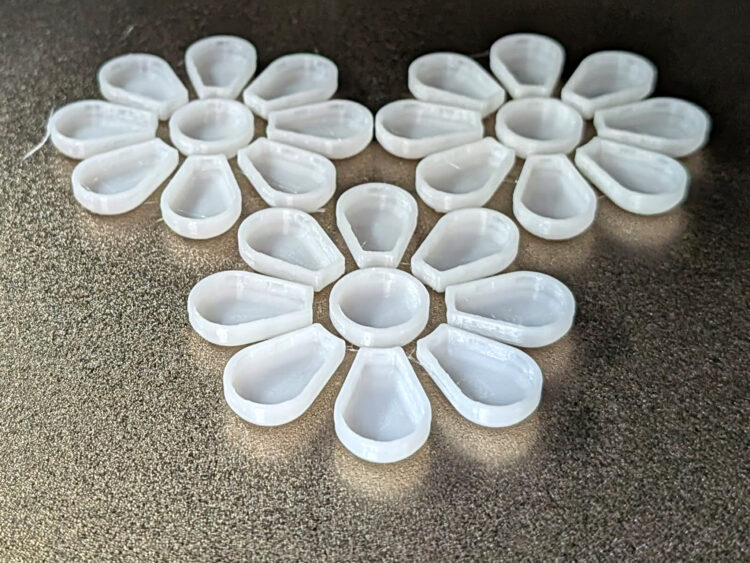
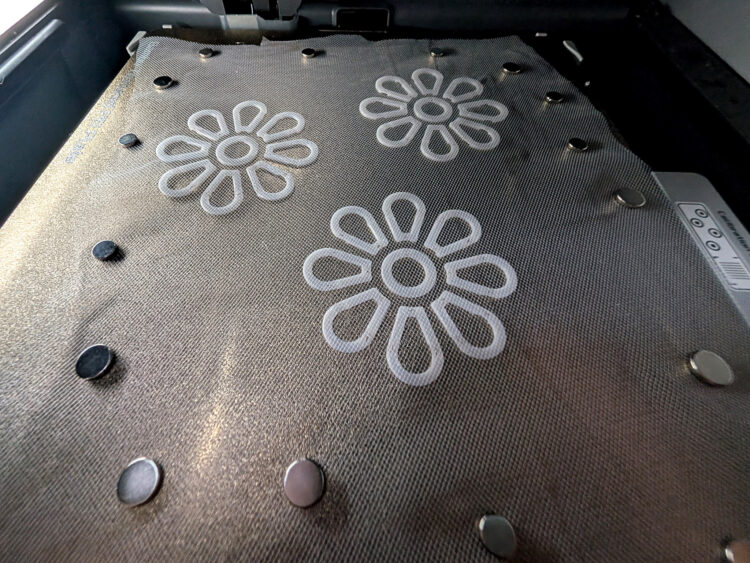
The manufacturing workflow utilizes advanced 3D printing techniques, specifically printing directly onto a porous mesh fabric like tulle. By pausing the print at a precise height and laying a stretched piece of tulle over the build plate, the molten PETG flows through the mesh openings, creating a permanent mechanical bond. This clever technique allows the floral base to remain flexible while rigidly securing the individual petals and central discs in place. Additional covers printed facedown on the build plate ensure a smooth, professional surface finish.
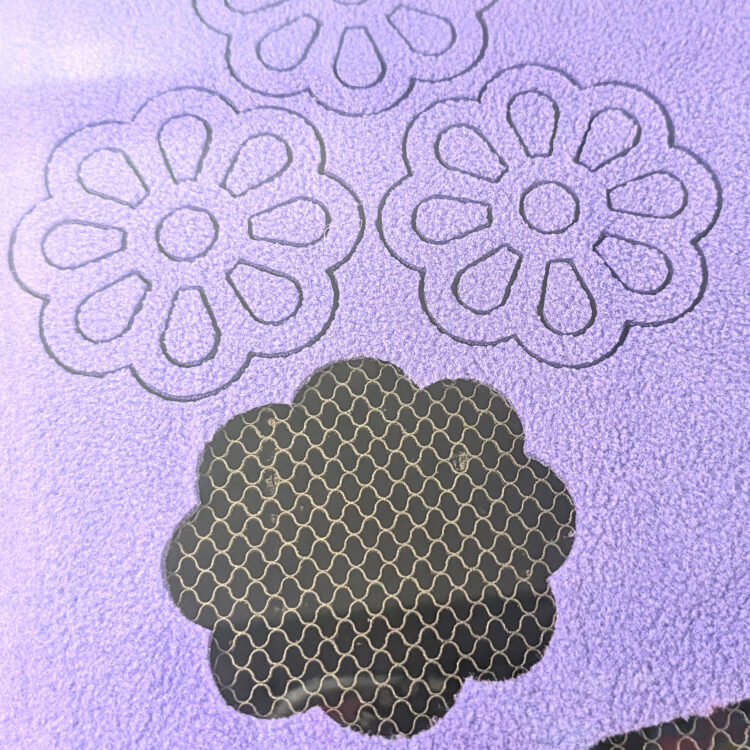
To frame the 3D-printed elements and conceal the internal wiring, the project incorporates a fabric border made from non-fraying materials such as fleece or PVC-free faux leather. These border pieces can be precisely cut using a laser cutter or carefully trimmed by hand using vector template files. Faux leather provides a sleek, rugged outline with pre-perforated stitch guides, while fleece offers a softer, more tactile transition between the rigid plastic flowers and the surrounding denim fabric.
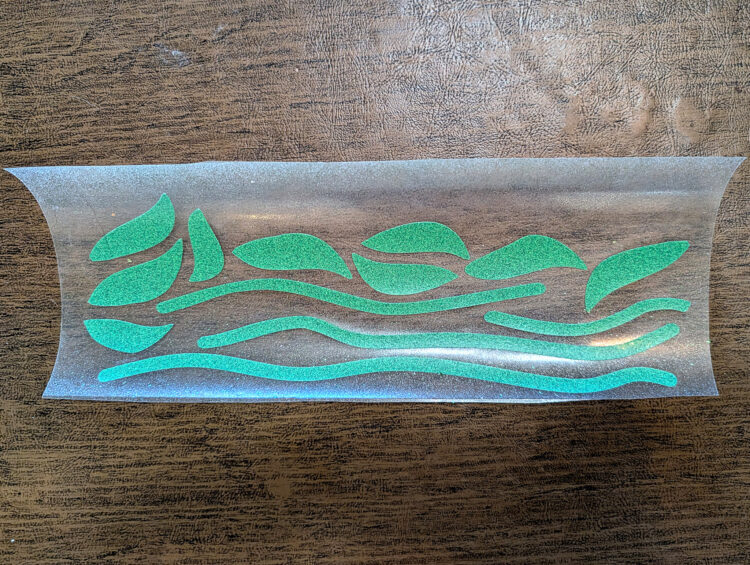
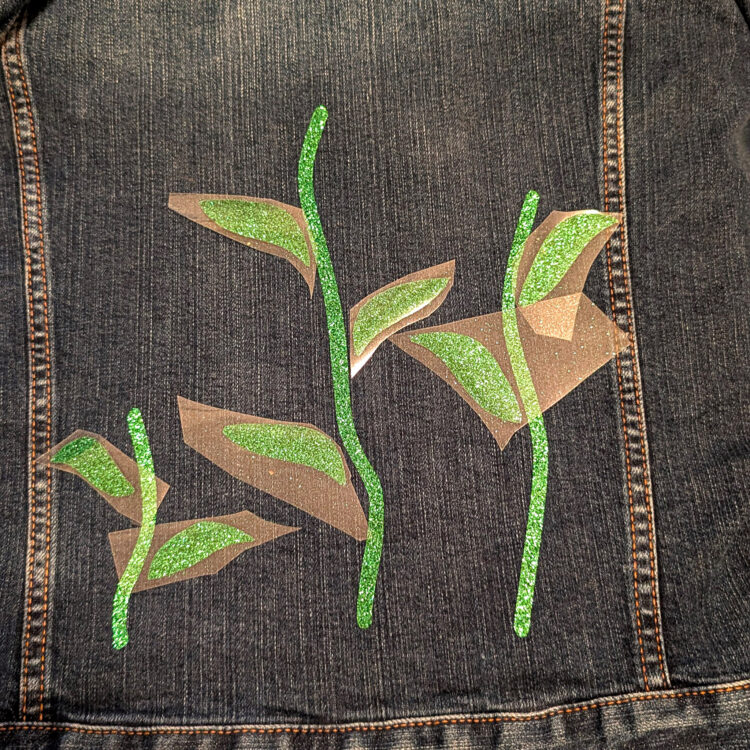
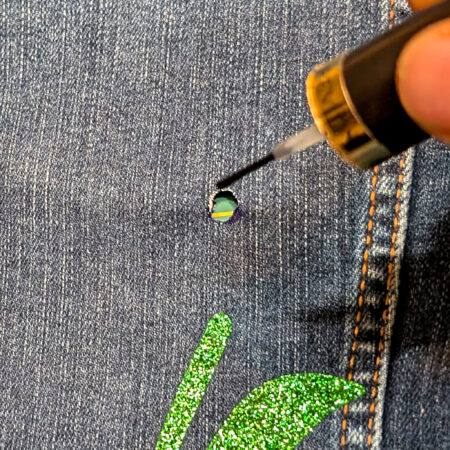
Complementing the floral motifs, the design features stems and leaves cut from heat-transfer vinyl (HTV) using a vinyl cutter. Once positioned on the exterior back panel of the jacket, the vinyl elements are permanently adhered using a household iron, creating a complete botanical scene. Small, meticulously placed holes are then cut into the back of the jacket to allow wiring to pass seamlessly between the exterior flowers and the interior electronics, with the edges treated with clear craft glue or nail polish to prevent fabric fraying.
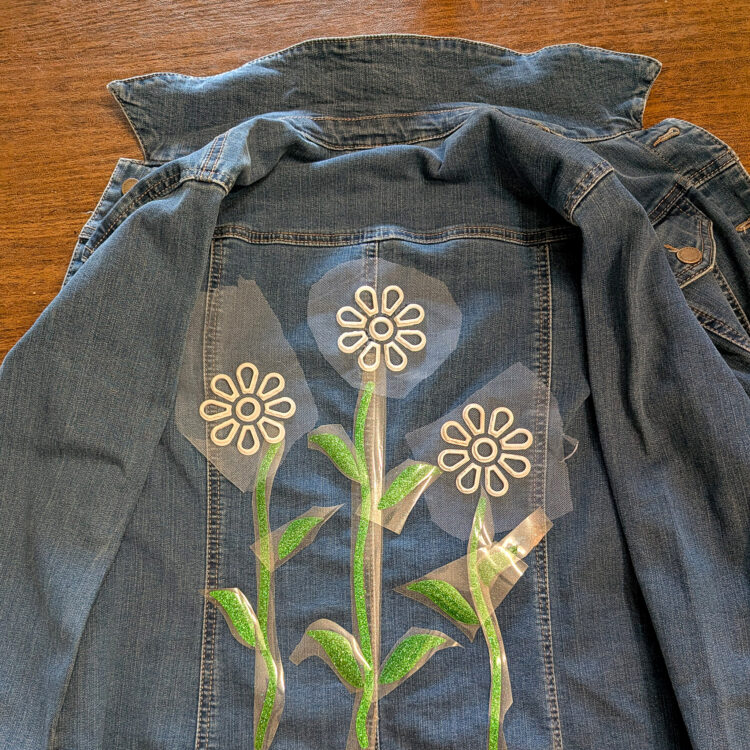
The electronic heart of the BedazzLED jacket relies on addressable pebble light strings and a compact microcontroller, such as a QuinLED or Athom WLED controller. These components are soldered into a continuous circuit, ensuring consistent data flow and electrical alignment across all three floral assemblies. Once the LED strings are threaded through the jacket and secured to the mesh flower bases using heavy-duty glue dots, the entire assembly is hand-sewn onto the denim exterior. Using traditional appliqué sewing techniques, makers can securely attach the borders while carefully avoiding the internal silicone-coated wires.
On the interior of the jacket, loose wiring is neatly managed and anchored to the fabric using iron-on fusible interfacing. This step conceals all interconnecting cables, maintaining a clean finish on the inside of the garment. The controller and a portable USB-C power bank are housed safely within an interior pocket, ensuring the entire electronic system remains completely self-contained and portable.
Powered by WLED software, the integrated lighting system provides access to a vast library of pre-installed, customizable animations, color palettes, and motion patterns. Users can easily adjust the brightness, speed, and visual sequences to suit any occasion, transforming a standard piece of outerwear into an interactive canvas. Furthermore, the use of waterproof pebble light strings ensures that the garment remains practical; after detaching the power bank and controller, the jacket can be carefully hand-washed in cold water.
Ansell’s creation highlights the expanding possibilities of soft circuits and wearable tech, proving that technical innovation can coexist with traditional craftsmanship. The underlying technique is readily adaptable to other accessories, offering makers the flexibility to embellish baseball caps with a single illuminated bloom or cover tote bags with elaborate floral arrangements. As demonstrated through her ongoing work and exhibitions at various maker events, Ansell continues to champion the philosophy that thoughtful integration of modern technology can elevate virtually any aspect of design and fashion.