

The success of Maker Faire is rarely attributed to a single entity. Instead, it is the product of tireless year-round efforts by a passionate community, an dedicated organizing team, and a robust network of industry sponsors who view the event through a unique lens. Far from treating the gathering like a traditional corporate trade show, these key partners understand the core ethos of the maker movement. For visitors touring the Faire, exploring the hands-on experiences, interactive exhibits, and community-driven projects brought by these major supporters offers a window into the future of hardware, software, and creative engineering.
This year marks a particularly significant milestone as Maker Faire celebrates its twentieth anniversary. Across the exhibition floors at Mare Island, anchor and coalshed partners have stepped up to provide the tools, processes, and workflows that help makers achieve their dream builds and overcome challenging fabrication problems. By doing so, they are opening doors and possibilities for participants of all ages, creating a weekend filled with valuable "aha" moments.
Arduino: Empowering Edge AI and Open-Source Hardware
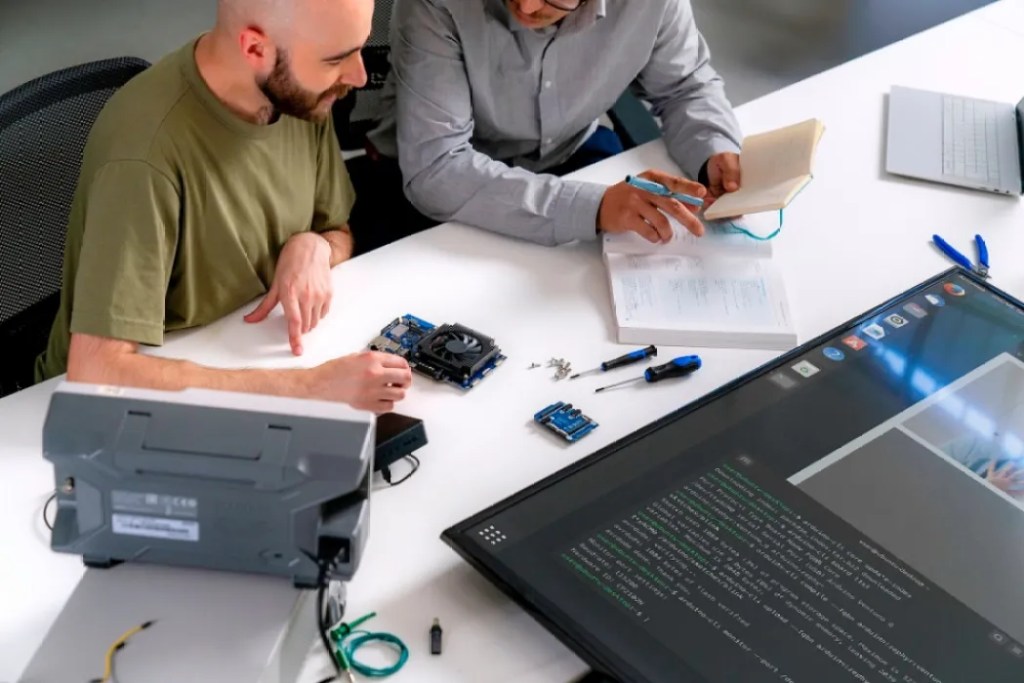
At the heart of the maker ecosystem lies open-source electronics, and Arduino continues to champion its mission to empower anyone to learn, solve real-world problems, and innovate. Moving beyond simple blinking lights and basic circuits into high-performance Edge AI, the company is showcasing versatile, modern tools at its booth, including the new Arduino UNO Q and the Arduino VENTUNO Q dual-brain boards. Visitors stopping by the space have the opportunity to get to know the team firsthand and explore interactive projects built by creators from around the globe.
Adding a deeper educational dimension to the weekend, Arduino co-founder Massimo Banzi took to the stage to deliver a candid retrospective on a year of building projects with the Arduino UNO Q. His talk offered an honest assessment of the board’s capabilities and limitations, covering practical applications ranging from custom lamps and musical instruments to open-source doorbells. Banzi also demonstrated a project built using the new Arduino VENTUNO Q alongside community-created projects that served as his primary sources of inspiration.

xTool: Milestones in the Making and Digital Fabrication
As a global leader in desktop laser cutting, engraving, printing, and welding, xTool has long focused on bridging the gap between digital design and physical creation. By combining advanced hardware with intuitive software, the company makes professional-grade fabrication tools accessible to makers of all experience levels.
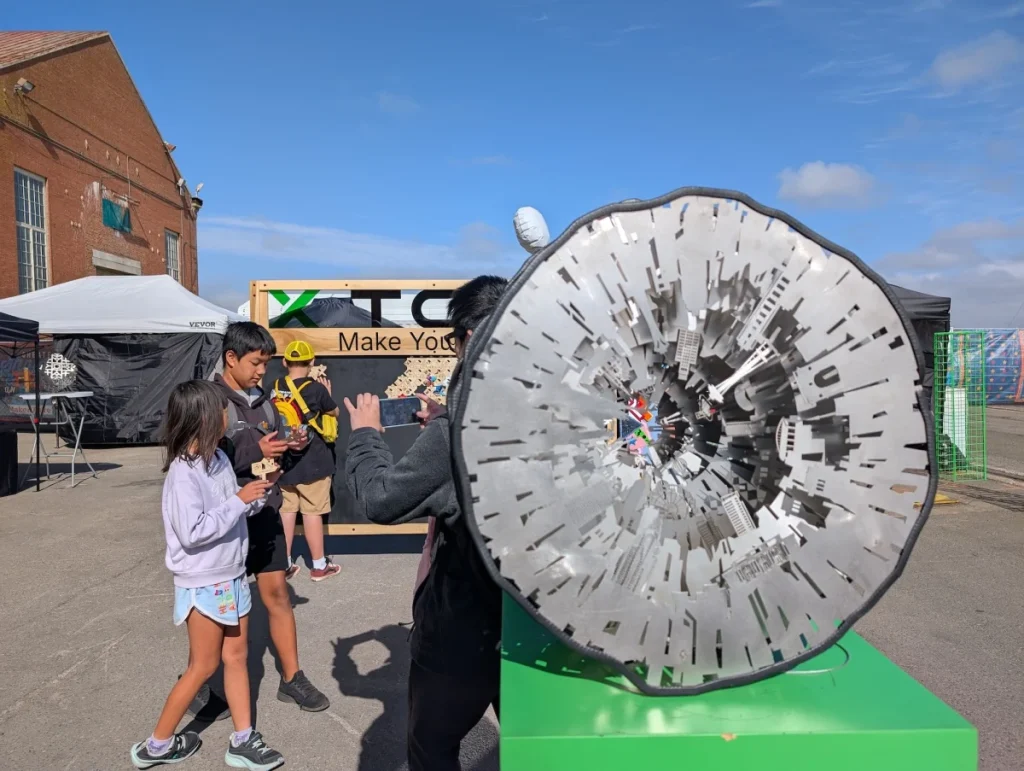
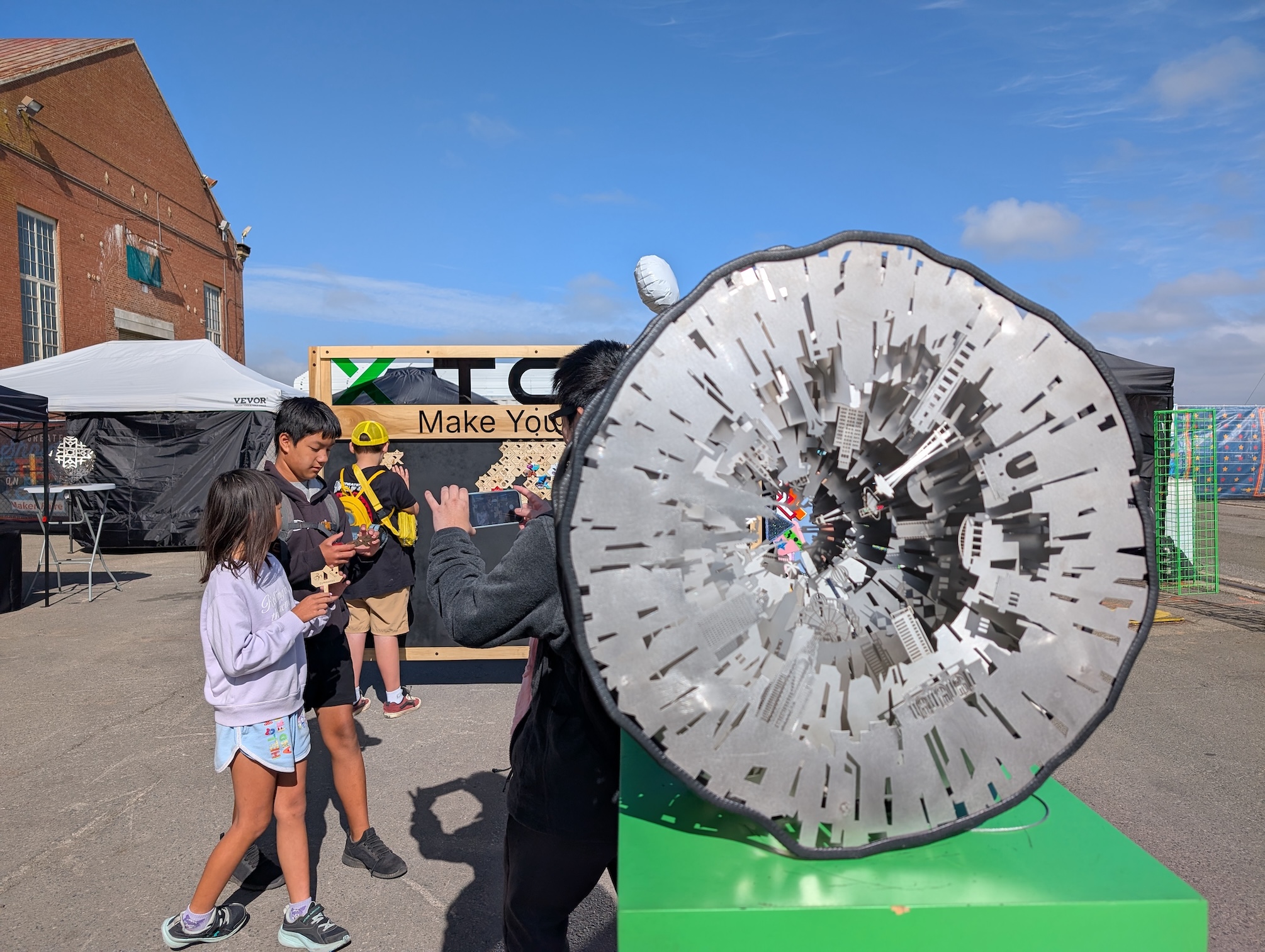
This year, the xTool experience at Maker Faire Bay Area went beyond simply demonstrating cutting-edge hardware. In celebration of Maker Faire’s twentieth anniversary and xTool’s sixth anniversary, the booth featured a collaborative initiative titled "Milestones in the Making." The installation invited the community to reflect on the personal journeys, memories, and creative milestones that have shaped them as thinkers and builders.
Visitors participated by engraving personal memories, milestones, or meaningful moments onto individual tiles using xTool machines, subsequently adding them to a growing tessellated mosaic known as the "Wall of Milestones & Memories." Together, these individual stories formed a collective work of art celebrating the curiosity and shared experiences defining the maker movement.
Complementing the booth experience, xTool partner and maker-educator John Burns delivered a story-driven presentation on the Make: Le Tigre stage. Focusing on raising his son Micah through the lens of making, Burns shared a hopeful, honest case study about the challenges, breakthroughs, and unexpected moments that emerge when children are given real tools and real trust, offering valuable insights for parents, educators, and the next generation of builders.

OpenAI: Collaborating on a Living Mural with ChatGPT
Artificial intelligence remains a dominant topic across technology sectors, but makers typically approach AI from a distinct perspective—treating it as a powerful collaborative tool rather than a replacement for human creativity. When utilized strategically, large language models allow creators to push their skills to new limits and discover innovative workflows, a trend reinforced by various companies integrating open-source AI-IoT hardware and edge AI devices into their exhibits.
Within the Maker Faire Bay Area Foundry, OpenAI collaborated directly with participants to construct a living mural. By scanning a QR code at the booth, attendees could submit ideas for things they wished existed in the world. ChatGPT’s Imagegen technology then visualized these concepts and integrated them into the evolving digital mural. The system actively analyzed submissions to identify shared themes when ideas were combined. By Sunday morning, the project had gathered more than 200 distinct community contributions, inviting attendees to explore the intersection of generative AI and human imagination.

HOTO: Hands-On Tool Design for Electronics Enthusiasts
Tool design continues to evolve to meet the changing demands of modern creators. At the HOTO booth, visitors engaged directly with the latest SNAPBLOQ series, a compact desktop tool system tailored specifically for makers and electronics enthusiasts. The activation emphasized active participation, allowing every visitor to craft a small project at the station and take it home. Alongside these hands-on opportunities, HOTO displayed its broader tool lineup, highlighting innovative directions in ergonomic and functional tool design.
CrunchLabs: Building Innovation and Problem-Solving Skills
Hands-on engineering and playful problem-solving took center stage at the CrunchLabs booth. Featuring prominent educational lines such as the Build Box, Hack Pack, and the all-new Creative Kit, the exhibit challenged attendees to test their mechanical intuition. Visitors who participated in the booth’s popular Disc Launcher challenge earned opportunities to win CrunchLabs Animal Friends collectibles or the iconic Phat Gus plushie, injecting a sense of play into rigorous engineering concepts.

Microchip: Retro Arcade Games, Edge AI, and Embedded Development
Microchip returned to Maker Faire with a crowd-pleasing mix of interactive exhibits, featuring retro arcade games, a Bluetooth Low Energy-tuned balancing bot, and a robotic claw machine designed to demonstrate the capabilities of CircuitPython and embedded hardware.
The company’s presence also extended to the speaking schedule, where Ross Satchell returned alongside Microchip’s Bob Martin, widely known as the "Wizard of Make." Building on a presentation from the previous year regarding AI’s growing role in engineering education, the pair evaluated how the landscape has shifted over twelve fast months. Their discussion highlighted "vibe coding" as a viable workflow for building embedded applications and provided an early look at Zephyr, the open-source real-time operating system backed by the Linux Foundation that is rapidly gaining traction in embedded development.

Furthermore, the team introduced the PyKit Explorer, a CircuitPython-based development platform slated for release on Microchip Direct and DigiKey, accompanied by a comprehensive library of educational content and ready-to-run workshops designed for classrooms and makerspaces.
Through these contributions, anchor partners and sponsors continue to shape the workflows, processes, and tools that enable makers to realize ambitious projects. By supporting Maker Faire, these organizations foster environments where curiosity translates into tangible creation, ensuring that the next generation of builders and thinkers experiences the invaluable impact of hands-on discovery.