



When the dining table groans under the weight of rich, heavy dishes, finding something fresh, crisp, and acidic to awaken the palate becomes essential. Amidst a spread featuring roasted turkey, buttery cornbread, and heavy gravies, where a standard head of lettuce splashed hastily with vinaigrette can easily feel like a mere afterthought, a juicy and savory-slanting pear salad demands genuine space on the plate. This approach serves as the complete antithesis of the haphazardly chunked-together fruit salads typically found at supermarket buffets for casual brunch gatherings or standard dessert spreads. By keeping the culinary focus squarely on crisp-tart pears—or crisp apples as a reliable alternative—this dish emerges as a welcome, vibrant accompaniment designed to balance the other hearty elements of a festive meal.
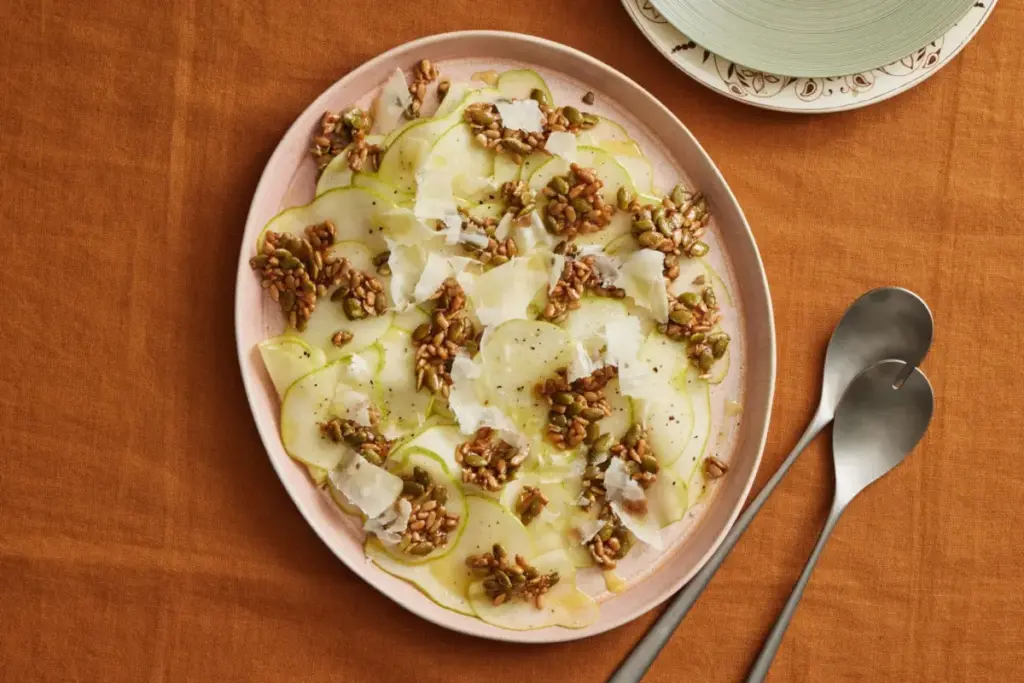
The preparation relies on precision and visual appeal rather than heavy-handed mixing. Sliced razor-thin using a mandoline and carefully fanned out across a platter, the fruit transforms into an edible canvas. Over this delicate base, wisps of sharp cheese and clusters of honey-roasted seeds are scattered, adding layers of texture and savory depth without overwhelming the natural freshness of the core ingredient. Long after the main meal concludes, any potential leftovers—assuming there are any to speak of—offer a delightful culinary reward the following day when spooned generously over a well-toasted and heavily buttered slice of hearty multigrain bread.
Achieving the ideal texture and flavor profile begins long before the slicing process starts at the kitchen counter. Culinary experts advise selecting firm green pears to ensure the slices maintain their structural integrity once processed. Varieties such as Bartlett and Anjou prove entirely fair game for this preparation, while crisp Asian pears can serve as a suitable substitute in a pinch. In fact, utilizing fruit that is slightly underripe is far better than choosing specimens that are even marginally overripe, as mushy textures will ruin the desired architectural presentation on the platter.
Once the slicing is complete, a crucial tasting step determines the final seasoning of the dish. Cooks are encouraged to sample a slice to gauge the natural sugar and acid levels of the fruit. If the slices lean toward a very sharp tartness, incorporating a teaspoon of honey into the accompanying dressing helps balance the profile. Conversely, if the fruit is naturally quite sweet, skipping the honey entirely ensures the salad maintains its refreshing, palate-cleansing edge without tipping into cloying territory. As seasonal menus continue to evolve for upcoming holiday gatherings, finding ways to incorporate crisp, vibrant produce into traditionally heavy celebrations remains a priority for home cooks looking to elevate their holiday spreads.