


The value of the S&P 500 index has experienced a staggering upward trajectory over the past several years, surging roughly 57 percent in the past two years alone and more than doubling over a five-year period. For many investors holding retirement savings in broad index funds, this rapid accumulation has dramatically shifted net worth calculations. Individuals who felt they were only halfway toward their financial independence goals during the COVID-19 era may find they have quickly surpassed traditional retirement benchmarks, while longtime retirees face portfolios that have expanded well beyond initial projections.
This exceptional growth, however, has sparked widespread debate across financial circles. Investors are increasingly questioning whether current valuations reflect genuine, sustainable economic expansion or if the market is being propelled by speculative fervor, particularly surrounding the hype of Artificial Intelligence.

To evaluate the current state of the stock market, financial analysts often point back to foundational principles, comparing corporate equities to more tangible assets like rental real estate. Owning a stock is structurally similar to owning a rental property; an investor acquires a stake in an enterprise to collect a stream of future profits. If the market value of a rental property doubles while the rental income paid by tenants remains relatively flat, the property looks better on paper, but the underlying cash flow has not changed unless the owner can improve business operations or raise rents.
Applying this logic to the broader market reveals a distinct divergence between asset prices and corporate earnings. An investment of $100,000 placed in the market in 2019 with reinvested dividends would have grown significantly over the following years. However, during that same timeframe, the underlying share of company earnings generated by that basket of stocks has risen at a much slower pace. Consequently, the price-to-earnings (P/E) ratio of the market has climbed from approximately 20 to roughly 30.

Just as a real estate investor purchasing an overpriced property must expect lower future returns relative to the initial capital outlay, stock investors operating in the current environment are paying higher multiples for corporate profits. This dynamic does not render equities unprofitable, but basic financial mathematics dictates that future returns will likely be lower than if those assets had been acquired during a market downturn.
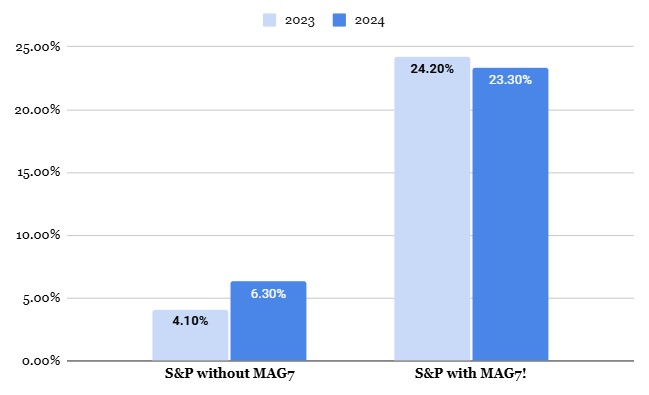
While higher valuations across the board typically signal expectations of accelerated economic growth, a closer examination of the S&P 500 reveals that the recent surge has been heavily concentrated. Approximately three-quarters of the market’s recent gains can be attributed to just seven major technology companies: Apple, Nvidia, Microsoft, Amazon, Google, Meta, and Tesla.

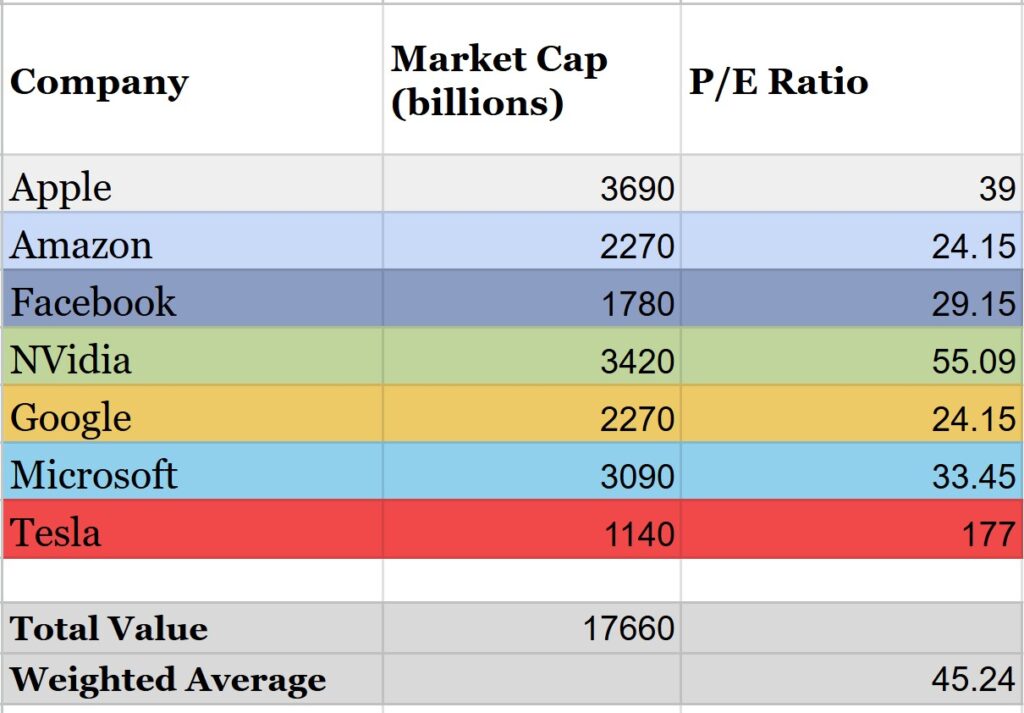
Often referred to as the "Magnificent Seven," these highly profitable firms command a massive share of the overall market value—collectively accounting for over 25 percent of the total market capitalization, valued at trillions of dollars. Furthermore, their P/E ratios are substantially higher than the rest of the market, sitting at a weighted average of around 45. By contrast, excluding these seven giants leaves the remaining 493 companies in the index trading at a more modest, though still elevated, P/E ratio of approximately 20. This disparity indicates that while the broader economy is anticipated to maintain steady health, market participants are pricing in extraordinarily rapid growth specifically for the tech sector.
At the heart of this tech-driven boom is the rapid advancement of Artificial Intelligence. Recent breakthroughs have demonstrated software capable of exhibiting complex, human-like reasoning across numerous industries, igniting widespread enthusiasm and heavy capital expenditure. Major technology conglomerates are pouring hundreds of billions of dollars into constructing massive data centers powered by advanced supercomputers, creating unprecedented demand for specialized hardware manufacturers like Nvidia.
Beyond the infrastructure level, businesses across various sectors are betting that generative AI will usher in a new era of corporate productivity. Capabilities such as parsing lengthy legal documents, identifying medical anomalies from skin photographs, writing and debugging software code, and developing advanced pharmaceuticals suggest that industries may soon operate with significantly enhanced efficiency. Proponents envision a future where advanced computing handles complex intellectual labor, potentially alleviating historical constraints on human productivity.
Whether these technological promises will translate into the corporate profits currently forecasted by the market remains a central uncertainty. Analysts point out that potential pitfalls—ranging from high capital expenditure costs and regulatory hurdles to unexpected competitive pressures—could alter the trajectory. Furthermore, broader macroeconomic and societal questions persist regarding how labor markets and employment rates might shift if automation alters traditional workforce structures.
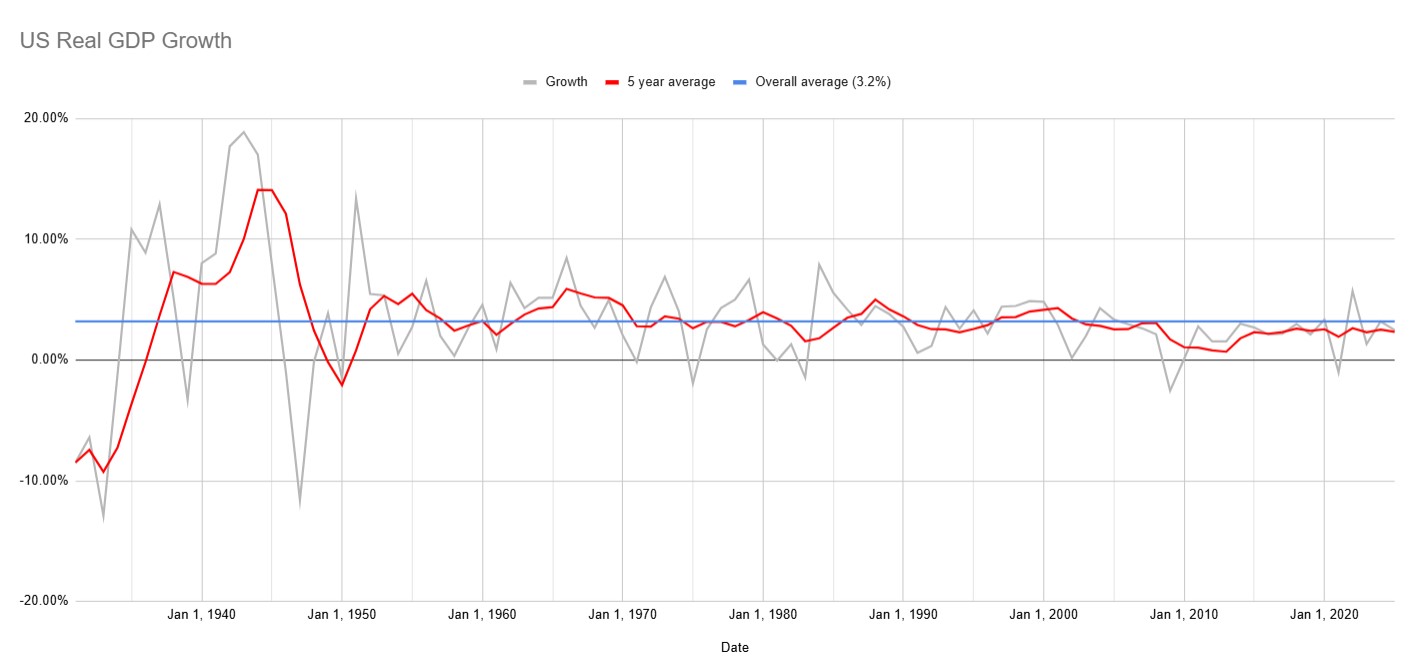
Historically, the broader United States economy has exhibited a remarkably steady real growth rate, averaging around three percent annually after inflation across successive decades. Interestingly, recent decades have actually experienced slightly slower-than-average economic growth, adding nuance to the debate over current equity valuations.
While market cycles will inevitably continue to feature periods of exuberance and correction, financial historians consistently caution against attempting to time market peaks and valleys. Even if stock valuations eventually moderate toward historical averages, corporate earnings over the long term are expected to grow alongside the underlying economy, allowing patient investors to compound their wealth steadily over time.

Alternative asset classes offer different perspectives on valuation. Institutional forecasts, such as those published annually by Vanguard, suggest that international equities and fixed-income bonds could potentially outperform U.S. stocks over the coming decade. This outlook is partly rooted in valuation disparities, as international stock funds currently trade at significantly lower P/E ratios compared to their U.S. counterparts. However, U.S. markets have continued to outpace international alternatives in recent years, heavily supported by the concentration of domestic tech innovation.
Other investment strategies, such as multi-asset robo-advisory portfolios, seek to balance volatility and capture global returns through diversified asset allocation, though they have historically lagged behind a purely U.S.-focused equity portfolio during the recent domestic tech rally. Meanwhile, conservative market figures, including Berkshire Hathaway’s Warren Buffett, have signaled caution by maintaining substantial cash reserves, reflecting a scarcity of broad market bargains at current pricing levels.
For everyday investors navigating these complex market dynamics, financial commentators frequently emphasize returning to fundamental principles: maintaining a long-term investment horizon, tuning out daily media noise, and focusing on personal financial discipline rather than reacting to short-term economic speculation.