

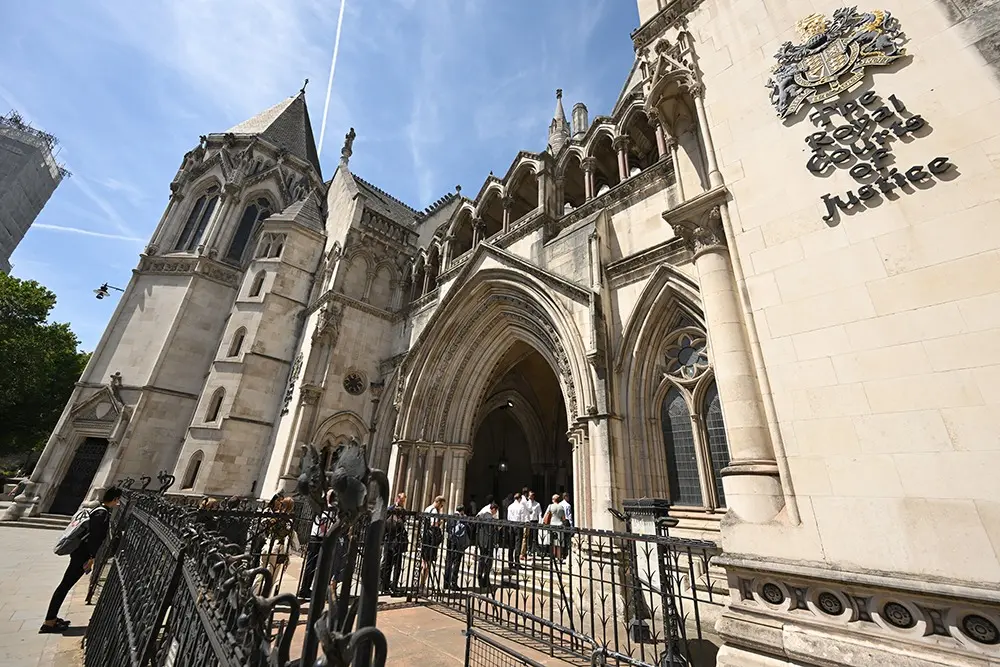
As has been widely reported on both sides of the Atlantic, a well-known individual in the United Kingdom is currently waiting to hear whether his legal effort to block two major media outlets from publishing allegations of inappropriate and exploitative sexual activity with girls and young women has been successful. The high-stakes case has ignited an intense legal and public debate concerning the delicate balance between freedom of the press, the protection of victimized accusers, and the profound legal weight given to genuine threats of suicide and severe mental health crises in British courts.
Lawyers representing the individual—who categorically denies the allegations leveled against him—are seeking what is formally known as a permanent injunction. The legal action is directed against The Guardian and ITN to stop them from publishing what their legal representatives described to the London High Court last week as a wide-ranging and rigorous journalistic investigation. According to the media outlets, this investigation was conducted over a period of four years and involves more than 30 independent sources providing first-hand accounts of the alleged misconduct.
The core argument brought forward by the celebrity’s legal team is one that they themselves have explicitly acknowledged is highly exceptional: they contend that the publishing of the allegations against the individual and the subsequent exposure of his identity would highly likely lead him to commit suicide. This unusual legal battle has rapidly become a major focal point of public debate across the U.K., amplified by widespread speculation on social media platforms over the true identity of the celebrity in question. As the legal community and the public await the judge’s impending decision, a fundamental question hangs over the proceedings: does the argument that publication would have a potentially fatal impact actually stand up under legal scrutiny?
According to Paul Tweed, a renowned defamation lawyer from Northern Ireland who has represented a large number of high-profile international clients—including Harrison Ford, Britney Spears, Jennifer Lopez, and Justin Timberlake—the argument does indeed have legal viability under very specific and heavily restricted conditions.
Tweed acknowledges that such celebrity privacy injunctions, once notorious in the British media landscape where they were frequently referred to as super-injunctions—a term that technically also forbids reporting on the existence of the injunction itself—have become a significant rarity in modern British jurisprudence. However, he emphasizes that the individual’s legal claim is built upon grounds that, while narrow, could still be accepted by a court of law if substantiated by overwhelming evidence.
A threat to life, if there is a genuine and imminent risk of suicide, is cited by Tweed as one of very few main grounds that are remaining for an injunction of this nature in today’s legal environment. However, he stresses that such a claim cannot be taken at face value and must be rigorously confirmed by a competent psychiatrist and whatever other comprehensive medical support the court will deem necessary. Such sensitive medical evidence, he notes, is invariably subjected to intense and rigorous scrutiny by the presiding judge before any definitive legal relief is granted. The court does not grant orders of this magnitude very lightly; rather, judges are known to be extraordinarily thorough in their examination of whether there is a genuine, medically verified risk of self-harm, or whether assertions of mental distress are simply being utilized as an operational excuse to suppress embarrassing or damaging investigative reporting.
According to reports from The Times, the unnamed individual at the center of the intense journalistic investigation wrote directly to both The Guardian and ITN back in September when he was first approached and asked to provide his formal reply to their mounting allegations. In his direct written response to the news organizations, he asserted that if their story was published or broadcast, he would take his own life at the earliest opportunity. Expanding on this grave warning during last week’s court hearings, his defense lawyer informed the court that her client possesses a prior history of attempting to take his own life specifically as a result of the impending publication of these allegations.
Elaborating on the severity of her client’s condition, the lawyer argued before the court that this is not a scenario where an individual has spuriously or conveniently raised mental health concerns merely in the face of an impending publication that they wish to avoid. Instead, she presented a harrowing picture of clinical vulnerability, stating that the claimant has previously attempted suicide twice as a result of these matters, has been hospitalized for extended periods spanning months, has been the subject of involuntary medical detention, and has been comprehensively examined by multiple medical professionals—now numbering more than 10 different doctors.
In sharp contrast, the legal counsel representing the news outlets argued robustly during the proceedings that there is an overwhelmingly strong public interest in publishing the numerous serious allegations against the individual. The media’s representatives claim that the celebrity abused his prominent status and influence over the course of many years to exploit vulnerable individuals. Furthermore, the lawyer for the media organizations highlighted the profound and lasting impact the alleged behavior had on the accusers themselves, pointing out that many of the women who have come forward to report these allegations have been deeply traumatized by the claimant’s alleged conduct and have suffered severe mental health crises and ongoing mental illnesses as a direct result.
The media’s legal team further argued that upholding the extraordinary injunction requested by the claimant would effectively require U.K. authorities to intervene directly in the lawful journalistic activities of the independent media, solely to prevent what would ultimately be an autonomous act committed by the claimant himself.
Should the injunction ultimately be enforced by the court, Paul Tweed notes that the sheer volume of column inches and the widespread online chatter the case has already managed to provoke serves as a powerful reminder of how attempting to suppress sensitive information can frequently backfire in the digital age. He points to the world-famous legal precedent involving Barbra Streisand, whose aggressive legal efforts to sue a photographer over an online aerial photograph of her Malibu mansion resulted in an unprecedented spike in public curiosity, with online demand to see the contested image skyrocketing worldwide—a phenomenon now permanently enshrined in digital culture as the Streisand Effect.
In the current era of ubiquitous social media, Tweed points out, the traditional legal injunction is rendered far less effective, a reality vividly demonstrated by the rampant speculation surrounding this specific case. Therefore, by actively pursuing an injunction while knowing full well that the public and social media users will inevitably speculate—either accurately or inaccurately—on the identity of the individual, the legal strategy runs a very real and visible risk of triggering the Streisand Effect on a massive national and international scale.
The current situation, which is widely expected to be officially resolved by a judge sometime this week, has already sparked widespread fury and intense debate across the United Kingdom concerning vital issues of press freedom, accountability, and profound fears that if the injunction is ultimately upheld by the court, the legal argument could subsequently be weaponized by others accused of being sexual predators to evade public scrutiny.
Weighing in on the broader societal implications of the case, Ian Hislop, the editor of the influential satirical and current affairs magazine Private Eye, spoke to The Times regarding the dangerous path such a legal precedent might forge. Finally, various people operating within the showbiz industry are having to face and answer long-standing accusations that have been swirling around for ages, Hislop noted. He added that if the very first thing that happens is that they are excused from answering simply because facing the music will affect their mental health, that does not seem fair to any of the accusers who have stepped forward. Acknowledging the harshness of his own perspective, Hislop concluded that while it may sound extremely callous, allowing such a defense would undoubtedly set a deeply concerning and dangerous precedent for the future of justice and investigative journalism in the U.K.