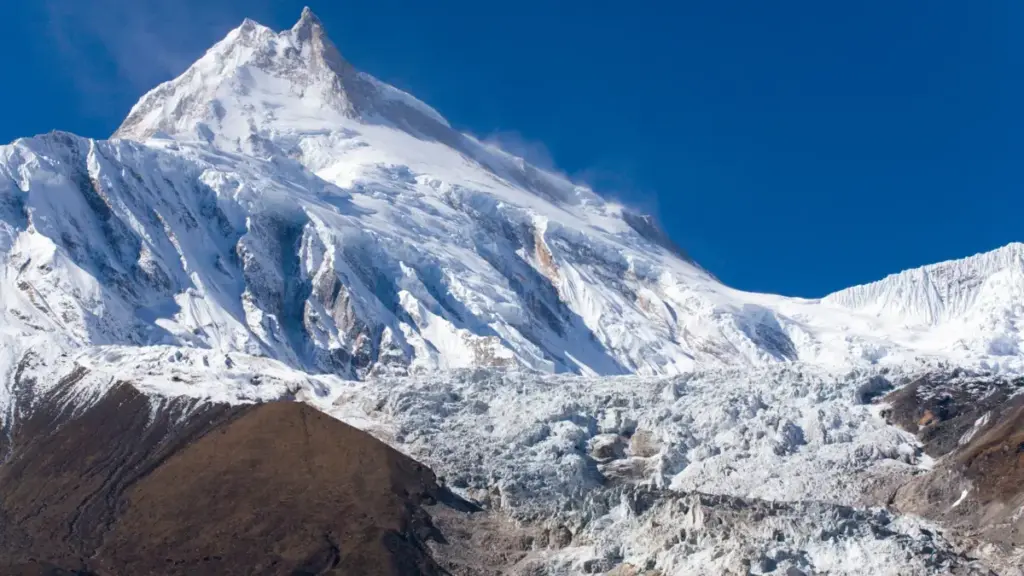
Foul weather and a series of deadly avalanches have abruptly spoiled the autumn climbing season on Manaslu, one of Nepal’s most popular high peaks outside of Mount Everest. With heavy snow and severe cyclonic conditions firmly in the forecast, mountaineering authorities and commercial outfitters agree that it is highly doubtful any more climbers will successfully make it to the top of the 26,781-foot Himalayan giant before the official season draws to a close in October.
The sudden and dramatic shutdown marks a bitter end to what had initially promised to be a busy and productive autumn season on the mountain, underscoring the unpredictable and unforgiving nature of the world’s highest peaks.
A Stepping Stone to Mount Everest
Manaslu, standing proudly as the world’s eighth-highest mountain, has evolved significantly in recent years to become a favored destination for climbers harboring ambitions of eventually tackling Mount Everest. The demanding ascent requires mountaineers to conquer roughly 8,000 vertical feet from Base Camp to the ultimate summit. Along the way, participants must endure painfully thin air, treacherous footing across a mix of shifting glaciers and loose rock, and extended periods spent within the physiological hazard known as the Death Zone.
However, unlike more technically demanding 8,000-meter peaks such as K2 or Annapurna, the standard route up Manaslu does not feature the same sheer, terrifying drop-offs or continuous technical vertical climbing. This relative accessibility has made it a cornerstone of the fall Himalayan tourism economy. Most of Nepal’s largest commercial guiding outfitters routinely schedule lucrative expeditions to Manaslu during the autumn window, which traditionally runs from late August through early October.
“Manaslu is the most accessible 8000-meter peak in Nepal,” the prominent American guiding company Summit Climb proudly notes on its promotional website.
Despite its reputation as a stepping stone, the peak is far from a safe cakewalk. Base Camp is frequently battered by relentless rain, sleet, and freezing winds. Furthermore, heavy snowfall routinely blankets the upper Himalayan ranges during the late summer and early autumn transition, drastically elevating the potential for catastrophic avalanches at higher elevations.
History has proven this danger time and time again. In 2012, a massive, roaring slab avalanche tore down the mountain and completely wiped out Camp III, tragically leaving 11 climbers dead or missing. Ten years later, in 2022, renowned American extreme skier Hilaree Nelson lost her life on Manaslu when an avalanche struck and swept her off an exposed 5,000-foot slope.
Such tragedies have long sparked fierce debate within the mountaineering community. “After climbing and skiing on some 40 of the world’s major 6,000-, 7,000-, and 8,000-meter peaks, this is the only mountain I could not recommend to anyone,” mountaineering expert and author Mike Marlot wrote in a scathing evaluation for Outside magazine back in 2012. “It is avalanche central.”
Alas, the broader climbing world largely ignored Marlot’s stark warnings. In recent years, scores of eager adventurers have continued to flock to Manaslu, propelling it to become the second-most-popular 8,000-meter peak in Nepal, trailing only Everest. For the 2026 season alone, Nepal’s Department of Tourism issued an impressive 493 climbing permits for Manaslu for the fall window, according to data published by the Himalayan Times. For context, Nepal issued 494 climbing permits for Mount Everest during the preceding spring season, marking the biggest year on record for the world’s highest mountain.
Heavy Snow and Deadly Slides
Expeditions on Manaslu appeared to be making steady, encouraging progress during the early weeks of September, successfully completing their mandatory acclimatization rotations. Soon after, a dedicated team of rope-fixing mountaineers representing the Expedition Operators Association of Nepal began the arduous task of laying fixed lines along the upper flanks of the peak. According to reports from the Everest Chronicle, this vital route-setting work to the summit was officially completed on Thursday, September 17, placing the teams three days ahead of the previous year’s timeline.
However, even as the lines were being anchored, the warning signs were stacking up. Rope fixers encountered exceptionally deep, fresh snow and active avalanches while battling their way to the summit ridge. Almost immediately, heavy storm clouds enveloped the peak, dumping feet of powdery new snow that drastically elevated the avalanche hazard just as commercial teams were preparing to launch their final summit bids.
Veteran high-altitude guide Mingma G captured the raw danger on video, posting footage of a massive avalanche thundering down the flanks of Manaslu on September 16. The towering wall of snow and ice narrowly missed obliterating several expedition tents pitched at Camp III.
“I have done every kind of climbing and never feared anything—but snow avalanches are the one thing that has always scared me,” Mingma G wrote in a candid post on Instagram. “Yes, you can use some of your skills, but ultimately it all comes down to luck. Yesterday was a lucky day on Manaslu. Fortunately nobody was above Camp III.”
Unfortunately, the climbers’ luck ran out just a few days later. On the night of September 20, an unexpected avalanche violently struck Camp III, sitting precariously at 22,000 feet, trapping and killing two climbers who were resting inside their tent. The following morning, search and rescue crews located the lifeless bodies of German-Indian climber Dhrubajyoti Guha and experienced Nepali mountain guide Phursemba Sherpa, both 47 years old, buried under several feet of crushing snow.
“Six other climbers who decided to retreat from Camp II are safe, but Guha and Sherpa decided to make an early summit attempt and headed for Camp III,” Mohan Lamsal, the managing director of the guiding agency Makalu Adventure, explained in an interview with the Times of India. “We sent four Sherpa climbers to Camp III to look for them. They dug through the snow and found both inside their tent, buried beneath nearly seven feet of snow.”
Shaken by the tragedy, Makalu Adventure promptly canceled the remainder of its expedition, according to the Everest Chronicle. The surviving members of the team were airlifted to lower elevations the very next day.
These twin fatalities pushed the overall 2026 death toll on Manaslu to a grim total of four. Earlier in the season, a climber from Singapore tragically died on September 17 during an acclimatization rotation, while a Nepali porter was found dead inside his tent at Base Camp weeks prior.
Guides and Climbers Retreat as a Cyclone Bears Down
The relentless heavy snowfall continued to torment teams operating above Base Camp. Earlier in the month, on September 1, climber Pastenji Sherpa of Altipro Adventures shared dramatic video footage showing a ferocious avalanche completely engulfing Camp I at an elevation of 18,700 feet.
“The mountain showed its true power,” Pastenji Sherpa wrote alongside the footage. “Moments like this remind us that in the high Himalayas, nature is always in control.”
Mother Nature ultimately showed no mercy to the remaining expeditions. Confronted with forecasts predicting even more severe snowfall, individual climbers and entire commercial outfits made the collective decision to head for lower elevations on September 22.
Veteran mountaineer Simone Moro, who splits his time between high-end expeditions and flying rescue helicopters on Everest and surrounding peaks, abandoned his summit bid after reaching Camp III that same day. Writing on his official Instagram account, Moro explained that he decided to immediately descend from Base Camp after reviewing a meteorological forecast warning of continuous, heavy snow across the mountain from September 24 through September 28.
“At least two meters of fresh snow on any big mountain in Nepal from west to east,” Moro wrote. “The message was clear for those who want to listen, understand, and follow evidence.”
Others quickly followed his pragmatic lead. Mingma G announced that his entire team would pack up and vacate Base Camp on September 23. “Persistent snowfall created dangerous conditions, with risk of avalanches near Base Camp too,” he stated. Meanwhile, 8K Expeditions informed its supporters that it was officially pausing its Manaslu expedition “until conditions improve.”
Seven Summits Treks, one of the industry’s largest outfitters, took the definitive step further, announcing publicly that it was calling off its entire Manaslu expedition for the season.
With heavy accumulations of snow forecasted to continue burying the mountain in the days ahead, the realistic hopes of any climbers reaching the summit before the official window slams shut in early October have grown exceedingly slim. Any hypothetical team attempting a late push would first be forced to dig out the heavily buried fixed lines that were painstakingly installed by route-fixing crews more than a week ago. Under normal historical patterns, expeditions wrap up their final summit pushes during the very first week of October.
Summing up the collective frustration and finality of the situation, the prominent mountaineering website Explorersweb published a blunt headline on September 22 that captured the mood of the entire climbing community: “Game Over on Manaslu.”