



It is a well-worn tradition in the realm of role-playing games to introduce a shadowy antagonist who has been orchestrating events from behind the scenes all along. Frequently, this figure takes the form of a malevolent supernatural entity harboring a deep disdain for humanity. After a substantial amount of philosophical posturing regarding the nature of free will, the player and their companions must ultimately triumph over this foe utilizing the time-honored triad of friendship, legendary blades, and ornate fantasy armor.
Fire Emblem: Fortune’s Weave enthusiastically embraces this classic trope, yet the antagonist it suddenly thrusts into the narrative is so memorably and outrageously despicable that the storytelling choice works remarkably well. Following the leisurely cadence of Act 1—which focuses heavily on gift-giving, social bonding, and relationship management—Act 2 of Fortune’s Weave grabs the player by the collar and plunges them headfirst into a vastly darker and more urgent reality. It serves as a striking reminder that traditional narrative tropes endure for a reason: when executed with precision and flair, they can still deliver an intensely satisfying gaming experience.
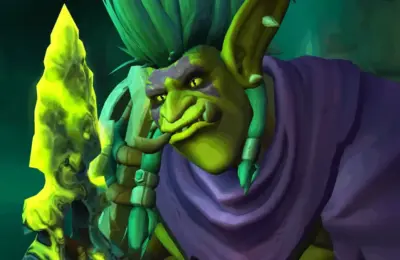
To step into Act 2, known as the War Arc, players must interact with the Strife Obelisk. This milestone is typically reached after completing at least one of the four distinct narrative routes available in Act 1, though the game technically permits players to access it directly following the prologue. From this juncture, the narrative resumes several months after the pomp and circumstance of the Heroic Games have concluded. It is revealed that Raksha, the cunning, green-haired schemer concealed behind a traditional wooden mask, has successfully resurrected her father, Emperor Dagda, following a dormant slumber that lasted half a century. And upon his return, the emperor quickly establishes himself as a singularly unpleasant force within the continent.
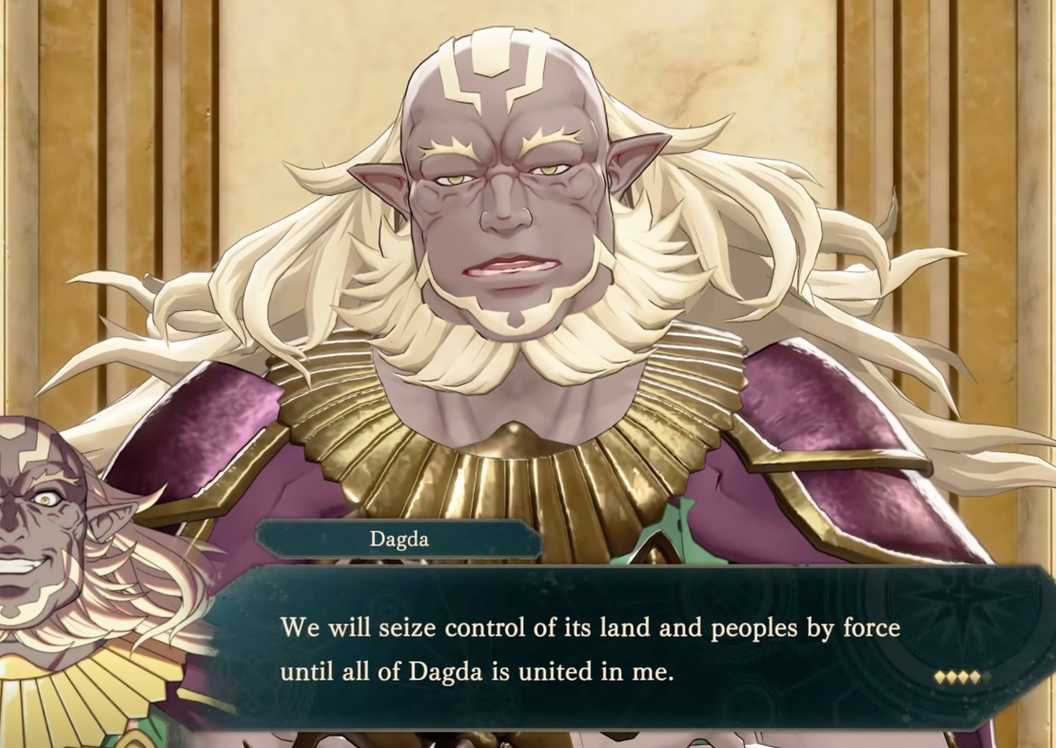
Dagda makes no pretense whatsoever of ruling with fairness, justice, or benevolence, rendering characters like Edelgard from Fire Houses appear remarkably moderate by comparison. No sooner has he reentered the political sphere than he brutally eliminates his own son, Solel. Following this shocking act of familial violence, he formally declares a "war of annihilation" directed at Saramis, the southern region of the continent that conveniently serves as home to a significant portion of the marginalized populations and people of color within the world of Fortune’s Weave.
Furthermore, Dagda orders the immediate demolition of Dagsion’s beloved public arena, choosing to replace it with a massive installation known simply as "the cauldron." The traditional public spectacles and communal spaces are swiftly dismantled, plunging the vibrant capital city—where players spent countless hours interacting with NPCs during the early stages of the game—into a state of localized hell. Imperial troops routinely occupy the streets, harassing ordinary citizens and seizing food and financial resources to feed the war machine demanded by their supreme ruler.
Dagda’s severe and uncompromising extremism eventually alienates several of the Empire’s historical allies, prompting them to defect and align themselves with Theodora’s resistance forces on the Saramis front. Faced with a series of humbling military defeats at the hands of this growing opposition, Dagda determines that the most effective response is a drastic one. He issues a command to round up every single resident of Dagsion—numbering approximately one million souls—and cast them directly into his newly constructed cauldron.

While the gruesome mechanics of this mass atrocity are mercifully kept off-screen, the process systematically dissolves the bodies and souls of the populace into a mystical slurry referred to as flamma. Dagda consumes these soul-derived concoctions by the bowlful, utilizing the horrific sustenance to restore his vitality or simply indulging whenever his perpetual bad mood flares up.
The striking parallels between Dagda and contemporary political figures have not gone unnoticed by the player base. From his overt prejudice and penchant for declaring military conflicts on a whim, to his all-encompassing greed, self-interest, and inner circle of scheming yet inept offspring, the character cuts a distinct profile. Add in a bottomless capacity for cruelty and an expression tailor-made for virtual retaliation, and the resemblance offers plenty of room for silent contemplation.
Fortunately for the populace of the game world, Dagda’s reign of terror meets as abrupt an end as its terrifying inception. Intoxicated by the collective essence of a million murdered subjects, the emperor undergoes a monstrous metamorphosis, transforming into a towering dragon that awaits the resistance forces atop the highest peak in Dagsion. In this draconic state, he proves entirely impervious to standard attacks, leaving the player’s party temporarily stymied.
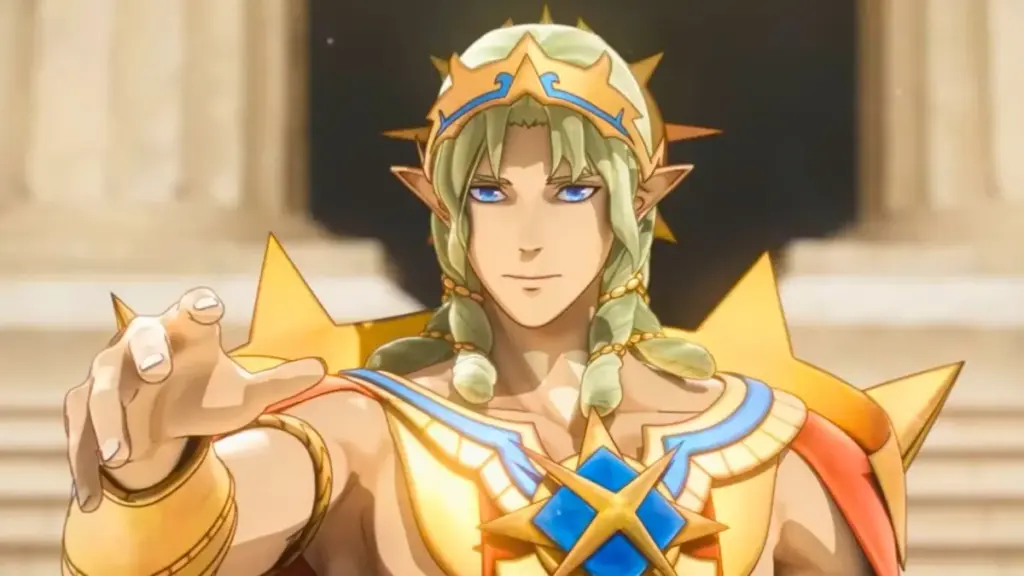
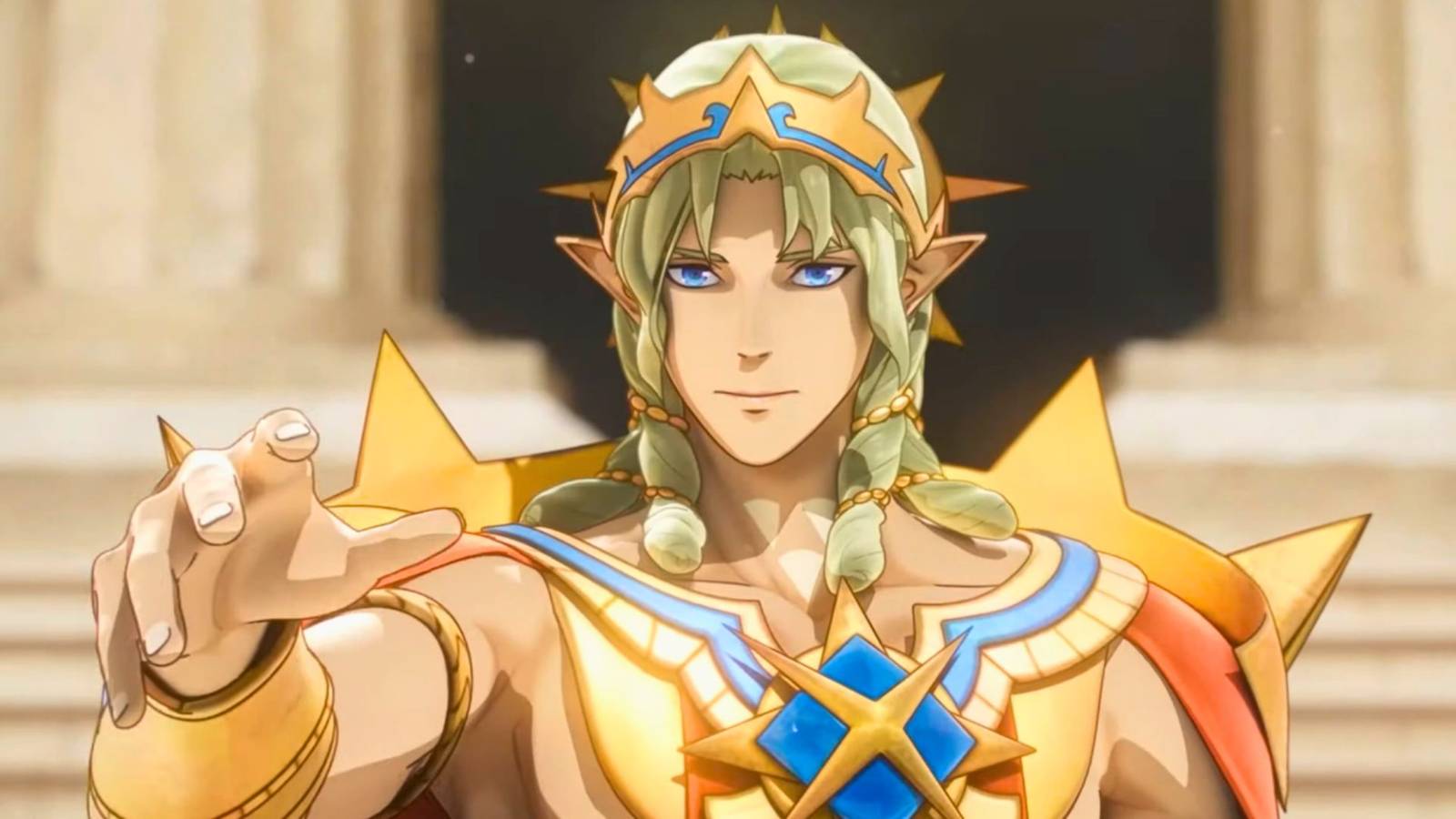
The turning point arrives when Eshmel descends unexpectedly into the fray, delivering a decisive blow that shatters the dragon’s protective barrier. With his defenses compromised, the player’s party is finally permitted to unleash their full arsenal upon him until the ancient tyrant is permanently felled. The resulting victory brings a profound sense of catharsis, though it is quickly tempered by the realization that another dark force is already rising to fill the power vacuum.
Within the broader scope of Fortune’s Weave, particularly for players who explore multiple Act 1 routes, Dagda’s actual screen time is relatively brief. Nevertheless, his vivid, unreserved cruelty, combined with the noticeably elevated difficulty and length of the battles tied to his campaign, ensures that every triumph over his forces feels hard-earned and deeply gratifying. Even if he ultimately serves as a stepping stone rather than the final boss of the entire adventure, this soul-guzzling monarch leaves an indelible impression on the overarching narrative.