



Dog food delivery services routinely promise the convenience of nutrition arriving directly at a pet owner’s doorstep, but the operational mechanics behind these companies differ dramatically. Some providers cook fresh meals and ship them chilled through recurring subscriptions, while others freeze gently cooked food and send it packed in dry ice. Meanwhile, major online pet retailers manage automated shipments of shelf-stable kibble and canned goods, and local courier services offer quick door-to-door delivery from nearby retail shelves.
Navigating these choices requires pet owners to align a service’s delivery model with their dog’s nutritional requirements, their household schedule, and available kitchen storage space. Rather than relying solely on brand popularity or price points, evaluating these options through a structured structural comparison highlights how each model functions in daily life.
Among the evolving landscape of delivery options, Get Real—a gently cooked, frozen fresh dog food line launched by Chewy in September 2025—serves as a notable example of how frozen fresh delivery can integrate into broader pet care supply routines.
How Dog Food Delivery Models Differ
The primary distinctions among dog food delivery options lie in the format of the food, how it must be stored, and the level of advanced planning required from the owner. While fresh-cooked subscription services and frozen fresh delivery companies ship perishable meals in insulated containers, shelf-stable autoship systems deliver standard dry or canned foods that can be kept in a home pantry. Same-day local services simply source whatever inventory is currently on nearby store shelves.
Consumers frequently compare brand names before determining which logistics model fits their routine. However, a single service model cannot suit every household. A delivery program that works seamlessly for a family with ample freezer capacity and a predictable weekly routine may prove impractical for an apartment owner managing minimal refrigeration space and an inconsistent schedule.
Each model presents distinct storage and operational trade-offs:
- Fresh-Cooked Subscriptions: These services ship prepared fresh meals directly to the customer on a recurring schedule. Meals require immediate cold storage—active packs stay in the refrigerator while the rest remain frozen—and arrive pre-portioned according to a custom feeding plan. Subscriptions generally permit users to pause, alter, or cancel service.
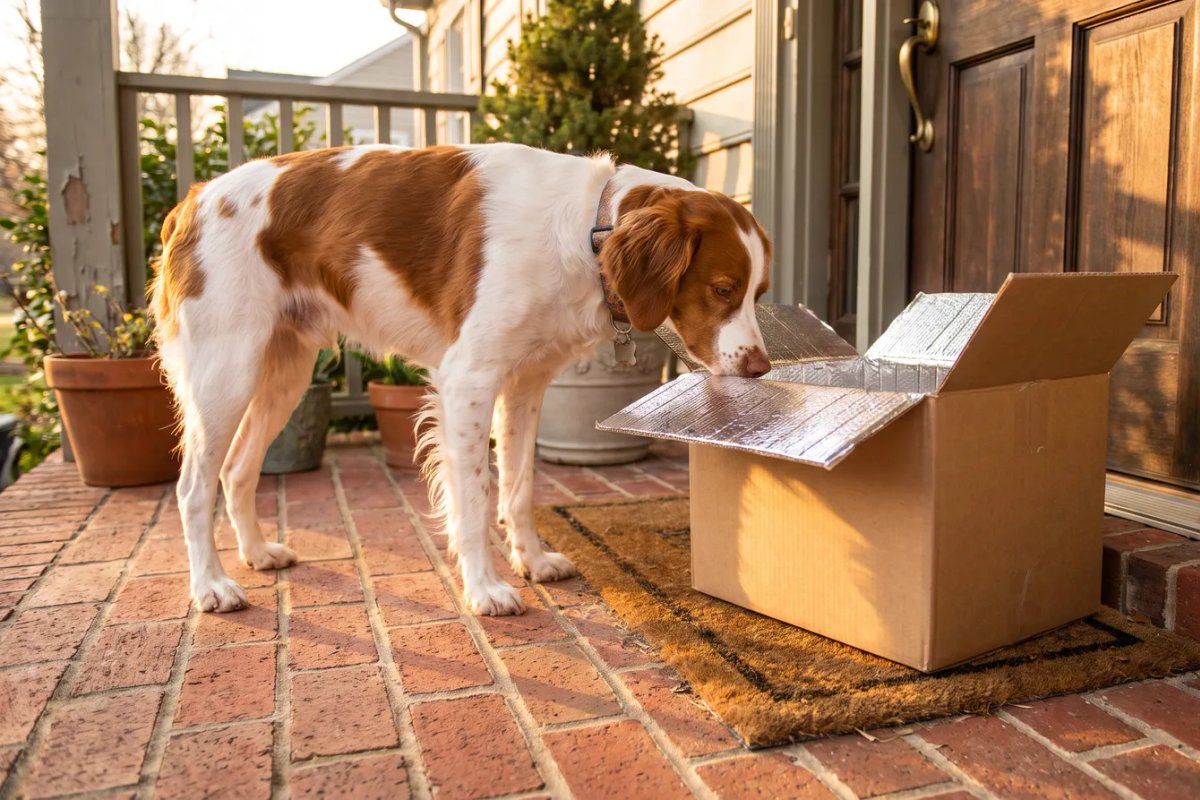
- Frozen Fresh Delivery: Represented by options such as Chewy’s Get Real line, this model features meals that are gently cooked and frozen prior to shipment in insulated boxes packed with dry ice. Packs are transferred directly to the freezer and thawed in the refrigerator before serving. Orders offer flexible scheduling, allowing owners to skip, pause, modify, or cancel orders.
- Shelf-Stable Autoship: This traditional e-commerce model delivers kibble or canned food directly to the home on a recurring schedule chosen by the user. Products can be stored indefinitely on pantry shelves until opened, though owners are responsible for measuring daily meal portions manually.
- Same-Day Local Delivery: Utilizing third-party shopping apps or local retail couriers, this option sources products directly from nearby pet stores and grocers. Selection depends on local store stock, and items arrive within hours, eliminating the need for a long-term plan.
The shift between fresh and shelf-stable options fundamentally changes how owners handle storage and meal prep. Fresh and frozen options arrive pre-portioned but demand dedicated freezer and refrigerator real estate. In contrast, shelf-stable kibble requires no cold storage but places the responsibility of portion measurement entirely on the owner. Additionally, because portioned subscription plans are tailored to a dog’s daily intake, owners must ensure their delivery frequency precisely matches their pet’s consumption rate.
Regardless of the delivery method, every model is capable of providing a diet that is complete and balanced. The preferred delivery format should ultimately align with a household’s storage capacity and daily workflow.
Fresh-Cooked Subscription Companies
Fresh-cooked subscription services represent the standard approach most consumers envision when considering fresh dog food delivery. To use these platforms, owners input their dog’s age, weight, activity level, and dietary profile into an online tool. The service calculates daily caloric needs and delivers custom-portioned meals directly to the home on a recurring cadence. Prominent direct-to-consumer brands operating under this framework include The Farmer’s Dog, Ollie, and Nom Nom.
These companies share a standard operational framework:
- Meals are prepared, customized, and pre-portioned according to the individual pet’s demographic profile.
- Shipments arrive chilled or frozen in insulated boxes.
- Orders follow an automated, recurring schedule managed directly through the company’s proprietary website rather than traditional retail outlets.
The major benefit of fresh-cooked subscriptions is the elimination of daily meal calculations. Meals arrive pre-measured for the pet, recipes remain consistent, and replacement boxes ship automatically. For owners seeking a fresh food diet without manually calculating daily caloric intake, these services streamline meal preparation.
However, the primary constraints are freezer space and delivery synchronization. Prepared meals must maintain cold chain integrity from the moment of delivery, requiring sufficient refrigerator room for active meal packs and designated freezer space for upcoming inventory. Once opened, fresh food has a brief shelf life, making it essential that delivery intervals precisely match the dog’s daily consumption.
Outside of traditional direct-to-consumer subscription services, commercial brands have also adapted to home delivery. Freshpet, known for its refrigerated retail display cases in grocery stores, offers Freshpet Delivery. The service delivers custom-portioned meal plans steam-cooked and preserved through cold chain management rather than artificial preservatives, bridging the gap between physical grocery shopping and direct-to-door delivery.
Frozen Fresh Delivery: The Get Real Model
Frozen fresh delivery functions similarly to fresh-cooked subscriptions, but with an emphasis on extended storage flexibility. Under this model, meals are gently cooked and immediately frozen, remaining solid until the owner intentionally thaws them. This makes the freezer the primary storage hub and allows pet owners greater control over when individual meal packs are thawed and served.
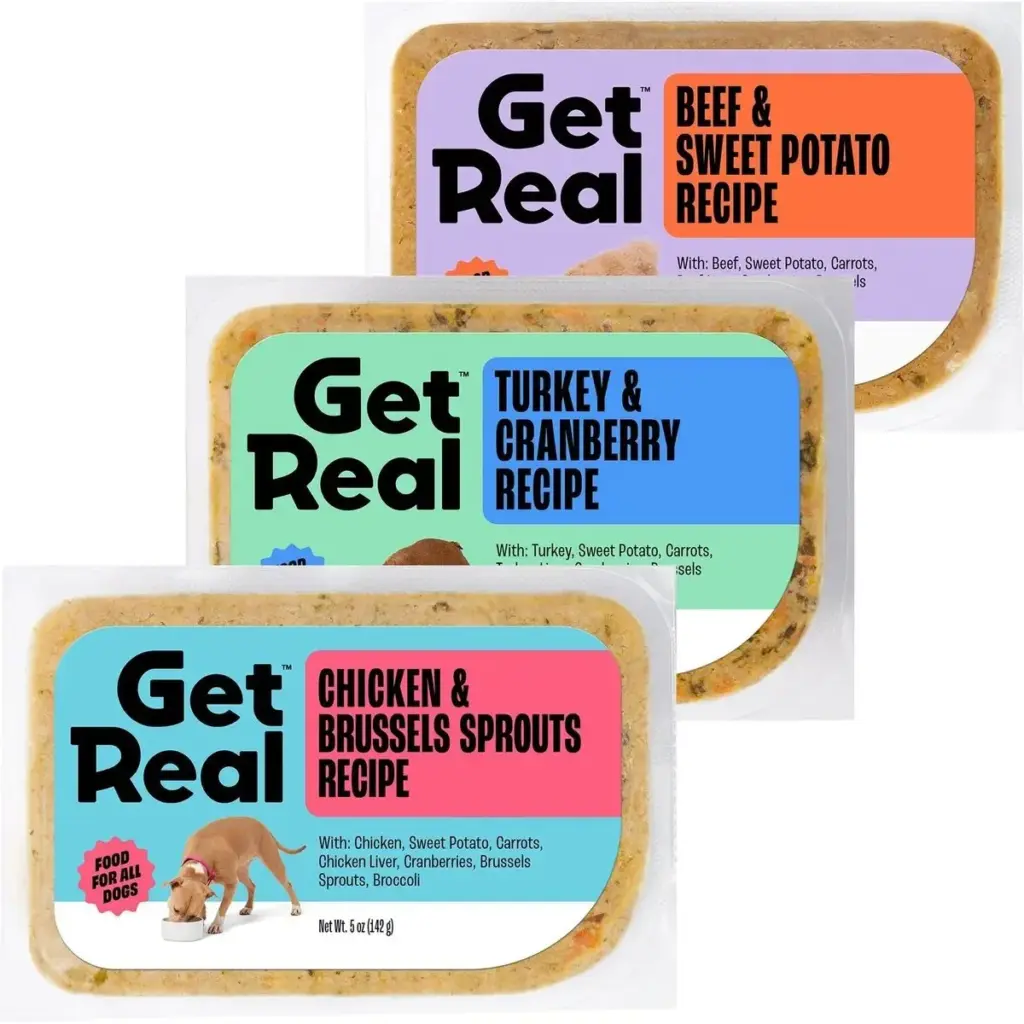
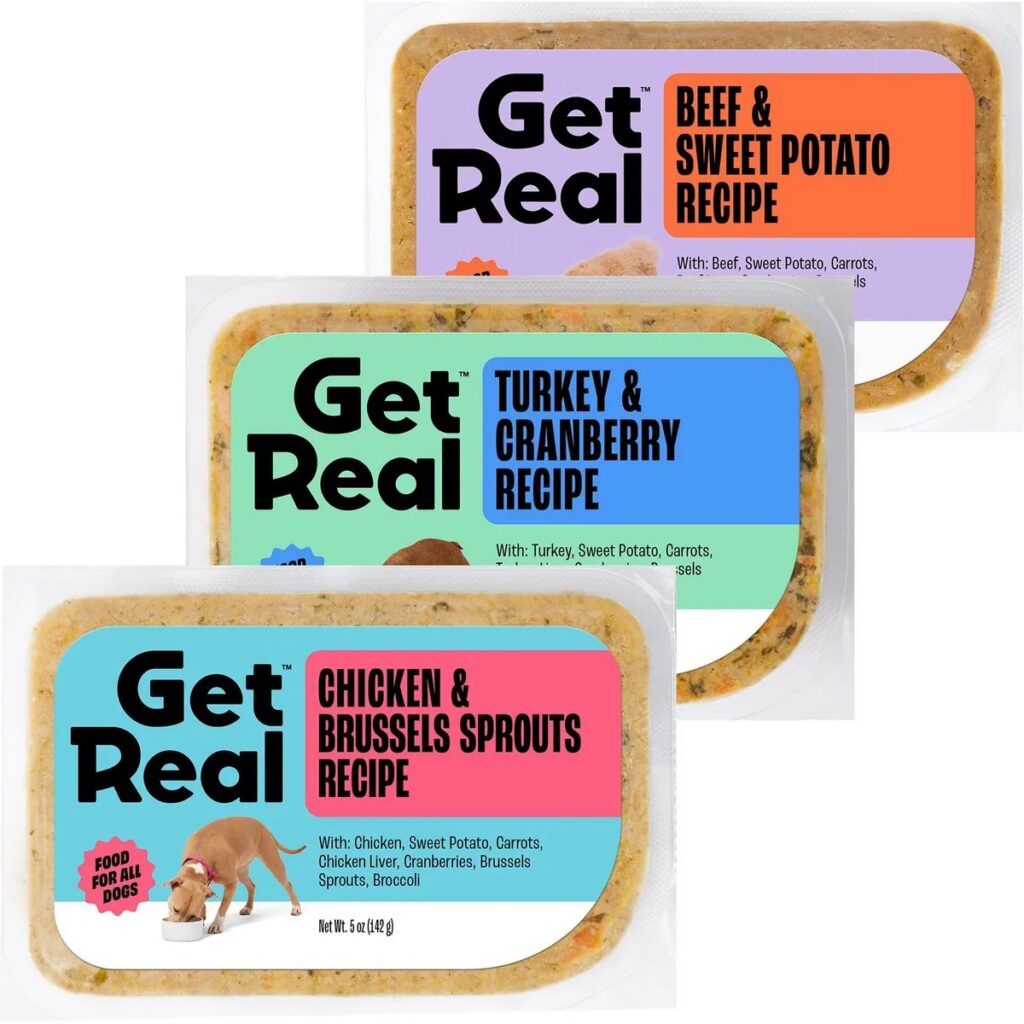
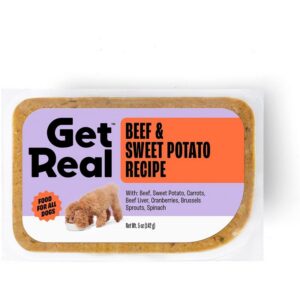
Get Real serves as a prominent example of the frozen fresh framework. Formulated with human-grade ingredients, each recipe contains ten key ingredients or fewer, supplemented with essential vitamins and minerals. The product line includes three primary formulas: Chicken & Brussels Sprouts, Beef & Sweet Potato, and Turkey & Cranberry. Every recipe is formulated to meet AAFCO nutrient profiles for all life stages, including the growth of large-size dogs weighing 70 pounds or more as adults. The meals can be served as a complete standalone diet, a fresh topper, or a kibble mixer.
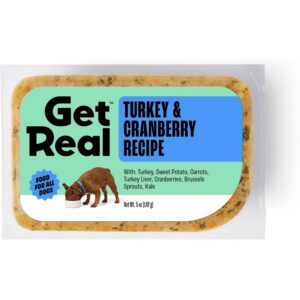
Get Real is offered in pre-portioned packaging across three distinct sizes: a 5-ounce mixer pack designed to supplement other diets, alongside larger 12-ounce and 24-ounce packs. Orders ship in insulated containers packed with dry ice, designed by Chewy to remain cold for up to eight hours post-delivery, depending on ambient weather conditions. Upon arrival, packs must be transferred to the freezer, then moved to the refrigerator 12 to 24 hours prior to feeding to thaw (or 35 to 48 hours for the 24-ounce packs). Once fully thawed, food should be served within three to five days.
A defining characteristic of Get Real is its integration into Chewy’s established e-commerce platform. Rather than managing a standalone subscription through an isolated service provider, customers in select markets can order frozen fresh food alongside standard household supplies, such as treats, toys, and medications. For owners seeking to avoid managing multiple pet care accounts, consolidating fresh meals with standard retail delivery offers a practical operational advantage. A sampler bundle featuring all three recipes is available to allow dogs to test the options before owners commit to a larger order volume or recurring schedule.
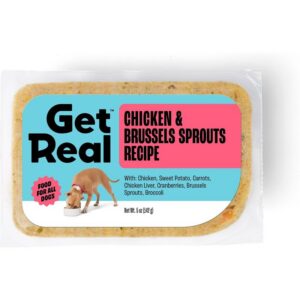
For owners focused on poultry diets, the Chicken & Brussels Sprouts recipe features chicken as the primary protein. According to the brand’s published guaranteed analysis, the recipe maintains a minimum crude protein level of 10 percent and a minimum crude fat content of 8.5 percent.
Shelf-Stable Delivery: Kibble and Canned Food Autoship
Automated subscription delivery for dry kibble and canned dog food remains the most widely used delivery structure across the pet industry. Available through major online pet supply retailers, general e-commerce platforms, grocery chains, and direct manufacturer sites, shelf-stable autoship delivers standard commercial diets on an automated schedule.
The primary benefit of shelf-stable delivery is ease of logistics. Unopened dry kibble and canned foods do not require refrigeration and can remain safely on a porch for extended periods without spoiling. Once brought inside, packages can be stored directly in a pantry or storage bin. Furthermore, pet owners have access to thousands of established brand formulations and bag sizes, with the ability to adjust order intervals to match their pet’s feeding pace.
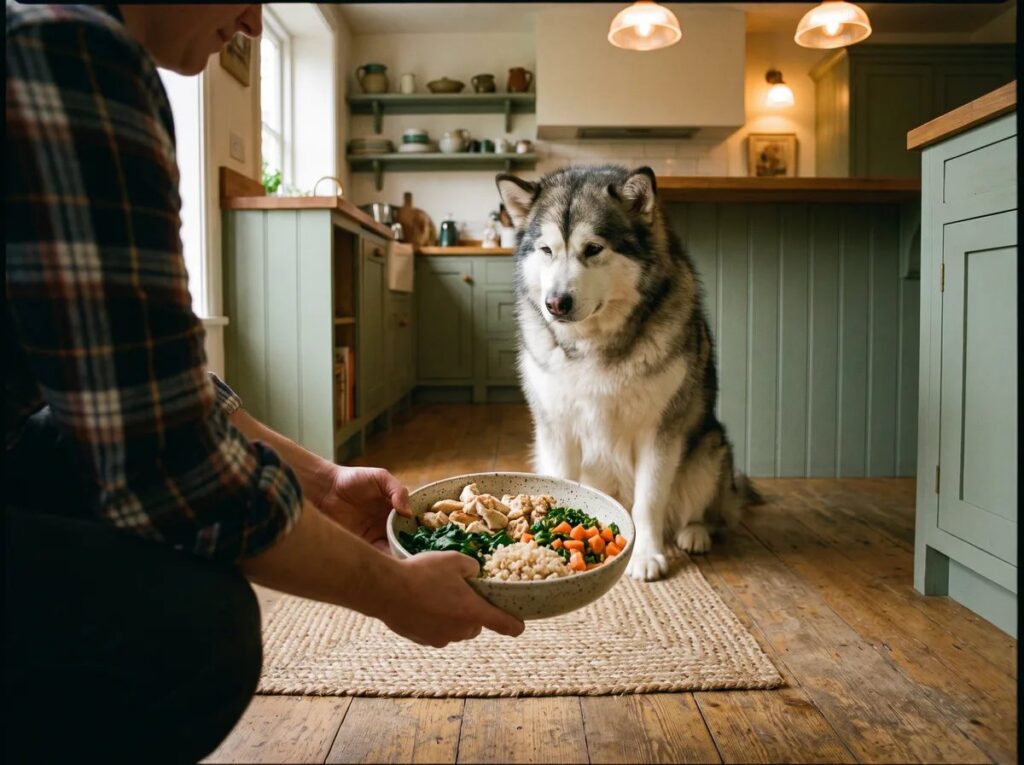
Through platforms like Chewy Autoship, users can modify delivery frequencies, pause upcoming shipments, skip cycles, or cancel orders as needed. For households that already utilize e-commerce autoship for standard dry food, incorporating a frozen fresh topper like Get Real into an existing account involves minimal added setup.
The primary requirement of shelf-stable delivery is manual portion control. Because dry food and canned products are delivered in bulk quantities, owners must measure out individual meals using product feeding guidelines and their pet’s target body condition. Using a digital kitchen scale or standard measuring tool helps ensure consistent daily calorie delivery.
Many households elect to combine models, utilizing shelf-stable kibble as the foundational diet while adding fresh food as an appetizing mixer. Get Real’s 5-ounce mixer packs are formatted for this purpose, with recipes like Beef & Sweet Potato—featuring beef, sweet potato, carrots, and beef liver—offering a convenient way to add fresh protein to standard dry kibble.
Same-Day and Local Delivery Options
Third-party delivery platforms such as DoorDash and Instacart have expanded into pet supply delivery, enabling pet owners to order dog food directly from local retail stores, big-box chains, and supermarkets. Orders are processed on demand, with local couriers picking up products off store shelves and delivering them within hours. In addition, several dedicated pet supply stores now operate their own localized same-day delivery or curbside fulfillment programs.
While convenient, same-day delivery works best as a backup solution rather than a primary feeding strategy. On-demand fulfillment is ideal when an owner unexpectedly runs out of food, when a scheduled shipment experiences carrier delays, or when a specific item is needed immediately.
However, on-demand local delivery is generally ill-suited for fresh or frozen diets. Standard courier transit is not structured to maintain strict frozen cold chains, and local store availability can vary significantly by address, store inventory, and time of day.
To maximize the reliability of on-demand delivery, pet owners should verify that the selected store has the specific formula in stock before placing an order, confirm that someone is present to receive the delivery promptly, and recognize that delivery fees or surge pricing may apply.
Consistently relying on same-day courier orders often signals that an automated delivery model—whether shelf-stable autoship or a managed fresh food plan—would provide greater practical convenience and financial predictability.
Essential Criteria for Comparing Delivery Companies
Evaluating dog food delivery platforms requires looking beyond promotional pricing and introductory offers. Comparing providers based on structural criteria helps owners select a long-term solution that fits their household needs:
- Dietary Completeness: Confirm whether the food carries an official AAFCO adequacy statement indicating it is complete and balanced for specific life stages (such as growth, adult maintenance, or all life stages), or if it is intended solely for intermittent or supplemental feeding. The U.S. Food and Drug Administration (FDA) notes that foods labeled as complete and balanced for a specific life stage are formulated to serve as a pet’s sole source of nutrition.
- Ingredient Integrity: Examine the ingredient list for clarity, transparency, and simple formulations. Get Real, for example, uses ten or fewer core ingredients plus added vitamins and minerals in its gently cooked recipes.
- Packaging and Portioning: Determine whether the food arrives pre-portioned based on your pet’s caloric needs, or if it requires manual weighing and measuring at mealtime.
- Account Controls: Ensure the service provider allows easy modifications to delivery schedules, including options to pause, skip, reschedule, or cancel shipments online without penalty.
- Platform Integration: Evaluate whether the service requires a dedicated, single-product subscription portal or if orders can be managed alongside general pet supplies within an existing retail account.
- Storage Requirements: Assess your home freezer and refrigerator capacity against the box dimensions and delivery frequency required by the brand.
When introducing a new food from any delivery service, owners should transition diets gradually. Chewy recommends transitioning a dog to Get Real over a 7 to 10-day period—or 10 to 14 days for dogs with sensitive digestive systems—by slowly increasing the proportion of new food mixed into the previous diet.
Managing Subscriptions: Pausing, Skipping, and Canceling
A dog food subscription service must offer clear operational flexibility. Changes in a pet’s health status, body weight, growth rates, travel schedules, or boarding stays require quick adjustments to incoming food volumes. A service that lacks user-friendly account management can quickly cause storage bottlenecks or unexpected supply shortages.
Before subscribing to any service, pet owners should verify the account policies regarding order modifications:
- Order Cutoff Dates: Identify how many days prior to shipment an order becomes locked for processing.
- Frequency Adjustment: Confirm whether delivery intervals can be lengthened or shortened to match actual consumption rates.
- Recipe Swapping: Determine if rotating protein sources or recipes requires creating a new subscription profile or if changes can be applied directly to upcoming boxes.
- Cancellation Policies: Ensure that subscriptions can be canceled online directly through the user dashboard without requiring lengthier customer service steps.
Get Real’s subscription management mirrors standard retail autoship frameworks. Customers choose their preferred recipes and shipping intervals with the ability to pause, skip, modify, or cancel orders as needed, supported by Chewy’s 24/7 customer service channels. This operational flexibility allows owners to adjust meal plans seamlessly—such as transitioning a dog between chicken and turkey recipes—without re-entering household profiles or managing multiple billing accounts.
Planning order sizes in advance prevents unwanted inventory buildup. Topper diets consume far less storage space than full-meal fresh diets. When uncertain about available freezer space or consumption rates, starting with a smaller order volume allows owners to test storage logistics before scaling up to full meal coverage.
Delivery Logistics: Safe Handling, Packaging, and Storage
Perishable dog food shipments rely on insulated packaging materials and cooling agents to maintain safe temperatures during transit. Frozen food shipments routinely incorporate dry ice to keep contents fully frozen throughout shipping.
Because dry ice consists of solid carbon dioxide and reaches extremely low temperatures, safe handling protocols are essential:
- Protective Barriers: Always use insulated gloves or a heavy towel when handling dry ice. Never touch dry ice with bare skin.
- Pet and Child Safety: Keep dry ice packaging entirely out of reach of children and animals.
- Proper Sublimation: Allow residual dry ice to sublimate (convert from solid to gas) in a spacious, well-ventilated area. Never place dry ice inside airtight containers, sinks, or glass receptacles.
Prompt unpacking prevents temperature loss. Insulated boxes for Get Real are designed to maintain internal temperatures for up to eight hours following drop-off, depending on regional weather. Upon delivery, packages should be brought indoors immediately and stored in the freezer.
If packs thaw during transit but remain at or below 40°F, they may be safely refrigerated or refrozen. However, any perishable food that has remained at ambient room temperature for longer than two hours, or shows visible signs of spoilage, should be safely discarded.
Establishing an organized storage routine ensures efficient meal preparation. Dedicating a specific shelf or container in the freezer allows owners to rotate stock naturally. For daily feeding, move frozen packs to the refrigerator 12 to 24 hours before serving (or up to 48 hours for 24-ounce packages). Thawed fresh food should remain refrigerated and be consumed within three to five days.
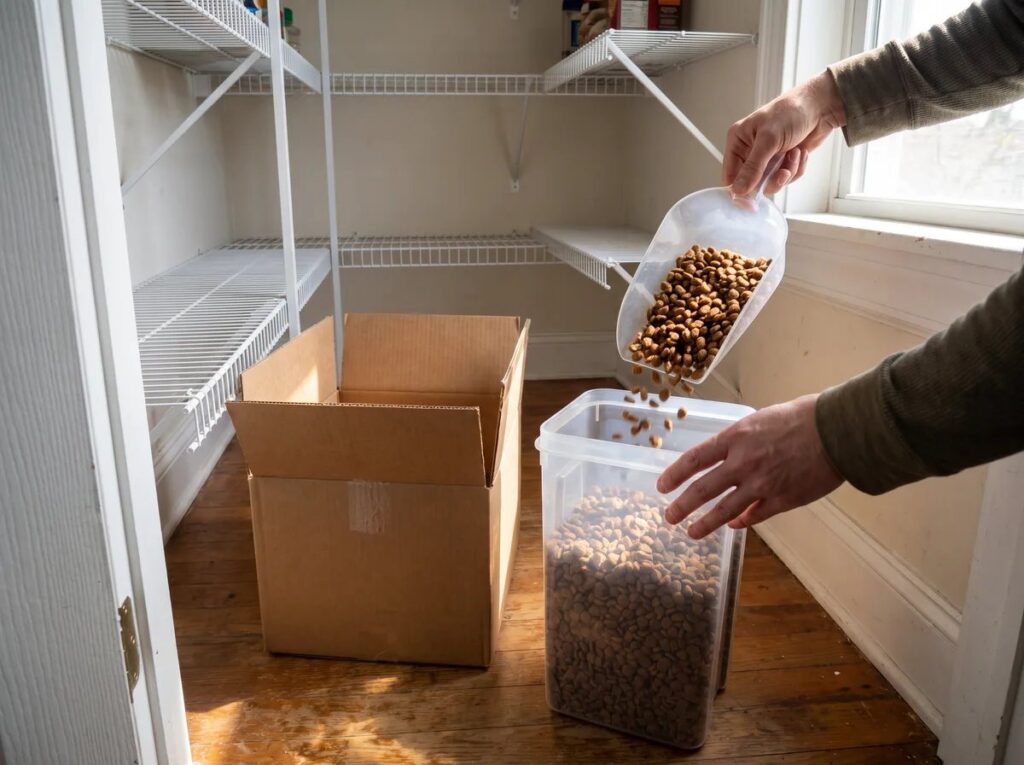
By contrast, shelf-stable kibble should remain stored in its original packaging inside an airtight container located in a cool, dry room, while opened canned foods should be covered and kept refrigerated.
Dog Food Delivery FAQs
Can you order dog food for delivery?
Yes. Dog food can be ordered for home delivery through specialized fresh and frozen subscription platforms, automated autoship programs from online pet retailers, or same-day courier apps sourcing from local pet stores.
Does Chewy deliver dog food?
Yes. Chewy delivers dry kibble, canned foods, veterinary diets, and pet supplies nationwide through scheduled shipping and automated autoship options. Select markets also have access to Get Real, Chewy’s frozen fresh dog food line shipped in insulated boxes with dry ice.
Can you get raw dog food delivered?
Yes. Various specialty retailers deliver raw dog food frozen in insulated packaging. Because raw diets carry distinct food safety handling protocols, pet owners should consult their veterinarian before introducing raw diets and strictly adhere to safe handling and thawing procedures.
What is a dog food subscription service?
A dog food subscription service provides recurring scheduled deliveries of dog food. High-quality services allow users to manage ship dates, adjust delivery frequencies, switch recipes, or pause orders through an online customer account.
Is fresh dog food delivery worth it?
Fresh dog food delivery offers significant value for pet owners seeking pre-portioned meals, high-grade ingredients, and routine convenience, provided the home has adequate freezer and refrigerator storage to manage incoming shipments safely.