
At first glance, the baked potato might not strike the home cook as a dish requiring specialized culinary technique. It is often treated as an afterthought, a quick and mindless side dish thrown into the oven without much thought or preparation. However, culinary professionals and food experts know that a vast and definitive difference separates a merely good baked potato from a truly transcendent one. Achieving that greatness, it turns out, requires rethinking standard practices, discarding certain long-held kitchen habits, and embracing a more scientific approach to basic roasting.
One of the most common missteps in preparing a baked potato involves the wrapping of the spud in aluminum foil. While this method does succeed in producing a tender interior, it simultaneously traps moisture against the skin, rendering the exterior unpleasantly soft and damp. For a potato featuring skin that achieves a deeply satisfying, ultra-crisp texture, the foil must be cast aside entirely. Instead, culinarians recommend baking the russets directly on the oven grate at a relatively high temperature. To push the texture and flavor even further—making the skin taste remarkably similar to a savory potato chip—cooks can thoroughly scrub the potatoes, rub them with vegetable oil, and season them generously with plenty of coarse salt before they enter the oven.
Surprisingly, bypassing the foil wrap and baking the potato directly on the rack does not compromise the fluffiness of the interior. Achieving that light, cloud-like texture inside comes down to a precise thermal benchmark: the internal temperature of the potato must reach at least 212 degrees Fahrenheit. While taking the temperature of a baking potato with a meat thermometer may initially feel unconventional or even slightly strange, culinary tests prove it to be a fail-safe, foolproof route to the most enjoyable eating experience possible.
The precision required for a great baked potato does not end when the timer goes off and the vegetable emerges from the oven. Disagreement abounds regarding the proper method for opening a freshly baked potato, with various culinary organizations and prominent food writers advocating for wildly different tactile approaches. Some authorities, including the Idaho Potato Commission, swear that the specific physical manner in which a baked potato is opened has a direct and noticeable impact on its final texture. Rather than immediately reaching for a knife, these traditionalists eschew steel blades entirely, opting instead for a fork to gently poke a neat plus sign into the surface of the skin.
Other esteemed culinary figures take a far more dramatic approach. Beloved food writer Nigel Slater, for instance, prefers to strike the hot potato as though he were participating in a high-intensity martial arts competition. Describing the technique in a piece published by The Guardian, Slater advises home cooks to bring their hand down fast and sharp, mimicking a karate chop, but with only enough force to crack open the potato skin without crushing the tender flesh beneath. Whether a cook wishes to attempt this dramatic feat remains literally in their own hands, though comprehensive testing by culinary teams reveals that a single, clean fork-pricked line drawn down the entire length of the spud is ultimately the most effective and reliable method for releasing steam and opening the potato.
Once the potato has been properly opened, it transforms from a simple side dish into a versatile, sturdy vessel capable of accommodating an almost endless array of hearty fillings. While butter, sour cream, and chives remain classic standbys, a baked potato can easily be elevated into a complete, deeply satisfying meal when filled with unexpected ingredients ranging from rich tuna salad to cheesy baked beans.
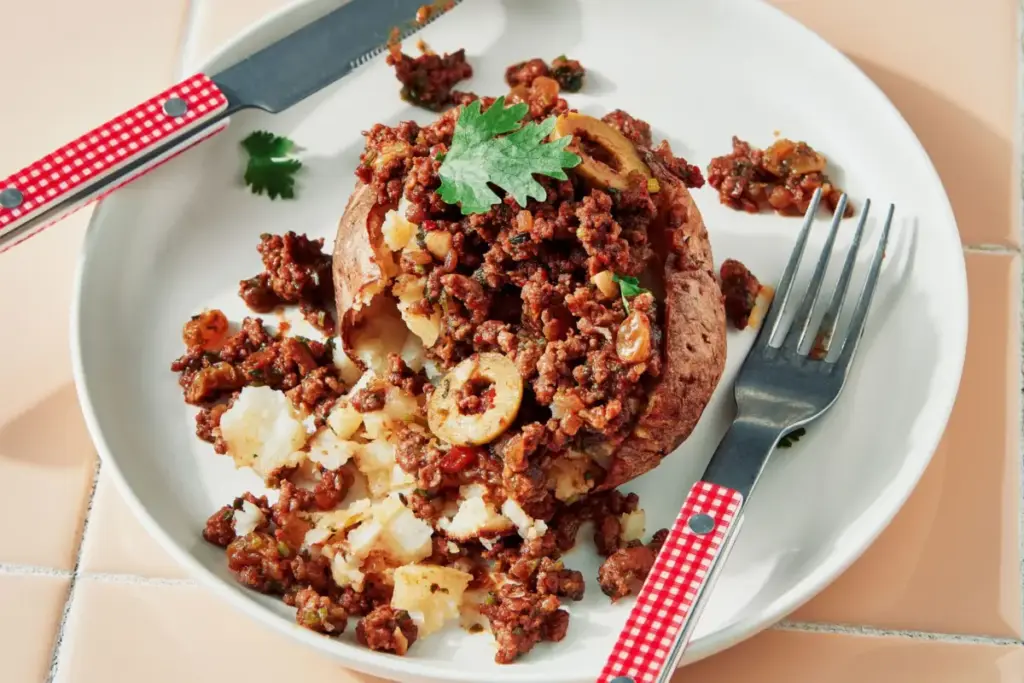
For a more substantial dinner option, the potato can be stuffed with a savory, picadillo-inspired mixture centered around ground beef. This beef filling delivers a robust profile packed with protein, iron, and creatine, though home cooks seeking alternative proteins can easily substitute ground turkey or ground chicken with equally delicious results. To balance the savory richness of the meat, the mixture is adorned with sweet golden raisins and briny stuffed olives, creating a complex interplay of flavors and textures.
As this picadillo-inspired mixture rests inside the hot potato, a spicy tomato sauce slowly and continuously soaks into the surrounding spud, further seasoning the potato with every passing minute and ensuring that every single bite is infused with flavor. When preparing the sauce, cooks are advised to use a genuine chili powder that consists of a complex blend of various spices—such as ground chiles, earthy cumin, aromatic oregano, and garlic powder—rather than relying solely on simple dried ground chiles.
Ultimately, this elevated approach to a comfort-food staple serves as a reminder that healthy, wholesome cooking does not have to be overly complicated or intimidating. In fact, culinary experience frequently demonstrates that the simpler a dish is, the better it ultimately tastes. Through the Good for You series, Test Kitchen editor Rebecca Firkser continues to share feel-good recipes designed for any day of the week, reminding home cooks that humble ingredients like white potatoes are far from being empty calories and are, in reality, remarkably good for you.